

Loki Wine operates three venues in Birmingham City Centre, Edgbaston and Knowle, specialising in high-quality wines with expert staff who can recommend bottles for any occasion
When we think about sparkling wine, the mind usually jumps to Champagne or Prosecco. These two categories have dominated the conversation for the last decade (or, in Champagne’s case, for centuries, since the monk Dom Pérignon allegedly “saw the stars” in his wine). However, I’m here to tell you that while Champagne feels like the ultimate celebratory drink and Prosecco offers a budget-friendly alternative, there are plenty of other options around the world that deliver both quality and value.
England
If you’ve been living under a rock and haven’t tried English sparkling wine, now is the time. As the price of Champagne has risen significantly over the past few years, English sparkling wine is, for the first time, offering genuinely great value. It’s also worth remembering that many large Champagne houses produce high volumes that aren’t always matched by quality, you’re often paying for marketing. In contrast, English producers tend to be smaller and more focused on craftsmanship. Hattingley Classic Reserve is a great example: fresh, crisp, and refreshing, with enough texture to make it a serious wine.
£35.99
Lambrusco
Lambrusco is often confused with Lambrini (they are not the same, the latter is actually a pear cider). Lambrusco, on the other hand, is a unique sparkling wine from Emilia-Romagna in Italy. These wines are mainly sparkling reds, though you can also find rosé and white versions. Personally, I’d stick to the reds. They are perfect barbecue wines; light, fruity, refreshing, and delicious, with enough tannin to pair well with meats. A personal favourite is Cleto Chiarli Lambrusco di Sorbara “Vecchia Modena”. The colour is almost like a deep rosé, but it still packs a punch, full of juicy, vibrant fruit.
£19.99
Corpinnat
Corpinnat is a relatively new collective formed by some of the top Cava producers. These wines offer stunning value and represent some of the best sparkling wine made today. The producers involved have a long history of crafting high-quality sparkling wines. One of the founding members, Can Feixes, produces an excellent Brut Nature, offering a racy yet complex style.
£23.99
Pet Nat
Short for pétillant naturel, this style may now be associated with hipsters, but it is actually the original method of making sparkling wine. Fermentation continues in the bottle after it has been sealed, trapping the carbon dioxide within the wine. These are fun, summery wines - don’t take them too seriously. One standout is Domaine de la Madone “Perréon Power” Pet Nat from Beaujolais, which bursts with crunchy fruit and purity, and practically screams: “pour me another glass!”
£22.99
This issue, we turn our attention to wellness, exploring the books shaping conversations around mental clarity, emotional resilience, mindfulness and modern wellbeing.
From psychology and longevity to mindfulness and digital balance, each title offers a thoughtful perspective on how we navigate increasingly demanding lifestyles. Leading this month’s selection at number one is Why Has Nobody Told Me This Before? by Dr Julie Smith, a standout guide that combines clinical expertise with accessible, practical advice for everyday life.
Across the collection, these are not simply books designed to motivate, but titles that genuinely challenge perspectives, encourage reflection and offer meaningful tools for living with greater intention and self-awareness in a constantly distracted world.
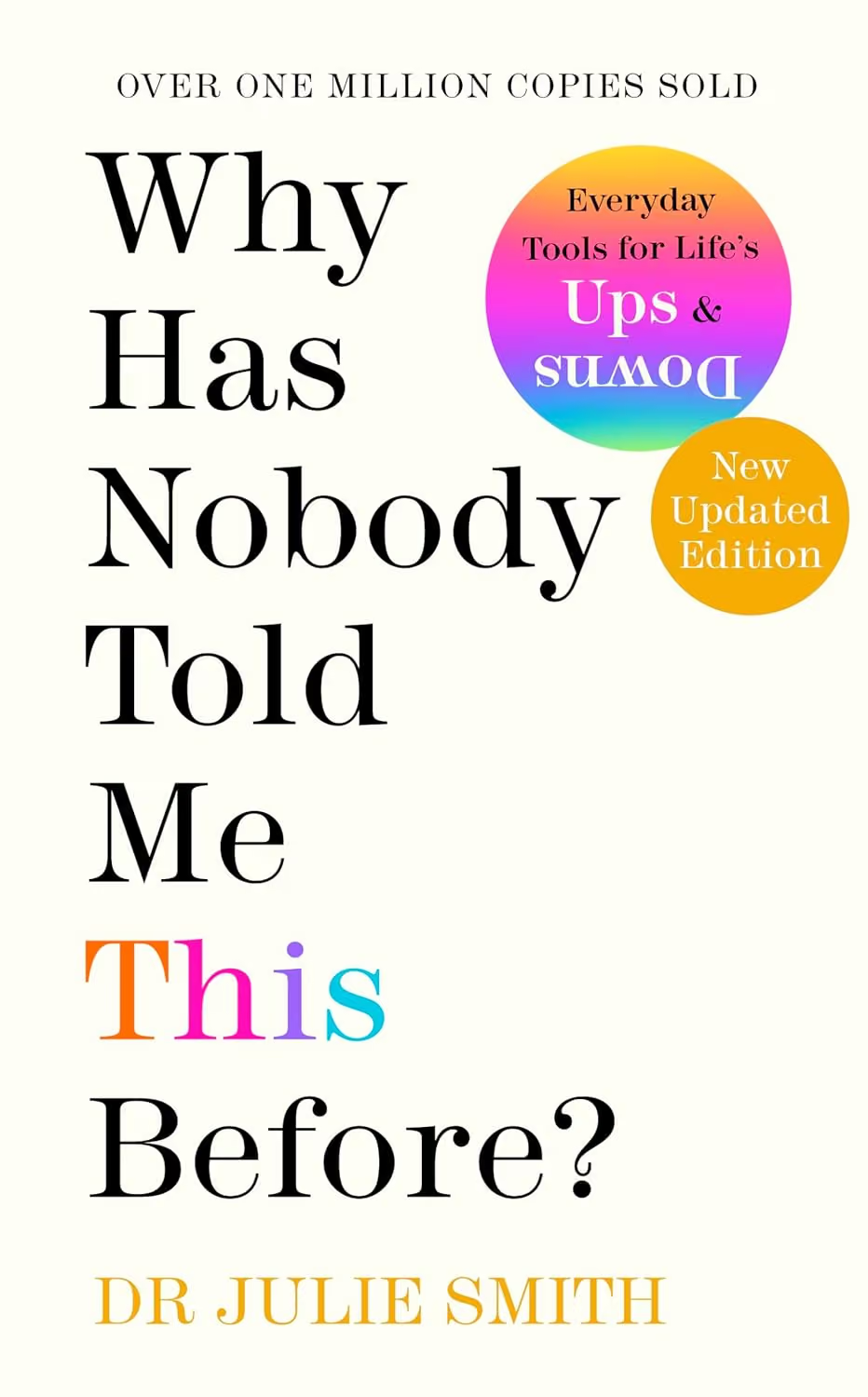
Why Has Nobody Told Me This Before? - Dr Julie Smith
Dr Julie Smith’s Why Has Nobody Told Me This Before? feels less like a traditional self-help book and more like a calm, intelligent conversation with someone who genuinely understands modern emotional pressure. Drawing on her experience as a clinical psychologist, Smith breaks down complex topics such as anxiety, confidence, stress and low mood into practical, manageable advice that feels realistic rather than overwhelming. What stood out to me most was the accessibility of the book. The techniques are simple enough to apply immediately, yet grounded in genuine psychological expertise. It is easy to understand why the book became such a phenomenon. Thoughtful, reassuring and highly practical, it is a book I found myself returning to repeatedly.
£20
Why We Sleep - Matthew Walker
Matthew Walker’s Why We Sleep completely changed the way I think about rest, recovery and long-term health. Drawing on decades of scientific research, Walker explains the extraordinary role sleep plays in everything from cognitive performance and emotional wellbeing to disease prevention and longevity. What makes the book particularly compelling is how clearly the science is communicated without losing depth or authority. Topics such as REM sleep, dreaming, caffeine and changing sleep patterns are explored in a way that feels both fascinating and slightly alarming. After reading it, it becomes difficult to view sleep as optional or negotiable. Informative, persuasive and deeply researched, it is one of the most impactful health books I have read.
£13
Breath: The New Science of a Lost Art - James Nestor
James Nestor’s Breath takes something we do instinctively every day and reveals just how much we have been getting wrong. Blending scientific research with ancient breathing practices, the book explores how breathing patterns can influence everything from stress and sleep to athletic performance and immunity. What I enjoyed most was Nestor’s investigative style. He travels extensively, tests methods himself and presents complex ideas in a highly engaging way. Some of the findings are genuinely surprising, particularly around mouth breathing and modern lifestyle habits. Breath is one of those rare books that immediately changes your awareness of your own body. Long after finishing it, I found myself thinking differently about something as basic as inhaling and exhaling.
£11
Mindfulness: A Practical Guide to Finding Peace in a Frantic World - Professor Mark Williams and Dr Danny Penman
This is one of the most practical and accessible introductions to mindfulness I have read. Rather than approaching mindfulness as something abstract or overly spiritual, Williams and Penman present it as a realistic tool for navigating stress, anxiety and the constant pace of modern life. Rooted in mindfulness-based cognitive therapy, the book combines scientific credibility with genuinely useful exercises that can be integrated into everyday routines. What stood out to me was its calm, compassionate tone. Nothing feels forced or unrealistic. Instead, it encourages small, sustainable shifts in awareness and perspective. Quietly powerful and highly readable, it is a book that feels increasingly relevant in a permanently distracted world.
£17
The Body Keeps the Score - Bessel van der Kolk
The Body Keeps the Score is one of the most insightful and thought-provoking books I have read on trauma and emotional healing. Bessel van der Kolk explores how trauma affects not only the mind, but also the brain and body, challenging many traditional approaches to treatment. What makes the book so powerful is its balance between scientific research, patient stories and practical understanding. Rather than focusing solely on medication or talking therapies, van der Kolk examines alternative healing approaches that reconnect people with their physical and emotional selves. It is an emotionally intense read at times, but also an incredibly important one that completely reshaped my understanding of trauma and long-term wellbeing.
£15
The Power of Now - Eckhart Tolle
Tolle’s The Power of Now is a book that demands patience and reflection, but ultimately rewards both. Centred around the idea of living fully in the present moment, Tolle challenges the constant mental noise and anxiety that often dominate modern life. What struck me most was the simplicity of many of his ideas, despite the profound impact they can have when genuinely applied. The conversational structure makes complex spiritual concepts feel surprisingly accessible. While it is certainly a deeply philosophical book, I found it grounding rather than abstract. More than anything, The Power of Now encourages a quieter, calmer way of living that feels increasingly relevant in a constantly distracted world.
£13
Outlive: The Science and Art of Longevity - Peter Attia with Bill Gifford
Outlive is one of the most comprehensive books I have read on health, ageing and longevity. Attia challenges conventional healthcare approaches by focusing not simply on extending lifespan, but on improving quality of life across every decade. Covering nutrition, exercise, sleep and emotional health, the book presents longevity as something proactive rather than reactive. What impressed me most was Attia’s ability to balance scientific depth with practical application. The advice feels strategic and evidence-based without drifting into trends or biohacking culture. It is an ambitious book, but an incredibly valuable one that reframes how we think about health, prevention and long-term wellbeing in modern life.
£25
Best Self: Be You, Only Better - Mike Bayer
Bayer’s Best Self approaches personal development in a direct and highly actionable way. Built around the idea of identifying both your “best self” and “anti-self”, the book encourages honest reflection on habits, relationships and daily choices. What makes it effective is its accessibility. Bayer avoids overly complicated theory and instead focuses on practical exercises that encourage meaningful behavioural change. Throughout the book, there is a strong emphasis on authenticity and alignment, particularly around building a life that genuinely reflects personal values rather than outside expectations. I found it motivating without feeling unrealistic or overly polished. It is a straightforward, engaging read that offers practical tools for personal growth and self-awareness.
£13
Set Boundaries, Find Peace - Nedra Glover Tawwab
Tawwab’s Set Boundaries, Find Peace is one of the clearest and most practical books I have read on relationships, communication and self-respect. Tawwab removes much of the confusion around what healthy boundaries actually look like and explains how a lack of boundaries often contributes to stress, burnout and resentment. What I appreciated most was the book’s straightforward tone. The advice is direct, realistic and immediately applicable across work, friendships and family dynamics. Rooted in therapeutic practice and cognitive behavioural techniques, it offers practical frameworks without becoming clinical or overwhelming. It is an empowering read that encourages clarity, confidence and healthier relationships in every aspect of life.
£17
Digital Minimalism - Cal Newport
Newport’s Digital Minimalism offers a compelling argument for reclaiming focus and intentionality in an increasingly distracted world. Rather than rejecting technology entirely, Newport encourages a more selective and conscious relationship with digital tools, particularly social media and constant online connectivity. What makes the book effective is its practicality. The “digital declutter” approach feels achievable rather than extreme, while the broader message around attention, solitude and meaningful interaction feels increasingly important. I found the sections on prioritising deeper conversations and rediscovering offline activities particularly insightful. Calm, intelligent and highly relevant, Digital Minimalism is ultimately about creating more space for clarity, presence and genuine quality of life.
£11

Swealthy stage properties to sell faster and for more.
In the upper tiers of the residential property market, value is rarely determined by location and specification alone. It is shaped by perception, confidence and the ability of a property to communicate a complete lifestyle narrative from the moment a buyer enters the space. Increasingly, experienced sellers recognise that presentation is not simply an aesthetic consideration but a strategic decision that can materially influence the financial outcome of a sale. Within prime markets especially, home staging has become an important component of intelligent asset positioning.
Luxury buyers do not approach property in the same way as mainstream purchasers. They are rarely searching for compromise solutions or transitional homes. Instead, they are selecting environments that must immediately support the standards of comfort, privacy and entertaining that already define their lives. As a result, the viewing experience carries unusual importance because it establishes whether a property feels aligned with expectation from the outset. When presentation supports that alignment, confidence increases. When it does not, hesitation can appear quickly and begin to shape perceptions of value.
For this reason, staging now operates less as decoration and more as preparation for market entry at the highest level of residential real estate.
WHY BUYERS AT THE TOP END PURCHASE EMOTION AND CERTAINTY
Affluent purchasers expect clarity when they walk through a property. They want to understand how rooms relate to one another, how space supports everyday routines and how the architecture accommodates both privacy and social life without requiring interpretation. Even generous homes can feel uncertain when their layout is not clearly expressed through proportionate furnishing and considered styling.
Thoughtful staging removes that uncertainty by presenting a property as resolved rather than potential. Reception rooms communicate entertaining scale. Bedrooms suggest calm retreat. Transitional areas become legible parts of a coherent living environment rather than undefined spaces waiting for explanation. Buyers begin to experience the property as somewhere they could already live, rather than somewhere they would need to adapt.
This shift matters because emotional certainty plays a decisive role in luxury purchasing decisions. When buyers feel confident about how a property will function within their lifestyle, they are more likely to interpret its value positively and respond with stronger engagement at an earlier stage of the marketing process.
THE COST OF UNDER PRESENTING PRIME PROPERTY
Even architecturally distinguished homes can underperform when presentation fails to match the expectations of the audience they are intended to attract. Empty rooms often appear smaller than they are. Oversized furniture can distort proportion. Inconsistent styling can interrupt the visual rhythm that allows architecture to communicate its strengths.
These signals are rarely analysed consciously, yet they influence judgement quickly. Buyers begin to imagine effort rather than ease, adjustment rather than readiness. Once that shift occurs, attention moves away from lifestyle possibility and towards perceived inconvenience, which can subtly affect both enthusiasm and pricing behaviour.
At the upper end of the market, where expectations are precise and competition between properties is often strong, presentation helps ensure that architectural quality is recognised immediately rather than discovered gradually. A carefully staged home enters the market already communicating coherence and completeness, which supports alignment between its intrinsic qualities and its perceived value.
PRESENTATION AS A SIGNAL OF CONFIDENCE
There is an unspoken dialogue between seller and buyer in prime residential transactions. Presentation forms part of that conversation by signalling how the property has been understood and prepared before reaching the market.
A carefully staged home suggests attention to detail and consistency of stewardship. Buyers often interpret this as evidence that the ownership experience has been considered thoughtfully, which reduces uncertainty at exactly the moment when they are forming impressions about risk. Confidence strengthens when the viewing experience feels deliberate and composed rather than improvised.
Within luxury markets, this confidence supports pricing resilience because buyers are responding not only to architecture but also to the sense that the property already reflects the standard of living they expect it to deliver.
WHY STAGING ACCELERATES LIQUIDITY IN HIGH VALUE REAL ESTATE
Liquidity is not always discussed in residential property conversations, yet it remains central to effective wealth management. A property that attracts confident engagement early in its marketing lifecycle protects flexibility for the seller and preserves the ability to respond to future opportunities elsewhere within a portfolio.
Presentation plays a significant role in supporting this liquidity because it influences how quickly the right buyers recognise the relevance of the opportunity being offered. Strong staging improves photography, strengthens digital engagement and increases the likelihood that serious purchasers will prioritise a viewing appointment while momentum remains high. Early interest often establishes the tone for the entire marketing period, particularly in prime markets where perception of demand can influence negotiation dynamics from the outset.
By encouraging immediate clarity and engagement, staging contributes to a marketing environment in which a property can move more efficiently from introduction to transaction without compromising value expectations.
THE IMPORTANCE OF THE DIGITAL FIRST IMPRESSION
Luxury property searches increasingly begin long before a viewing appointment takes place. Buyers often review numerous opportunities online before selecting which homes justify their time and attention. Photography therefore acts as the first introduction to the property experience.
Staging transforms the effectiveness of this introduction. Balanced colour palettes, resolved spatial arrangements and carefully managed lighting allow architecture to communicate its strengths clearly through imagery. Rooms appear purposeful rather than uncertain. Circulation feels intuitive rather than ambiguous. Materials read as deliberate rather than incidental.
These visual signals shape whether a buyer progresses from curiosity to engagement. In high value residential markets, that decision frequently determines whether a viewing is scheduled at all, which makes presentation a critical element of market positioning long before the front door is opened.
NEGOTIATION STRENGTH AND PERCEIVED READINESS
Negotiation behaviour is influenced strongly by whether buyers believe a property requires adjustment after completion. Even modest anticipated improvements can introduce caution into discussions about value because they create uncertainty about timing and effort following acquisition.
Staging reduces this uncertainty by presenting the home as complete in atmosphere as well as structure. Buyers begin to imagine continuity rather than transition, which supports a more confident interpretation of the property’s positioning within the market. When the viewing experience reflects readiness rather than potential, negotiation conversations are more likely to centre on acquisition decisions rather than anticipated changes.
This shift in emphasis helps maintain alignment between expectation and price throughout the transaction process.
PRESENTATION AS A COMPONENT OF ASSET STRATEGY
Experienced sellers increasingly treat staging as part of a broader preparation strategy that begins before a property is introduced to the market. They recognise that first impressions establish the framework through which all subsequent discussions about value will take place. When presentation reflects the expectations of the intended audience, the property enters the market with clarity, coherence and confidence already established.
Within prime residential markets, where perception shapes engagement as much as specification, staging operates as a practical extension of asset management rather than a decorative enhancement. By supporting emotional certainty, protecting pricing position and improving marketing momentum, presentation contributes directly to the preservation and strengthening of residential wealth in ways that are increasingly recognised by sophisticated property owners and advisers alike.
If you’re ready to stage smarter, Swealthy Staging can help. Visit swealthystaging.com to see how purposeful staging can transform your property and attract the right buyers.
swealthystaging.com

New developments. Prime locations. Expert management.
.avif)
Birmingham's skyline is transforming with stunning new apartment developments, creating exceptional investment opportunities in the heart of the UK's second city.
Three2Six Real Estate Agents specializes in maximizing returns for apartment investors across Birmingham city centre. With £50 million plus portfolio under management and deep local expertise, we understand what makes city centre properties profitable.
City Centre Specialists | We know Birmingham's apartment market inside out
Full Management Service | Tenant screening to maintenance, we handle everything
Budget-centric expertise | We'll help you adapt to policy changes
Technology-driven | Advanced property management platform with AI integration
Local Expertise | 5-18 years of Birmingham real estate experience
Whether your new apartment is in the prestigious Jewellery Quarter or prime city centre locations, we'll ensure it delivers optimal rental yields while keeping you compliant with evolving regulations.
CONTACT US FOR YOUR RENTAL YIELD ASSESSMENT NOW
Let Three2Six Real Estate Agents, Birmingham's City Centre specialists, manage your portfolio - contact us today to discuss your new apartment investment

If you’re ready to stage smarter, Swealthy Staging can help. Visit swealthystaging.com to see how purposeful staging can transform your property and attract the right buyers.
If you’re ready to stage smarter, Swealthy Staging can help. Visit swealthystaging.com to see how purposeful staging can transform your property and attract the right buyers.
Swealthy Staging specialise in both interior design and property staging, offering expertise that helps clients achieve the right balance between lifestyle-focused living and market-driven presentation. In this article, we explore the distinctions between these two disciplines, why they matter, and how our team can guide you towards a service which aligns with your goals.
When it comes to transforming a home, the terms interior design and property staging are often used interchangeably, yet they are far from the same thing. While both involve careful arrangement of spaces, furniture, and décor, the goals, approaches, and outcomes of each service differ significantly. Understanding these differences is crucial for homeowners, property investors, sellers, and estate agents who want to make informed decisions about their property.
Interior design is the art and science of enhancing a living space to reflect the personality, lifestyle, and needs of the owner. Unlike property staging, interior design is not focused on selling a home, but about creating a space that supports long-term living.
Key elements of interior design include:
1. Personalisation: Every choice in interior design, from colour schemes and furniture selection to finishes and layout, is tailored to the client’s tastes. The goal is to create a space that feels uniquely theirs.
2. Functionality: Interior designers consider how people use their spaces on a daily basis. Storage solutions, flow, lighting, and ergonomics all play critical roles in designing a home that is both beautiful and practical.
3. Emotional Connection: A well-designed home evokes an emotional response in its occupants. It reflects their personality, tells their story, and becomes a place where memories are made.
4. Long-Term Investment: Interior design is an investment in lifestyle. It is about creating a home to meet a client’s evolving needs over years, rather than just appealing to others.
In essence, interior design is about living in a space, making it functional, comfortable, and visually pleasing for those who call it home.
Property staging, on the other hand, is a strategic approach aimed at selling or leasing a property. The purpose of staging is to present a home in its best light so that it appeals to a wide audience of potential buyers or tenants.
Key features of property staging include:
1. Depersonalisation: Unlike interior design, staging removes personal items such as family photos and memorabilia. This enables prospective buyers to visualise themselves in the space rather than feeling like a visitor in someone else’s home.
2. Neutral Aesthetics: Staging often relies on neutral colour palettes, minimalistic décor, and carefully curated furnishings to create a broad appeal. The aim is to make the property look stylish yet universally inviting.
3. Strategic Styling: Stagers highlight the home’s best features, emphasise the flow of rooms, and make spaces appear larger and more functional. Small touches like rearranging furniture, adding art, or placing a few decorative items can dramatically improve buyer perception.
4. Short-Term Impact: Property staging is a temporary, market-driven exercise. Once a home is sold, the staging items may be removed or repurposed.
Ultimately, staging is about marketing a space, helping potential buyers connect with it emotionally while leaving them free to imagine living there.
Understanding the difference between interior design and property staging comes down to three main contrasts:
Interior design personalises a home for the occupant, reflecting their tastes, lifestyle, and preferences.
Property staging intentionally depersonalises the space to appeal to a wider audience.
Interior design focuses on creating spaces for daily living, comfort, and functionality.
Property staging focuses on presenting a property to sell, highlighting potential, scale, and versatility.
Interior design fosters an emotional connection for the homeowner, creating a sense of belonging.
Property staging cultivates emotional neutrality, allowing buyers to imagine their own lives without distraction from the owner’s personal style.
These differences are subtle but significant. Misunderstanding them can lead to decisions that either compromise the home’s liveability or limit its market appeal.
Choosing the right service (interior design or staging) has real implications for both lifestyle and investment.
For homeowners who plan to live in their property for years, interior design is the clear choice. It ensures that spaces are tailored to personal needs and functional for daily routines. A home that is aesthetically pleasing and practical enhances quality of life and can even increase long-term property value.
For sellers or estate agents, staging is an essential tool to accelerate sales and maximise return on investment. Staged homes tend to sell faster and often command higher prices because they allow buyers to see the potential of a property without being distracted by the previous owner’s personal style. Staging turns an ordinary property into a marketable showpiece.
By clearly distinguishing between the two, clients can make smarter decisions: investing in long-term living solutions with interior design or achieving short-term market success with staging.
When deciding between interior design and property staging, consider your primary goal:
If your focus is long-term living, comfort, and personal expression, interior design is the solution.
If your focus is selling or leasing, attracting buyers, and maximising market appeal, property staging is the key.
For many homeowners and property investors, the ideal strategy may even involve both: a home designed for personal enjoyment but with staged elements to enhance resale value.
Swealthy Staging’s expertise makes navigating these choices simple and stress-free. We understand lifestyle and marketing needs. This means we can advise homeowners on subtle upgrades that enhance liveability while also boosting market value if they decide to sell in the future.
We know how to transform a home into a stylish, functional space for daily life and can also shift it into a strategically staged property to appeal to buyers. This dual perspective ensures no detail is overlooked. Plus, our clients benefit from our comprehensive knowledge, creative solutions, and meticulous attention to detail. Whether it’s crafting a personalised sanctuary or creating a market-ready property, we deliver results that exceed expectations.
If you’re ready to move forward with clarity and confidence, Swealthy Staging is here to help.
READY TO STAGE YOUR PROPERTY?

And how a financial plan can turn uncertainty into opportunity
Why it's best not to panic around the UK Autumn budget statement
And how a financial plan can turn uncertainty into opportunity
We’ve been delighted by the tremendous response to our recent article. With its timely insight and continued relevance, we’ve chosen to bring the feature back for those who may have missed it and to keep it top of mind for readers returning for a second look.
Every year, the UK’s Autumn Budget Statement is a hotly anticipated event. For some, it brings the hope of tax cuts or increased public spending. For others, it raises anxiety about what changes may be coming - from income tax and national insurance contributions to pensions, business rates, and benefits. But one thing is certain: the media frenzy around the Budget often stokes fear more than it provides clarity.
In uncertain times, it’s easy to let headlines drive your decisions. But reacting emotionally to budget announcements can lead to costly mistakes. Instead, by keeping calm and focusing on a sound financial plan, you can not only weather economic shifts but potentially turn them into opportunities.
Understanding the Autumn Budget Statement
The Autumn Statement is a key fiscal event where the Chancellor of the Exchequer outlines the government's plans for taxation and spending. It's used to update the country on the health of the economy and to make adjustments based on current financial realities.
Because it directly affects personal finances, business operations, and investment climates, many people react strongly - especially if it introduces changes to taxes, benefits, or pension rules. But overreacting or making hasty decisions in response to these announcements is rarely helpful.
It’s important to remember that the Autumn Statement is fundamentally a political tool. Decisions are made in the context of national economic priorities and political strategy - not with individual financial plans in mind.
While changes may have a knock-on effect, such as adjustments to income tax thresholds or capital gains tax, the impact on your long-term financial position is often much less dramatic than it first appears. Jumping to conclusions based on a single budget announcement can lead to rash decisions, such as pulling investments, changing pension contributions, or even selling property - all without proper analysis.
When budget changes are announced, markets may respond quickly, sometimes with volatility. But this initial reaction is rarely sustained. Investors who panic and make knee-jerk decisions often lock in losses that could have been avoided by staying the course.
For example, an increase in corporation tax might cause a temporary dip in business sentiment or share prices, but over time, companies adapt, and markets rebalance. Those with long-term investment strategies typically outperform those who try to time the market.
While the Budget sets the national financial landscape, your personal financial success is more often determined by your planning and behaviour. Having a clear, flexible financial strategy allows you to absorb changes and make adjustments without panic.
A good financial plan acts like a compass. It helps you see the bigger picture and stay on course, even when the economic environment is shifting. Instead of worrying about every policy change, your plan is built around your personal goals - whether that’s saving for retirement, buying a home, or funding your children’s education.
With a solid plan in place, you can assess how changes affect your strategy in a structured way. This clarity helps you act with intention rather than emotion.
Budget changes often present new financial planning opportunities but only if you’re prepared to spot them. For example:
Tax-efficient investing: A rise in income tax could make ISAs or pension contributions more attractive, especially for higher earners.
Business adjustments: Entrepreneurs may find new incentives, grants, or allowances that support growth or innovation.
Capital gains planning: Adjustments to CGT may create windows of opportunity to sell or restructure assets strategically.
By working with a financial planner or adviser, you can review these opportunities in the context of your overall goals and take action where it makes sense.
The most valuable aspect of financial planning is resilience. When you know your income, savings, investments, and insurance are working together in harmony, you’re less likely to panic when external events happen. Your plan can include:
Emergency funds to cover short-term instability
Diversified investments to reduce risk exposure
Debt management strategies to keep liabilities under control
Regular reviews to adapt to new legislation or economic conditions
This proactive approach helps turn challenging times into manageable ones and sometimes even into times of growth.
It’s one thing to read about planning, it’s another to do it. If you’re unsure where to start, or how changes in the Autumn Budget might affect you, consider working with a qualified financial adviser or planner. They can help you:
Understand exactly what budget changes mean for you
Create a bespoke plan tailored to your circumstances
Stay focused on your long-term goals, regardless of political noise
Find efficiencies and opportunities you might have missed on your own
Panic is a poor financial strategy. The Autumn Budget may bring news - good or bad - but it doesn’t have to derail your financial future. By approaching it with a calm, considered mindset and a well-structured plan, you can rise above the noise and make decisions that genuinely serve your goals.
The truth is, financial success is rarely about reacting to government announcements. It's about preparation, discipline, and adaptability. With a financial plan in place, you can look beyond the headlines and see the opportunities that others miss, even in the toughest of times.
For a no-pressure introductory conversation about protecting your estate and legacy, visit southcotefinancial.co.uk or call 0121 661 7014.
Business Property Relief Schemes (BR) invest in assets that are high risk and can be difficult to sell such as shares in unlisted companies. The value of the investment and the income from it can fall as well as rise and investors may not get back what they originally invested, even taking into account the tax benefits. Tax treatment varies according to individual circumstances and is subject to change.
This article is for financial education, not financial advice. Before making any financial decisions, we recommend you seek professional financial advice.

And how a financial plan can turn uncertainty into opportunity
Every year, the UK’s Autumn Budget Statement is a hotly anticipated event. For some, it brings the hope of tax cuts or increased public spending. For others, it raises anxiety about what changes may be coming - from income tax and national insurance contributions to pensions, business rates, and benefits. But one thing is certain: the media frenzy around the Budget often stokes fear more than it provides clarity.
In uncertain times, it’s easy to let headlines drive your decisions. But reacting emotionally to budget announcements can lead to costly mistakes. Instead, by keeping calm and focusing on a sound financial plan, you can not only weather economic shifts but potentially turn them into opportunities.
The Autumn Statement is a key fiscal event where the Chancellor of the Exchequer outlines the government's plans for taxation and spending. It's used to update the country on the health of the economy and to make adjustments based on current financial realities.
Because it directly affects personal finances, business operations, and investment climates, many people react strongly - especially if it introduces changes to taxes, benefits, or pension rules. But overreacting or making hasty decisions in response to these announcements is rarely helpful.
It’s important to remember that the Autumn Statement is fundamentally a political tool. Decisions are made in the context of national economic priorities and political strategy - not with individual financial plans in mind.
While changes may have a knock-on effect, such as adjustments to income tax thresholds or capital gains tax, the impact on your long-term financial position is often much less dramatic than it first appears. Jumping to conclusions based on a single budget announcement can lead to rash decisions, such as pulling investments, changing pension contributions, or even selling property - all without proper analysis.
When budget changes are announced, markets may respond quickly, sometimes with volatility. But this initial reaction is rarely sustained. Investors who panic and make knee-jerk decisions often lock in losses that could have been avoided by staying the course.
For example, an increase in corporation tax might cause a temporary dip in business sentiment or share prices, but over time, companies adapt, and markets rebalance. Those with long-term investment strategies typically outperform those who try to time the market.
While the Budget sets the national financial landscape, your personal financial success is more often determined by your planning and behaviour. Having a clear, flexible financial strategy allows you to absorb changes and make adjustments without panic.
A good financial plan acts like a compass. It helps you see the bigger picture and stay on course, even when the economic environment is shifting. Instead of worrying about every policy change, your plan is built around your personal goals - whether that’s saving for retirement, buying a home, or funding your children’s education.
With a solid plan in place, you can assess how changes affect your strategy in a structured way. This clarity helps you act with intention rather than emotion.
Budget changes often present new financial planning opportunities but only if you’re prepared to spot them. For example:
Tax-efficient investing: A rise in income tax could make ISAs or pension contributions more attractive, especially for higher earners.
Business adjustments: Entrepreneurs may find new incentives, grants, or allowances that support growth or innovation.
Capital gains planning: Adjustments to CGT may create windows of opportunity to sell or restructure assets strategically.
By working with a financial planner or adviser, you can review these opportunities in the context of your overall goals and take action where it makes sense.
The most valuable aspect of financial planning is resilience. When you know your income, savings, investments, and insurance are working together in harmony, you’re less likely to panic when external events happen. Your plan can include:
Emergency funds to cover short-term instability
Diversified investments to reduce risk exposure
Debt management strategies to keep liabilities under control
Regular reviews to adapt to new legislation or economic conditions
This proactive approach helps turn challenging times into manageable ones and sometimes even into times of growth.
It’s one thing to read about planning, it’s another to do it. If you’re unsure where to start, or how changes in the Autumn Budget might affect you, consider working with a qualified financial adviser or planner. They can help you:
Understand exactly what budget changes mean for you
Create a bespoke plan tailored to your circumstances
Stay focused on your long-term goals, regardless of political noise
Find efficiencies and opportunities you might have missed on your own
Panic is a poor financial strategy. The Autumn Budget may bring news - good or bad - but it doesn’t have to derail your financial future. By approaching it with a calm, considered mindset and a well-structured plan, you can rise above the noise and make decisions that genuinely serve your goals.
The truth is, financial success is rarely about reacting to government announcements. It's about preparation, discipline, and adaptability. With a financial plan in place, you can look beyond the headlines and see the opportunities that others miss, even in the toughest of times.
For a no-pressure introductory conversation about protecting your estate and legacy, visit southcotefinancial.co.uk or call 0121 661 7014.
Business Property Relief Schemes (BR) invest in assets that are high risk and can be difficult to sell such as shares in unlisted companies. The value of the investment and the income from it can fall as well as rise and investors may not get back what they originally invested, even taking into account the tax benefits. Tax treatment varies according to individual circumstances and is subject to change.
This article is for financial education, not financial advice. Before making any financial decisions, we recommend you seek professional financial advice.
It looks like your search doesn't match any of our library articles. Please reset the filter and try again.
Looking for a different viewing experience, head down to our printed issues library and browse throught our heritage of design and luxury all in one destination.

Copyright © Swealthy LTD
All rights reserved





















.avif)