Explore Lamborghini with spatial computing: Place the full-scale car in your space, interact with engineering beneath the surface, and experience design in extraordinary detail.
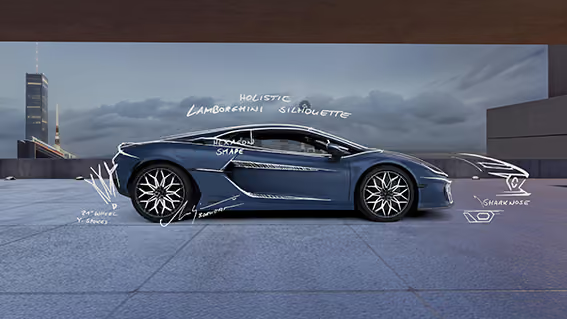
Sant’Agata Bolognese, 07 July 2026 – Automobili Lamborghini keeps innovating in the digital space, leveraging technology to extend its vision into immersive environments to offer new ways to experience its vehicles. Today’s launch of the Lamborghini app for Apple Vision Pro is the next milestone of the company’s success story. The new spatial computing app redefines how enthusiasts and collectors connect with the Italian icon, transforming the legendary craftsmanship of a super sports car brand into an immersive digital journey.The native app features the entire current model range of Automobili Lamborghini, including the Urus SE Performante, launched digitally just last week. Even before the Super SUV’s physical premiere at this week’s Goodwood Festival of Speed, enthusiasts can now explore its design and engineering through the Apple Vision Pro. Within the experience, users can go beneath the carbon fiber skin and discover the technical soul of Lamborghini’s most coveted models.
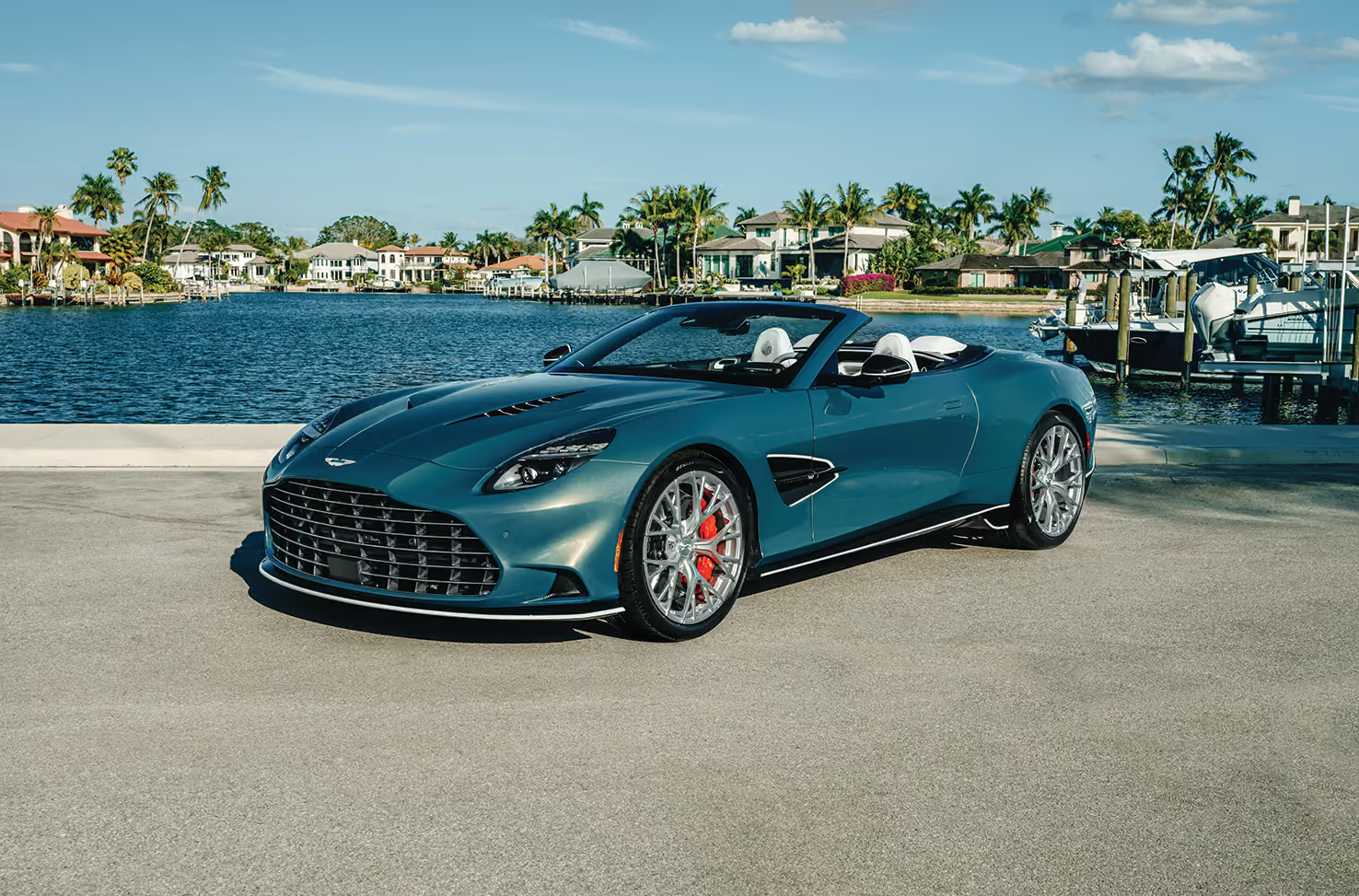
A singular expression of craftsmanship and coastal inspiration, the Aston Martin Vanquish Volante Wave Edition distils the rhythm and serenity of Florida’s shoreline into a one-of-one automotive statement.
Commissioned through Q by Aston Martin in collaboration with Aston Martin Naples, this bespoke convertible makes its world debut at the 2026 Naples Winter Wine Festival, where it will be auctioned in aid of the Naples Children & Education Foundation.
Visually, the car is defined by its Q Iridescent Sapphire finish, a luminous blue with a subtle green undertone that mirrors the movement of water through the Everglades. Gloss black tinted carbon fibre elements and a bespoke Club Sport White wave-inspired livery create contrast and dynamism, while red brake calipers subtly reference coastal navigation markers.
Inside, the narrative softens. A Glacier White interior palette is paired with pale blue stitching that forms an abstract wave motif, delivering a calm, almost meditative environment. Performance remains uncompromised, with a twin-turbocharged 5.2-litre V12 producing 835PS, propelling the car from 0–62mph in 3.4 seconds, with a 214mph top speed. The result is a convertible that balances raw power with poetic design.
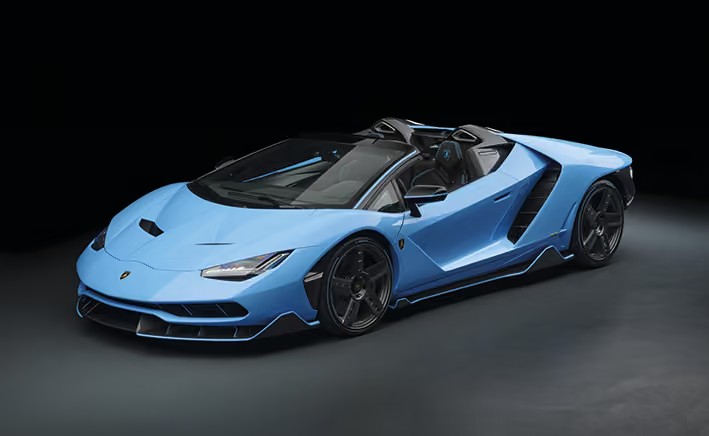
Lamborghini’s Few-Off Roadsters represent the most distilled expression of the marque’s V12 philosophy, rare, uncompromising machines that transform performance into a deeply emotional, open-air experience.
Produced in extremely limited numbers, these cars sit at the intersection of radical design, advanced engineering and pure sensory engagement.
Rooted in a lineage that stretches back to the 1968 Miura Roadster, Lamborghini’s open-top vision has continually evolved through a series of landmark creations. Modern Few-Off interpretations, including the Reventón Roadster, Veneno Roadster, Centenario Roadster and Sián Roadster, each push the boundaries of what a super sports car can be, both visually and technically.
What defines these models is not simply performance, but intensity. With the engine positioned prominently behind the driver and the absence of a fixed roof, the connection between car, environment and driver becomes immediate and visceral. Every detail is engineered to heighten sensation, from dramatic aerodynamic forms to cutting-edge materials.
As Stephan Winkelmann notes, these cars are statements of capability and intent. They are not designed for volume, but for impact, each one a milestone that encapsulates Lamborghini’s relentless pursuit of innovation and emotional design.
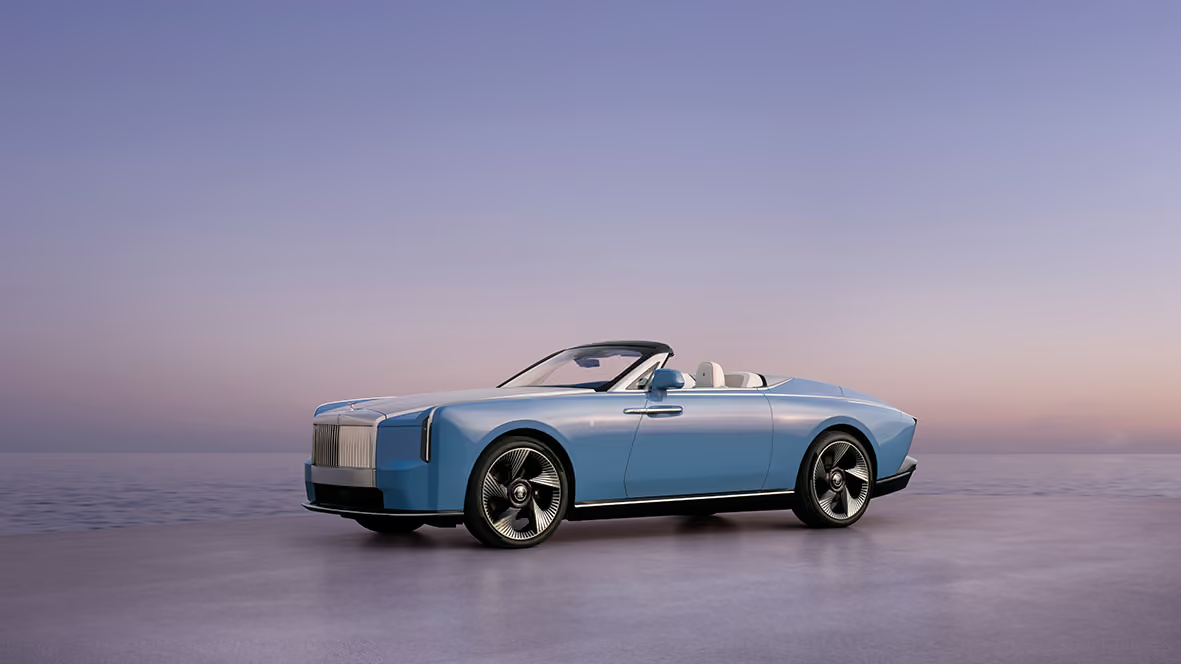
Project Nightingale marks a significant evolution in Rolls-Royce’s Coachbuild programme, introducing its first formalised Coachbuild Collection.
Limited to just 100 motor cars worldwide and available strictly by invitation, it represents a new chapter in highly personalised luxury.
The name draws from ‘Le Rossignol’, the nightingale, referencing the creative sanctuary at Henry Royce’s French Riviera estate. This heritage informs a design language inspired by the experimental ‘EX’ models of the 1920s, reinterpreted through a contemporary lens. The result is a sheer, monolithic aesthetic shaped by the principles of Streamline Moderne, delivering a presence that is both restrained and commanding.
Underpinning the project is Rolls-Royce’s Architecture of Luxury aluminium spaceframe, ensuring structural integrity and refinement at the highest level. While presented as a production concept, Project Nightingale will undergo a global testing and validation programme beginning this summer, with client deliveries scheduled from 2028.
More than a car, Project Nightingale is an exercise in curated exclusivity, designed for a select group of clients with a deep affinity for the brand’s design ethos, and a desire to participate in one of its most considered and collectible modern expressions.
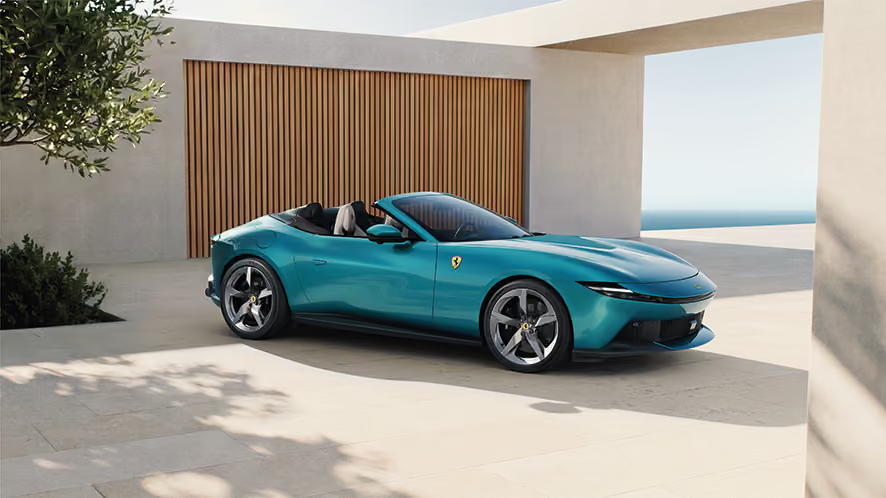
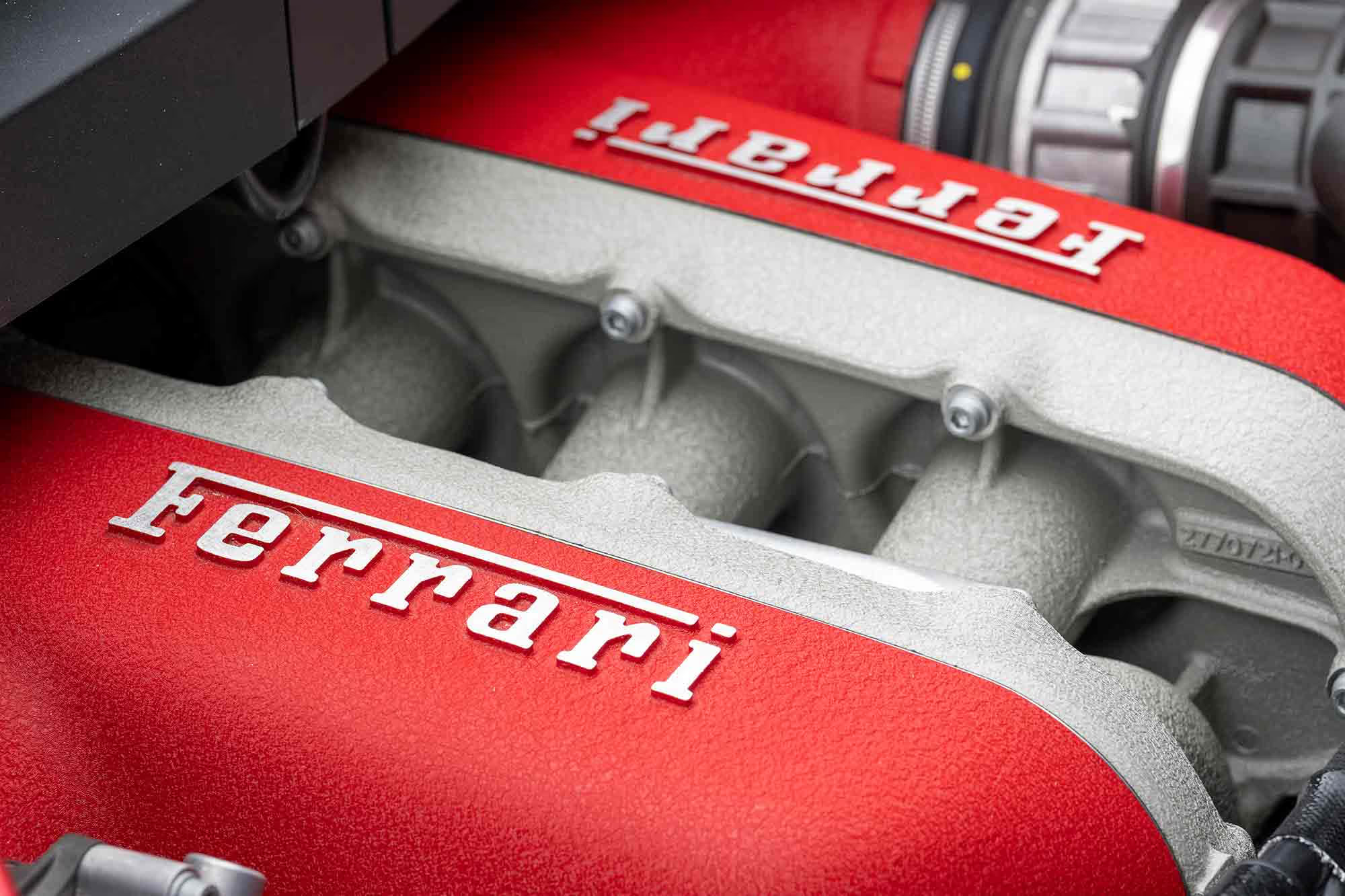
Powered by a front-mid-mounted twin-turbo V8 producing 640hp, the Amalfi Spider delivers immediate responsiveness while maintaining the refinement expected of a modern Ferrari.
Designed as a 2+ configuration, it introduces a level of versatility often absent in this segment. The soft top, available in tailored fabric or technical materials, opens in just 13.5 seconds at speeds of up to 60 km/h, reinforcing its usability across varied driving scenarios. Compact proportions are balanced by practical luggage capacity, positioning the Amalfi Spider as a genuine lifestyle proposition rather than a purely occasional indulgence.
Technologically, Ferrari integrates a brake-by-wire system for heightened control, supported by ABS Evo to ensure consistent braking performance across all conditions. Active aerodynamics, including a three-position rear wing and an integrated wind deflector, refine both stability and open-air comfort.
The Amalfi Spider ultimately captures Ferrari’s evolving philosophy: a car that delivers engaging performance without sacrificing accessibility, where elegance, engineering precision and driving pleasure exist in seamless alignment.
For more information, contact your local dealer
120 Highlands Rd, Shirley, Solihull B90 4NU
ferrari.birmingham@sytner.co.uk
0121 701 2458
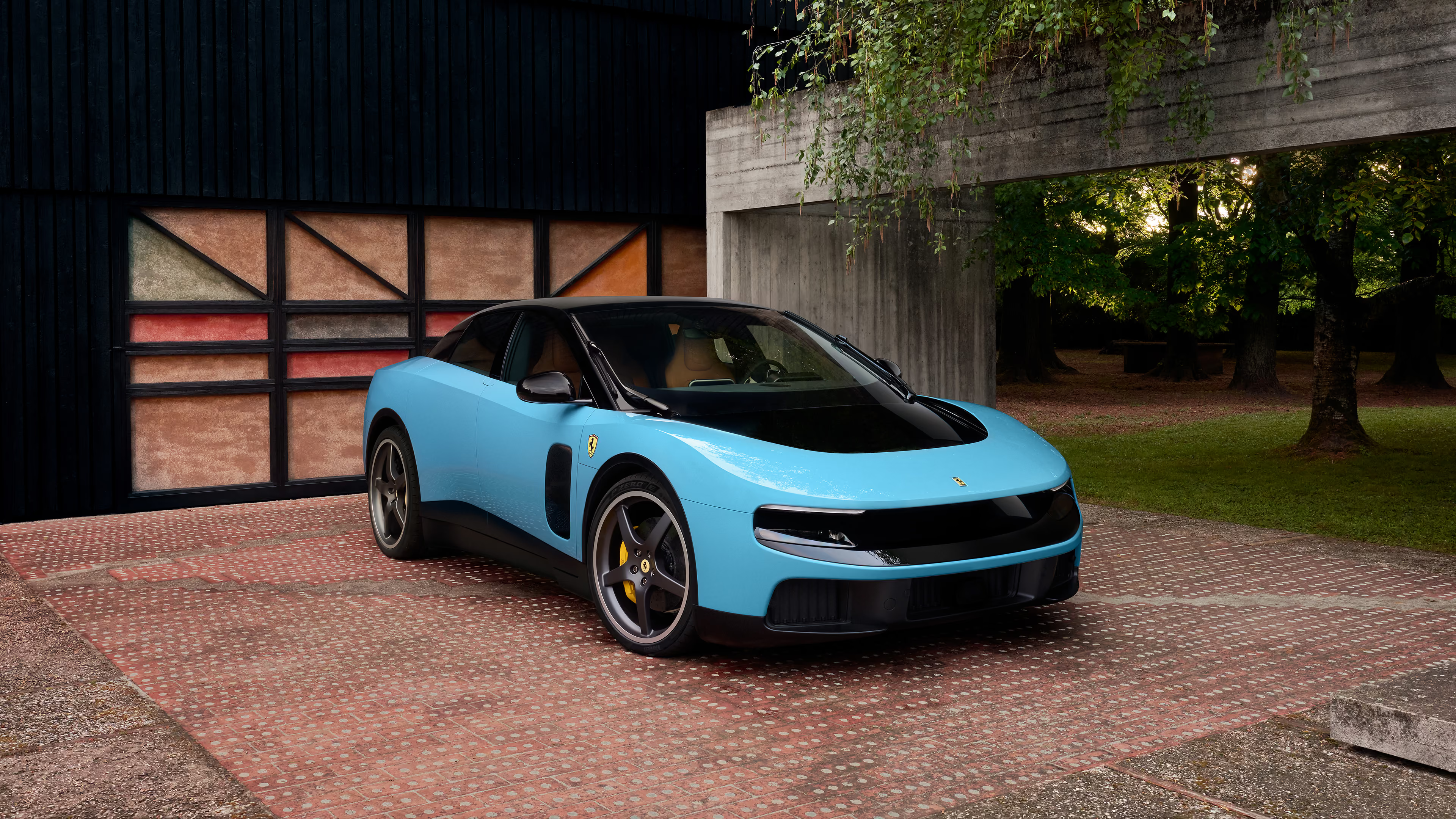
The highly anticipated, next-generation sports car from the Maranello marque has been unveiled, opening a new chapter in the history of the Prancing Horse.
• The dedicated platform with four electric engines and the high degree of system integration ensure performance typical of the brand, as well as a level of user-friendliness unprecedented in a Ferrari.
• Designed with Sir Jony Ive and Marc Newson at the creative collective LoveFrom, a singular design language unites the exterior, interior and interface with clarity and refined simplicity throughout.
• The form is defined by the glass house, an uncompromised, shell-like form. Floating front and rear aerodynamic wings drive aerodynamics and performance.
• In one of many automotive firsts, four electric-traction engines with electrically-controlled active suspension and four-wheel steering system all work in perfect synchrony.
• Advanced dynamic management, new regeneration and torque management systems, and an authentic, functional sound ensure total engagement and repeatability in every driving situation.
• Deeply engaging tactile controls employ the best characteristics of physical and digital, combining beautiful mechanical buttons, switches and dials with contextually relevant digital information.
• The car broadens the Ferrari range alongside the existing powertrains and makes it possible to create a completely new kind of Ferrari – something only achievable thanks to the all-electric architecture. Electrification also opens up new design opportunities beyond the car itself.
Rome, 25 May 2026 – Ferrari today unveiled the Ferrari Luce in the symbolic setting of the Vela di Calatrava – Città dello Sport in Rome, a venue chosen to mark the beginning of a new chapter in Ferrari’s storied history of engineering excellence and innovation. Ferrari won its first ever victory in Rome on this day in 1947, with the Ferrari 125 S winning the Gran Premio di Roma at the Baths of Caracalla circuit. On that decisive day, driver Franco Cortese set in motion an unimaginable legend of success. Some 79 years later, Ferrari returns to unveil a project that reinforces its unwavering commitment to redefine the limits of what is possible.
The Ferrari Luce marks the culmination of Maranello’s multi-energy strategy, announced at the 2022 Capital Markets Day and subsequently confirmed on various occasions. In accordance with the principle of technological neutrality, electrification is just one of the means available to Ferrari to expand its design potential in product architecture, performance, design, and driving experience, without replacing existing engines.
Deepening the Prancing Horse’s in-house expertise in electric technology opens new potential for performance and efficiency across the entire Ferrari ecosystem. This includes technology transfer between road cars and the 499P that triumphed in the last edition of the World Endurance Championship, and the bold Ferrari Hypersail project, a unique laboratory of research and innovation. Ferrari Luce expands the Maranello marque’s expertise still further, opening up a new segment consistent with Maranello’s DNA of combining performance, engagement and versatility.
The Ferrari Luce name evokes clarity and direction. It lights the way towards the future and defines the intent to create a Ferrari 360°, not merely the “electric Ferrari” but an entirely new Ferrari, designed for deeper engagement and performance, with a unique and recognisable character. In keeping with tradition, Ferrari chosen to engineer, develop and manufacture the main components in-house; from the electric engines to the battery pack, every element is created in Maranello to guarantee quality, control and uniqueness. The project includes more than 60 new patents, testifying to Ferrari’s technical excellence and to a vision that also looks to long-term value. In the future, Ferrari will provide assistance on all electric components, including batteries, in line with the Ferrari Forever philosophy.
The design of the Ferrari Luce was entrusted to LoveFrom, the design collective led by Sir Jony Ive and Marc Newson. Introducing a team from outside the Ferrari Design Studio led by Flavio Manzoni invited a new perspective and cross-fertilisation, enabling a new design language to be introduced. LoveFrom was given the creative freedom needed to define the design direction of the project from the outset, translating this design language into an authentic Ferrari experience. The electric power source, Ferrari-engineered engines and advanced drivetrain affords a radically new architecture that uniquely combines extraordinary Ferrari performance with the luxury of spaciousness.
This architecture generously accommodates four doors and five seats, which is a first for the Prancing Horse (as transaxle configurations with a front-mid engine and a rear gearbox do not allow for a fifth seat). The interior is a celebration of hundreds of discrete products, each meticulously considered and treated with individual care. Together they create a single, clean volume, with forms simplified and rationalised in service of the driving experience. The exterior, interior and interface share a unified design language.
A defining visual characteristic of the Ferrari Luce is the unprecedented purity of the glass house. This uncompromised, shell-like form extends below the belt line to the extremes of the car. The front and rear aerodynamic wings, floating above and around the silhouette of the glass house, enable this uniquely pure and simple form. The front and rear light panels are transparent and part of the primary surfaces. The lights seem to gently recede when switched off, preserving the purity of the form. The halo tail lights celebrate the beauty and clarity of the 360 Modena and 458 Italia. The extreme innovation of the Ferrari Luce is manifest with a custom wheel design. Luce has the largest staggered wheel diameters on a series-production Ferrari road car: 23” in the front and 24” at the rear.
The interface is designed with clear organisational principles of input and output. Controls and displays are grouped functionally, with the most essential commands and feedback directly in front of the driver. Thousands of deeply considered details unite to create a singular driving experience. Precision-engineered mechanical buttons, dials, toggles and switches are combined with multifunctional digital displays developed with Samsung Display©. Materials are honest and pure – recycled anodised aluminium, Corning® Gorilla® Glass and premium leather. The superior audio system has 21 speakers and 24 channel/3000 W amplification incorporates the innovative Ferrari Audio Signature, and features presets, individual listening optimisation, and dynamic compensation functions.
From a technical perspective, the Ferrari Luce is based on a bespoke platform with a dedicated chassis and engineering innovations in every single component. Technologies derived from Ferrari’s unrivalled experience in the world of motor racing made it possible to contain kerb weight at 2260 kg, helping deliver best‑in‑class performance (0–100 km/h in 2.5 seconds, 0–200 km/h in 6.8 seconds, top speed over 310 km/h and maximum total power output of 1050 cv) and a range in excess of 530 km.
The car is powered by four electric engines, one per wheel, and is equipped with a high‑capacity 122 kWh battery, an active suspension system derived from the F80 and an independently steering rear axle. Within this framework of technological innovation, two concepts best encapsulate Ferrari Luce’s ambitious entry into the world of high‑performance electric sports cars: the control of each wheel’s motion in every direction and in any dynamic condition, and the authentic approach to sound.
Each wheel is equipped with one actuator for traction and regeneration, one for the steering angle and one to control vertical movement. The ability to adapt torque distribution in real time to road conditions and desired performance provides exceptional freedom and precision of control. Each of the Ferrari Luce’s wheels is therefore perfectly attuned to the driver’s input, allowing the driver to experience a single, fluid movement. Torque vectoring and the elastic balance of the suspension system also assist in changing direction, enhancing the car’s agility and ease of driving.
The Ferrari Luce’s approach to sound is based on the key principle that it must be authentic and functional, generated from the car’s mechanics and serving the driving experience. A precision accelerometer at the centre of the axle captures the dynamic texture and vibration of the rotating components while the sound waves are moving. Developed in-house and patented, this system filters, equalises and amplifies the signal in a similar way to an electric guitar, but only when functional to the driving experience. The sound level is based on the position of the e-Manettino and the use of the paddles, allowing the driver to switch from quiet focus to maximum expressiveness. Sound is emitted via an external amplification system that creates a natural sound wave, and an internal system that ensures detail and high fidelity. As well as the quality of the interior sound, this has the benefit of being audible outside the car. The Ferrari Luce has benefited from cutting-edge noise, vibration and harshness (NVH) research, making it the most comfortable Ferrari ever. Road noise is significantly reduced by the first elastically-mounted subframe in Maranello’s history, as well as active suspension, the optimisation of weight, rigidity, and soundproofing.
The Ferrari Luce succeeds in its ambitious goal of achieving by far the lowest drag coefficient in the history of Maranello’s road cars, paired with an unrivalled interior space. An extreme care for aerodynamics shaped the fundamental architecture of the entire car. Surfaces have been refined to be smooth, continuous and uninterrupted to maximise airflow and wake management. The active aerodynamic grilles are another first for Ferrari, regulating the airflow through the heat exchangers and always ensuring the correct balance between cooling requirements and aerodynamic drag. Active ride height can lower the front by 10 mm at speed to maximise efficiency without compromising comfort or performance. The cooling system is part of an integrated software that optimizes range by balancing power consumption and intelligent warm-up, fast-charging management, and battery and cabin preconditioning functions, operable remotely.
Vehicle dynamics have been developed to exploit the unprecedented advantages of the electric architecture in terms of centre of gravity, inertia, and freedom of control, allowing the Ferrari Luce to maintain dynamic behaviour that is always agile and natural. The driver manages the car via the e-Manettino, which modulates power and traction, and the iconic five-position Manettino equipped with logics that adapt to grip conditions. The Vehicle Control Unit (VCU) makes its debut on the Ferrari Luce; this control centre integrates powertrain and dynamics, updating targets 200 times per second and coordinating efficiency strategies with the brand-new Side Slip Control X.
The electric all-wheel drive is a first for a Ferrari. It allows the full potential of torque vectoring to always make the car precise and responsive, while the new torque shift engagement and extended regenerative braking deliver a progression of torque and engine braking worthy of a sports car. Torque management is a characteristically Ferrari response to one of the typical challenges of electric powertrains: the sensation of strong, instantaneous longitudinal acceleration, which can even be unsettling when pulling away and which levels off as acceleration increases. Ferrari has engineered a proprietary, patented system that allows the available torque to be increased by operating the right-hand steering wheel paddle, whilst maintaining the sensation of progressive acceleration. The left paddle increases energy recovery and the sensation of deceleration, delivering a dynamic experience unrivalled by any other car in its class.
The powertrain comprises four F80-derived permanent magnet synchronous engines with radial flux, delivering a maximum speed of 30,000 rpm at the front and 25,500 rpm at the rear. The system operates on 800 V architecture and combines performance with efficiency, with solutions directly derived from motorsport. The high-voltage battery pack was designed, validated, and built in Maranello and comprises 210 cells in series that deliver 122 kWh and support fast charging up to 350 kW. It is designed as a structural element of the car. Power electronics feature compact inverters and a DC/DC resonant converter for the active suspension to achieve record-breaking efficiency of more than 98%.
The Ferrari Luce’s battery pack, chassis and body form an integrated system capable of optimising structural performance and efficiency. The chassis combines hollow castings, extrusions, and aluminium, while the body utilises extrusions and aluminium sheet metal. The architecture maximises interior space, eliminating the central tunnel and integrating the battery beneath the floor and rear seats. The high level of optimisation and integration of an elastically mounted rear subframe combines the handling typical of a Ferrari with superior performance in terms of driving comfort. The battery housing actively contributes to rigidity, with an increase of over 25% (bending) and 35% (torsional) compared to previous four-door models. The BIW-battery housing combination is among the lightest in its class for a vehicle of this specification. The semi-virtual double wishbone suspension (with high-mounted upper arm), independent rear-wheel steering, optimised CCM brakes, and targeted solutions to reduce friction, complete a set-up designed to maximise driving excitement and comfort.
The extensive use of recycled secondary-alloy aluminium allows a reduction in CO₂e emissions during production of around 70% of the overall vehicle weight.
The Ferrari Luce marks a new chapter, yet one that continues its long history of uncompromising innovation, driving performance, and an engineering culture that seeks to redefine the limits of what is possible.
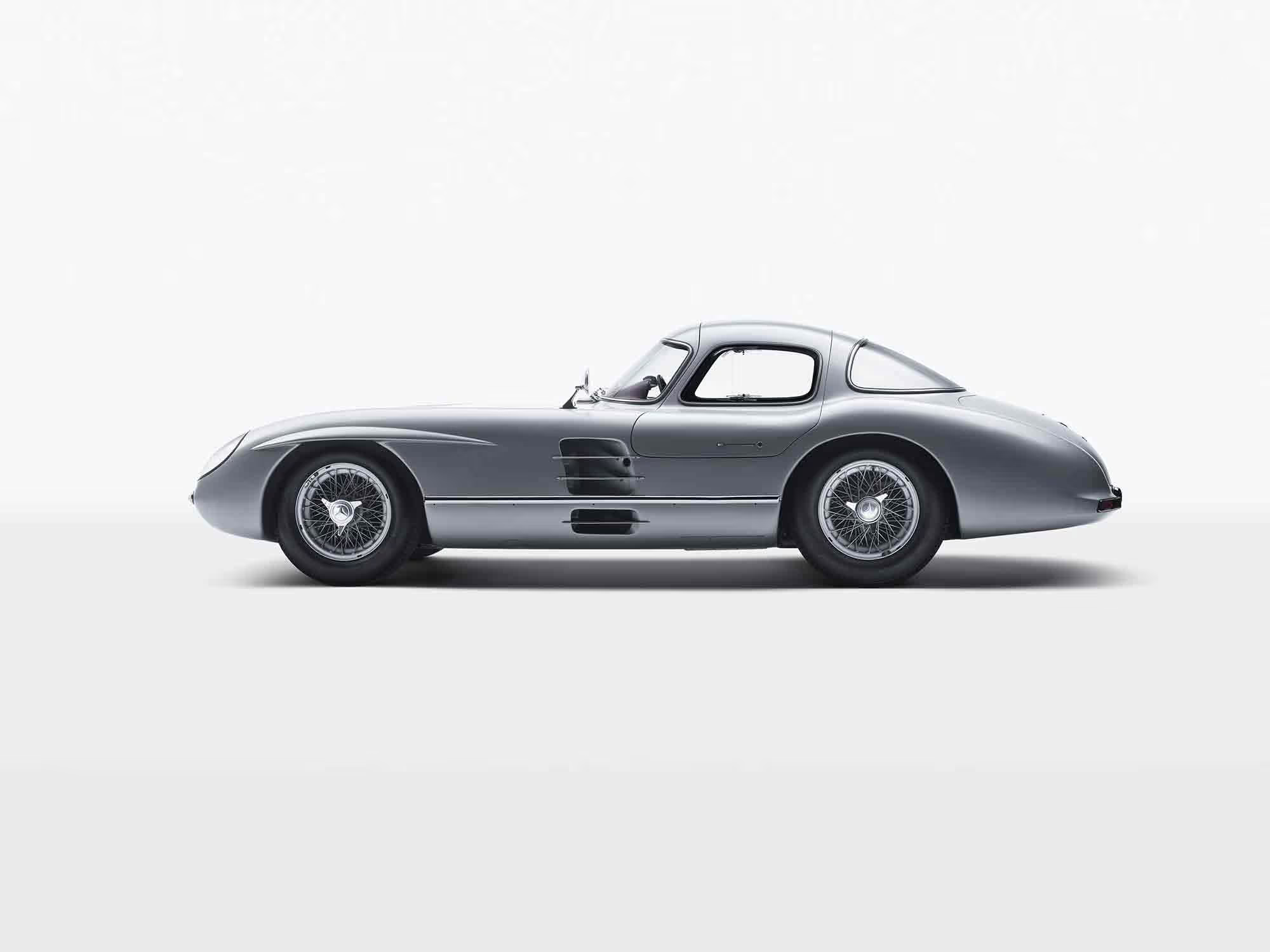
Perhaps no possession embodies lasting allure quite like a classic car.
In the world of luxury, true value often lies in the timeless - a fine watch, a vintage wine, a well-kept estate. But perhaps no possession embodies lasting allure quite like a classic car. These machines are not just built, but sculpted; designed not just to move, but to move you. Decades after their debut, classic automobiles continue to captivate collectors, connoisseurs, and those with an appreciation for engineering elevated to art.
Here, we present ten of the finest classic cars ever created: machines that have defined eras, broken records, and earned their place in the pantheon of automotive greatness.
1955
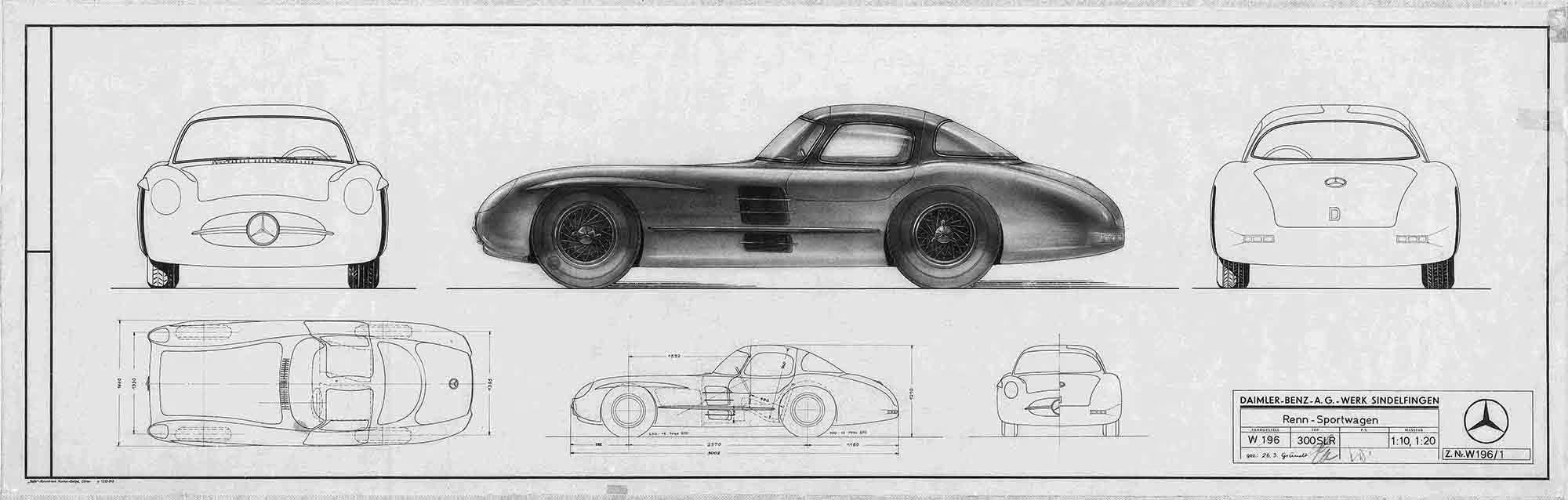
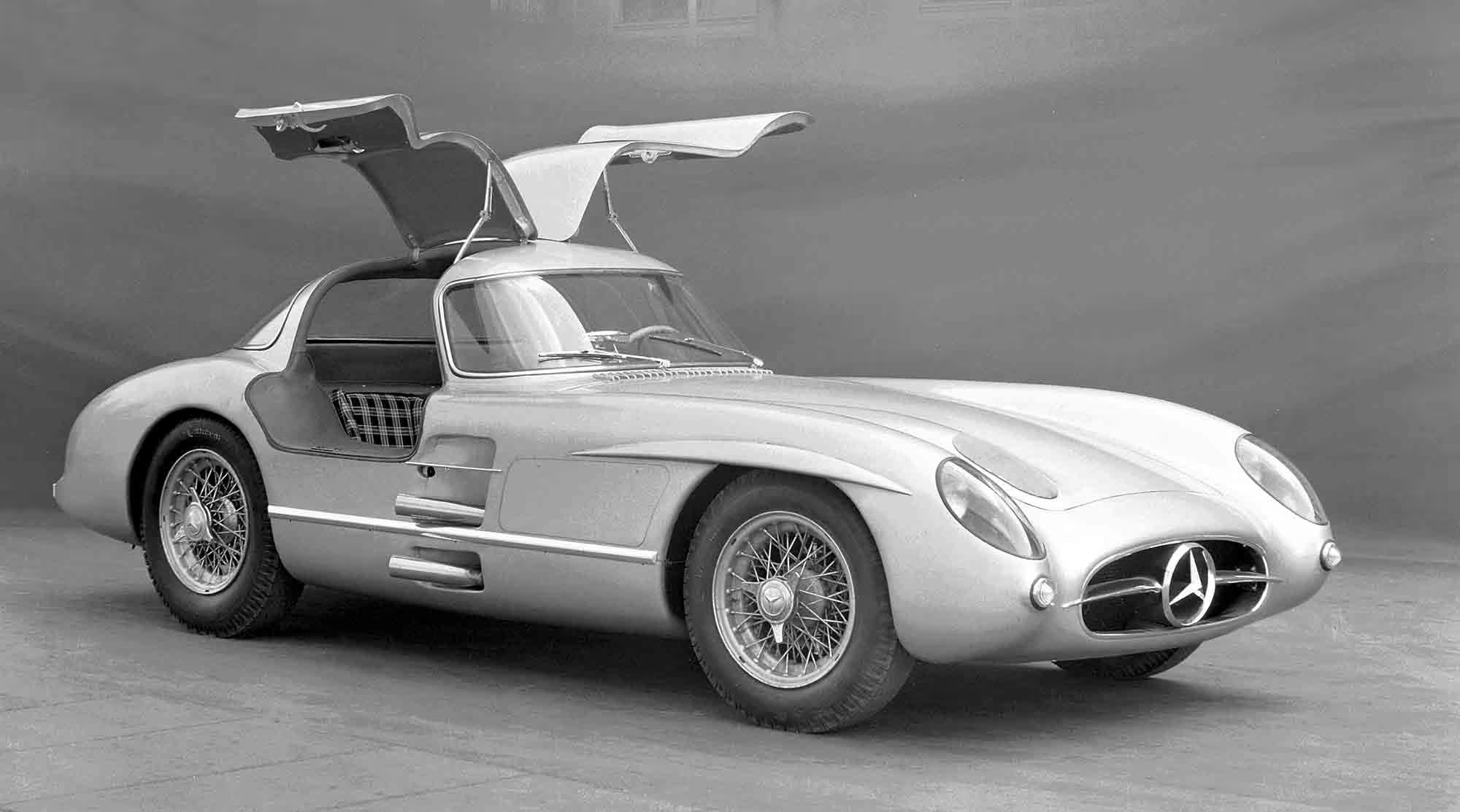
A car so rare that it exists in legend more than in garages. Only two were built, and one sold in 2022 for €135 million; making it the most expensive car ever sold. Derived from the dominant W196 Formula 1 car, the 300 SLR is a fusion of racing ferocity and aesthetic restraint. Its long bonnet, gullwing doors, and raw mechanical performance represent the pinnacle of post-war German engineering. The SLR defines what it means to be priceless.
1962–1964
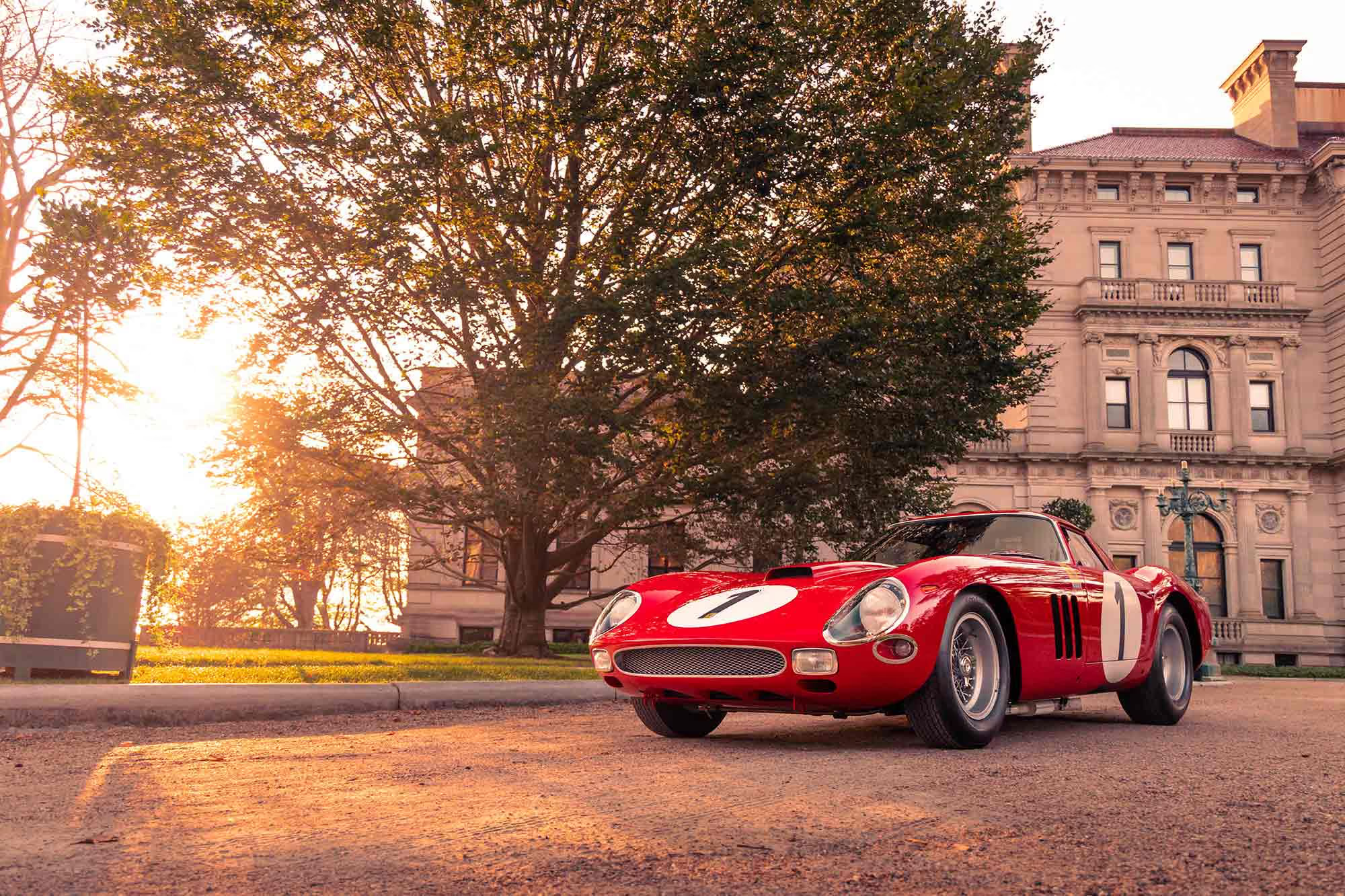
If any car can match the 300 SLR in mystique, it’s the Ferrari 250 GTO. Built for GT racing, but styled with grace, the GTO is considered by many to be the most beautiful Ferrari ever made. Just 36 were produced, each with its own subtle differences. Beneath the svelte Pininfarina-designed body lies a 3.0-litre V12 that sings at every rev. Values have comfortably exceeded $70 million at private sales - the ultimate status symbol, and for many, the ultimate car.
1956–1959
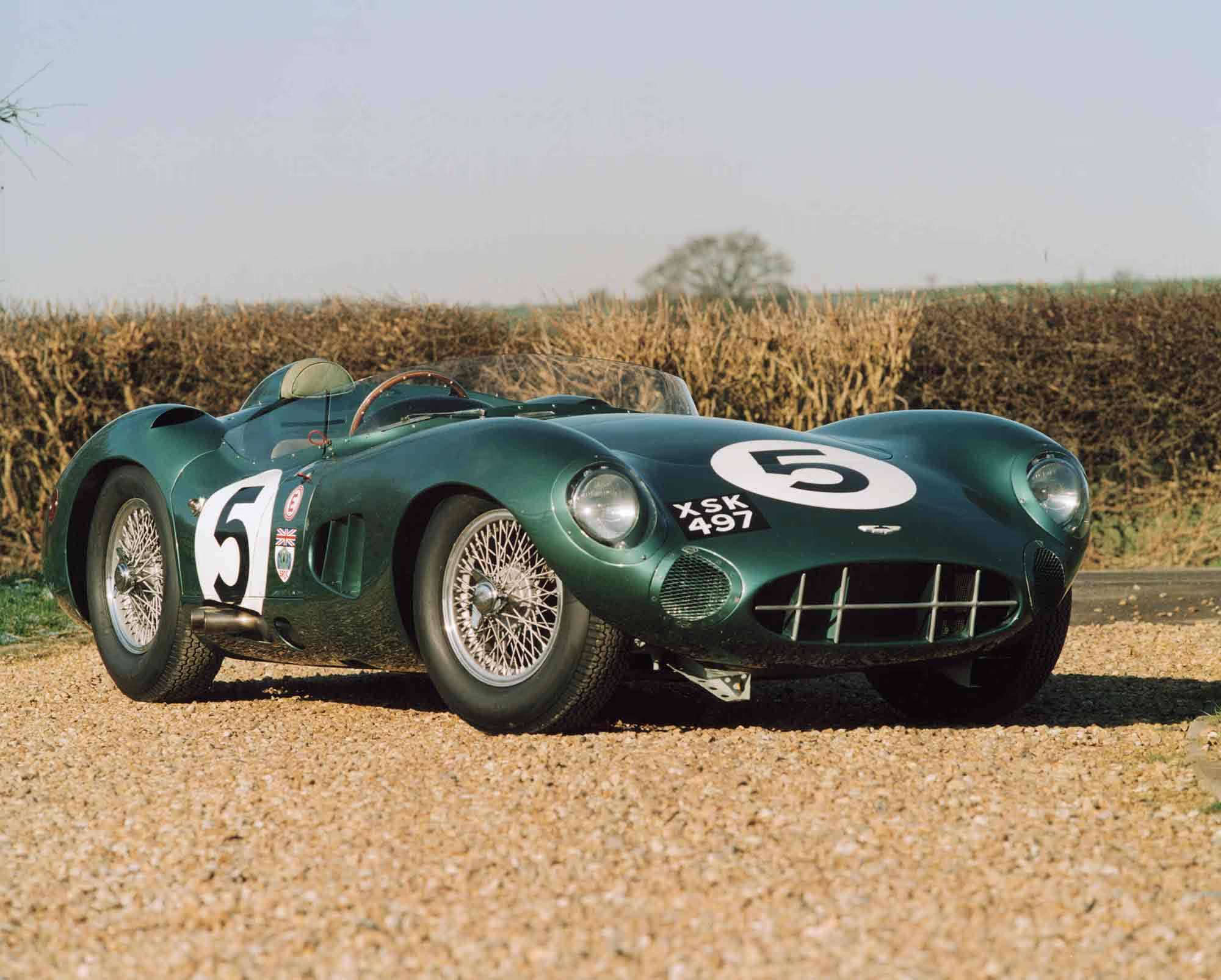
The car that delivered Aston Martin its first and only outright win at Le Mans in 1959. The DBR1 isn’t just beautiful, it’s victorious. Driven by legends like Stirling Moss and Carroll Shelby, it stands among the rarest and most celebrated competition cars of the 20th century, with only five ever built. Its flowing curves evoke a sculpture in motion, and its performance helped define Aston Martin’s golden era. The DBR1 is British motorsport royalty - graceful, historic, and undeniably iconic.
1966–1968
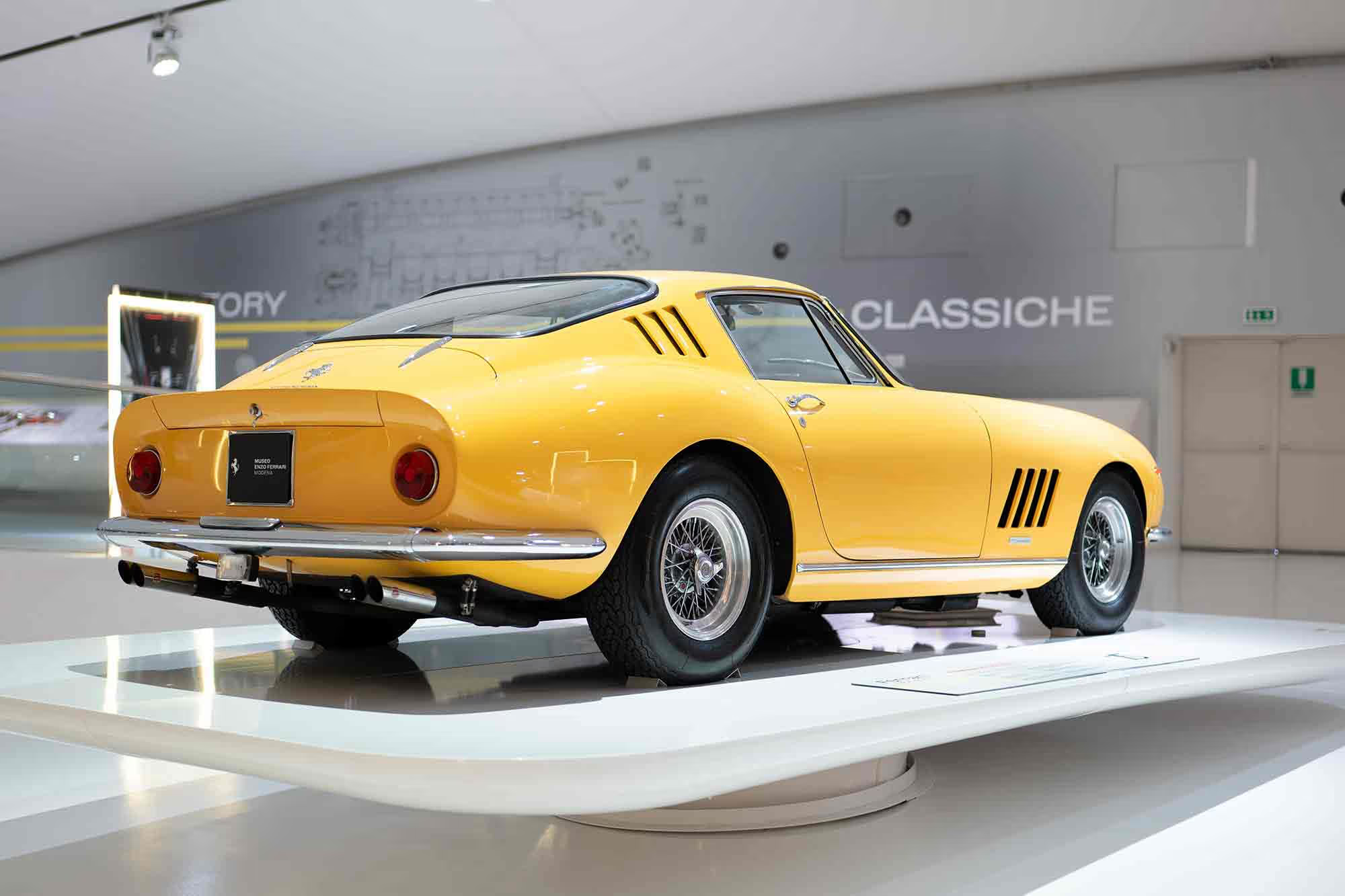
A grand tourer of extraordinary poise and presence, the 275 GTB/4 represents the perfect marriage of design and dynamics. Sleek, muscular, and V12-powered, it marked Ferrari’s transition from the 250 series to the modern GT era. The four-cam engine added depth to the performance, while Scaglietti’s bodywork captured Italian craftsmanship at its peak. Prices now range from £2.5 to £4 million - for many, a relative bargain compared to its rarer siblings.
1904–1906
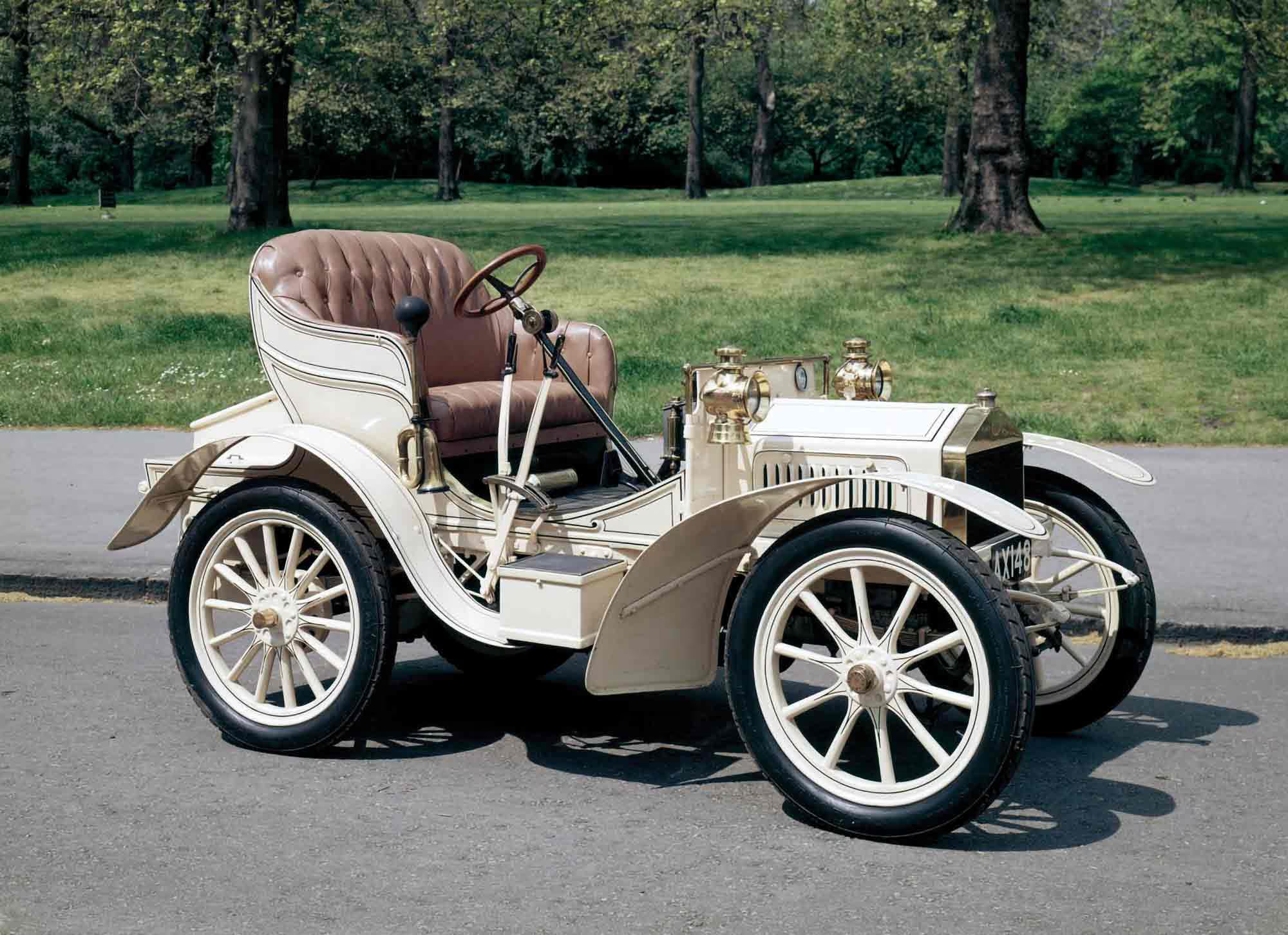
Where it all began. The 10 HP was the first model jointly developed by Charles Rolls and Henry Royce, a motor car of elegance and engineering precision. Only 16 were built, of which just a few survive today. One example sold at auction for over £3 million. It may not be described as fast or flashy, but its significance is immeasurable. For serious collectors, the 10 HP is not just a car but the genesis of a legend.
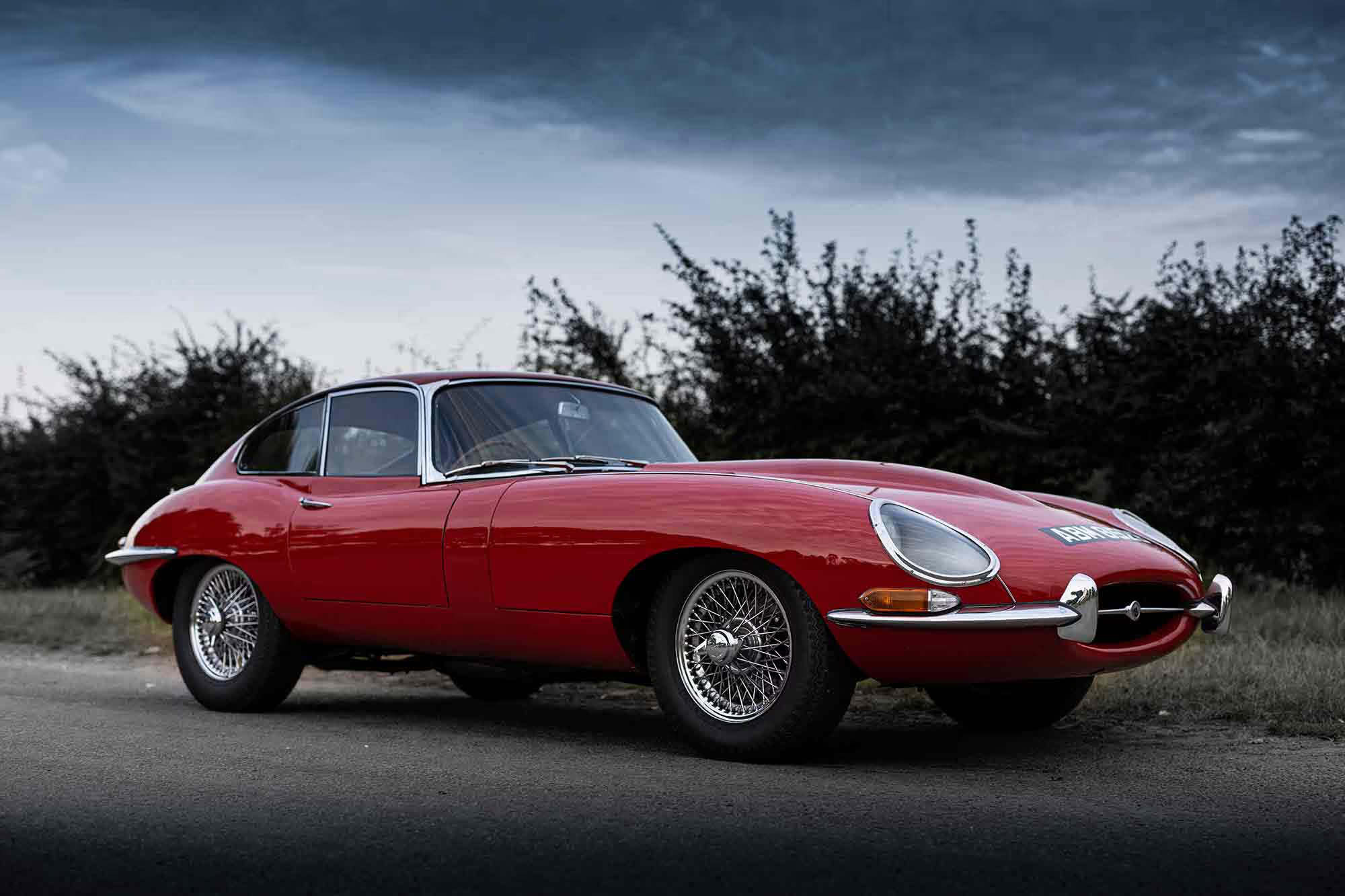
1961–1967
No list of classic cars would be complete without the Jaguar E-Type. Revealed at Geneva in 1961, it stunned the automotive world. With a top speed over 150 mph and styling to rival Italian exotica, it was both a technical marvel and a cultural phenomenon. Available in coupé and convertible form, it remains one of the few icons you can still buy today - with pristine examples ranging from £100,000 to £250,000. An icon that endures, not just in memory, but on the open road.
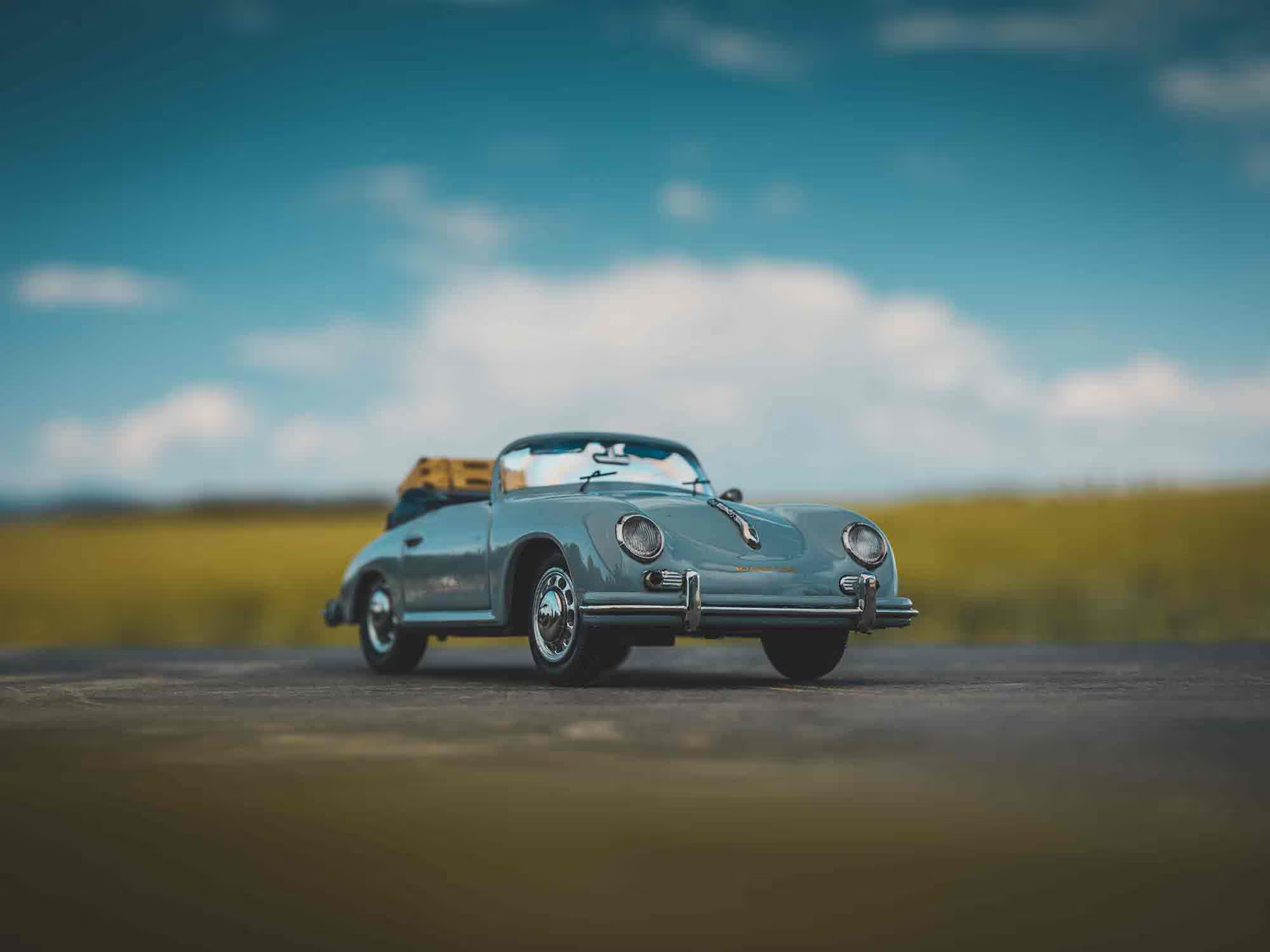
1954–1958
Favoured by the likes of James Dean and Steve McQueen, the 356 Speedster is pure, purposeful driving. Lightweight, minimalist, and imbued with Porsche’s early racing DNA, it’s as rewarding to look at as it is to drive. The low windshield, bucket seats, and stripped-out interior give it a raw charm. Collectors prize the original Pre-A and Carrera versions, often fetching over $500,000 at auction.
1971–1973
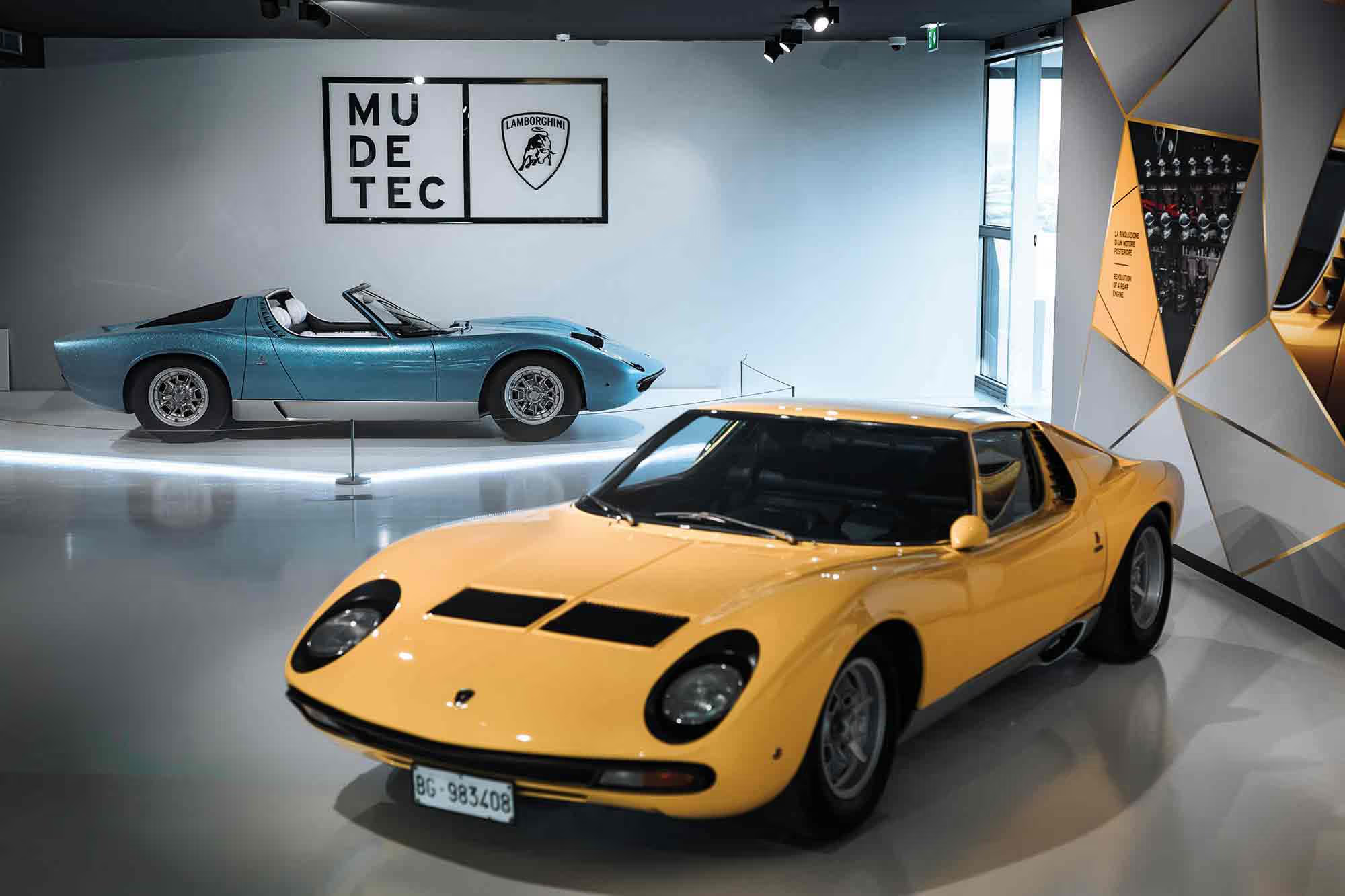
Sensual, audacious, and utterly revolutionary - the Miura redefined the sports car as we know it. With its mid-mounted V12 and impossibly low stance, it shocked the establishment in 1966 and matured into the sublime SV by 1971. The SV variant delivered 385 hp and sculpted rear haunches that bordered on erotic. Values have soared in recent years, with mint examples crossing the $3 million mark. Still, there is no price too high for automotive perfection.
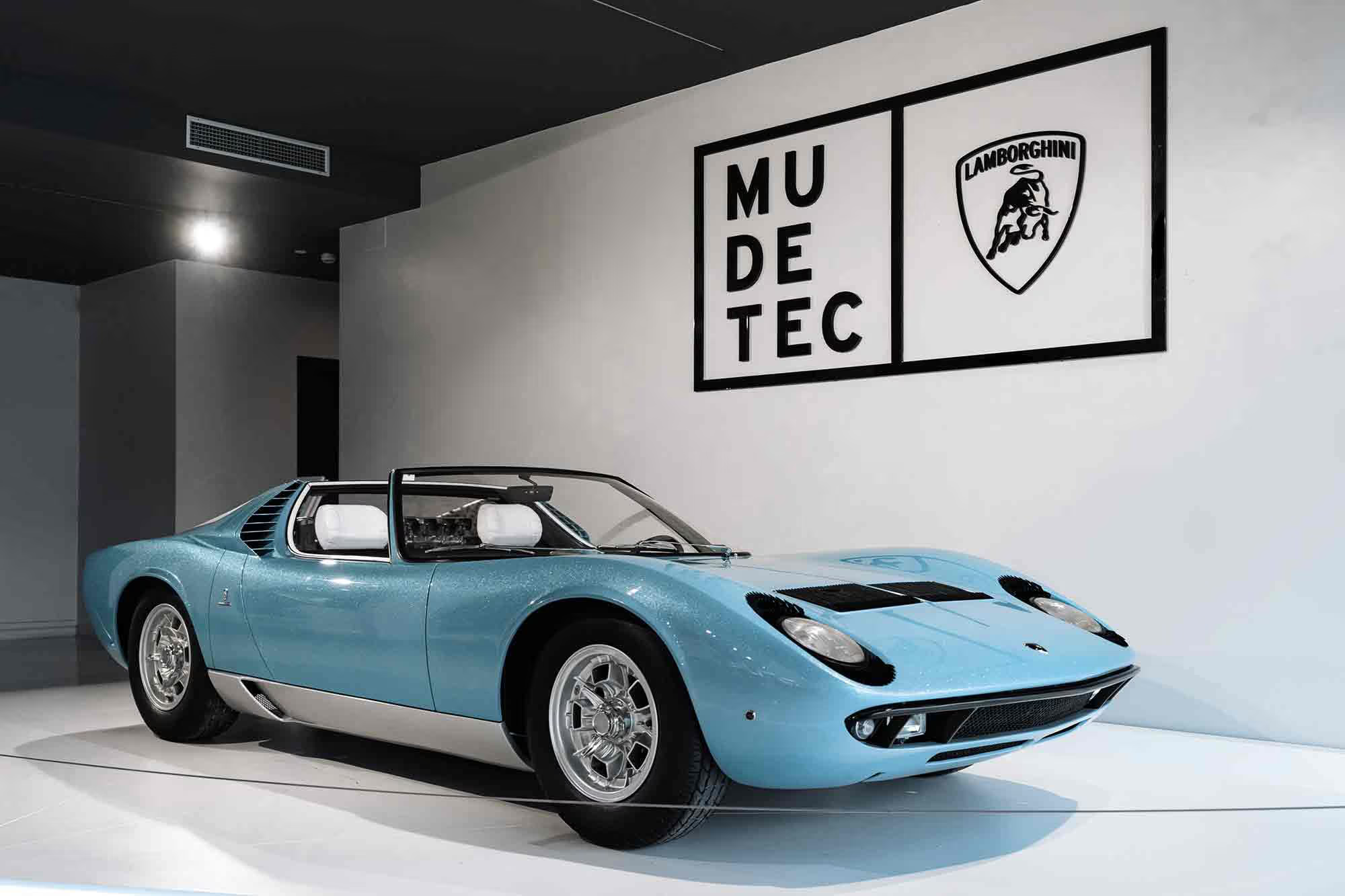
Unveiled at the Carrozzeria Bertone stand at the 1968 Brussels Motor Show, the Miura Roadster (pictured) remained a one-off and is considered one of the most beautiful show cars ever produced. The color combination itself was designed to dazzle: Lamè Sky Blu for the paintwork, with white leather interior and red carpeting.
The Miura Roadster has no side windows or roof closure system, which allowed the Bertone stylists to maintain a unique purity of line. Many aesthetic changes were made compared to the Miura sedan, with the rear part completely redesigned to leave the engine fully exposed, and the secondary control switches in the cabin interior, usually mounted on the ceiling, moved to a different position.
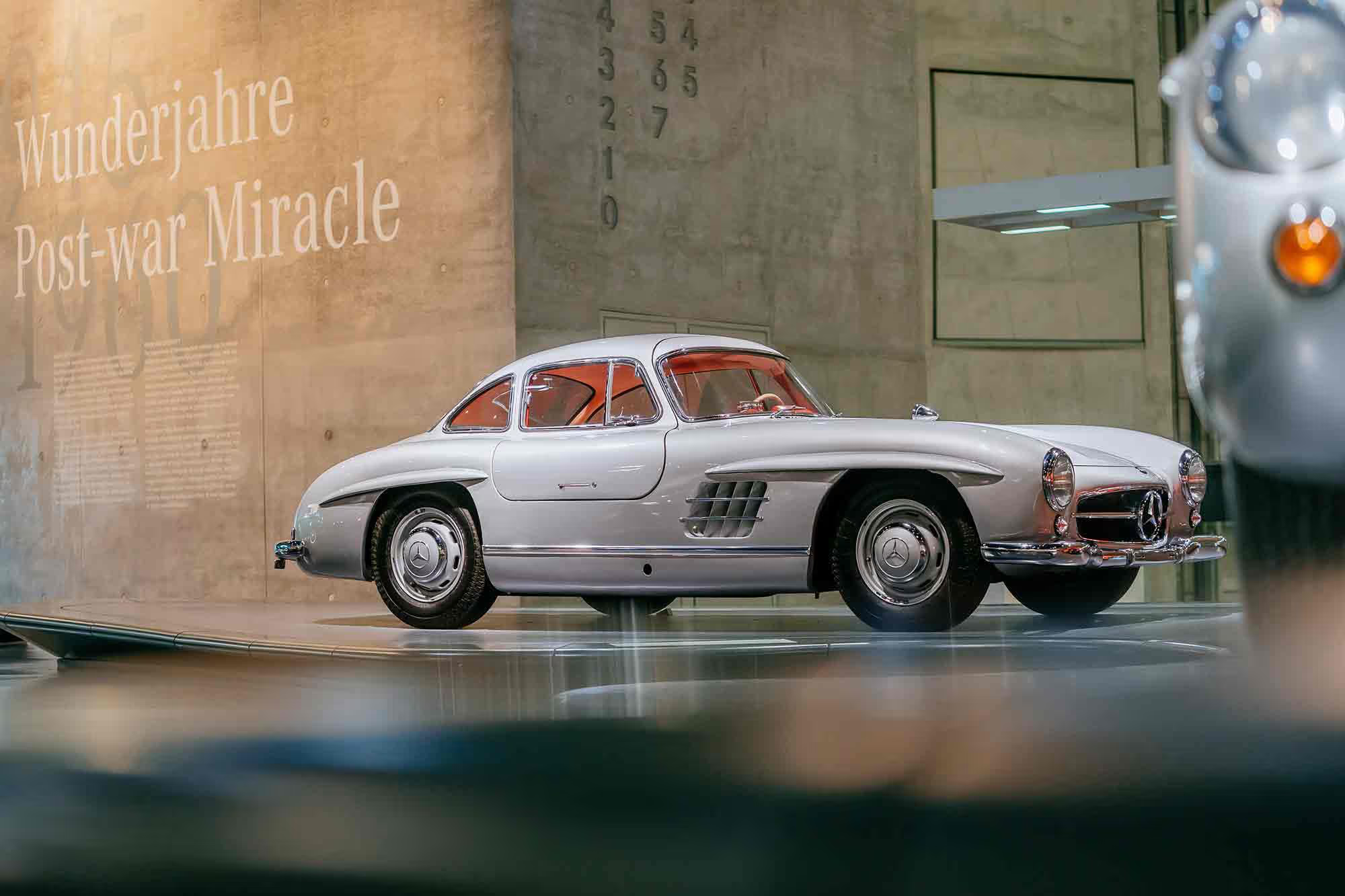
1954–1957
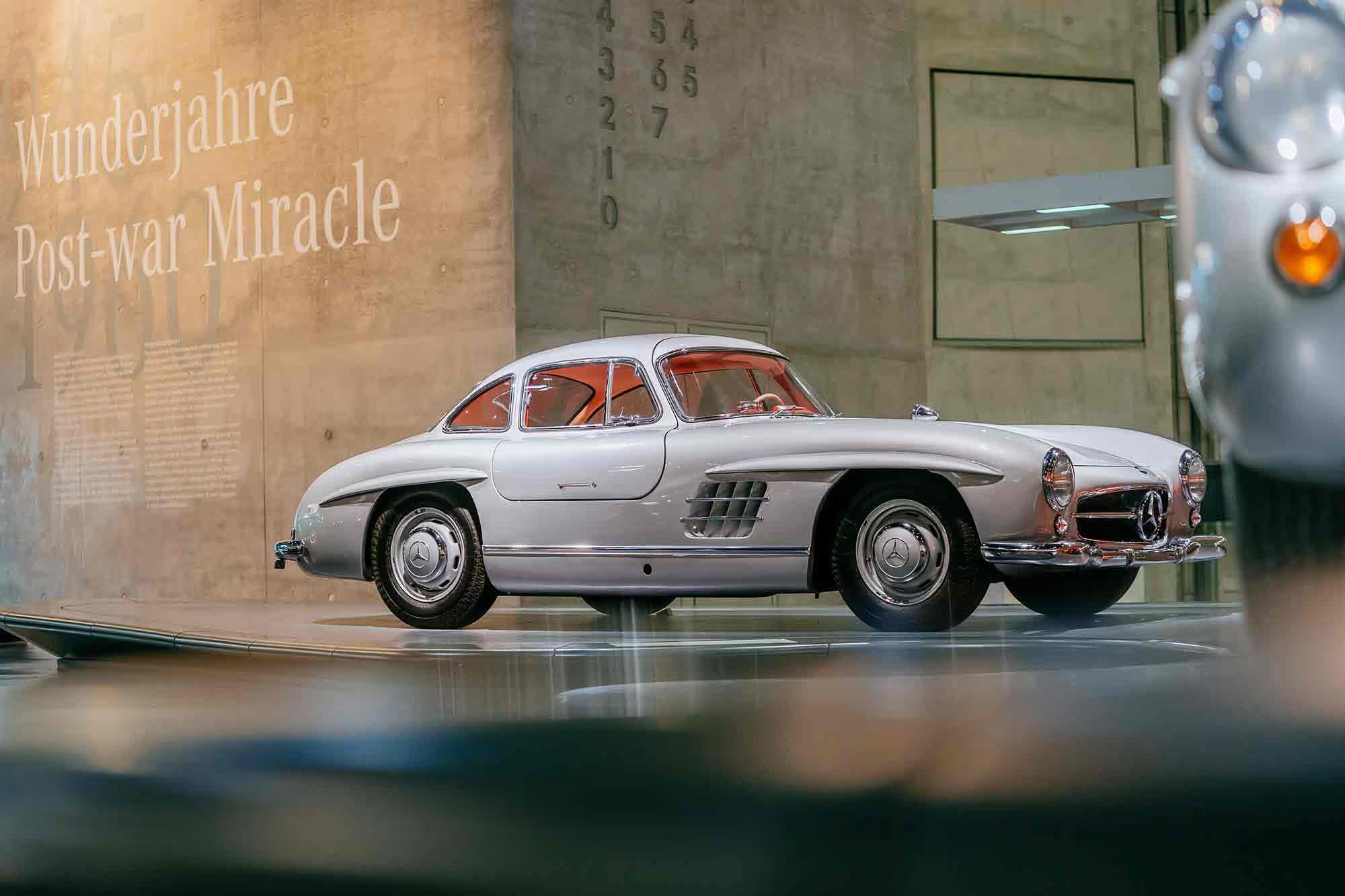
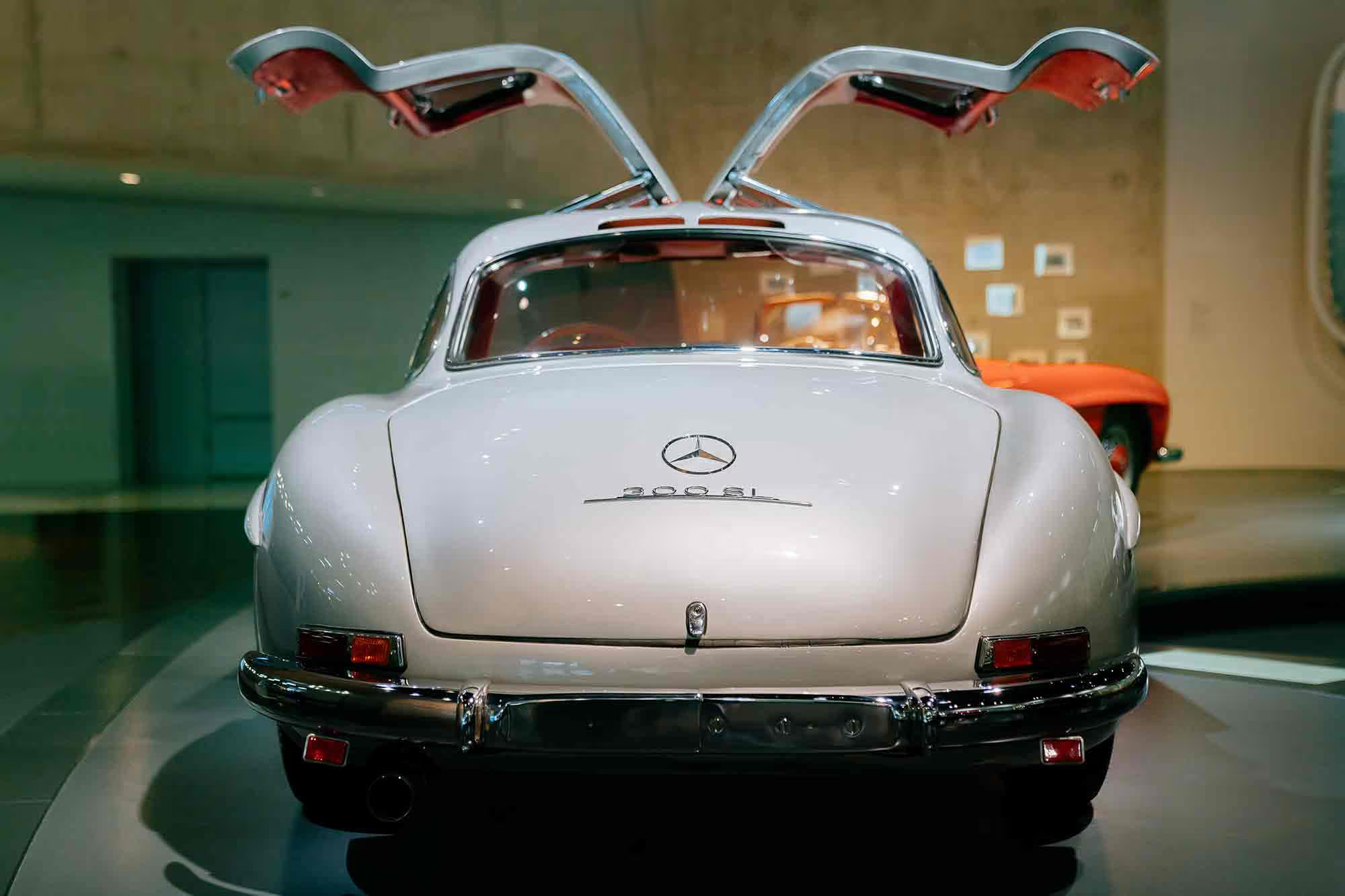
Part spacecraft, part sculpture, the 300SL Gullwing was the world’s fastest production car when it launched. With its distinctive upward-opening doors and advanced fuel injection, it was a technological tour de force. Even today, few cars attract as much admiration. Values remain strong, typically between $1.5 and $2.5 million - and every penny is justified by its engineering brilliance and undeniable glamour.
1986–1991
Proof that modern classics now command just as much reverence as vintage grand tourers. The E30 M3 was BMW’s special - a DTM-bred saloon with sharp handling, boxy aggression, and a howling 2.3-litre four-cylinder. This is the definitive driver’s car of the 1980s. Once obtainable for £10,000, exceptional examples now command six figures. It’s not just nostalgia, it’s a legend reborn.

These ten cars are more than mechanical marvels, they are stories on wheels, investments in artistry, and testaments to human ambition. Whether admiring the uncompromising purity of a Ferrari 250 GTO or the heritage embodied by a Rolls-Royce 10 HP, each invites reflection. Some remain parked in private collections, others occasionally appear at prestigious auction houses, but all represent a standard of design and craftsmanship that modern machines, for all their speed, rarely match.
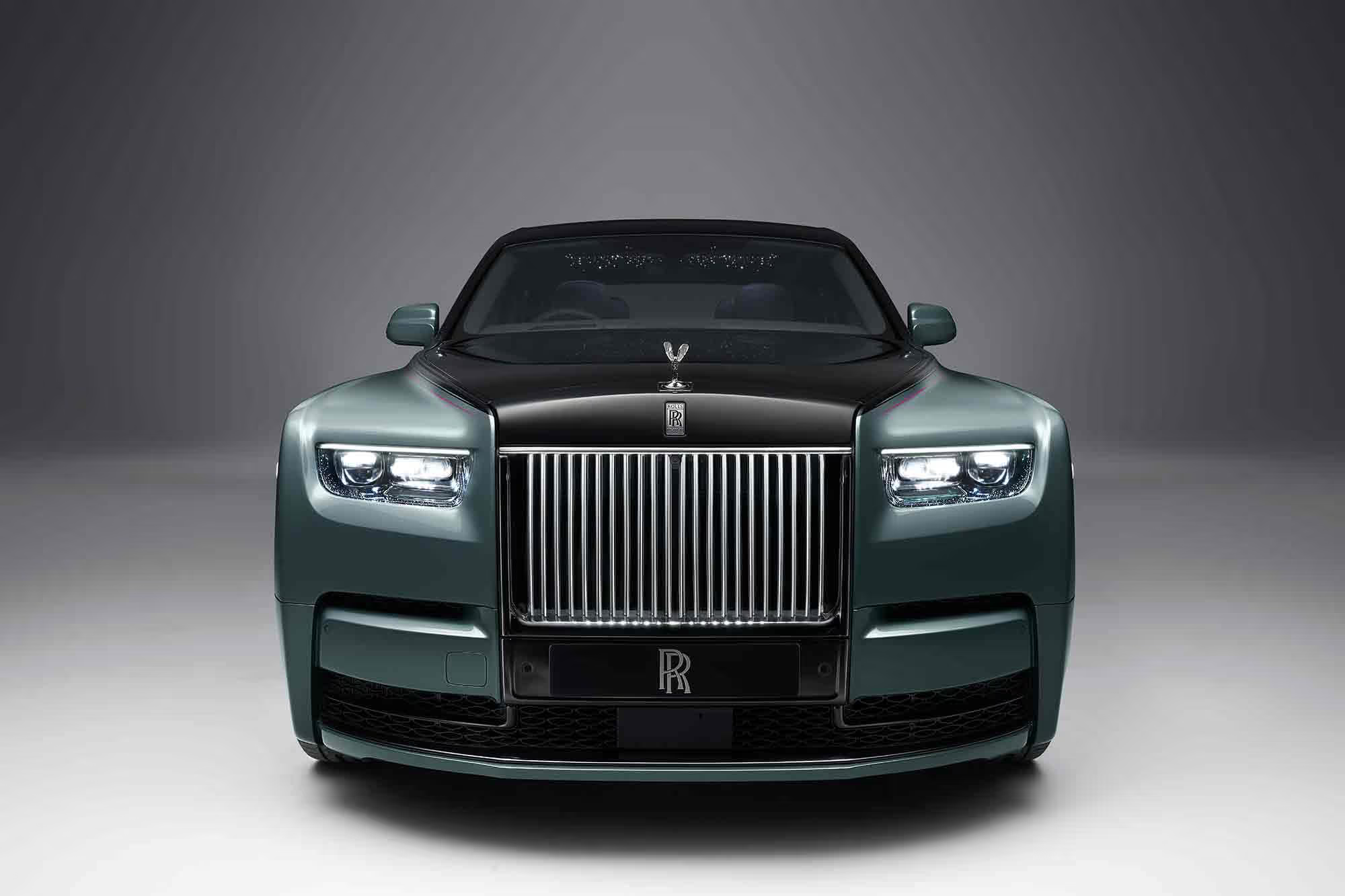
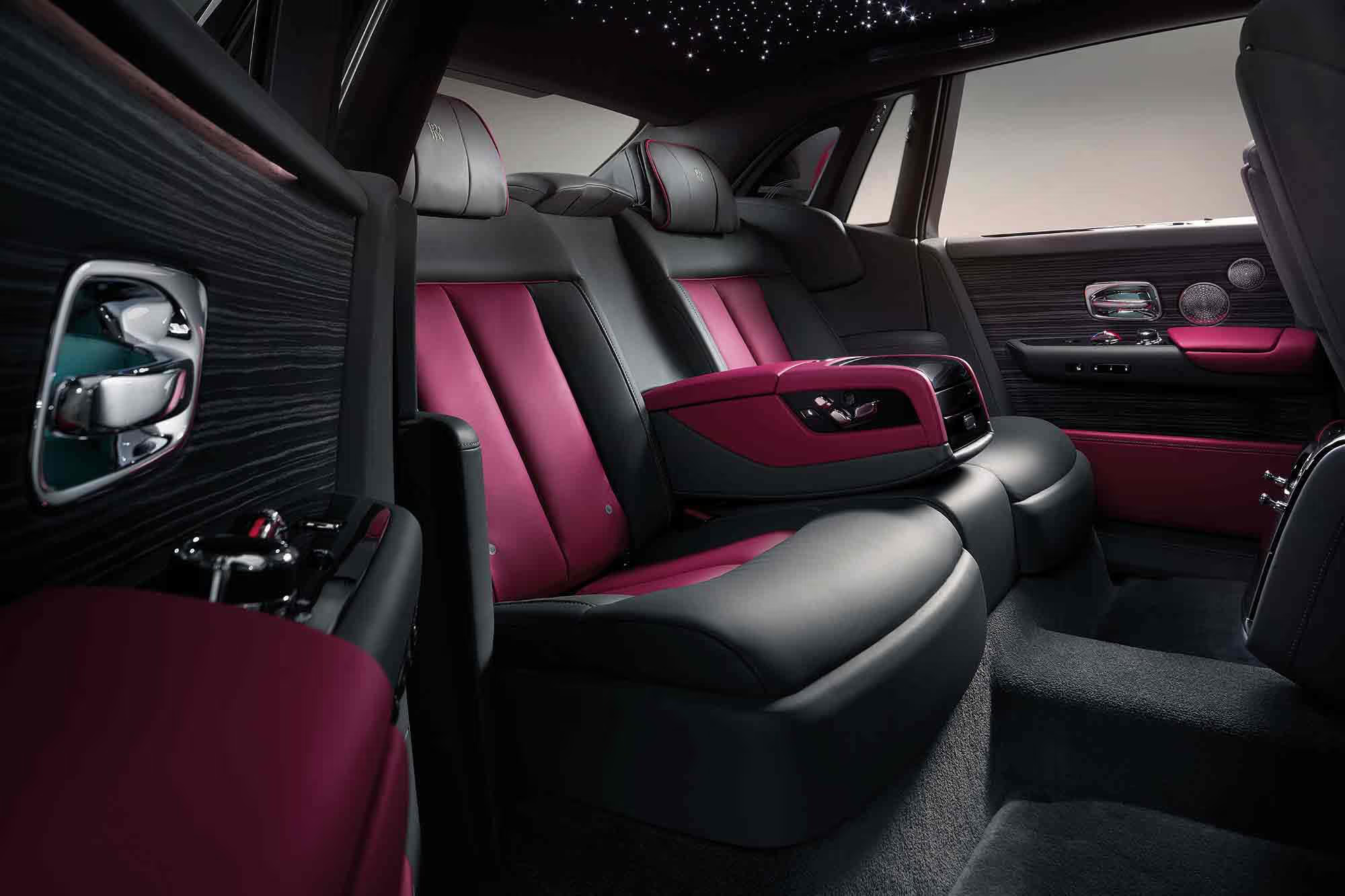
Phantom Platino
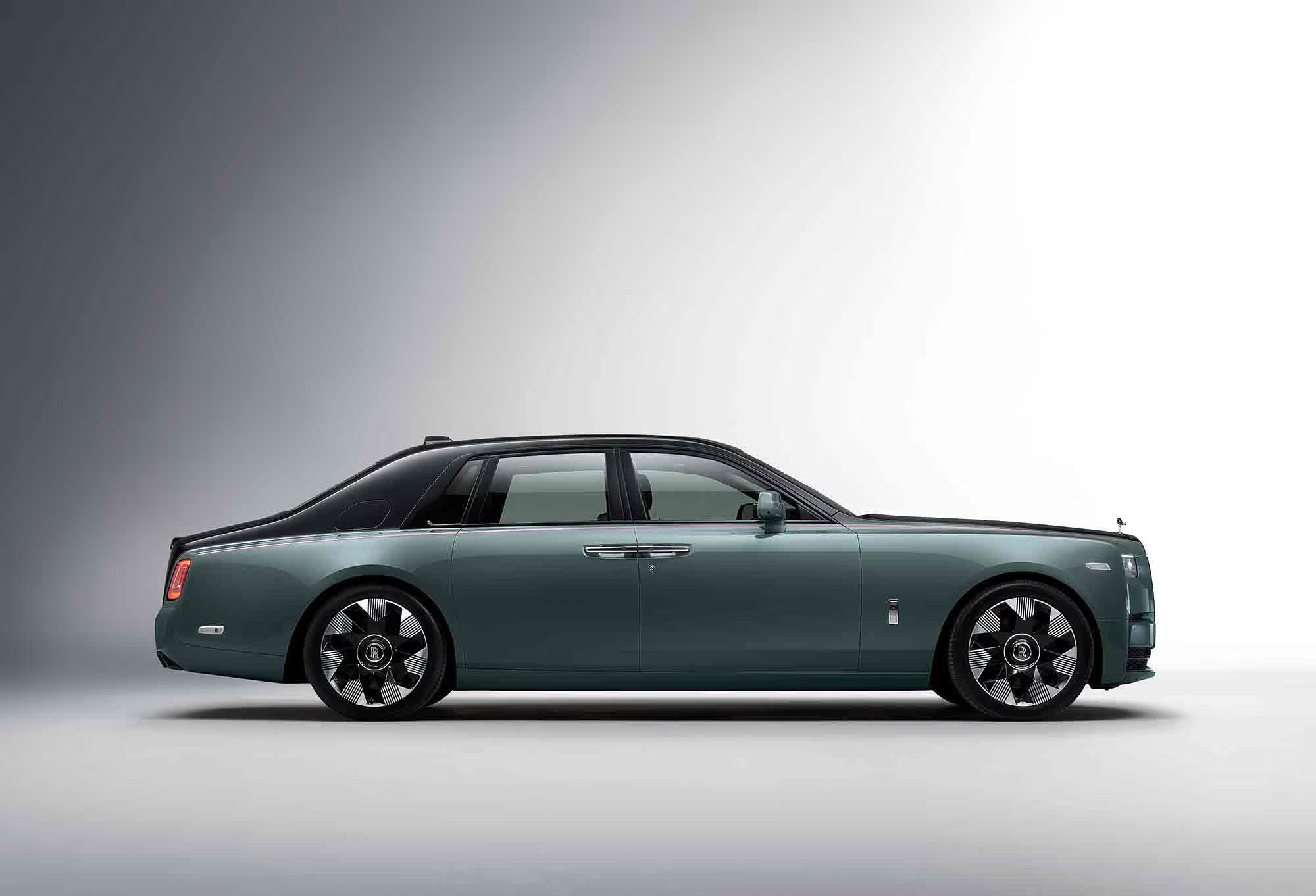
You can’t talk about luxury cars without mentioning Rolls Royce and the Phantom is certainly an aspirational vehicle. In fact, Rolls Royce believe it is the best car in the world!
Now well into its eighth generation, the Phantom is a car that is always evolving, adapting to meet the demands of a modern market. The latest iteration, Phantom Series II, is a result of client requests and feedback, with finely tuned aesthetics and engineering. This car even has its own app, accessible to members only, which is integrated throughout the technological system.
The Phantom was first created in 2017. It has been so successful, exuding that timeless elegance that is still the brand’s pinnacle product. The design is so revered, in fact, that most of the client’s requests have been that there should be no changes to the vehicle! So, you’ll find tweaks here and there, but they do nothing but enhance the Rolls Royce experience.
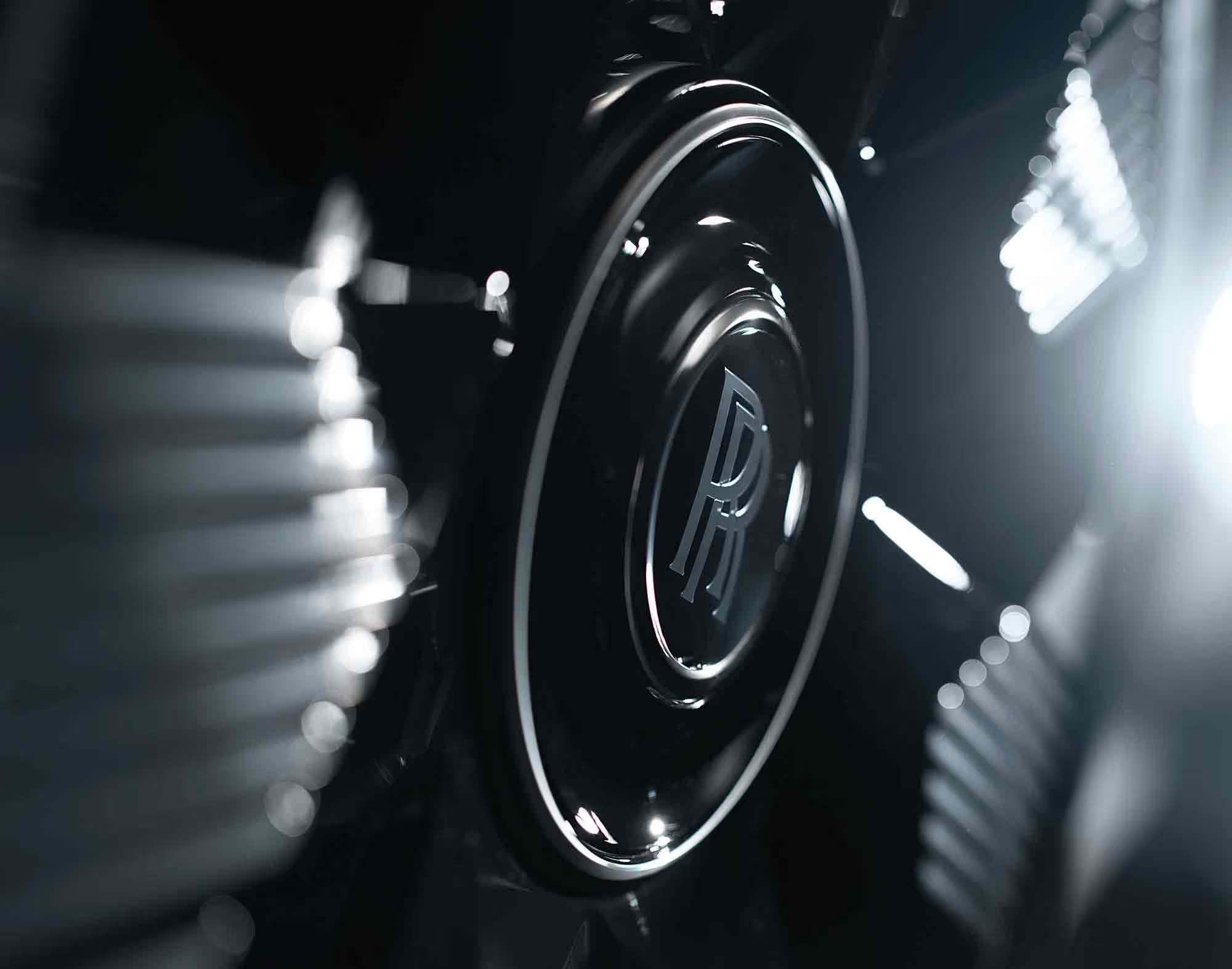
The side profile is a signature characteristic of Rolls Royce, with its short front, long rear overhang, long wheelbase and broad c-pillar. The wheels are new - 3D, milled, stainless steel with triangular facets, they can be fully or part-polished, depending on your preference. Or, if you prefer the 1920s style, you might choose the disc wheel in stainless steel or black lacquer.
You know you’ve made it when you own a Rolls Royce, and the Phantom Platino is the ultimate expression of success.
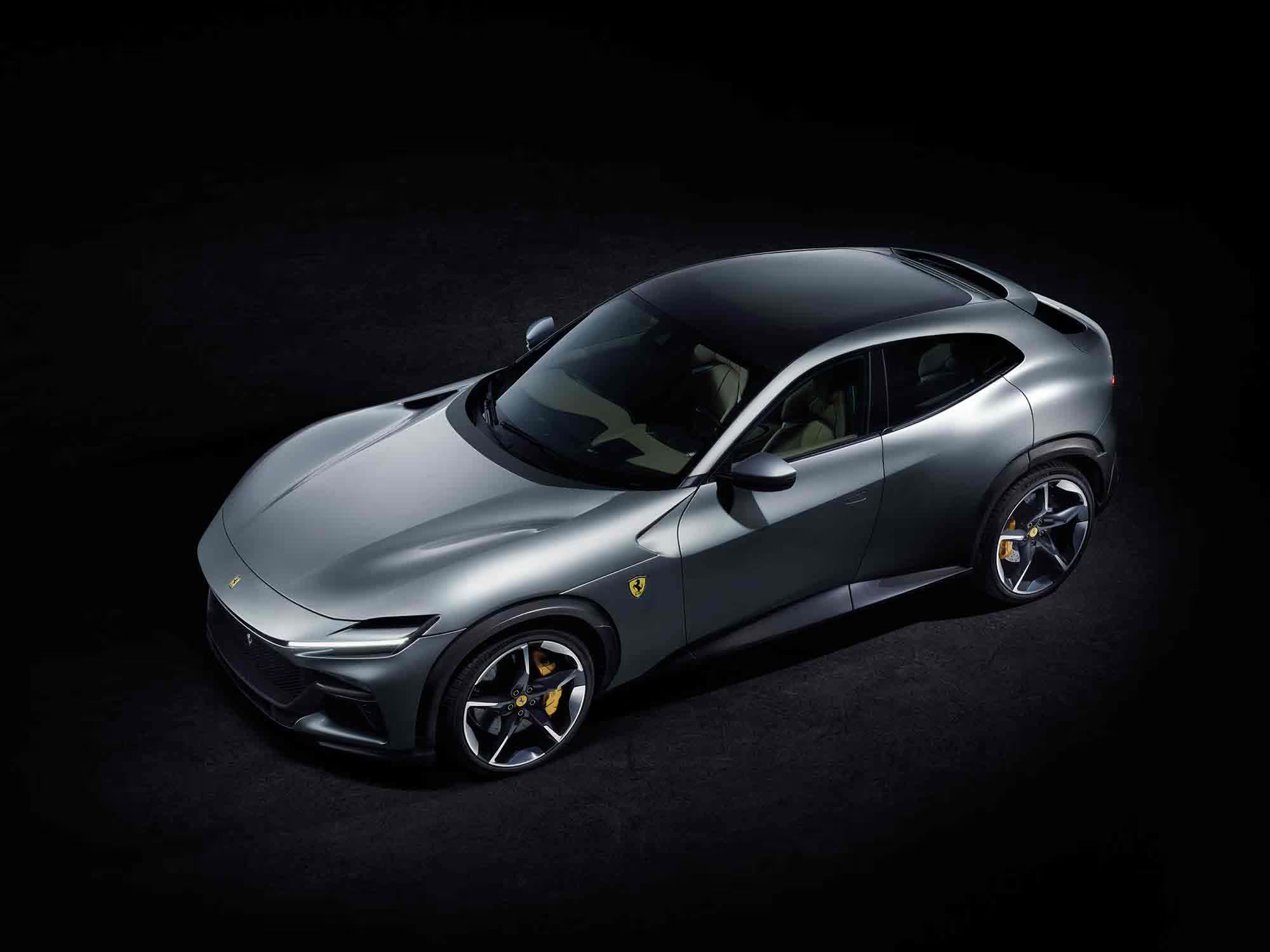
Purosangue
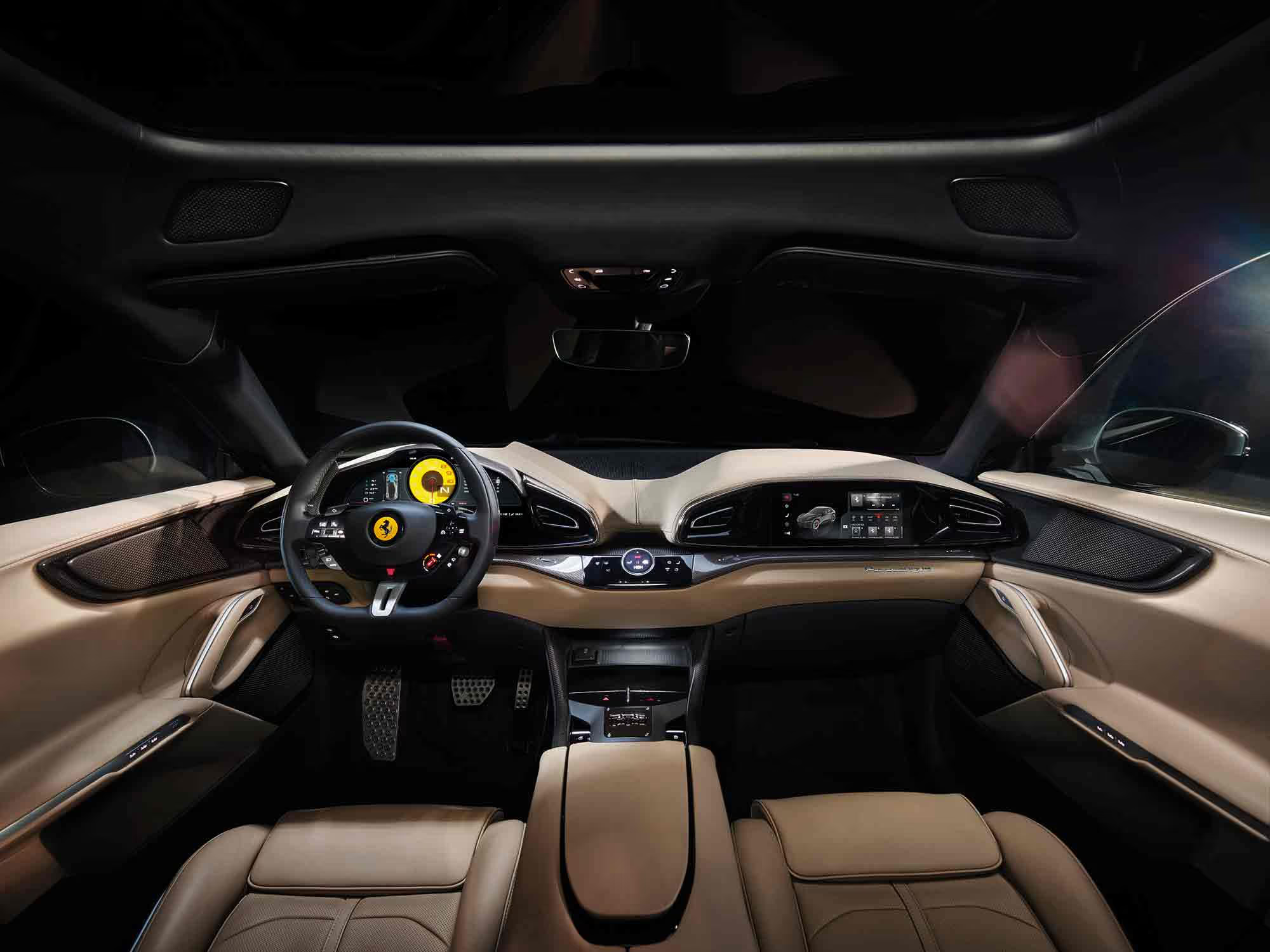
Can you believe Ferrari have never made a car for more than two people? Until now! Imagine being able to enjoy that supercar design with more spectators. With its naturally aspirated V12 engine pushing out 725CV, Ferrari looks set to take over a whole new market with this luxury design.
But this is not like other 4x4s. Rather than having an engine pushed far forward in the car, the Purosangue has its engine mid-front mounted, with the gearbox at the back. This helps to achieve the kind of driving dynamics you’d expect from Ferrari, while the aerodynamic shape looks incredible and helps this car to fly down the road.
There’s four-wheel steering, an active suspension system and a carbon fibre roof, making this an incredibly lightweight design. Of course, the seats are heated and the driver enjoys a position close to the ground. The size of the boot is something you might not expect though, with the back seats folding down to maximise storage even more. On a more decadent note, there are massagers in the front seats and an air quality sensor on the inside and the outside of the car. There are even rearward opening “welcome doors” that add a nice touch.
When you think luxury, you automatically think of Ferrari, but this is more practical than your average offering from the prancing horse brand. It straddles the line between road car and race car perfectly.
For more information, contact your local dealer
120 Highlands Rd, Shirley, Solihull B90 4NU
ferrari.birmingham@sytner.co.uk
Tourbillion
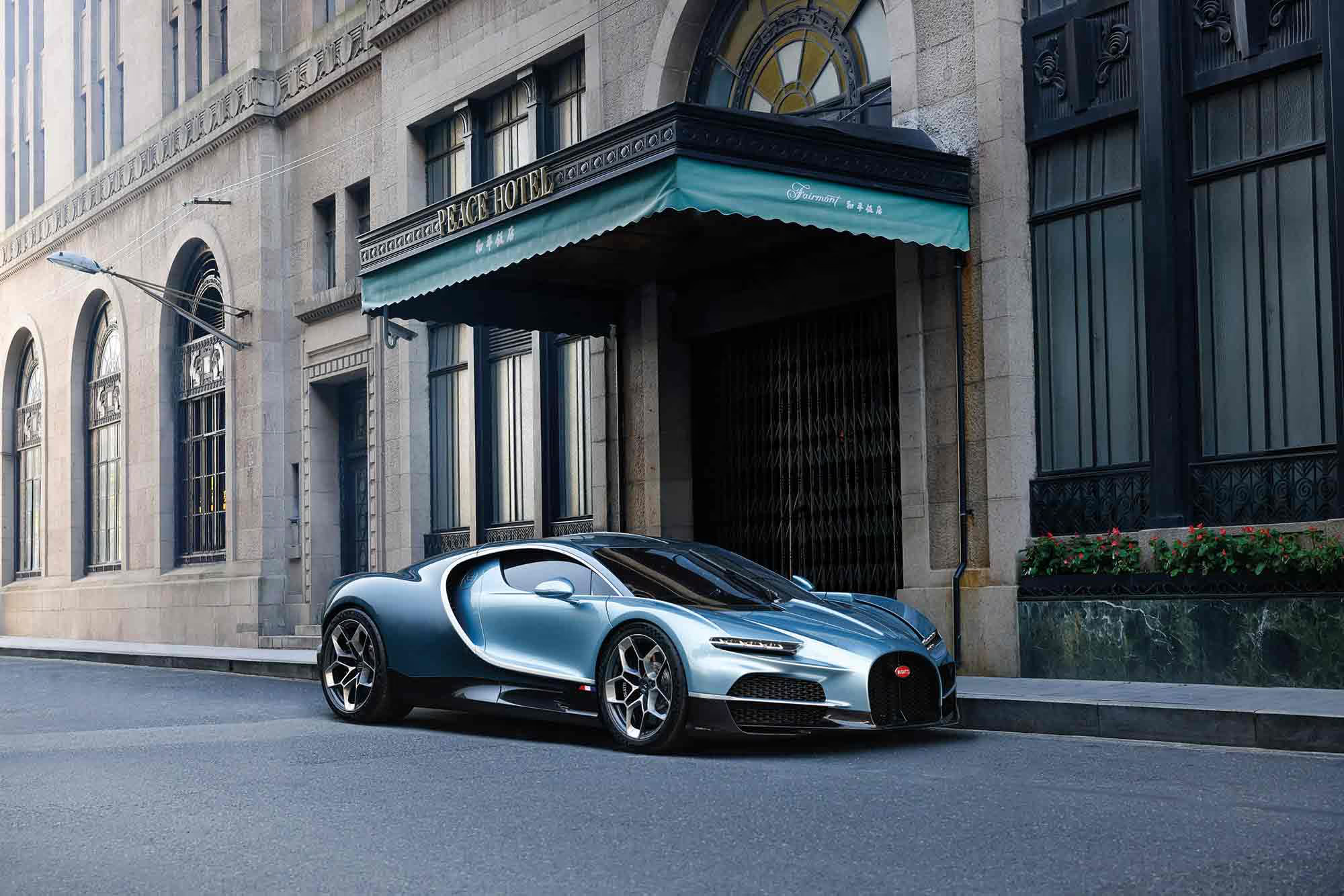
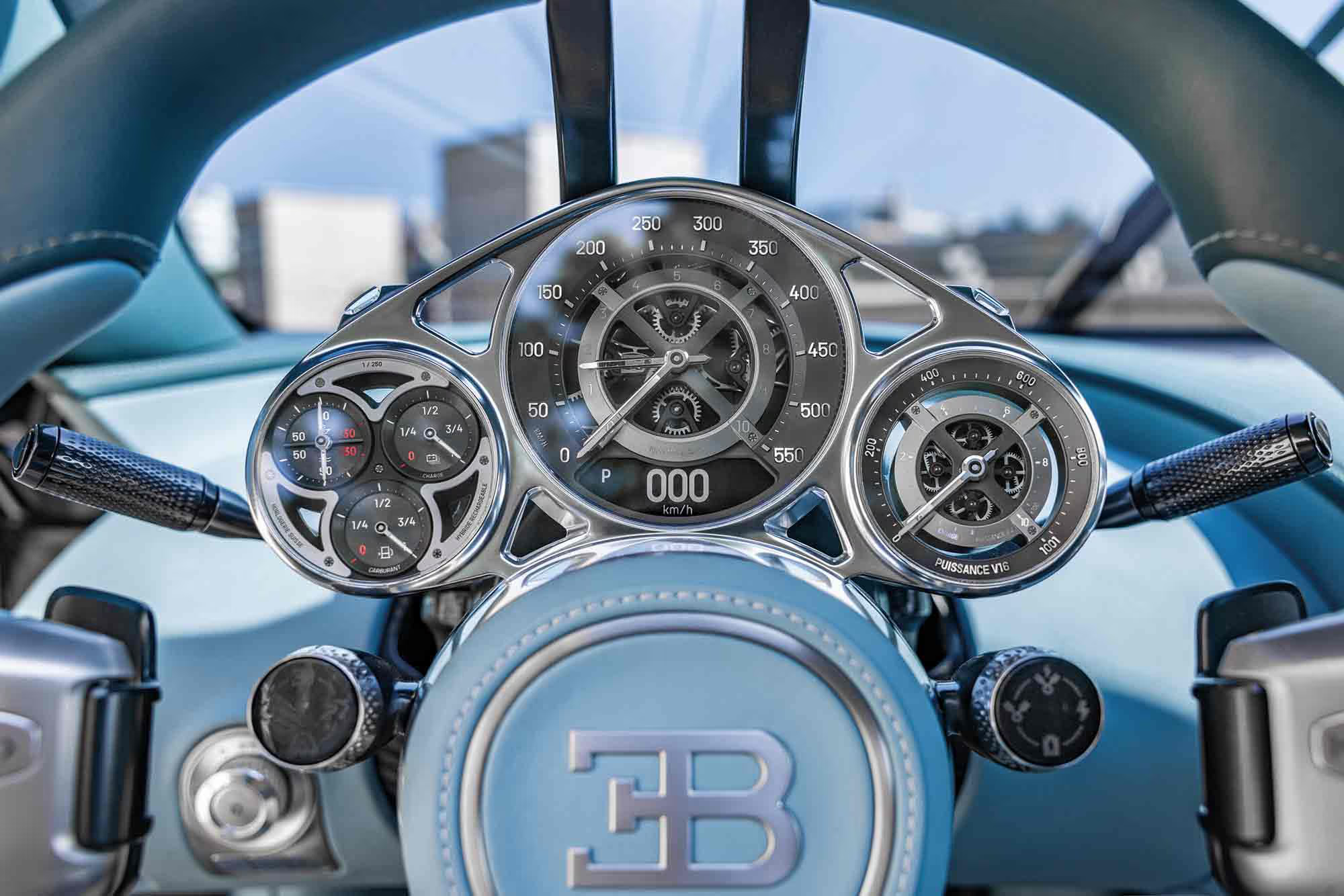
Representing a new era for BUGATTI, TOURBILLION is the first hybrid model from the brand, intending to push the boundaries of possibility for the hyper sports car.
The design is inspired by BUGATTI greats of the past, bringing a timeless elegance and sophistication to the look. It is powered by a 1000HP naturally aspirated V16 engine, complemented by three electric motors providing an additional 800hp, which makes it - together with an aerodynamic shape - a joy to drive.
The look is sharp, angular, enhanced by LED lighting and the iconic ‘eight-eye’ identity. A single taillight protrudes from below, sending out hot air in a super stylish way. And every single component has been designed with aesthetics in mind, from the obvious parts, to things like the frame, engine and structure – it’s a real work of art.
Its performance can be attributed in part to its lightweight structure, created using 3D printed materials and structures. And when you take your seat in the driver’s position, you’ll get instant racecar vibes, with your legs stretched out in front of you low to the ground.
Revealed in Molsheim in June, the launch was the most-viewed in history, with car enthusiasts desperate to see what BUGATTI was about to unveil. Turns out, BUGATTI’s most powerful car ever created was worth the watch!/
Revuelto
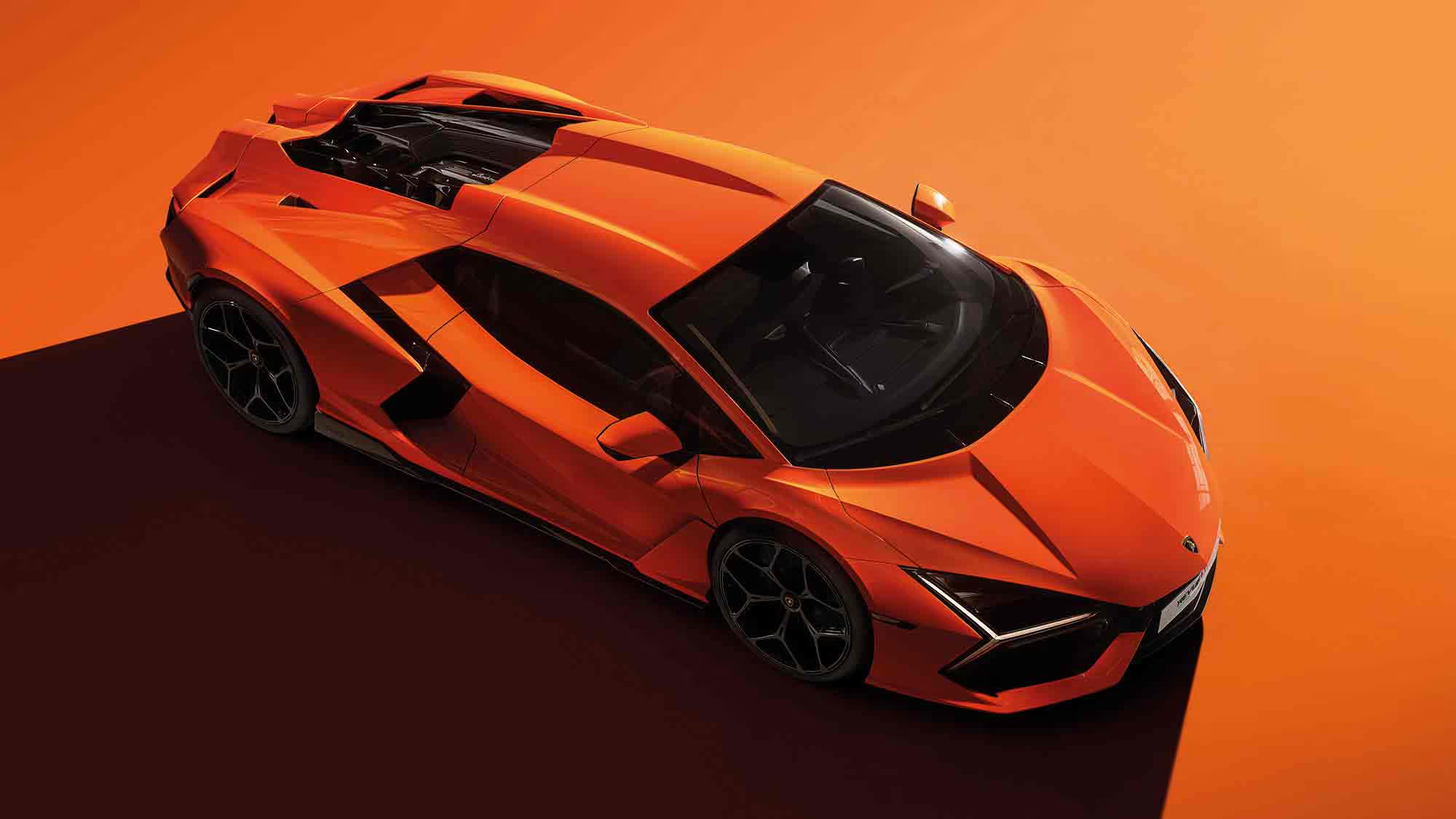
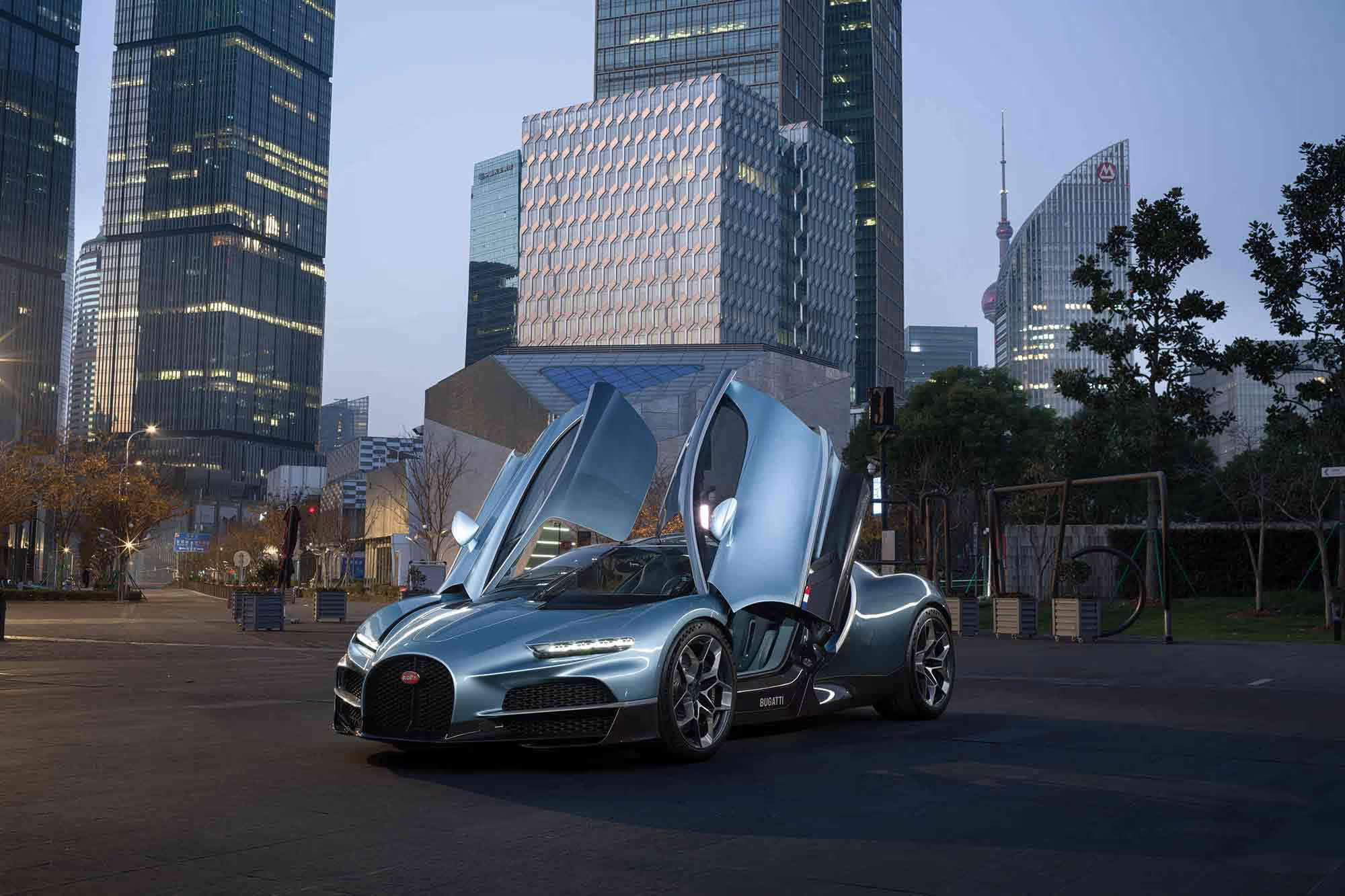
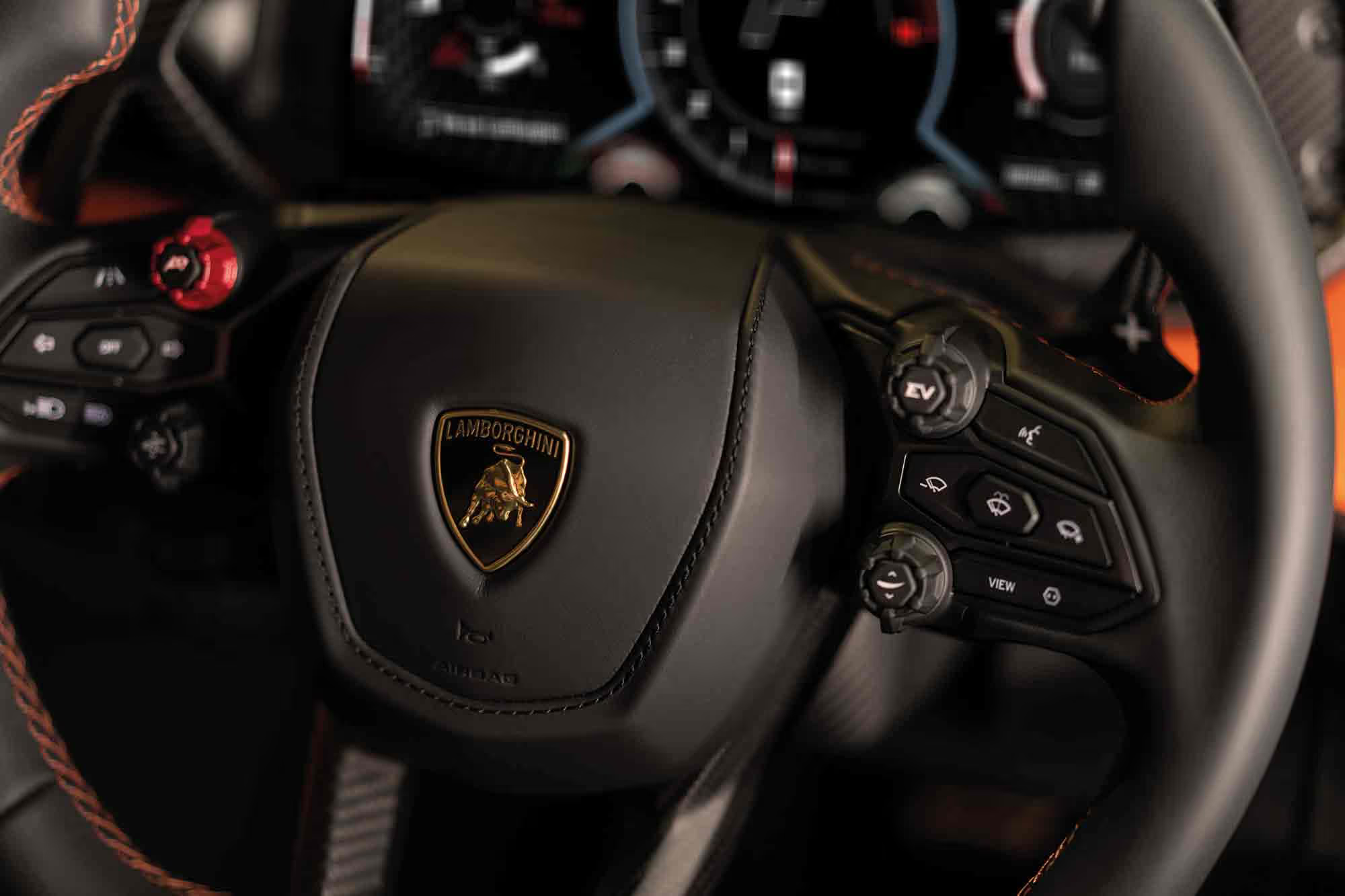
It’s rare to find a Lamborghini that falls below our discerning luxury tastes, but the Revuelto exceeds our greatest expectations. It’s not the newest model in the range, but as their high-performance electrified car flagship model, it is a design that will continue to impress for many years to come.
With its naturally-aspirated V12 engine combined with eight-speed, double-clutch transverse gearbox and three electric motors, this will whizz right off your driveway, while 13 drive modes mean you’ll never get bored while driving this monster.
Crafted from carbon fibre and other lightweight materials, this car will feel as though its floating above the road, while its top speed is more than 217m/h. Meanwhile the iconic y-shape of the car brings something extra to your driving experience – forget feeling like a racing driver, you’ll feel like a pilot!
There are endless possibilities for personalisation in this car, so that every model is almost completely unique to the driver. And at the same time, the company is working to improve their sustainability measures, reducing waste and executing hand-made sections with excellence.
And to cement this design in the modern era, there’s an incredible infotainment system and technological elements throughout your drive. Amazon Alexa will keep you company on longer drives and you can monitor your car’s status from your smart device even when you’re not inside it, checking things like fuel level, battery charge, electric range and even where it is parked.
Could a Lamborghini be your next car?
Type 00
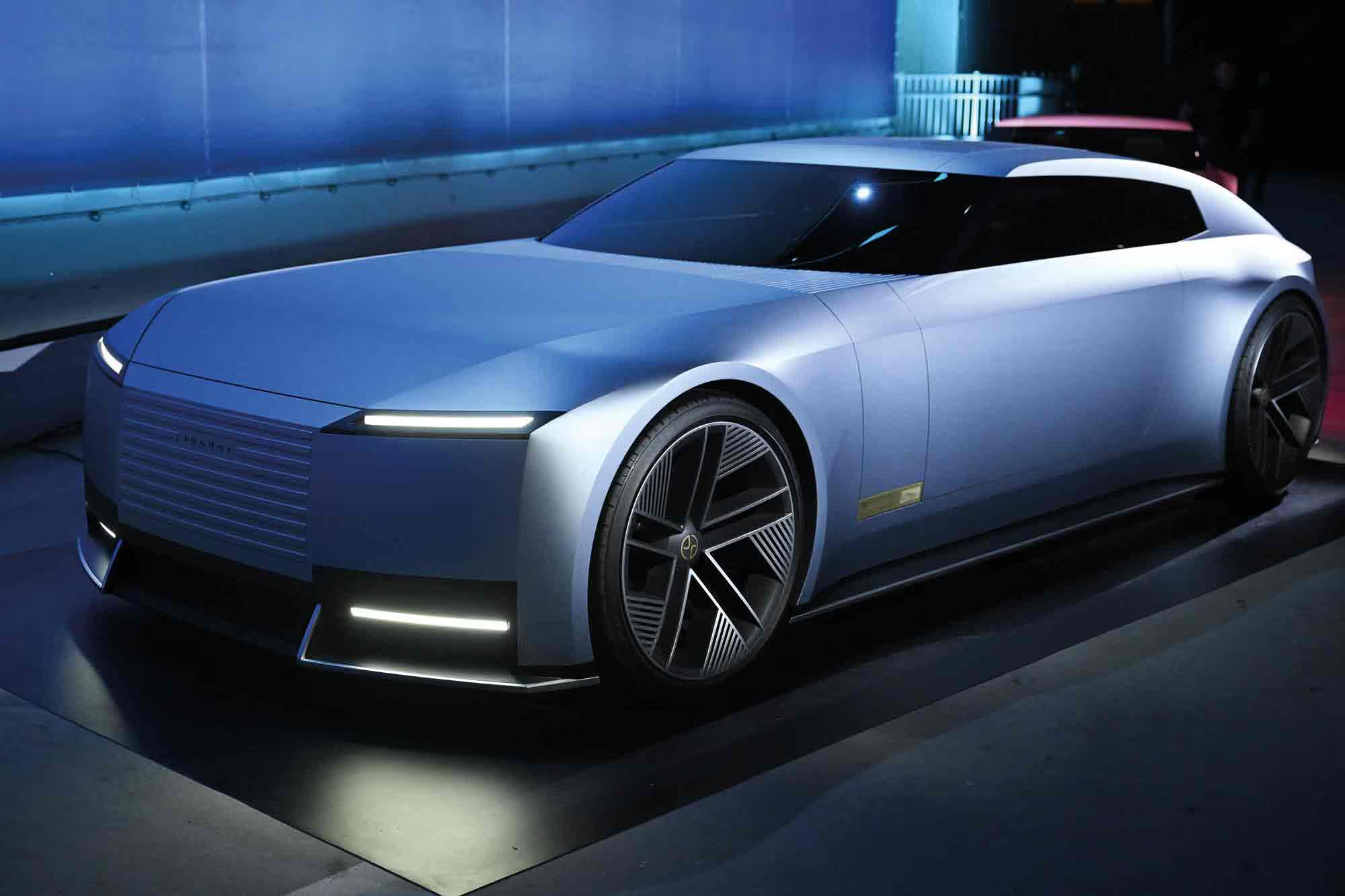
The latest Jaguar model was introduced to the world in a flurry of fearless pink advertising. The brand is taking its identity back to its roots, claiming to “copy nothing”, while making a statement with incredible design that is certainly unique!
With a sweeping bonnet and roofline, a fastback profile and 23-inch alloy wheels, this car has a silhouette you’ll recognise a mile off. Details include a glassless rear tailgate and a panoramic roof for luxury touches that matter.
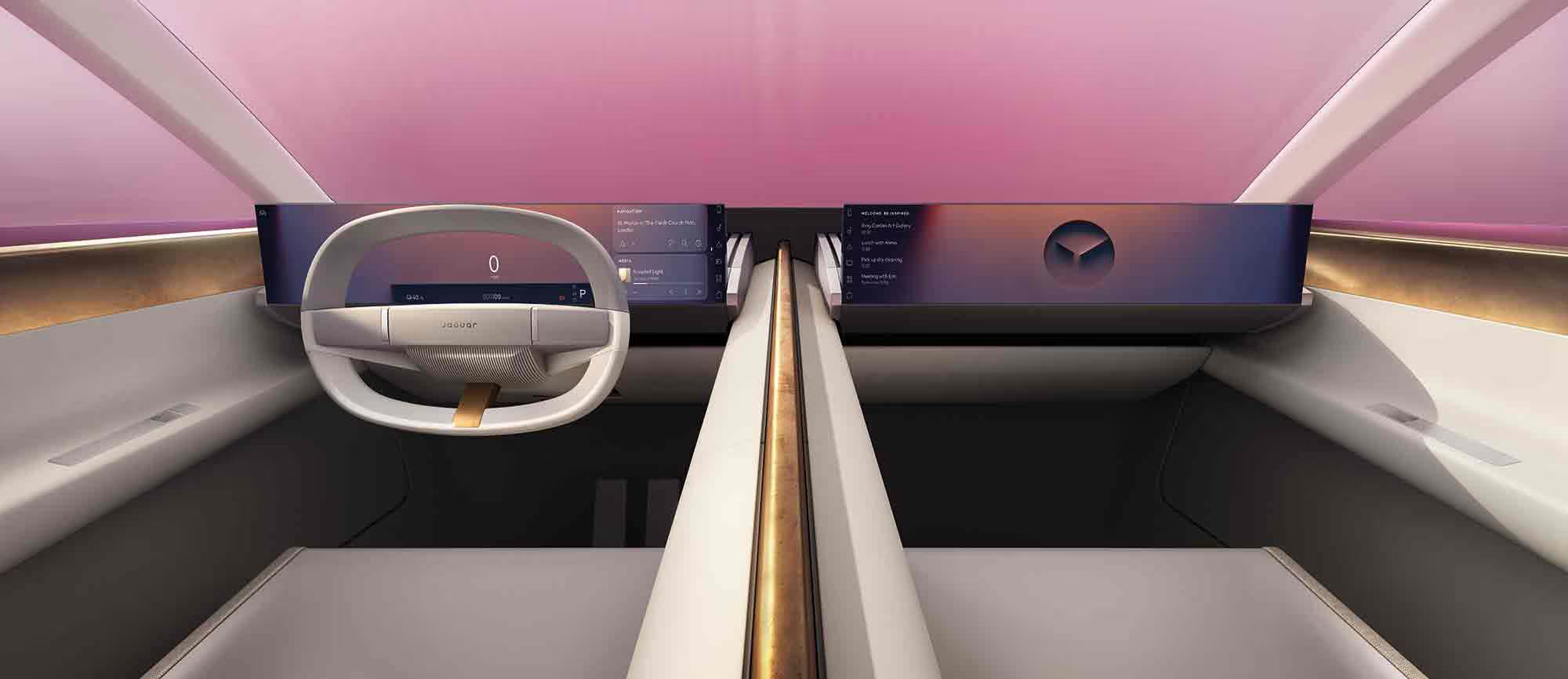
And you won’t have seen a more modern interior anywhere else. With butterfly doors and ‘pantograph’ tailgate, you’ll find bold brass accents, travertine stone finishes and floating seats and instrument panels that offer a futuristic feeling. This is beautifully complemented by woolen textiles and a neutral colour palette, giving the interior a very expensive aesthetic.
And they’ve integrated technology in a very clever way too. Technology is included to enhance the experience, rather than rule it. Screens glide silently in and out of place and you’ll never have to look around for your rearview mirror – the Clearsight display gives you better visibility from all angles.
Expect ambient lighting, bespoke scents and textured design for a car that delights all your senses.
This car was released at Miami Art Week, making it a fashion statement, as much as a functional vehicle. But it’s not all about looks. This is an electric vehicle that lasts longer than the latest trends, with a maximum range of 770km. It is set to be released in 2026 – will your name be on the waiting list?

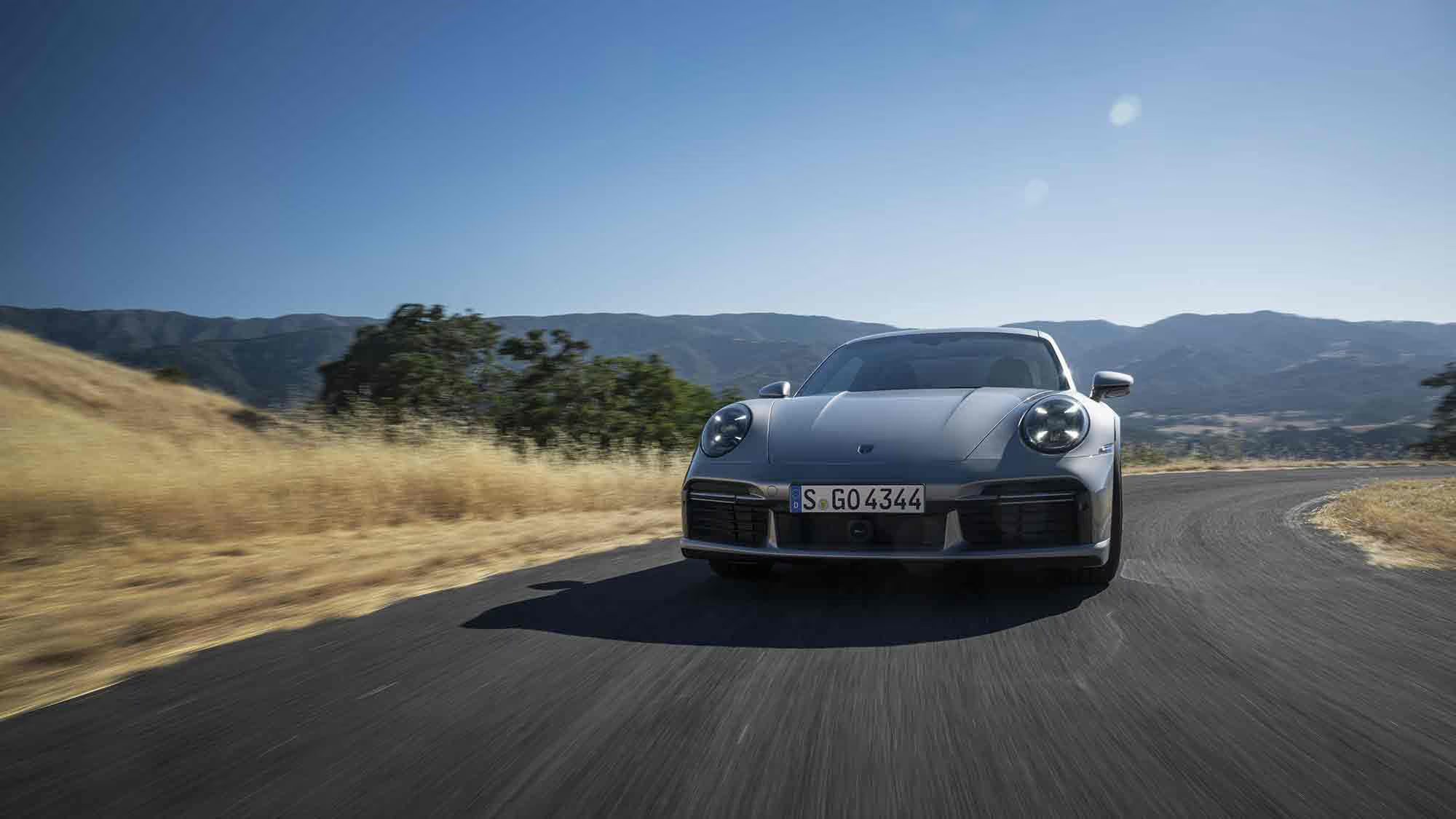
911 Turbo 50 Years
Can you believe it’s been 50 years since the world’s most iconic car was first released? Despite its age, the Porsche 911 is still one of the most sought-after cars on the road, renowned for its timeless elegance and outstanding performance. If the Jaguar is too flashy for you, then the 911 is the perfect antidote – there’s never been a cooler car!
The 911 was always a desirable car, thanks to its turbo technology, previously an exclusive component of racecars, rather than road cars. Of course, this most recent evolution of the 911 has been updated to ensure it remains at the forefront of today’s automobile market, but there are some heritage touches that may prove far too irresistible to anyone who knows their stuff about cars.
The first Porsche 911 was released in 1974, so the 50 Years anniversary model has been produced in a batch of just 1,974 cars, making this a limited-edition vehicle everyone will want to get their hands on. The design is based on the latest version of the 911 but with a livery that will evoke nostalgia, as the one present on the original 911 when it was first displayed at the Frankfurt Motor Show in 1973.
There are fun touches, like an LED projector on the door that projects the image of a turbocharger onto the ground next to the car when opened. Of course, you’ll find McKenzie tartan accents inside the car, contrasted with heritage Turbonite on the seat belts, controls and decorative stitching. And then there’s the important stuff, like a 3.7 litre box engine with variable turbine geometry (VTG) twin turbocharging and eight-speed dual-clutch transmission. Everything about this car has been expertly engineered to be a joy to drive.
.avif)
It looks like your search doesn't match any of our library articles. Please reset the filter and try again.
Looking for a different viewing experience, head down to our printed issues library and browse throught our heritage of design and luxury all in one destination.

Copyright © Swealthy LTD
All rights reserved













.avif)