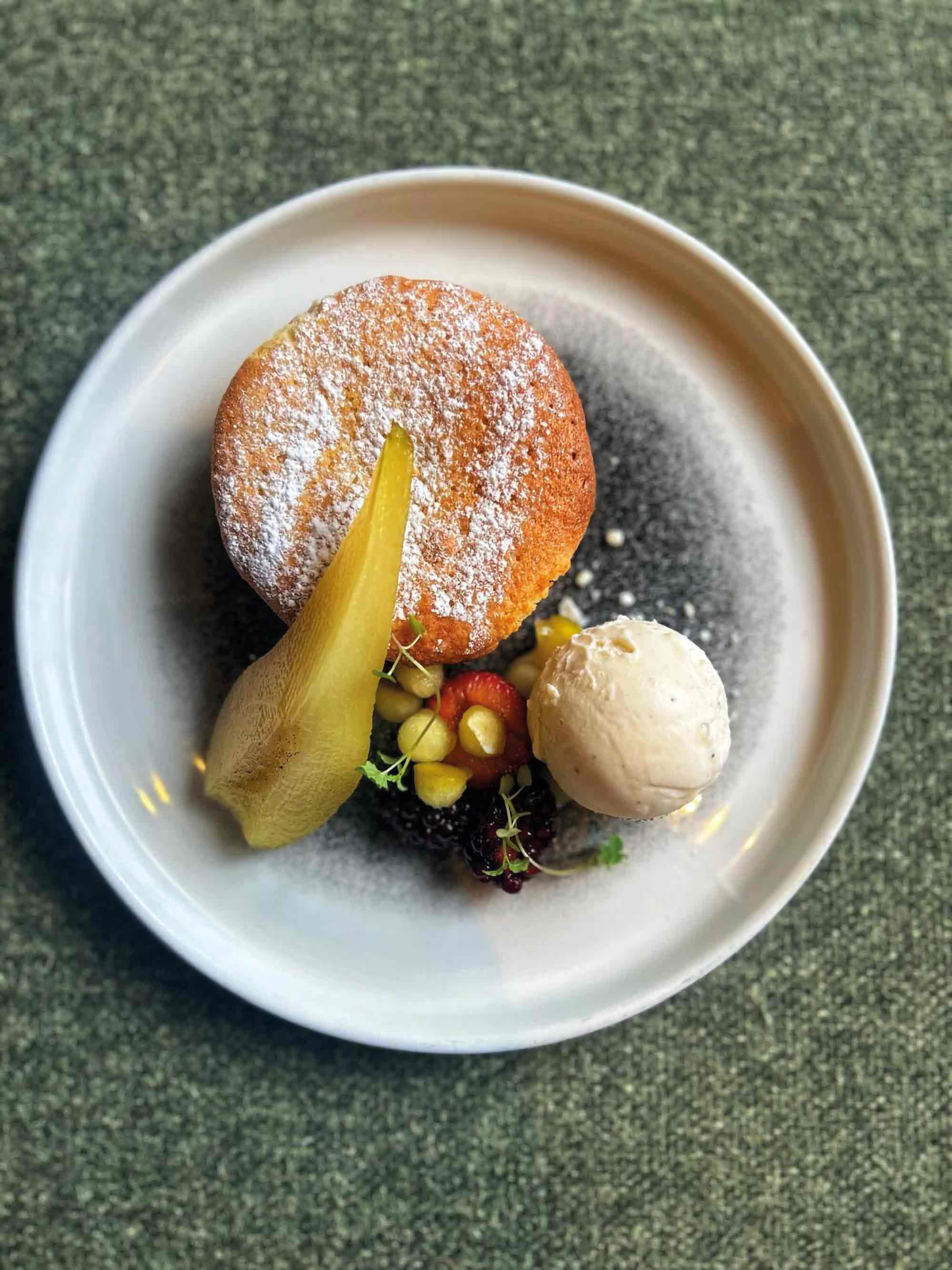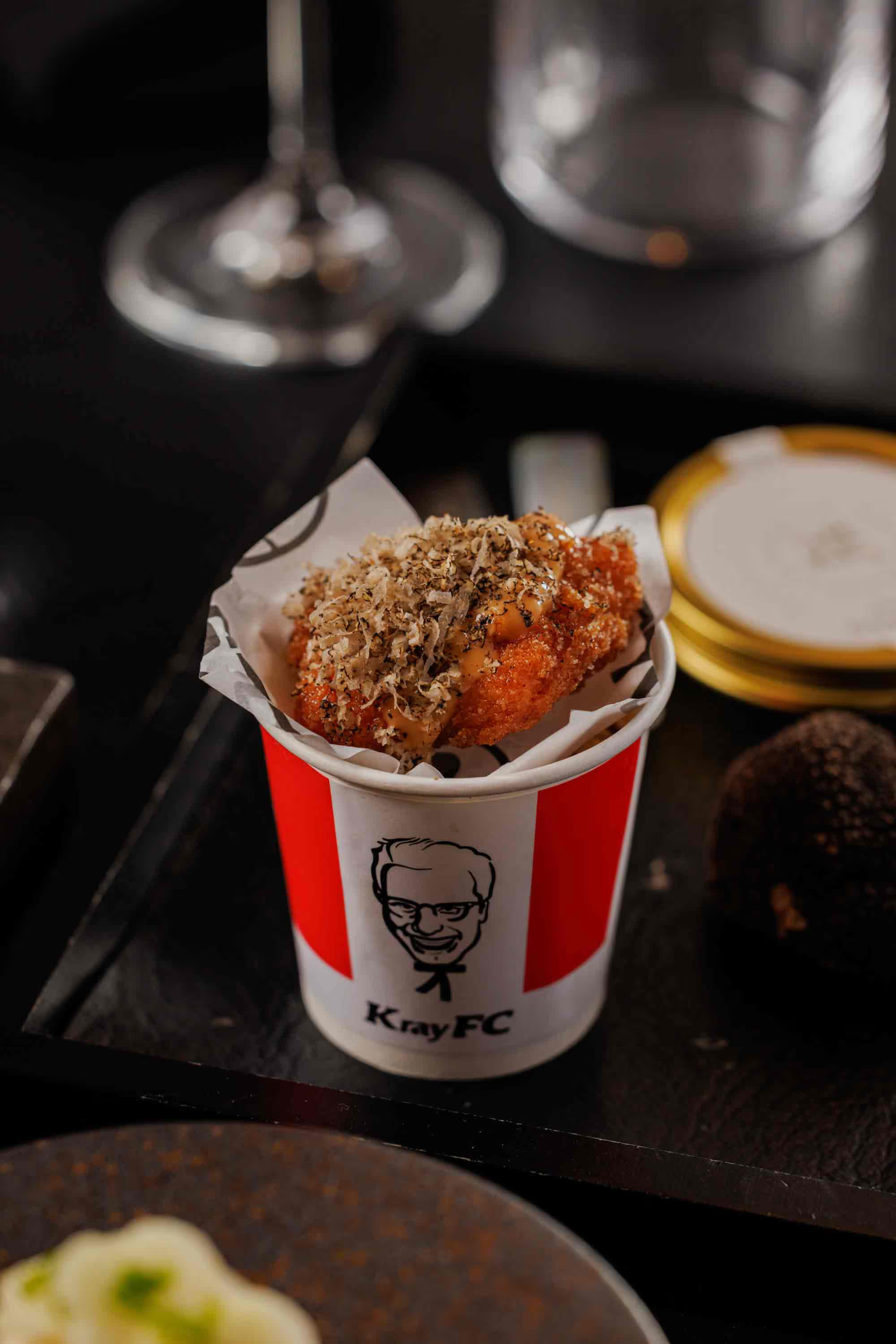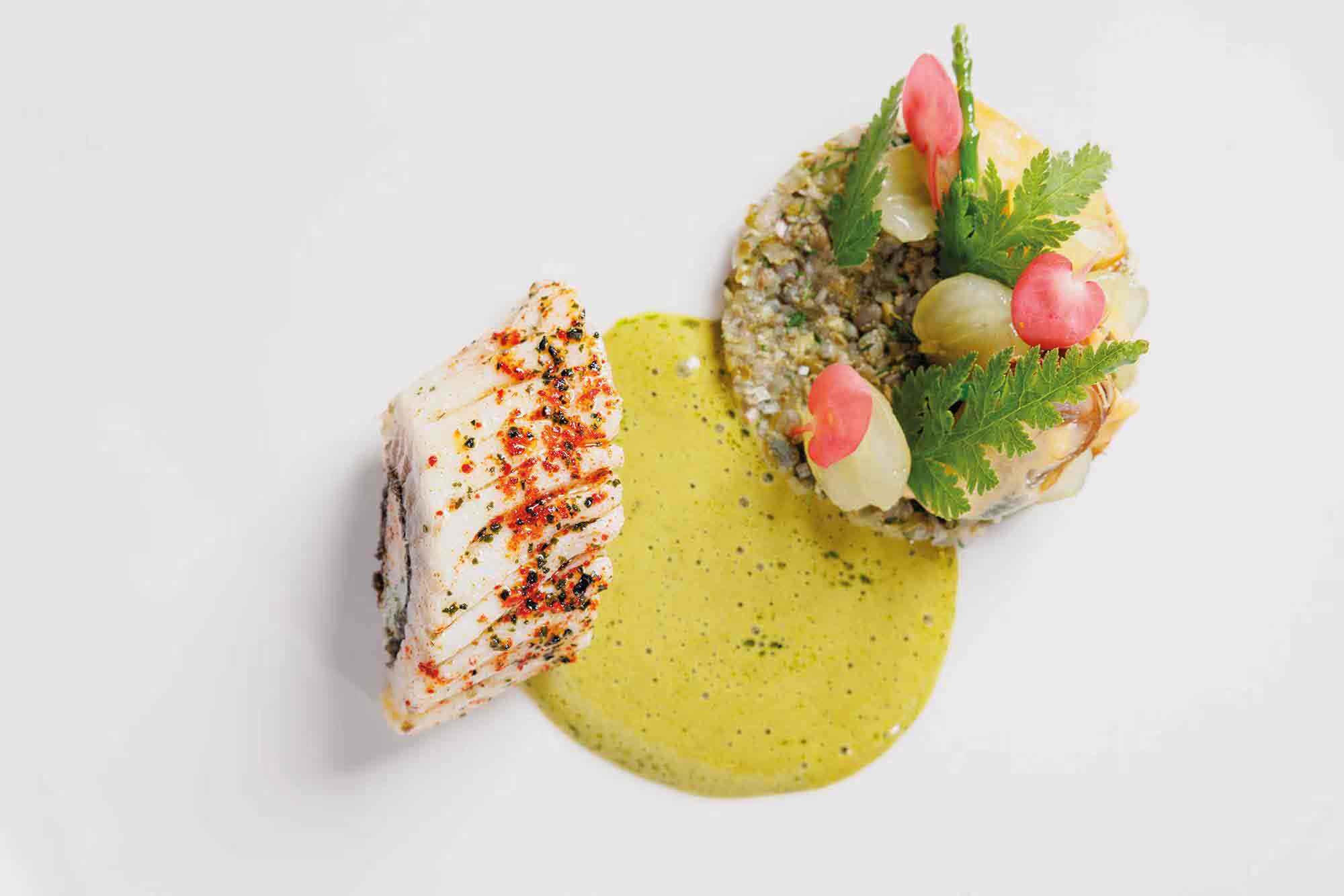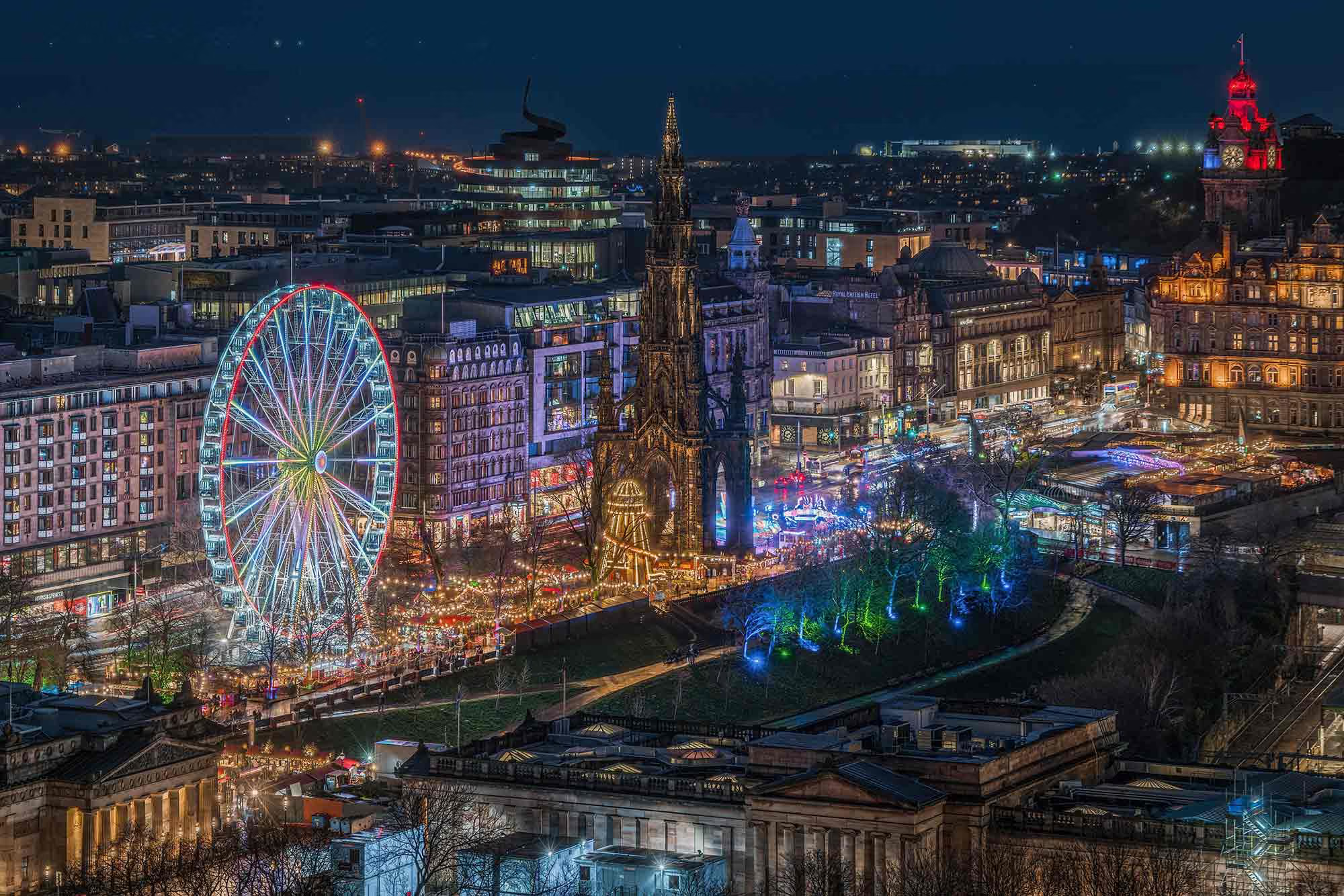
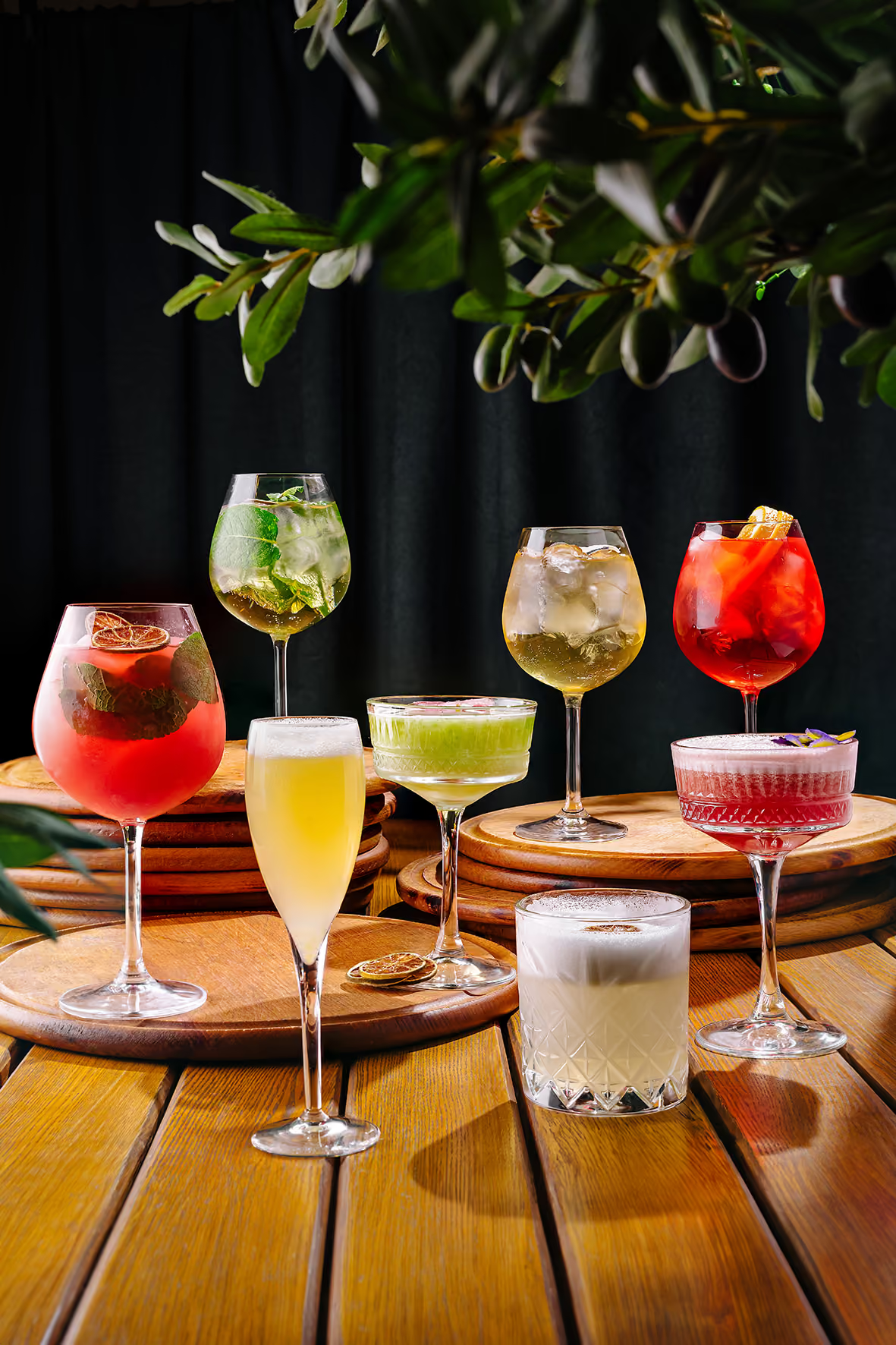
Birmingham Cocktail Weekend returns from 9th–12th July 2026, bringing four days of cocktails, events and city-wide celebrations to Birmingham, with Edgbaston Village is pouring in on the action
Festival wristband holders can unlock exclusive £6 signature cocktails at more than 40 venues across the city, alongside £5 alcohol-free alternatives, food offers and exclusive events throughout the weekend.
In Edgbaston Village, both The High Field and Chapter are taking part, offering two must-visit stops on your cocktail trail.
The High Field is ideal for relaxed summer sipping, with its spacious garden providing the perfect setting for an afternoon cocktail in the sunshine. Meanwhile, Chapter offers a lively atmosphere, stylish interiors and expertly crafted drinks that make it perfect for brunch, evening drinks or catching up with friends.
Whether you spend one evening exploring or make a full weekend of it, Edgbaston Village is the perfect place to raise a glass this summer.
Easy to Reach
Edgbaston Village is easily accessible, however you choose to travel:
By Train - Five Ways station is around a 10-minute walk from Greenfield Crescent. Birmingham New Street Station is approximately 20 minutes on foot or a short bus ride away.
By Metro - The Edgbaston Village Metro stop is just a 2-minute walk from the market.
By Bus - Regular services run along Calthorpe Road and Harborne Road.
By Car - Limited on-street and pay-and-display parking is available nearby.
By Bike / Foot - The area is pedestrian and cycle friendly, with plenty of bike racks available.
Dine Outdoors
After a day spent exploring Birmingham’s gardens and outdoor events, make the most of the sunshine with alfresco dining in Edgbaston Village. Enjoy drinks in The High Field’s garden, brunch on the terrace at Chapter, or discover the area’s independent cafés, bars and restaurants.
Make the Most of Summer
From peaceful garden walks to bustling markets and outdoor dining, Edgbaston Village offers the perfect way to enjoy everything summer has to offer!
Gardens and outdoor spaces to explore this Summer
Longer days and warmer evenings make this the perfect time to enjoy Birmingham’s greener side. From historic gardens to community spaces and seasonal events, Edgbaston offers plenty of ways to make the most of summer outdoors.
Birmingham Botanical Gardens
A true Edgbaston landmark, Birmingham Botanical Gardens offers 15 acres of stunning landscapes, glasshouses and seasonal floral displays. Wander through colourful borders, discover over 30,000 plants and enjoy one of Birmingham’s most peaceful green spaces.
This summer, visitors can also take part in the Gardens’ popular outdoor yoga sessions, held weekly at 9am on Saturday mornings throughout the summer. Featuring guided movement, mindfulness and sound bath experiences surrounded by nature, it’s the perfect way to start the weekend.
Martineau Gardens
One of Birmingham’s hidden gems, Martineau Gardens, is a tranquil community garden filled with orchards, wildlife-friendly planting and peaceful walking routes.
On Saturday 27th June, its much-loved Annual Garden Party returns from 3pm, bringing live music, food, fundraising and community spirit to the gardens. With a fizz reception, raffle and entertainment, it’s a wonderful way to enjoy this unique green space while supporting an important local charity.
Winterbourne House & Garden
With seven acres of beautifully maintained gardens, woodland walks and colourful planting displays, Winterbourne House & Garden offers a picture-perfect summer day out. The historic Edwardian house adds even more charm, making it ideal for a relaxed afternoon of exploring.
Artisan Market Dates for Your Diary
The much-loved Edgbaston Village Artisan Market returns to Greenfield Crescent on Saturday 13th June and Saturday 11th July, bringing together up to 80 independent traders offering artisan food, drink, handmade crafts and unique gifts.
For even more summer shopping, don’t miss the Summer Night Market on Friday 17th July from 4–9pm, with over 40 Birmingham Artisan Market traders, live entertainment and a lively evening atmosphere.
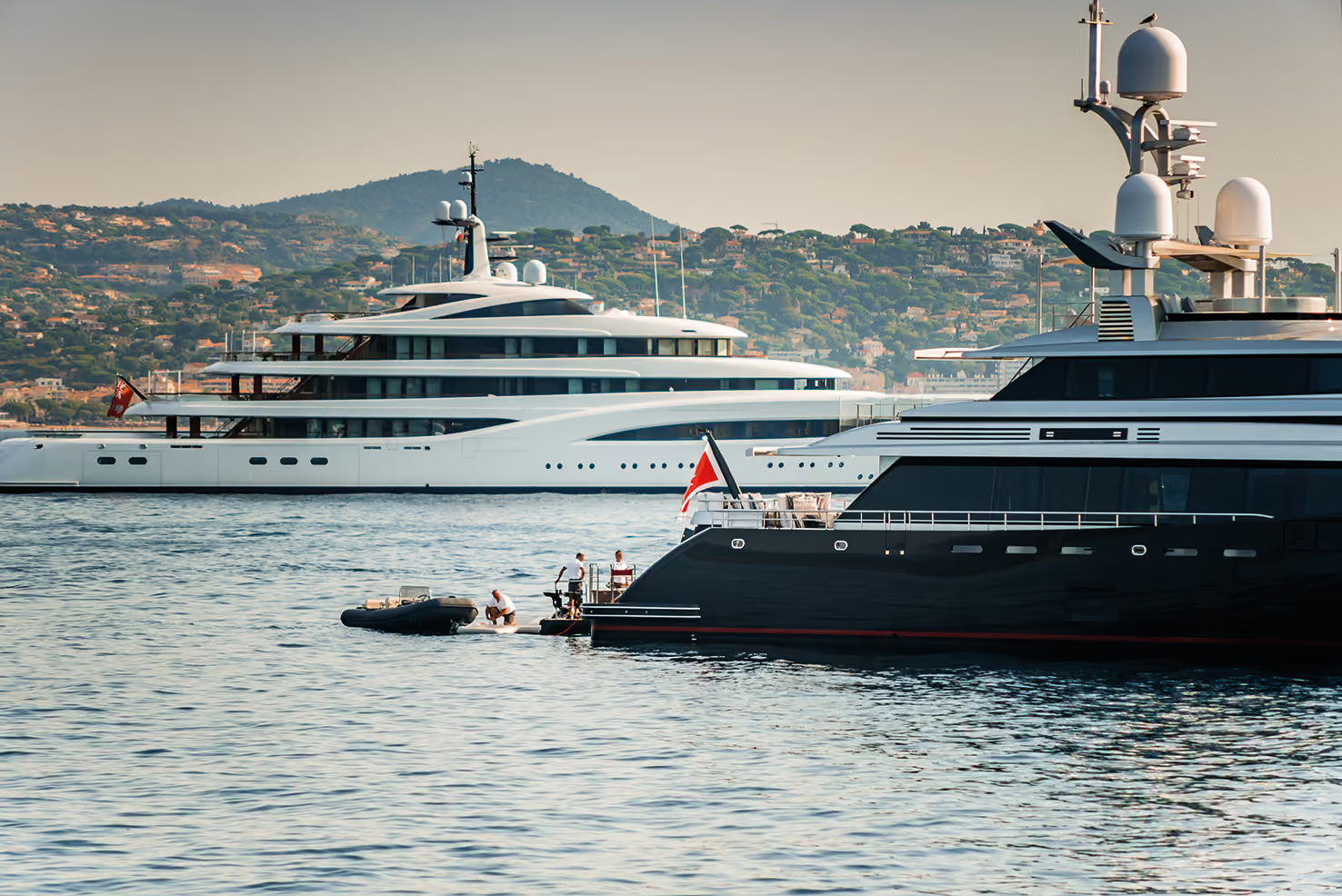
In the upper echelon of global travel, yacht harbours are no longer functional maritime infrastructures. They are curated luxury ecosystems, engineered as much for atmosphere as for anchorage.
Here, discretion and visibility coexist in deliberate tension. Arrival is choreographed. Departure is unhurried. And every berth is a stage upon which wealth expresses itself through precision, restraint, and presence.
These are not ports in the conventional sense. They are controlled environments of influence, where superyachts operate as both private sanctuaries and public statements, and where the shoreline becomes an extension of the vessel itself. Across continents, a select group of destinations has come to define this architecture of modern maritime luxury.
1. MONACO YACHT HARBOUR
Monaco
Monaco remains the reference point against which all yacht destinations are measured. Its harbour operates at maximum density of prestige, where some of the world’s most recognisable vessels sit in immediate proximity, forming a continuous exhibition of naval architecture and capital concentration.
The transition from deck to shore is instantaneous. Within minutes, guests move from private maritime privacy into a condensed world of haute couture, high-stakes gaming, and globally benchmarked dining. During peak moments such as the Monaco Yacht Show, the harbour shifts into a global focal point of maritime attention, reinforcing its position as the apex of yacht culture.
2. MARINA DI PORTOFINO
Italy
Portofino’s power lies in restriction. The harbour’s physical limitations are not a constraint but a mechanism of exclusivity. Berthing space is scarce, and scarcity defines value.
Framed by pastel architecture and steep Ligurian terrain, the marina delivers a quiet, almost architectural intimacy. The experience ashore is deliberately restrained: refined retail, low-profile gastronomy, and a cadence of life that privileges privacy over performance. It is luxury expressed through absence rather than excess.
3. PUERTO BANÚS MARINA
Marbella
Puerto Banús operates as a hybrid environment where maritime luxury merges with social theatre. It is high-energy, visually assertive, and intentionally performative.
Superyachts sit alongside designer flagships, while waterfront promenades function as continuous social corridors. Beach clubs, late-night venues, and luxury retail create a perpetual cycle of visibility and movement. Here, luxury is not quiet. It is kinetic.
4. MARINA DI PORTO CERVO
Sardinia
Porto Cervo represents calibrated Mediterranean refinement. Developed along the Costa Smeralda, it integrates natural landscape with architectural control, producing an environment that feels both designed and organic.
The marina is supported by curated urbanism: sculpted piazzas, discreet luxury boutiques, and controlled social spaces. The effect is a setting where exclusivity is embedded in spatial design rather than overt signalling.
5. IBIZA MAGNA
Ibiza
Ibiza Magna reflects Ibiza’s transition from purely hedonistic destination to layered luxury environment. Its position adjacent to Ibiza Town places it at the intersection of seclusion and immediate cultural access.
By day, the marina functions as a private base for offshore leisure. By night, it becomes a gateway to curated nightlife, contemporary dining, and private cultural programming. The contrast between withdrawal and immersion defines its appeal.
6. PORT DE SAINT-TROPEZ
France
Saint-Tropez maintains its position through a carefully sustained mythology of glamour. The port itself is modest in scale, yet disproportionately influential in cultural perception.
Yachts sit against a backdrop of historic façades and active waterfront terraces where observation and participation blur. The surrounding ecosystem of beach clubs, fashion houses, and seasonal ritual reinforces a sense of effortless, unforced prestige.
7. PORT VAUBAN
Antibes
Port Vauban is less a social harbour and more an operational cornerstone of the Mediterranean yacht industry. Its scale and technical capacity make it one of the most significant superyacht hubs in the world.
Beyond berthing, it functions as a centre for refit, maintenance, and technical coordination. This is infrastructure as luxury enabler, where engineering precision underpins the visible lifestyle of the world’s largest vessels.
8. MARINA GRANDE
Capri
Capri’s Marina Grande derives its exclusivity from geography rather than development. The island’s dramatic topography creates inherent limitation, and limitation creates desirability.
Arrival is visually theatrical, framed by vertical cliffs and intense blue water. Ashore, the experience is tightly controlled, with boutique hospitality and elevated dining shaping a compact but highly refined luxury environment.
9. YACHT HAVEN GRANDE
St. Thomas
In the Caribbean context, Yacht Haven Grande represents structured luxury within a natural paradise setting. Purpose-built for superyachts, it combines scale with curated retail and waterfront hospitality.
Its strength lies in balance: high-end provisioning and services integrated seamlessly with leisure infrastructure, all set against a consistently favourable marine environment. It is efficiency wrapped in escapism.
10. MARINA BAY
Singapore
Marina Bay is the most technologically and architecturally defined expression of yacht luxury on this list. It operates within a hyper-urban environment where precision is a core aesthetic.
The marina benefits from streamlined logistics, regulatory efficiency, and immediate adjacency to one of the world’s most advanced luxury districts. Here, maritime experience and metropolitan infrastructure merge into a single continuous system of high-performance luxury.
Across these ports, the defining principle is not size but orchestration. Each destination operates as a managed ecosystem in which maritime infrastructure, urban luxury, and service architecture are tightly integrated.
Deep-water capacity, advanced mooring systems, and technical reliability form the baseline. Beyond that, connectivity becomes essential: proximity to private aviation, luxury hospitality, and global transport networks ensures seamless mobility across jurisdictions and time zones.
However, the decisive factor is atmospheric control. Each harbour sustains a distinct identity shaped by geography, cultural code, and clientele behaviour. Monaco concentrates intensity. Portofino enforces restraint. Saint-Tropez cultivates narrative glamour. Singapore delivers precision. Together, they define not merely where yachts dock, but how modern luxury is staged, experienced, and ultimately understood at sea level.
Fourth-generation luxury jewellery & watch retailer celebrates significant expansion.
Johnsons Jewellers is a respected family-run business with a history of more than 125 years and a reputation as one of the finest jewellers in the Midlands.
Their latest major store expansion is not the first since their inception in 1897. However, it reflects a significant shift to build on their renowned bespoke jewellery and bridal service and to elevate their presentation of luxury Swiss watches.
“We pride ourselves on being a destination store in the region and want to keep it that way”, said Libby Johnson. “With the Birmingham jewellery district nearby and plenty of other regional competition, we need to give customers even more reason to choose us. Additionally, we hoped to take advantage of new footfall from the large retail & leisure park that recently opened opposite our store.”
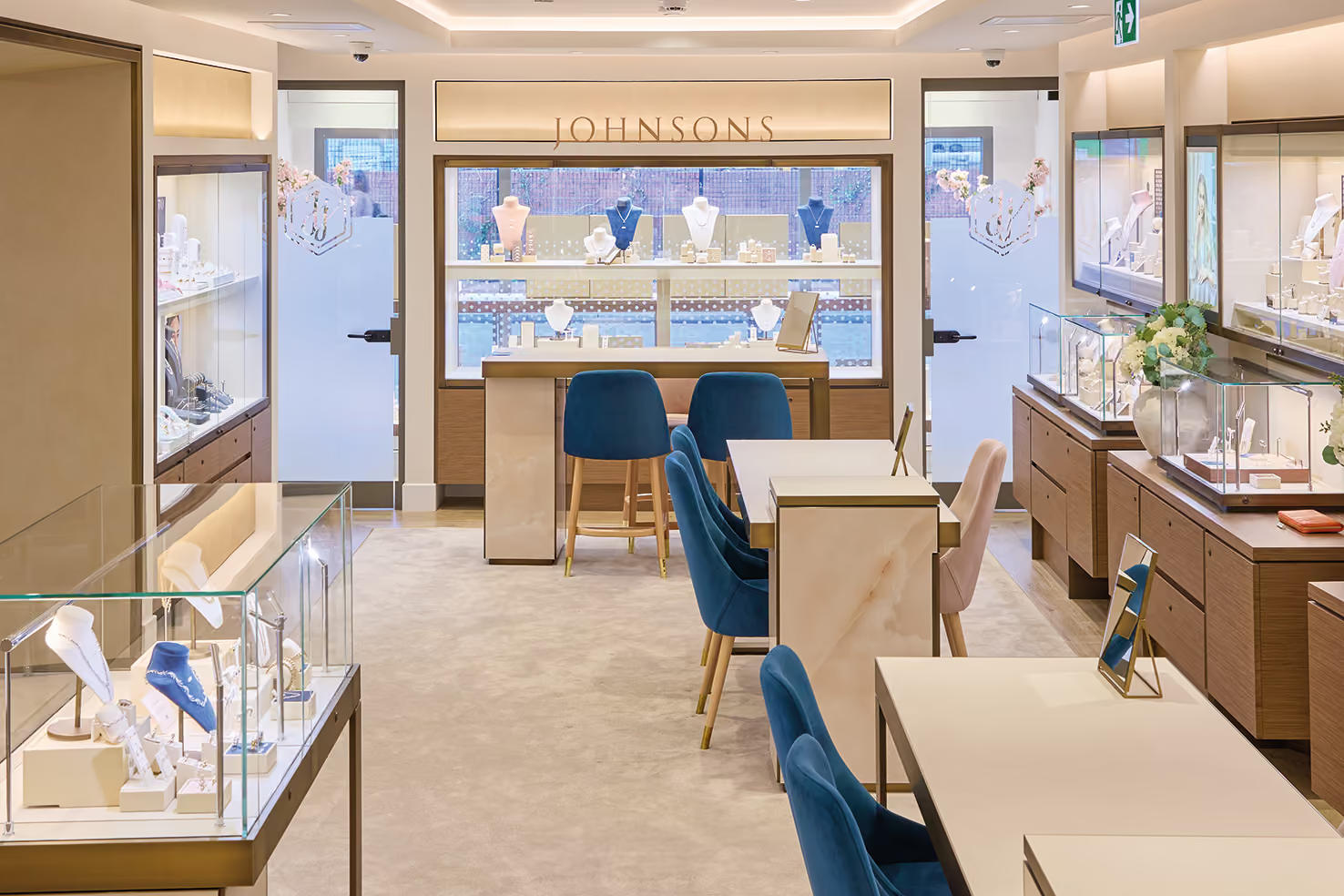
With the closure of a neighbouring shop came the opportunity to significantly expand, nearly doubling the previous retail space. This has allowed for a more defined customer experience with an inviting jewellery room and attractive bridal floor beyond. Whilst prestigious Swiss watch brands have been allocated their own ‘shop-in-shops’, the whole showroom is united through an overarching new interior design scheme which effectively creates a branded Johnsons environment, including a large central welcome and repairs collections desk.
The result is a look that emanates quiet luxury. The whole space effortlessly attracts attention with tempting views that draw customers through the space. It’s an attractive interior design scheme which blends layers of rich materiality and colour, together with craftsmanship and sensitive lighting to perfectly showcase the fine jewellery and watches on offer.
Customer experience has been paramount to the store layout and design. There’s an increased choice of consultation spaces; all created with premium service and comfort in mind. An elegant hand drawn ceiling and wall frieze was commissioned to flow over the bridal space - its ornate, tactile details of magnolia and doves symbolising love, peace and everlasting connections. While the hospitality bar, which used to be behind the scenes, is now centrally located to support and embrace the frequent customer celebrations throughout the showroom.
The Johnsons Jewellers story is less about individuals – the fourth-generation expert family team is supported by long-standing knowledgeable staff. And what’s important to the whole team is their great heritage and prestigious reputation which has built trust amongst its customers. So it seems only fitting, that in pride of place, adjacent to the hospitality area, they feature an image from the 1930s which honours the original beginnings of the current store.
Robert Johnson recalls visiting his grandparents who used to live above the small jewellery shop on this site. “We’ve come a long way since then but I’m sure that they, and my father, would be proud of the business we’ve built today and what we’ve achieved here with this latest fantastic store development
His daughter Libby, concludes, “it’s been a lengthy phased process so that we could remain open for our loyal customers but Lloyd and the wider project team have more than fulfilled our vision. We have had some wonderful feedback from our customers as well as the brands. The whole team love their new ‘home’ and are excited for our next chapter.”
johnsonsjewellers.co.uk
50/51 Queens Road, Nuneaton, Warwickshire, CV11 5JX

From luxury soft play experiences in private homes to a beautifully curated family destination near Lichfield, Remen Bains, the founder of the kids corner and crumb and play is redefining what family spaces can be. We caught up with her to discuss the inspiration behind both brands, the rise of design-led play, and what's next for the business.
What originally inspired you to enter the children's lifestyle and play sector?
Becoming a parent was the real inspiration. Once I had my own children, I noticed a clear gap in the market for high-end, beautifully designed play spaces that catered to both children and parents.
That vision led to The Kids Corner, a space designed to feel intentional, creative and elevated rather than purely functional. As the community grew, Crumb and Play evolved naturally from that idea, bringing together quality food, design and family experiences under one lifestyle-led concept.
Both brands were born from a desire to create family spaces that feel inspiring, thoughtful and beautifully designed, while still being fun and enriching for children.
The Kids Corner has become known for luxury soft play experiences in private homes and events. How did you identify the demand for a more elevated approach?
We identified the demand through both personal experience and client feedback. Many families wanted to bring play into their homes and events in a way that still felt exclusive, luxurious and aesthetically aligned.
A lot of our clients are also very private and, in some cases, we've signed NDAs. Bringing high-end play experiences directly into their homes allows their children to enjoy those experiences in a more personal setting, away from the public eye.
At the time, there was very little in the market that combined high-quality play with a design-led approach. We saw an opportunity to create soft play experiences that were not only engaging for children but also beautifully curated and seamlessly integrated into luxury settings.
Crumb and Play introduces a Dutch-inspired play village concept just outside Lichfield. What attracted you to that European aesthetic?
I've always loved the Scandinavian approach to family spaces because everything feels simple, thoughtful and creative. I was especially drawn to the use of wooden toys, neutral tones and calming environments that encourage children to use their imagination and play more freely.
With Crumb and Play, I wanted to bring that same design-led concept to the Midlands, creating a space that feels stylish, welcoming and community-focused for parents, while remaining engaging and inspiring for children.
Both businesses balance style, experience and practicality in very different environments. How do you maintain the same standards across both brands?
For us, it always comes back to consistency in the experience we create. Whether it's a mobile setup inside a client's home or our permanent space at Crumb and Play, every detail is considered, from the design and styling to the customer experience and overall atmosphere.
Both brands are built around the same values: quality, intentional design and creating spaces that feel welcoming, elevated and memorable for families. Although the environments are different, we approach each experience with the same level of care and attention to detail.
Looking ahead, how do you see the future of luxury family spaces evolving?
I think the future will be all about experience, connection and creating environments that feel beautiful and welcoming for the whole family. Even though so much is moving towards AI and technology-led play, I still love the idea of keeping play simple, allowing children to use their imagination, be creative and enjoy natural, open-ended play.
With both The Kids Corner and Crumb and Play, I want to continue creating thoughtful family experiences that feel inspiring and genuine. I'd also love to keep growing within the children's sector and I do have a product idea sitting in the back of my mind that's waiting to come to life, so watch this space.
-2.avif)
The new independent restaurant is set to open in Birmingham’s Jewellery Quarter
Vieni, meaning “come in” will open at The Goodsyard on Pitsford Street, on Saturday 7 February, becoming the first hospitality venue to welcome guests into the landmark new development. Bookings are live at www.vieni.co.uk
Founded by Angelina Adamo and led by Charlotte Carter, Vieni occupies a 1,485 sq ft space with 40 covers and brings together a shared passion for hospitality and over a decade of industry experience.
The menu at Vieni is a personal reflection of Angelina’s heritage, inspired by everything her Nonna ever taught her. Fresh, bright and full of life, the dishes are designed to transport diners straight to Agrigento, Sicily. Mornings begin with coffee brewed in traditional moka pots, served alongside brioche and sharp lemon granita, while generous, unfussy plates such as whole sea bass, chargrilled beef ribs feature later on. There are nods to Sicilian street food throughout, with arancini, cannoli, and, for dessert, Angelina's father's Giovanni’s tiramisu soaked generously in Marsala.
-8-1.avif)
Spritzes and Italian liqueurs feature throughout the drinks list, with indulgent affogatos also on offer.
Vieni’s design is bold, feminine and inviting, created to feel like stepping into Nonna’s house. An open kitchen sits at the heart of the space, alongside bespoke Sicilian-inspired wallpaper, handmade plates by Moulded by Sarah Jane, a statement disco ball from Disco Heads, a Bertha charcoal oven, and a striking Ferrari-red coffee machine.
Chef-founder Angelina Adamo has spent more than ten years working across Michelin-starred restaurants, hotels and kitchens of every scale. She is also the founder of Tutto Apposto, which has grown from intimate private dining into a successful events and hospitality business, now operating the Circle Lounge at Birmingham Hippodrome. Vieni marks her first bricks-and-mortar restaurant.
“When I first viewed the site, sunlight flooded the space and I just knew,” says Angelina. “My very first thought was how perfectly a disco ball would catch the light! Vieni allows me to bring my Nonna’s cooking into a restaurant setting for the first time and seeing that vision realised in my first permanent space is incredibly special. I can't wait to showcase that Sicilian food isn't just pizza and pasta, it's so much more!"
-1.avif)
Charlotte Carter, restaurant manager, is a respected leader in hospitality and a passionate advocate for women in the industry. With a deep understanding of operations, people and guest experience, she has been instrumental in shaping Vieni from the earliest concept stages through to opening.
“We’ve been sketching ideas on napkins from the very beginning, menus, colours, the kind of team and atmosphere we wanted to create,” says Charlotte. “Vieni is about warmth, generosity and making people feel instantly at home. We’re so proud to be the flagship hospitality opening in The Goodsyard, it's so exciting to finally open the doors.”
Reservations are now live, bookable at : www.vieni.co.uk

The Most Luxurious Ways to Celebrate Valentine’s Day
VALENTINE’S DAY, AT ITS MOST REFINED, IS NOT ABOUT GRAND GESTURES PERFORMED FOR AN AUDIENCE, BUT ABOUT INTENTIONAL INDULGENCE SHARED BETWEEN TWO PEOPLE WHO APPRECIATE BEAUTY, CRAFT, AND EXPERIENCE. LUXURY, AFTER ALL, IS NOT EXCESS FOR ITS OWN SAKE, IT IS THE PRIVILEGE OF CHOOSING THE EXCEPTIONAL. THIS VALENTINE’S DAY, THE MOST MEMORABLE CELEBRATIONS ARE THOSE THAT TRANSFORM TIME TOGETHER INTO SOMETHING EXQUISITELY RARE.
Begin with travel that feels effortless yet deeply considered. A private villa perched above the Amalfi Coast, a chalet in St. Moritz accessible by chauffeured transfer, or a discreet riad hidden behind unmarked doors in Marrakech offers more than scenery; it offers privacy. In these settings, mor nings unfold slowly, guided by sunlight, impeccable service, and the absence of schedules. For couples who value discretion, a bespoke itinerary curated by a personal travel designer ensures every moment feels organic rather than orchestrated.
Dining, too, becomes an intimate art form when elevated beyond the reservation. Consider a private chef preparing a tasting menu in your suite, each course inspired by shared memories or favourite destinations. Alternatively, after-hours access to a Michelin-starred kitchen,where the chef cooks solely for you - creates an experience that is both theatrical and deeply personal. Wine pairings drawn from a sommelier’s private cellar, or a vertical tasting of a beloved vintage, transform dinner into dialogue.
For those who equate luxury with wellness, Valentine’s Day offers an opportunity to indulge together in restoration. Book a couple’s spa ritual that spans an entire after noon, complete with mineral baths, customised aromatherapy, and post-treatment Champagne. Even more decadent is a wellness retreat that replaces noise with silence: guided meditation at sunrise, tailored bodywork and nutrient-rich cuisine designed to leave you both radiant long after the day has passed.
Art and culture provide another avenue for refined romance. Private gallery viewings, museum tours led by curators, or a candlelit per formance by a string quartet in an architecturally significant space elevate Valentine’s Day beyond cliché. These experiences invite connection through shared curiosity and intellectual pleasure, an often-overlooked form of intimacy.
Above all, true luxury lies in exclusivity that feels natural rather than contrived. It is the handwritten note waiting on fine stationery, the perfectly timed surprise that reveals an intimate understanding of one another, the quiet confidence of knowing that nothing has been left to chance. Even moments of stillness, lingering over breakfast served on porcelain warmed just enough, or watching dusk fall from a terrace wrapped in cashmere become indulgent when they are unhurried.
For couples who treasure legacy, Valentine’s Day can also be a moment to invest in the future. A private viewing of a landmark property, a consultation with an art advisor to acquire a meaningful piece, or a tailored experience designed to mark a shared milestone elevates the day from celebration to significance. These gestures speak not only to romance, but to vision.
Finally, consider the luxury of the bespoke. Commission a jeweller to design a piece that tells your story, or arrange for a renowned per fumer to create a shared scent, blended exclusively for the two of you. These are not gifts meant to impress, but to endure.
In the end, the most luxurious Valentine’s Day is not defined by price or spectacle, but by intention and intrigue. It is about choosing experiences that reflect discernment, emotional intelligence, and a deep appreciation for life well lived, together.
To complete the experience and add a touch of dream-worthy indulgence, we turned to our friends at Harvey Nichols, who shared their curated recommendations for this Valentine’s Day.
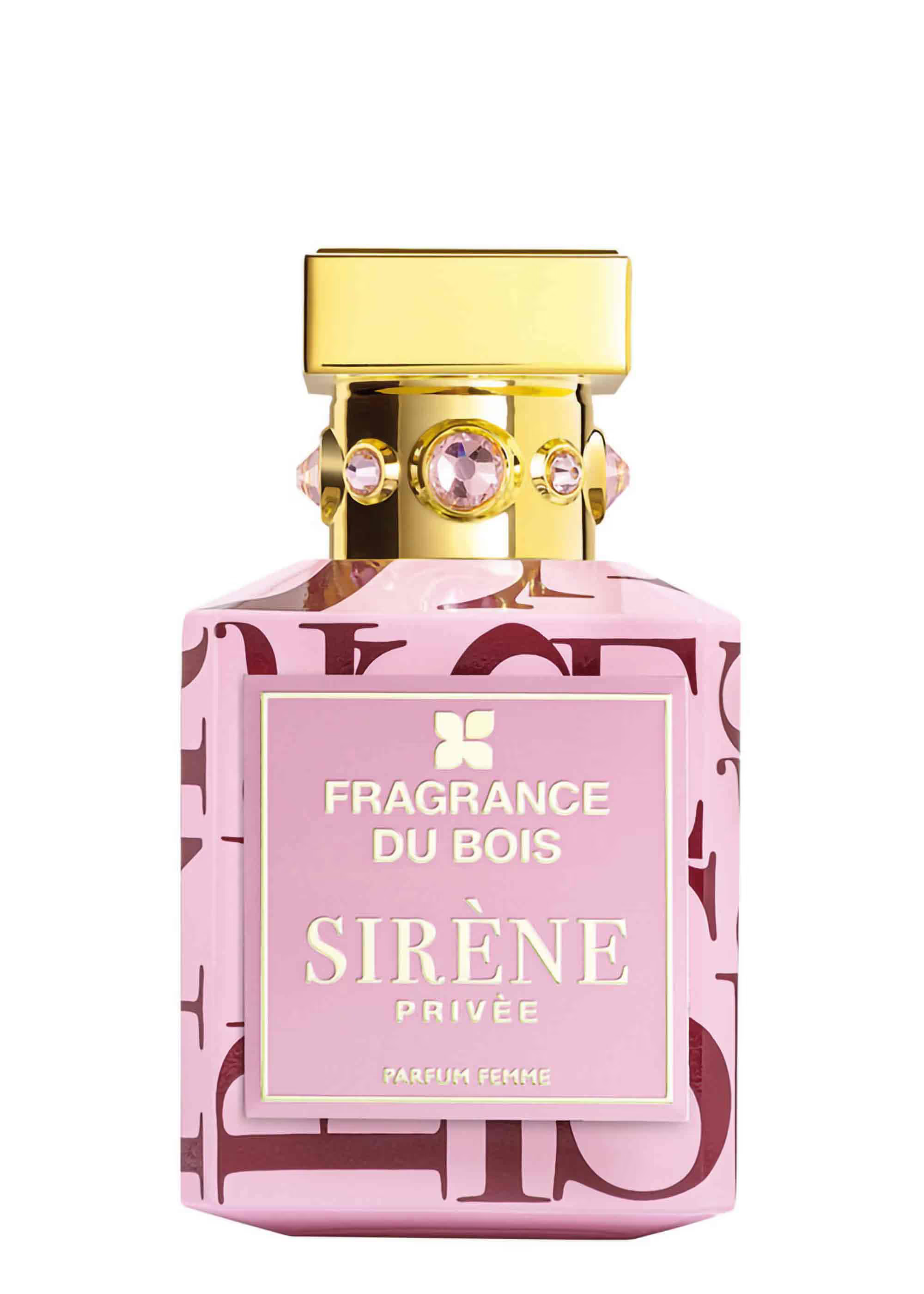
Sirène Privée Parfum 75ml
The bold just got bolder. A fearless evolution of the Sirène legacy, Fragrance Du Bois Sirène Privée is a fragrance of striking contrasts, spicy yet smooth, seductive yet elevated. If Sirène was the bold original, Privée is her darker, more dangerous side. Created by per fumer Wesley Perumal, it is inspired by the evolution of the original Sirène, created to express a deeper, more provocative side of femininity, layered with mystery, seduction, and illusion.
£295.00
Renaissance Mask - Nutri-Active Brightening & Resurfacing Mask
This Oskia luxuriously textured AHA and enzyme exfoliating mask leaves the complexion smoother and illuminated.
This deliciously scented mask works hard to remove tired skin cells and boost cell regeneration and ATP energy without aggressively stripping the top layers of the epider mis.
£75.00

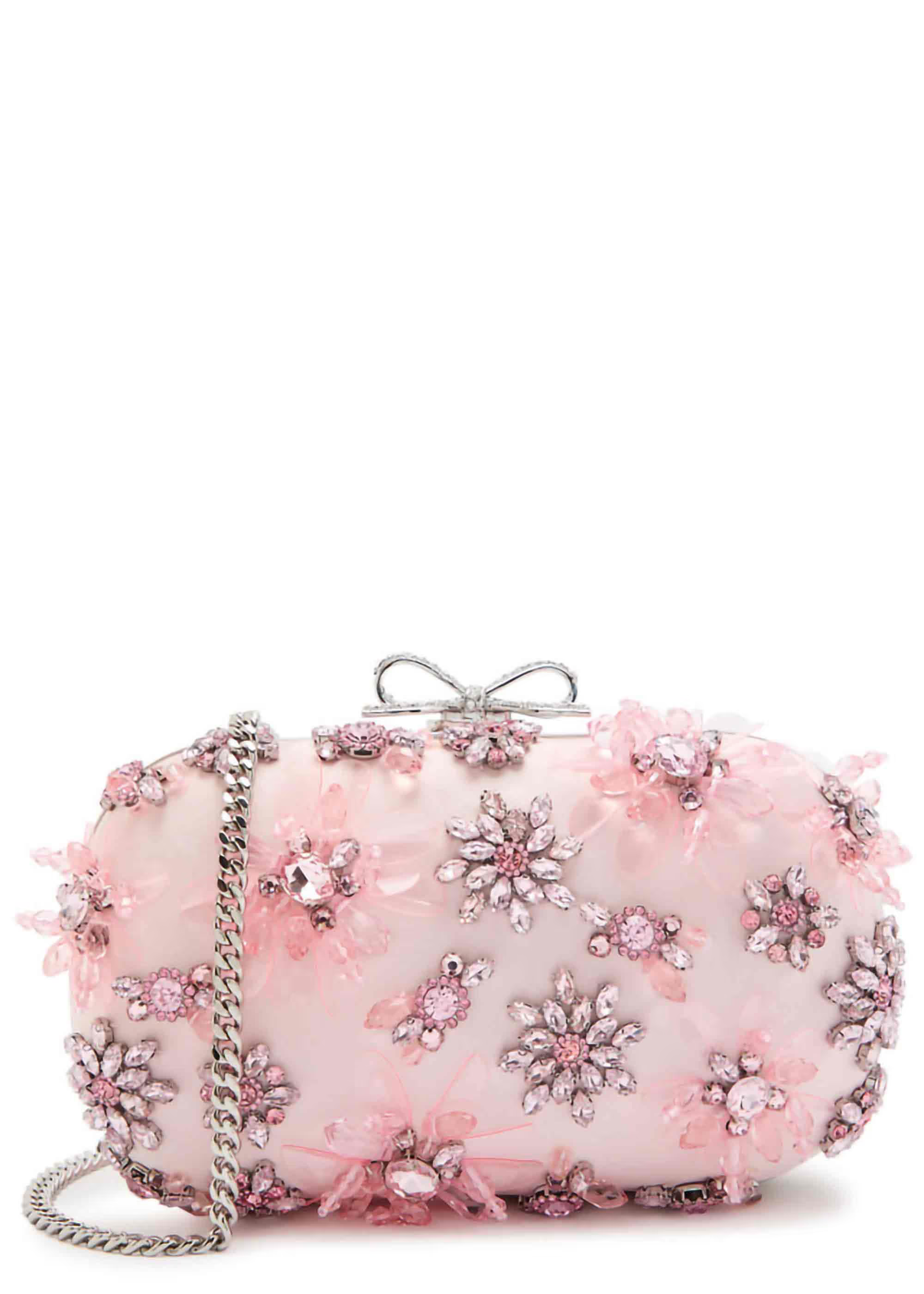
Floral-embellished satin box clutch
Self-Portrait satin box clutch.
Detachable chain shoulder strap, crystal and bead-embellished floral appliqués, pavé metal bow plaque, internal card slot, fully lined with push-lock fastening at top.
£400.00
Teese embellished voile top
Sister Jane voile top.
Paillette sequin embellishments, hang threads, halterneck, cascading ties at back neck, fully lined.
Concealed zip fastening at back.
£70.00


How Space, Wilderness and Restraint Define Modern Safari Luxury
There are places in the world where luxury arrives with a fanfare, and there are places like the Okavango Delta, where it reveals itself quietly, through space, silence and a profound sense of privilege. From the moment you approach by air, the Delta feels different. Channels of water glint in the sunlight, spreading across a patchwork of emerald islands and floodplains, creating a landscape that appears to breathe as it shifts with the seasons. Touching down on a narrow bush airstrip surrounded by nothing but grass and sky, the noise of the outside world falls away almost instantly.
The Okavango Delta sits at the heart of northern Botswana, one of Africa’s most stable and conservation-focused countries. Fed by rains that fall hundreds of miles away in the Angolan highlands, the Okavango River spills into the Kalahari Desert but fails to reach the sea. Instead, it fans out into the largest inland delta on earth, transforming arid land into a thriving wetland just as much of southern Africa begins to dry. This unique timing sustains one of the richest wildlife habitats on the continent and underpins the Delta’s reputation as a safari destination without equal. From classic tents overlooking quiet channels to secluded island retreats, every lodge and camp is positioned to take full advantage of this astonishing biodiversity, inviting guests to witness life in its most elemental form.
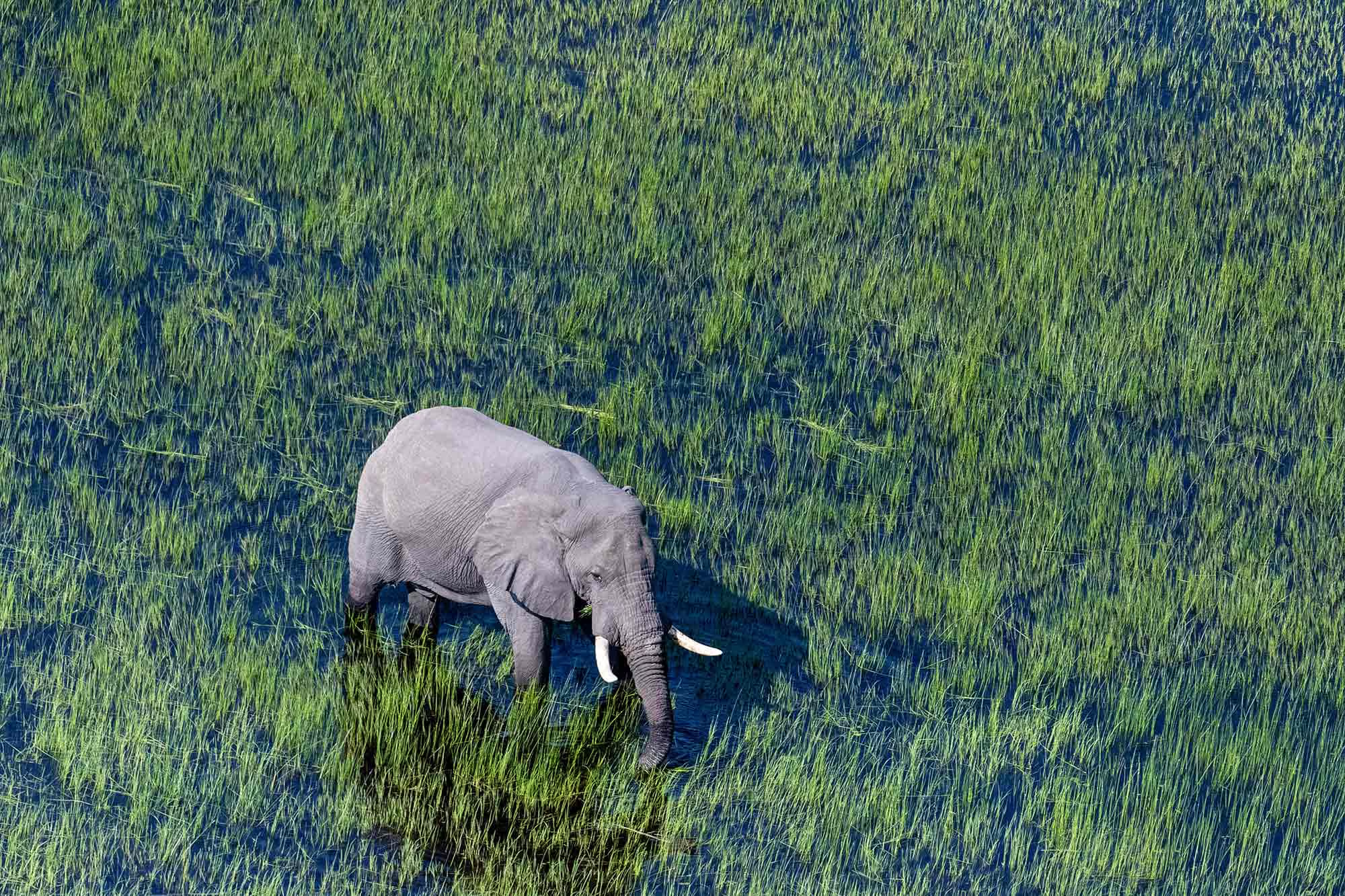
Luxury safaris here are shaped by this environment rather than imposed upon it. Camps are small by design, often with fewer than twelve tents, and built to blend into their surroundings. Canvas suites sit on raised wooden decks, shaded by ancient trees, their interiors defined by natural textures and understated comfort. Open fronts invite the bush inside, so mornings begin with birdsong and the soft movement of animals passing nearby. There is no sense of spectacle for its own sake. Everything feels considered, calm and quietly confident. Properties such as Zarafa Camp envelop guests in refined comfort while placing them in the heart of the Delta’s waterways; Abu Camp delivers close encounters with elephants splashing at the water’s edge; and the intimate Pom Pom Camp offers timeless tented luxury where crystal-clear channels thread through the bush.
Days follow a rhythm dictated by light and temperature. Early mornings bring game drives that take advantage of the cool air and heightened animal activity. The Delta reveals itself slowly at this hour, mist lifting from the floodplains as herds of elephants move through shallow water, their reflections stretching across the surface. Red lechwe splash effortlessly between islands, while giraffe browse in the distance and hippos grunt softly from hidden channels. The sheer density of wildlife is striking, but it never feels crowded. Botswana’s low-volume tourism model ensures that vast concessions are shared by very few vehicles, creating a sense of exclusivity that feels genuine rather than manufactured.
What sets the Okavango apart is the variety of ways in which the landscape can be explored. In addition to traditional game drives, many areas offer “mokoro” excursions, gliding silently through narrow waterways in dugout canoes guided by skilled local polers. From this low vantage point, the Delta feels intimate and immersive. Water lilies drift past, frogs cling to reeds, and fish ripple beneath the surface. The absence of engine noise sharpens the senses and creates moments of unexpected encounter, a sitatunga stepping delicately through papyrus or a fish eagle calling overhead. Some luxury lodges also arrange boat safaris, tracing channels that open onto wide lagoons where crocodiles bask and waterbirds cluster, a testament to the Delta’s extraordinary ecological diversity.
As the sun climbs higher, activity slows. Late mornings and early afternoons are designed for rest rather than movement, a concept that defines the true luxury of the Delta. Lunches are unhurried, often taken beneath shady trees or on open decks overlooking the water. Afternoons invite sleep, reading or quiet observation, time spent watching the play of light across the floodplain or the steady procession of wildlife passing at a distance. In camps where private plunge pools are part of the experience, it is not unusual to share the view with elephants or antelope moving through the heat haze.
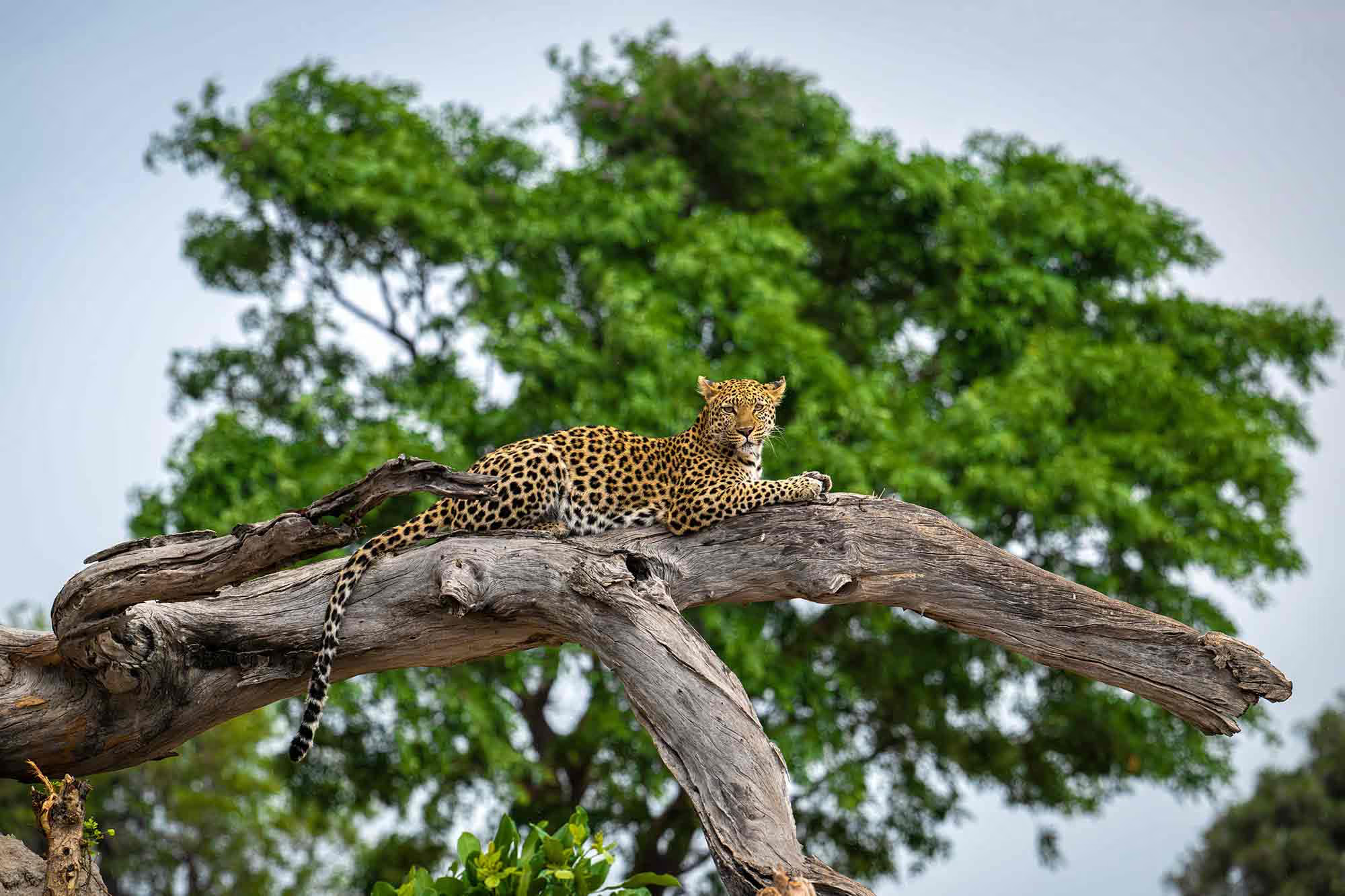
As temperatures ease, the Delta stirs again. Afternoon drives build gently toward the drama of dusk, when predators become active and the air fills with anticipation. Lions are a constant presence here, often encountered resting on islands or moving confidently through shallow water. Leopards are seen with surprising regularity, while wild dogs, with their energy and intricate social bonds, provide some of the most memorable sightings the Delta has to offer. These encounters are never rushed. Guides position vehicles thoughtfully, allowing moments to unfold naturally rather than chasing a checklist of species.
The expertise of the guides is central to the experience. Many have grown up in the region, their knowledge shaped by both formal training and lived experience. They read tracks, interpret behaviour and share insights with a quiet authority that deepens understanding rather than overwhelming it. Stories of the land, its people and its wildlife are woven naturally into each outing, adding depth and context to every sighting. Walking safaris offer another layer of connection. On foot, the scale of the Delta shifts. Attention moves from big game to the smaller details that underpin the ecosystem, from insects and plants to the patterns left by passing animals. These walks recalibrate perspective and reinforce the idea that the Delta’s richness lies as much in its subtleties as in its icons.
Evenings in camp are defined by warmth and ritual. As the light fades, fires are lit and lanterns glow softly against canvas and wood. Sundowners are taken in carefully chosen spots, a simple drink enjoyed as the sky deepens in colour and the sounds of the bush emerge. Dinner is social but relaxed, with menus that balance refinement and comfort. Freshly baked bread, locally sourced produce and thoughtful presentation reflect a level of care that feels personal rather than ostentatious. Conversations flow easily, shaped by shared experiences and the absence of distraction.



For travellers from the UK, reaching the Okavango Delta is far more straightforward than its remoteness suggests. Most journeys route via Johannesburg or Cape Town, with frequent overnight and daytime flights from London Heathrow and other major UK airports. From Johannesburg or Cape Town, a direct regional flight of around two hours connects to Maun, the Delta’s main gateway, where small aircraft or helicopter transfers await. On arrival, guests are met by their safari operator and transferred by light aircraft into the Delta itself. These short flights provide a breathtaking introduction to the landscape, revealing the full scale and complexity of the waterways below before landing on private bush airstrips close to individual camps. From start to finish, the journey is seamless and well managed, allowing the transition from city to wilderness to feel effortless.

Sustainability is woven into every aspect of luxury safaris in the Okavango. Botswana’s commitment to conservation ensures that tourism supports wildlife protection and local communities rather than compromising them. Camps operate with a light footprint, relying on solar power, minimising waste and working closely with nearby villages. Many employ and train local staff, creating long-term opportunities and fostering a strong sense of custodianship. For guests, this adds a layer of meaning to the experience, knowing that their presence contributes directly to the preservation of this remarkable ecosystem.
Leaving the Okavango is always tinged with reluctance. On the final morning, the familiar rituals take on added significance, one last drive, one last coffee enjoyed as the sun lifts over the floodplain. From the air, the Delta returns to abstraction, a living mosaic of water and land that feels almost unreal. Yet what lingers most is not the imagery, but the feeling of having experienced something rare and deeply grounding.
Many areas offer mokoro excursions; gliding silently through narrow waterways in dugout canoes guided by skilled local polers

Luxury safaris in the Okavango Delta are not about excess or spectacle. They are about access, authenticity and connection. It's about moving at the pace of the land, engaging all the senses, and rediscovering a relationship with the natural world that feels both humbling and restorative. In a world increasingly defined by noise and speed, the Delta offers a different kind of richness, one that stays with you long after you have returned home. The Okavango does not shout its value; it simply proves it.
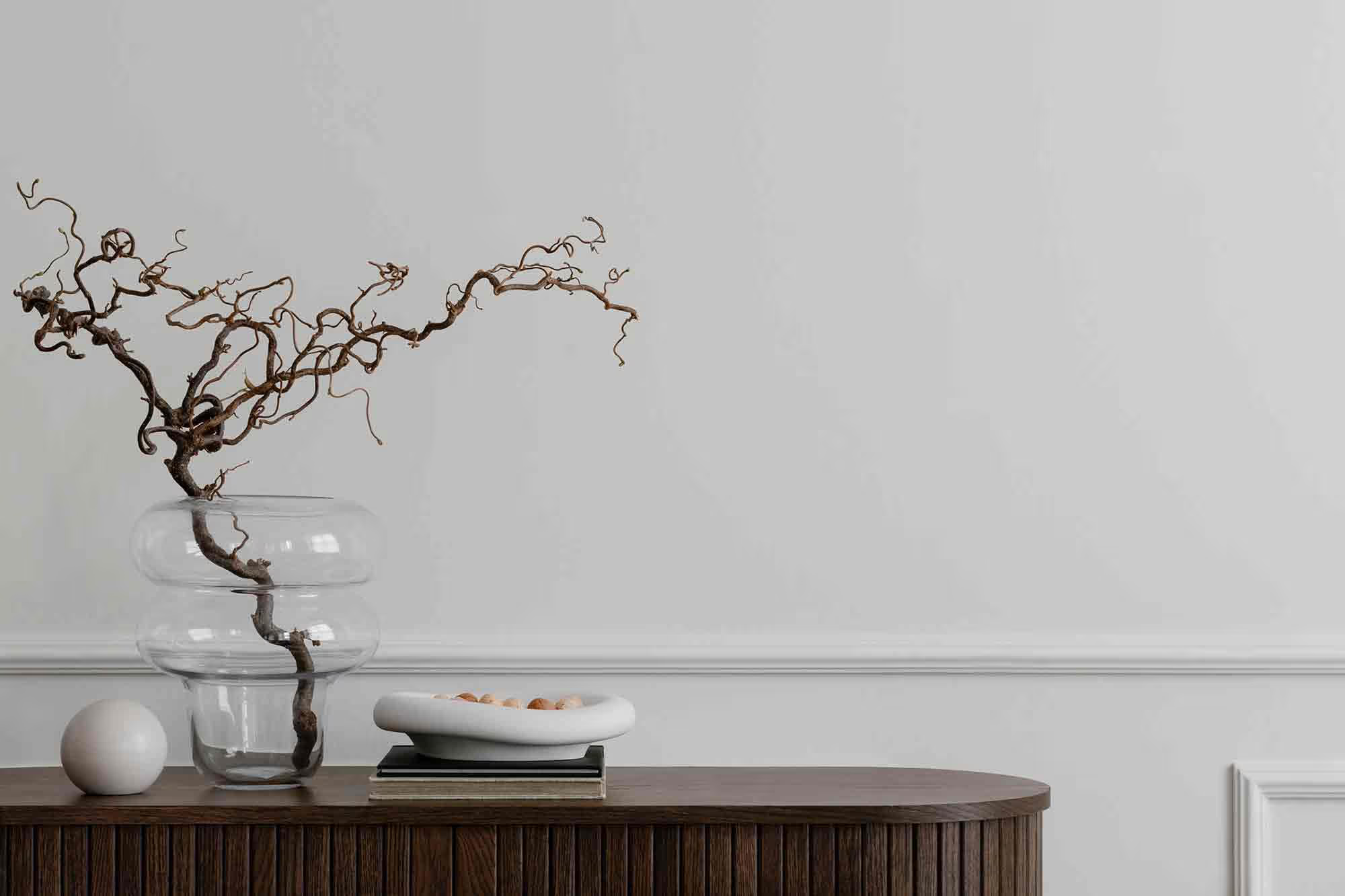
If you’re ready to stage smarter, Swealthy Staging can help. Visit swealthystaging.com to see how purposeful staging can transform your property and attract the right buyers.
If you’re ready to stage smarter, Swealthy Staging can help. Visit swealthystaging.com to see how purposeful staging can transform your property and attract the right buyers.
Swealthy Staging specialise in both interior design and property staging, offering expertise that helps clients achieve the right balance between lifestyle-focused living and market-driven presentation. In this article, we explore the distinctions between these two disciplines, why they matter, and how our team can guide you towards a service which aligns with your goals.
When it comes to transforming a home, the terms interior design and property staging are often used interchangeably, yet they are far from the same thing. While both involve careful arrangement of spaces, furniture, and décor, the goals, approaches, and outcomes of each service differ significantly. Understanding these differences is crucial for homeowners, property investors, sellers, and estate agents who want to make informed decisions about their property.
Interior design is the art and science of enhancing a living space to reflect the personality, lifestyle, and needs of the owner. Unlike property staging, interior design is not focused on selling a home, but about creating a space that supports long-term living.
Key elements of interior design include:
1. Personalisation: Every choice in interior design, from colour schemes and furniture selection to finishes and layout, is tailored to the client’s tastes. The goal is to create a space that feels uniquely theirs.
2. Functionality: Interior designers consider how people use their spaces on a daily basis. Storage solutions, flow, lighting, and ergonomics all play critical roles in designing a home that is both beautiful and practical.
3. Emotional Connection: A well-designed home evokes an emotional response in its occupants. It reflects their personality, tells their story, and becomes a place where memories are made.
4. Long-Term Investment: Interior design is an investment in lifestyle. It is about creating a home to meet a client’s evolving needs over years, rather than just appealing to others.
In essence, interior design is about living in a space, making it functional, comfortable, and visually pleasing for those who call it home.
Property staging, on the other hand, is a strategic approach aimed at selling or leasing a property. The purpose of staging is to present a home in its best light so that it appeals to a wide audience of potential buyers or tenants.
Key features of property staging include:
1. Depersonalisation: Unlike interior design, staging removes personal items such as family photos and memorabilia. This enables prospective buyers to visualise themselves in the space rather than feeling like a visitor in someone else’s home.
2. Neutral Aesthetics: Staging often relies on neutral colour palettes, minimalistic décor, and carefully curated furnishings to create a broad appeal. The aim is to make the property look stylish yet universally inviting.
3. Strategic Styling: Stagers highlight the home’s best features, emphasise the flow of rooms, and make spaces appear larger and more functional. Small touches like rearranging furniture, adding art, or placing a few decorative items can dramatically improve buyer perception.
4. Short-Term Impact: Property staging is a temporary, market-driven exercise. Once a home is sold, the staging items may be removed or repurposed.
Ultimately, staging is about marketing a space, helping potential buyers connect with it emotionally while leaving them free to imagine living there.
Understanding the difference between interior design and property staging comes down to three main contrasts:
Interior design personalises a home for the occupant, reflecting their tastes, lifestyle, and preferences.
Property staging intentionally depersonalises the space to appeal to a wider audience.
Interior design focuses on creating spaces for daily living, comfort, and functionality.
Property staging focuses on presenting a property to sell, highlighting potential, scale, and versatility.
Interior design fosters an emotional connection for the homeowner, creating a sense of belonging.
Property staging cultivates emotional neutrality, allowing buyers to imagine their own lives without distraction from the owner’s personal style.
These differences are subtle but significant. Misunderstanding them can lead to decisions that either compromise the home’s liveability or limit its market appeal.
Choosing the right service (interior design or staging) has real implications for both lifestyle and investment.
For homeowners who plan to live in their property for years, interior design is the clear choice. It ensures that spaces are tailored to personal needs and functional for daily routines. A home that is aesthetically pleasing and practical enhances quality of life and can even increase long-term property value.
For sellers or estate agents, staging is an essential tool to accelerate sales and maximise return on investment. Staged homes tend to sell faster and often command higher prices because they allow buyers to see the potential of a property without being distracted by the previous owner’s personal style. Staging turns an ordinary property into a marketable showpiece.
By clearly distinguishing between the two, clients can make smarter decisions: investing in long-term living solutions with interior design or achieving short-term market success with staging.
When deciding between interior design and property staging, consider your primary goal:
If your focus is long-term living, comfort, and personal expression, interior design is the solution.
If your focus is selling or leasing, attracting buyers, and maximising market appeal, property staging is the key.
For many homeowners and property investors, the ideal strategy may even involve both: a home designed for personal enjoyment but with staged elements to enhance resale value.
Swealthy Staging’s expertise makes navigating these choices simple and stress-free. We understand lifestyle and marketing needs. This means we can advise homeowners on subtle upgrades that enhance liveability while also boosting market value if they decide to sell in the future.
We know how to transform a home into a stylish, functional space for daily life and can also shift it into a strategically staged property to appeal to buyers. This dual perspective ensures no detail is overlooked. Plus, our clients benefit from our comprehensive knowledge, creative solutions, and meticulous attention to detail. Whether it’s crafting a personalised sanctuary or creating a market-ready property, we deliver results that exceed expectations.
If you’re ready to move forward with clarity and confidence, Swealthy Staging is here to help.
READY TO STAGE YOUR PROPERTY?
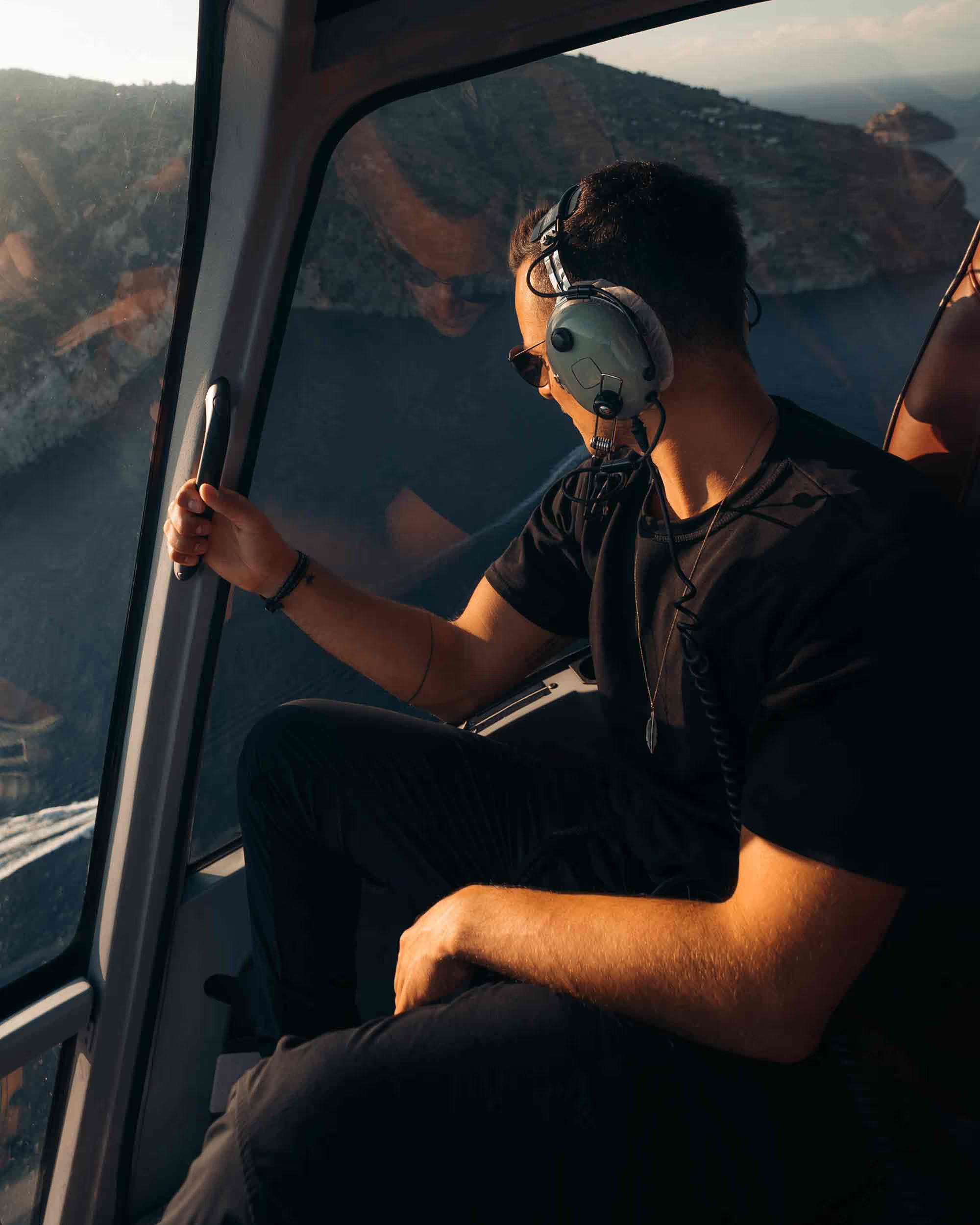
In the upper echelons of British society, luxury is no longer defined by excess alone.
In the upper echelons of British society, luxury is no longer defined by excess alone. It is defined by access, intelligence, and control. As the country’s wealthiest individuals refine how they live, travel, and do business, helicopter chartering has emerged as one of the most powerful, yet understated, symbols of modern privilege.
More than a mode of transport, helicopter chartering in the UK represents a philosophy: one that values time over distance, discretion over display, and experience over convention.
For ultra-high-net-worth individuals, time is not merely valuable, it is non-renewable. Helicopter chartering addresses this reality with surgical precision. Where road and rail introduce unpredictability, helicopters deliver certainty.
A journey from Mayfair to a country residence in the Cotswolds can take under half an hour. A same-day round trip between London and Manchester, Liverpool, or the West Country becomes not only feasible, but effortless. Even Scotland, long considered remote, is suddenly within comfortable reach.
This ability to compress geography fundamentally reshapes how affluent individuals structure their lives. Business meetings, family commitments, leisure pursuits, and international travel can coexist within a single day, without compromise.
Commercial aviation, even in first or private class terminals, still involves queues, fixed schedules, and exposure. Helicopter chartering removes friction entirely.
Clients depart on their own timetable from private helipads, executive airports, or discreet rural locations. There are no crowds, no announcements, and no waiting. The aircraft arrives when required, flies directly to its destination, and lands as close as regulations allow to the final point of interest.
For individuals accustomed to bespoke service in every other area of life, this level of autonomy feels less like luxury and more like necessity.
In an era of heightened visibility, privacy has become one of the most coveted luxuries of all. Helicopter chartering offers it by default.
Unlike fixed-wing aviation, helicopters can operate away from major hubs, dramatically reducing public exposure. High-profile clients, whether business leaders, public figures, or members of established families, can move discreetly, shielded from unwanted attention.
For many, this discretion extends beyond convenience. It is integral to personal security, reputation management, and peace of mind.
Today’s luxury helicopters rival premium automotive interiors in both design and comfort. Cabins are meticulously finished with hand-stitched leather seating, refined lighting, advanced sound insulation, and climate control systems that ensure a calm, controlled environment.
Panoramic windows provide uninterrupted views of the British countryside, coastlines, and cityscapes, turning each flight into an experience in its own right. For many clients, helicopter journeys become moments of quiet reflection rather than mere transit.
Service levels are equally refined. Charter operators provide concierge-style coordination, flexible scheduling, and pilots trained not only in advanced aviation but in client-facing professionalism. The experience is seamless, discreet, and entirely tailored.
One of the defining advantages of helicopter chartering is its ability to reach places other forms of transport cannot. Private estates, Highland lodges, remote shooting grounds, islands, racecourses, and yachts at anchor all become accessible with minimal disruption.
Helicopters are frequently used to connect London residences with country homes, transfer clients to and from private jets at regional airfields, arrive directly at major sporting and cultural events, provide yacht-to-shore transfers along the UK coastline and reach rural or offshore business interests.
For individuals with complex lifestyles spanning multiple locations, helicopters serve as the connective infrastructure of modern wealth.

While efficiency is the foundation of helicopter chartering, pleasure is its natural extension. Increasingly, helicopters are commissioned not only for transport but for experience-led journeys.
Aerial tours over the Scottish Highlands, the Lake District, Snowdonia, or the Jurassic Coast reveal Britain from a perspective few ever see. Sunset flights over London’s skyline, private Champagne picnics reached by air, and bespoke sightseeing itineraries have become hallmarks of contemporary luxury travel.
Milestone birthdays, anniversaries, and proposals are now celebrated at altitude, where exclusivity is absolute and memories are truly singular.
Britain’s social calendar is rich with prestigious events, many of which are synonymous with helicopter arrivals. Royal Ascot, Cheltenham Festival, Silverstone, Goodwood, and major cultural gatherings all see helicopters ferrying guests directly to the heart of the occasion.
For attendees, this is not about spectacle. It is about avoiding congestion, maintaining privacy, and arriving composed rather than fatigued. The helicopter becomes an extension of the event itself, an elegant prelude rather than an ostentatious display.
The UK is widely regarded as having one of the most rigorous aviation regulatory frameworks in the world. Licensed helicopter charter operators operate under strict Civil Aviation Authority oversight, with uncompromising standards for pilot training, aircraft maintenance, and operational procedures.
For the luxury client, this regulatory discipline translates into confidence. Safety is embedded into the service, allowing clients to focus entirely on the experience rather than the logistics.
In a cultural climate where overt displays of wealth feel increasingly outdated, helicopter chartering reflects a quieter, more assured form of status. It is not about being seen but about moving through the world efficiently, privately, and on one’s own terms.
Helicopter chartering does not announce wealth. It assumes it for Britain’s most affluent individuals, this form of travel aligns perfectly with a broader shift in luxury values: toward discretion, craftsmanship, and intelligent design.
Ultimately, helicopter chartering is not simply about flying. It is about rethinking distance, redefining convenience, and reclaiming time.
As the boundaries between business, leisure, and personal life continue to blur, those who can move effortlessly between them gain a decisive advantage. Helicopter chartering offers that advantage, elevated, refined, and unmistakably modern.
In a nation defined by tradition, helicopter chartering represents progress: a way of living that rises above the ordinary, without ever needing to say so.
In a nation defined by tradition, helicopter chartering represents progress: a way of living that rises above the ordinary, without ever needing to say so.
It looks like your search doesn't match any of our library articles. Please reset the filter and try again.
Looking for a different viewing experience, head down to our printed issues library and browse throught our heritage of design and luxury all in one destination.

Copyright © Swealthy LTD
All rights reserved









.avif)