.jpg)
The Grand Hotel Birmingham is looking ahead to the festive season, offering an exclusive sneak peek of three new festive suites, which will be available for guests to stay in from 2nd November – 31st December.
This Christmas, guests are invited to join the line up of royalty and rockstars that have called The Grand Hotel home for a night, as festive decor and installations will adorn the walls of selected guest suites from 2nd November – 31st December. Bookings are now open via the hotel’s website.
Three suites will be transformed in partnership with Light Up Christmas, all complete with intricately decorated Christmas trees and themed around classic Christmas vintage, winter florals and tradition-with-a-twist, to create a festive wonderland for guests.
The “Dickens’ Christmas” suite will have a classic festive feel, drawing on nostalgic traditions. Combining traditional décor with warm textures, the suite will evoke a timeless elegance, providing a cosy place to relax.
A “Mulled Wine” suite will be dressed with luxurious burgundies, deep purples and warm browns and accented with real dried orange slices, pomanders studded with cloves, cinnamon stick bundles, star anise & berries, to create a festively fragrant space.
The final suite, “Florals … for Christmas?” takes inspiration from the iconic line from The Devil Wears Prada. Set to deliver a unique spin on the usual décor themes of the season, the room will be laden with stunning floral displays.
Originally opened in 1879 and designed by Thomson Plevins, The Grand Hotel is a Grade II* listed Victorian masterpiece. Not only will the suites come alive with festive cheer, but the entire hotel will blend its historic grandeur with delicate sparkles of glass decorations and deep Bordeaux tones, evoking classic Christmas glamour with a modern touch.
Johan Scheepers, General Manager of The Grand Hotel Birmingham, said: “Beyond the doors of the hotel, Birmingham comes alive each Christmas, with festive markets, glittering shopping streets, as well as the best dining, music and theatre, all just moments away. It seems only fitting that we lean into the festive cheer, offering guests the ultimate festive escape during their stay.”
Louise Walsh, Co-Founder of Light Up Christmas, said: “It’s all about teamwork and organisation – we’ve worked with The Grand Hotel Birmingham, year on year, and each time we love to experiment with new ways to fuse current trends with classic Christmas traditions. We can’t wait to bring the festive magic and see our designs spring to life as guests begin to stay in the suites”.
Guests can also give the gift of an elegant, luxurious experience with a gift card to friends and loved ones, whether it’s enjoying a cocktail or decadent afternoon tea in the luxurious setting of Madeleine Bar, experiencing the magic of Downstairs at The Grand in Isaac’s or adding an extra touch of luxury with a massage in their suite.
Gift cards can be redeemed for a hotel stay, in Madeleine’s, the hotel bar, or at Isaac’s, the hotel restaurant.
The Grand Hotel Birmingham’s festive suites are available to book now from 2nd November to 31st December.
For further information, to make a reservation or purchase a gift card, head to the website: https://www.thegrandhotelbirmingham.co.uk/grand-yuletide-trio
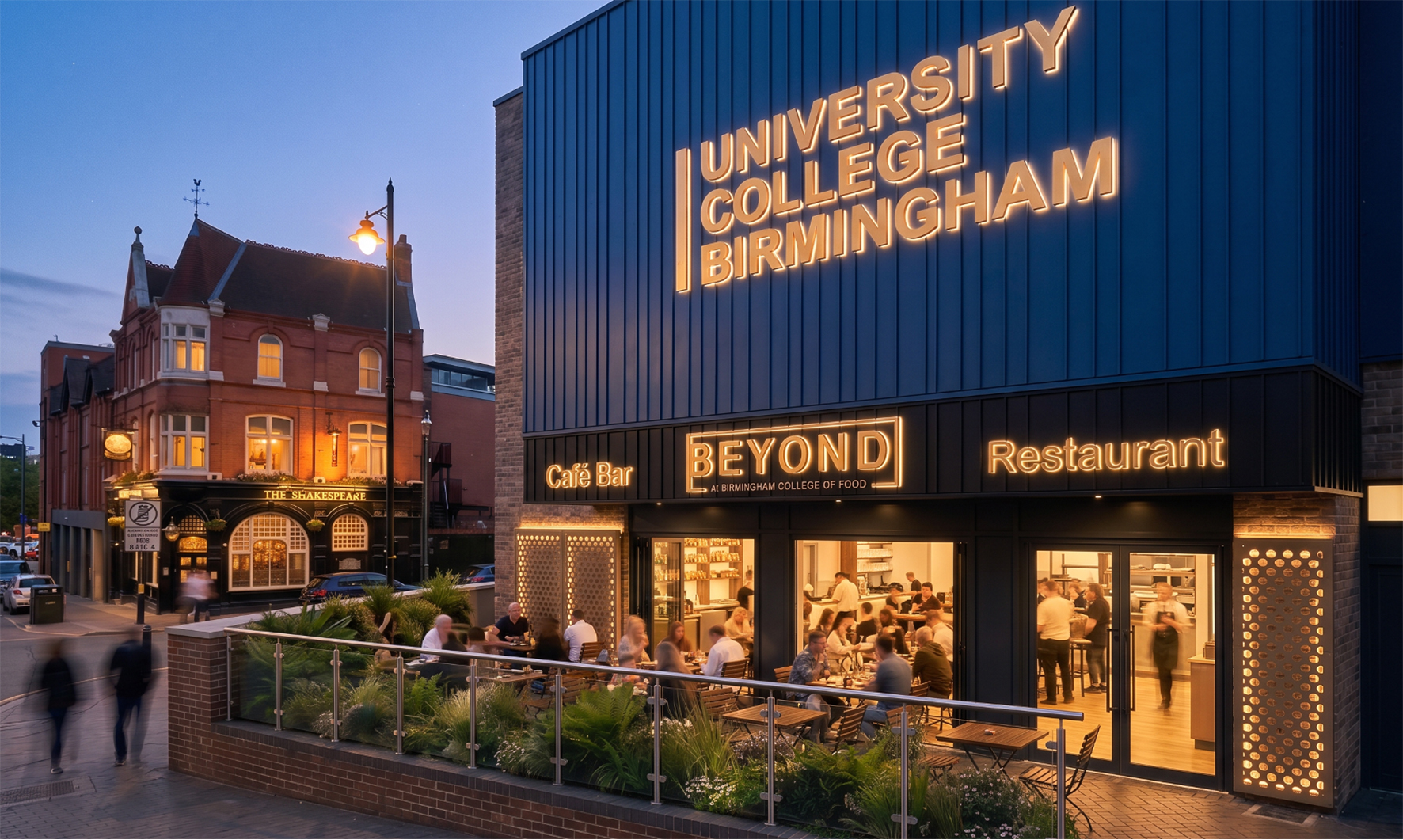
University College Birmingham (UCB) has revealed details of new restaurant Beyond and a major transformation of Restaurant at College of Food, with both venues opening this autumn
Following the announcement of University College Birmingham’s (UCB) £15 million investment and acquisition programme, which included The Cube hotel and restaurant, it has revealed further details on the first two College of Food venues which will open as part of the investment programme.
Beyond, a new 80-cover Café, restaurant and bar will open at UCB’s College of Food campus late this autumn. Located at the front of the Summer Row building, Beyond will be open for breakfast and lunch every day, and for dinner from Wednesday to Sunday.
Creating 30 new jobs for both full-time employees and students on placements, Beyond’s menu will be small plates-led, featuring sharing dishes that celebrate the diversity of UCB’s students and Birmingham’s heritage, all paired with an extensive wine list. The space will offer a mix of table, kitchen and bar and counter-top seating, plus an outdoor terrace for guests to enjoy warmer weather.
UCB’s existing venue, Restaurant at Birmingham College of Food, is also undergoing major refurbishment. Located inside the Summer Row campus, the restaurant is one of Birmingham’s longest-running dining destinations and offers diners the chance to enjoy top-quality food carefully prepared and served by UCB students, under the guidance of experienced industry professionals and lecturers.
Following the refurbishment, guests will be able to access the restaurant through Beyond and enjoy a bigger open-plan space featuring a new finishing kitchen, giving guests the chance to watch the students work. A new bar has also been added, for diners to enjoy a drink before or after their meal.
Students will continue to work across both the kitchen and front of house, developing the confidence, skills and experience they need for their future hospitality careers, while guests can enjoy stellar food and service, creative flair and seasonal produce, plus elegant desserts from the restaurant’s dedicated pastry section.
Restaurant at Birmingham College of Food is open during term time for lunch and dinner, Monday to Friday, and will reopen on 12th October, with bookings open now.
David Cumberlidge, Commercial Director, said: “The changes at our Summer Row campus represent a significant step in our commitment to investing in exceptional learning environments for our students, as well as creating fantastic new experiences for the people of Birmingham and beyond, whether that’s enjoying small plates and wine at Beyond, or tasting exemplary dishes at the new-look Restaurant at College of Food.
“Beyond and the transformed Restaurant at College of Food will give our students brand new, state-of-the art spaces to learn in, working alongside industry professionals in environments that reflect the very best of what’s happening in hospitality right now.
We are giving the people of Birmingham and beyond even more reason to visit Summer Row, but also adding new, exemplary facilities for all of our current and future students, no matter what they are studying. We hope this will encourage even more young people to consider embarking on the next phase of their education at University College Birmingham.”
University College Birmingham provides further and higher education, sixth-form provision, apprenticeships and university courses to more than 10,000 students from Birmingham, the wider region, across the UK and internationally. Its curriculum and skills training span a wide range of disciplines, including Nursing and Health, Business and Finance, Tourism and Hospitality, Computing, Cyber Security, Creative Studies (taking in hair, beauty, theatrical make-up and prosthetics), Digital and IT, Psychology and Social Work, Education, Sustainable Construction and Engineering, and Sport. These programmes are delivered through three academic schools: the Business School, the School of Health, Life Sciences and Education, and the School of Computing, Engineering and Built Environment.
The changes at Summer Row mark the first steps in UCB’s previously announced wider investment programme, which will also see them open a new hotel and restaurant at The Cube, plus a neighbourhood restaurant in Harborne, all aimed to create exceptional learning environments for students, while supporting Birmingham’s wider hospitality sector.
University College Birmingham’s educational training venues also include a culinary school in Chelmsley Wood, which offers free training for adults and young people, aiming to give an introduction to working in hospitality or refresh existing skills to get them back into work.
For more information, or to book a table at Restaurant at Birmingham College of Food, visit: https://www.ucb.ac.uk/open-to-the-public/restaurant/
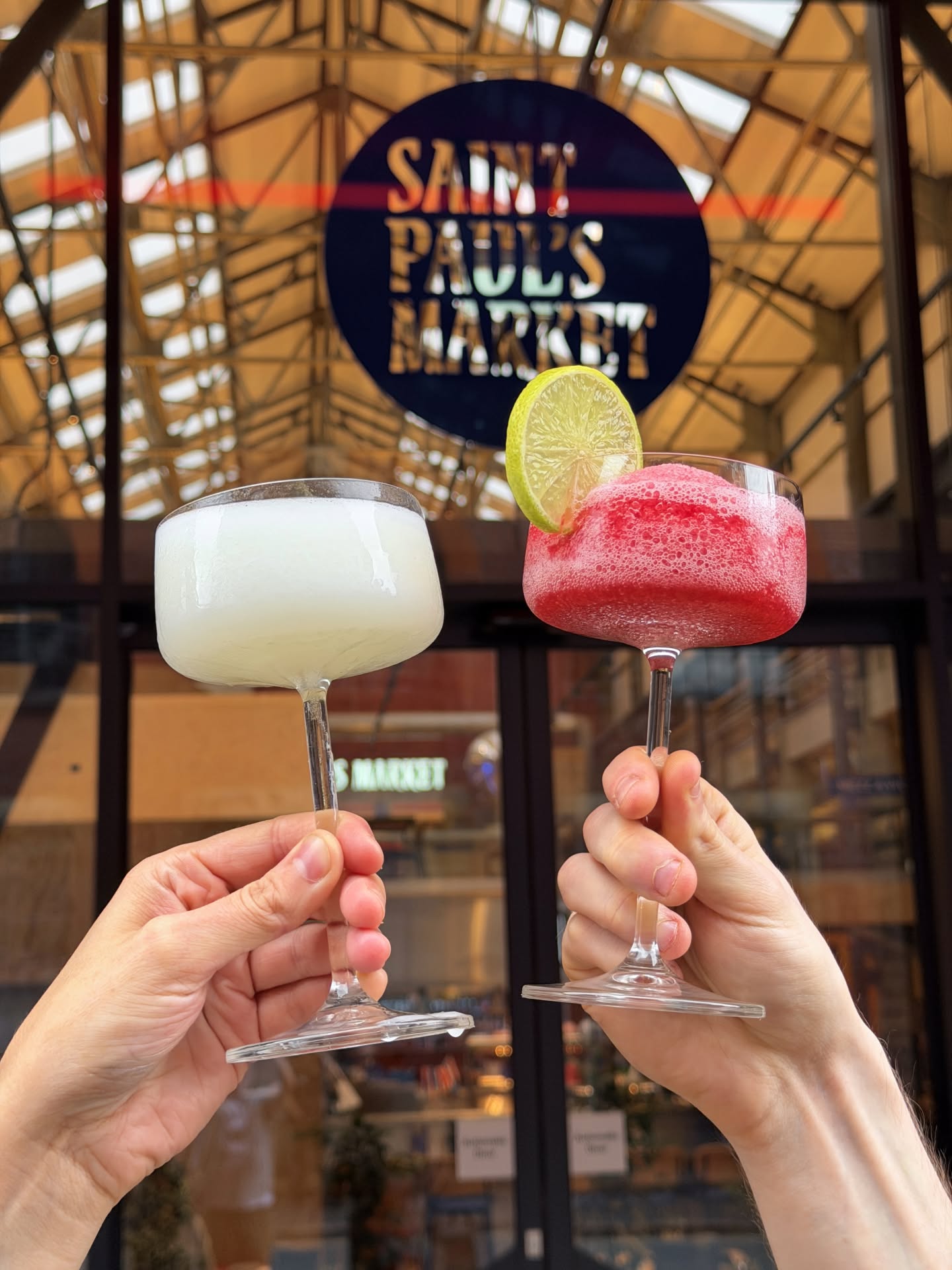
Saint Paul’s Market, in Birmingham’s Jewellery Quarter, is celebrating its first birthday this September with five days of food, drink, live entertainment and independent makers, culminating in an artisan market on Saturday 27 September.
The food hall, which has welcomed over 300k visitors in its first year, officially opened on 25 September 2025 and will mark its anniversary with celebrations running from 23–27 September. Highlights include a Midland Press wine tasting on 23 September, live music and birthday celebrations on 25 September, and a Birmingham Artisan Market on 27 September.
Across the week, visitors can also enjoy DJs, food specials from all eight traders, a special birthday cocktail, Aperol on tap, self-serve Guinness and football screenings on the venue’s huge TV screen.
Located on Mary Ann Street in Birmingham’s Jewellery Quarter, Saint Paul’s Market brings together eight independent Birmingham kitchens, two bars and 500 seats across two floors in a 10,000 sq ft former industrial warehouse.
The food hall is home to Colbeh, Soi, Corner Shop, Chancer’s, Tiger Bites Pig, Zindiya, LA-POP and Oak ’n’ Roll, offering everything from Persian food cooked over fire and BBQ Thai dishes to Detroit-style pizza, fried chicken, Taiwanese bao, Indian street food, gelato and Vietnamese-inspired coffee and cinnamon buns.
The venue was created as a collaboration between Liverpool’s Baltic Market, Independent Birmingham and Buddha Belly, with a focus on championing local independent businesses and creating a vibrant destination for the city.
Joe Schuppler, founder of Independent Birmingham, said, “It’s hard to believe it’s already been a year since we opened Saint Paul’s Market. We’re incredibly proud of what we’ve created with our brilliant traders and partners, and so grateful to everyone who has supported us along the way. We wanted to celebrate our first birthday in true Saint Paul’s style – with great food, drinks, music and plenty of good times!”
Tim Haggis & Oli Press, Co-founders of Baltic Market, added, “It’s been brilliant to see Saint Paul’s Market thrive over its first year. We knew Birmingham had an incredible independent food scene, and it’s been amazing to see that come together under one roof. We’re really proud of what the team has created and can’t wait to celebrate this milestone with everyone!”
Sai Deethwa and James Fitzgibbons, co-founders of Budda Belly and Soi 1268, said, “We’re hugely passionate about championing quality independent food, so bringing Saint Paul’s Market to life alongside Independent Birmingham, Baltic Market and our brilliant traders has been incredibly exciting. To see it become such a buzzing part of Birmingham’s food scene in just one year is amazing, and we can’t wait to celebrate everything we’ve built together.”
Alongside its food and drink offering, Saint Paul’s Market regularly hosts live music and DJs, football screenings and a monthly artisan market in collaboration with Birmingham Artisan Markets, supporting local makers and creatives.
Drinks are equally focused on the local scene, with craft beers from Birmingham breweries, wines from Midland Press and spirits from Spirit of Birmingham, alongside cocktails, boozy slushies and an extensive selection of drinks.
After a strong first year, the birthday celebrations mark the start of Saint Paul’s Market’s next chapter as it looks to continue growing as a lively, inclusive hub for Birmingham’s local community.
To keep up to date with details on the first birthday celebrations, please follow St Paul’s Market on Instagram @saintpaulsmarket

KIBOU Birmingham has announced that it will officially open its doors on Temple Row on Monday 12th October.
Bookings will go live Friday 3rd September via the KIBOU website, including for two soft launch dates on Saturday 10th and Sunday 11th October, with 50% off food. To be the first to book and get access to soft launch sittings, guests can sign up to the newsletter via the KIBOU website.
Platters will feature a selection of handmade nigiri, uramaki and sashimi, not complete without a sushi-lovers’ addition of wasabi and ginger.
The team will be giving away scan-to-win cards, with customers able to try their luck to win prizes to be redeemed when the restaurant opens, including £50 vouchers, glasses of Sake, Kirin Lager and KIBOU’s best-selling sushi roll, the Volcano Roll, featuring salmon uramaki, dipped in tempura and drizzled with KIBOU special sauce. All entrants will also be entered into a prize draw to win £100 to spend in the restaurant.
Nestled in the heart of the Colmore Business District, at 61-63 Temple Row, facing onto Cathedral Square, the new KIBOU restaurant will be serving up classic and contemporary Japanese sharing plates.
The new site will accommodate up to 200 covers across a bar and lounge, open sushi kitchen, main restaurant, and private dining space. From chicken karaage, spiced pork gyoza and crisp tempura to beautifully presented sushi and sashimi, A5 Joshu wagyu beef, steaming ramen, katsu curry, and teriyaki, the restaurant promises an extensive menu with bold flavours.
A standalone bar will also serve KIBOU’s Japanese-inspired cocktails alongside a curated list of Japanese whisky, sake, and umeshu.
Guests will be able to enjoy bold, colourful, Japanese-inspired interiors, with original hand-painted and digital murals by Gloucestershire-based artist Martyna Sabadasz, evoking the brand’s signature spirit of discovery and adventure.
KIBOU currently has 6 sites open across England. The group has also announced that a 210-cover flagship restaurant will open in the heart of London’s Covent Garden in early 2027 following its strongest trading year on record, taking the total number of restaurants to 8.
Gemma Hutchinson, Senior General Manager at KIBOU, says: “We’re so excited to be finally opening our doors in Birmingham. The team is busy putting finishing touches to the restaurant, and we can’t wait to show people what we’ve done with the place.
“We’re very much looking forward to welcoming our first guests through the door in October, whether they’re quick enough to secure a spot on one of our soft launch sittings, or they join us from our official opening date. For now, we hope you enjoy a first taste of KIBOU on Temple Row next week, good luck!”
To sign up to the mailing list for soft launch bookings, or to make a reservation, visit here: https://kibou.co.uk/locations/kibou-birmingham
KIBOU Birmingham opens on Monday 12th October, follow the journey to opening on their Instagram here: https://www.instagram.com/kibou_restaurants/
.jpg)
Cow & Sow has given its menu an early festive makeover, releasing bookings for the exclusive festive sharing menu including prime cuts of Wagyu, produce from the Cow & Sow farm and new indulgent desserts
Cow & Sow is supporting spontaneous Christmas celebrations, with no pre-orders required
Cow & Sow has announced its starting the Christmas celebrations early, with the launch of a brand new festive sharing menu and bookings now open for November and December.
The restaurant’s best value festive menu to date will mean parties of over 4 can indulge in 3 courses served family-style, from just £55 per person. The menu features a loaded sharing board, mouthwatering cuts of English Wagyu, Chateaubriand or Tomahawk steaks and a choice of two new indulgent desserts to finish.
The Cow & Sow festive set menu begins with a stand-out sharing board, loaded with maple-glazed brisket, pork, sage and onion croquettes, pigs in blankets, black garlic and truffle mushroom tartlets, sticky pork belly and marinated olives.
To follow, guests can choose from a selection of sharing cuts of grass-fed beef sourced from local family farms, cooked over fire and basted to perfection. Cuts of Angus beef include picancha, chateaubriand, or bone-in Tomahawk and Porterhouse, or for extra indulgence, guests can upgrade to Cow & Sow’s signature English Wagyu.
All steaks will be served with sharing sauces, butters and sides of koffman’s chips, fire-roasted hispi cabbage, mac and cheese as well as the iconic crispy onion blossom.
To round off the meal, Cow & Sow is introducing two brand new decadent desserts; sticky toffee pudding with salted caramel sauce and clotted cream, and winter berry pavlova with vanilla chantilly and cinnamon.
Set menu prices are based on the cut of steak chosen, with prices ranging from £55 - £79 per person.
There is also a vegan set menu available, meaning nobody needs to miss out on the celebrations. The courses include Pearl barley risotto with pear and walnut, Salt baked beetroot pithivier with kitchen farm greens and sticky toffee pudding, with three courses available for just £40 per person.
For those that would prefer not to share, the regular day to night menu will also be available, with a festive spruce up. To continue the spontaneous celebrations, no pre-orders are required for parties of up to 12 people, so diners don’t have to remember what they ordered weeks in advance.
Mark Warburton, founder of Cow and Sow, says “We know it’s a little early to be talking about the big C word, however, it’s arguably the perfect time to get your Christmas plans in order. Personally, I like to enjoy the season with minimal fuss, which is why we’ve made organising festive gatherings at Cow & Sow as easy as possible, without the need for pre-orders. There’s no need for people to guess what they fancy eating weeks in advance!
“This year our new English Wagyu is on the menu, as well as lots of produce from our Cow & Sow Kitchen Farm. We’re going all out on the celebrations but have tried to keep the experience as affordable as possible with our best value festive menu to date. We would love for as many people as possible to join us!”
To find out more or how to book your table, please visit: https://thecowandsow.co.uk/ or email bookings@cowandsow.co.uk directly.
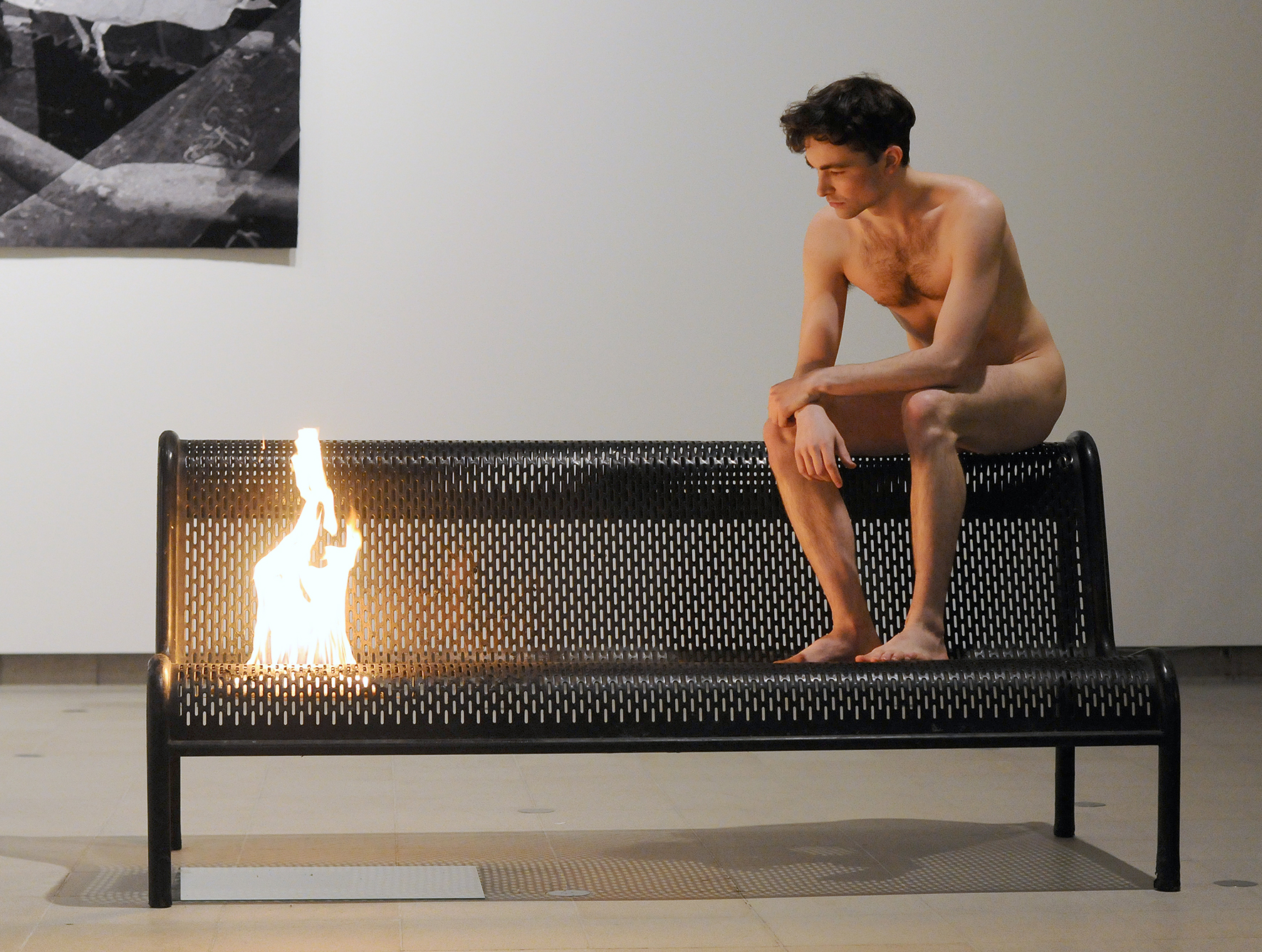
British Art Show 10: A Chorus of Strangers starts its national tour in Coventry on Friday 2 October 2026.
Continuing until Sunday 10 January 2027, the landmark exhibition will then travel to Swansea, Bristol, Sheffield and Newcastle Gateshead, marking the first time in its history that the British Art Show will tour to five cities across the UK.
Produced by Hayward Gallery Touring, the British Art Show has, since 1979, provided the most ambitious overview of contemporary art in Britain, introducing generations of artists to audiences nationwide while reflecting the social, cultural and political concerns of its time. Over four decades, the exhibition has reached millions of visitors and featured many of the most influential artists working in Britain.
Curated by Ekow Eshun, British Art Show 10: A Chorus of Strangers brings together 37 artists whose work addresses the urgencies and possibilities of contemporary life. Through painting, sculpture, installation, film, photography, performance and sound, the exhibition explores how identities are formed, how histories are remembered and contested and how human lives are intertwined with wider social and ecological systems.
Ekow Eshun
Ekow Eshun is one of the UK’s most influential cultural figures. His curatorial projects include In the Black Fantastic at the Hayward Gallery and The Time Is Always Now: Artists Reframe the Black Figure at the National Portrait Gallery. Eshun has established an international reputation for exhibitions that combine rigorous scholarship with compelling storytelling and a deep engagement with contemporary culture.
A Chorus of Strangers
The title, A Chorus of Strangers, reflects the exhibition’s exploration of relationships between self and other, individual and collective, human and non-human. At a moment characterised by profound social transformation, environmental uncertainty and competing narratives of identity and belonging, the exhibition asks how art can create new ways of understanding difference, connection and coexistence.
The exhibition unfolds through three interconnected themes. Moments of Being explores how artists draw on memory, imagination and spirituality to make sense of personal and collective experience. Ways of Living focuses on identity, history and belonging; works examine how culture, memory and migration shape our understanding of ourselves and others. States of Nature looks beyond human-centred perspectives to explore the interconnected relationships between people, nature and the environment in an era of ecological change.
Ekow Eshun, Curator of British Art Show 10, said:
“A Chorus of Strangers explores the ways in which artists are responding to the realities of our time, illuminating connections between inner life and collective experience, between history and memory, and between human society and the natural world. Together, the artists in the exhibition offer compelling visions of what it means to live together amidst uncertainty, difference and change.”
Coventry
British Art Show 10 will launch in Coventry, where the exhibition will be presented across key cultural venues including the Herbert Art Gallery & Museum, the Delia Derbyshire Building at Coventry University and Warwick Arts Centre’s Mead Gallery at the University of Warwick. The Coventry presentation will introduce audiences to 37 contemporary artists whose work reflects the richness and diversity of artistic practice in Britain today, showcasing the city’s continuing role as a centre for artistic innovation and cultural exchange.
Coventry has also gained additional funding from Arts Council England to develop Coventry Art Show, a programme led by Art Riot Collective that reinforces the city’s infrastructure for artists and audiences with a focus on access for everyone. Partners in the programme include Coventry Biennial, Coventry-Dresden Exchange and SOMA. Exhibitions, events, workshops and activities will take place across the city parallel to BAS10.
Kyla Craig, Director of Art Riot Collective, said:
“A national exhibition of this scale is rare, and it’s important that its impact is felt beyond the gallery walls. The Coventry Art Show project is about removing barriers to participation and creating opportunities for people of all backgrounds, experiences and abilities to engage with contemporary art in ways that are meaningful to them. At the same time, we’re investing in Coventry’s artists, supporting new talent and strengthening the networks that help culture thrive. It’s a chance to celebrate what’s already happening here while creating new opportunities for the future.”
Legacy commissions
Alongside significant recent works, British Art Show 10 will feature newly commissioned projects developed in collaboration with partner cities across the tour, creating opportunities for artists to respond directly to local histories, communities and contexts. Supported by Art Fund, these commissions will form an important part of the exhibition’s dialogue between the national and the local, connecting artistic practices across the UK while recognising the distinct character of each host city.
Marguerite Nugent, Cultural Director, Culture Coventry, said:
“The opening of British Art Show 10 in Coventry is a significant milestone for the city. It reflects the strength of the partnerships that have developed across our cultural sector and our shared ambition to present work of national significance while creating benefits that endure beyond the exhibition itself. We’re particularly excited by the legacy of new commissions and the opportunity to strengthen Coventry’s public collections for future generations.”
Craig Ashley, Deputy Head of School, Arts & Creative Industries, Coventry University, said:
“We’re delighted to welcome British Art Show 10 to the Delia Derbyshire Building at Coventry University. Bringing contemporary artists of this calibre into a university setting creates valuable opportunities for students, researchers and the wider public to encounter new ideas, perspectives and approaches to creative practice. The exhibition demonstrates the important role that universities can play in supporting artistic innovation and fostering dialogue between education, culture and society.”
Doreen Foster, Director of Warwick Arts Centre, said:
“This is a major moment for Coventry and for the wider region. We’re proud to help bring this extraordinary exhibition to local audiences and to connect it to the extraordinary artists and organisations that already belong to our city. Together, we celebrate the power of contemporary art to connect people, share experiences and create space for thinking about the world around us.”
For more information on the British Art Show 10: A Chorus of Strangers (2 Oct 2026 to 10 January 2027, various venues, Coventry), see: southbankcentre.co.uk/whats-on/british-art-show-10-a-chorus-of-strangers/
.jpg)
The Grand Hotel Birmingham is now offering in-room treatments, for guests to enjoy even more luxury during their stay.
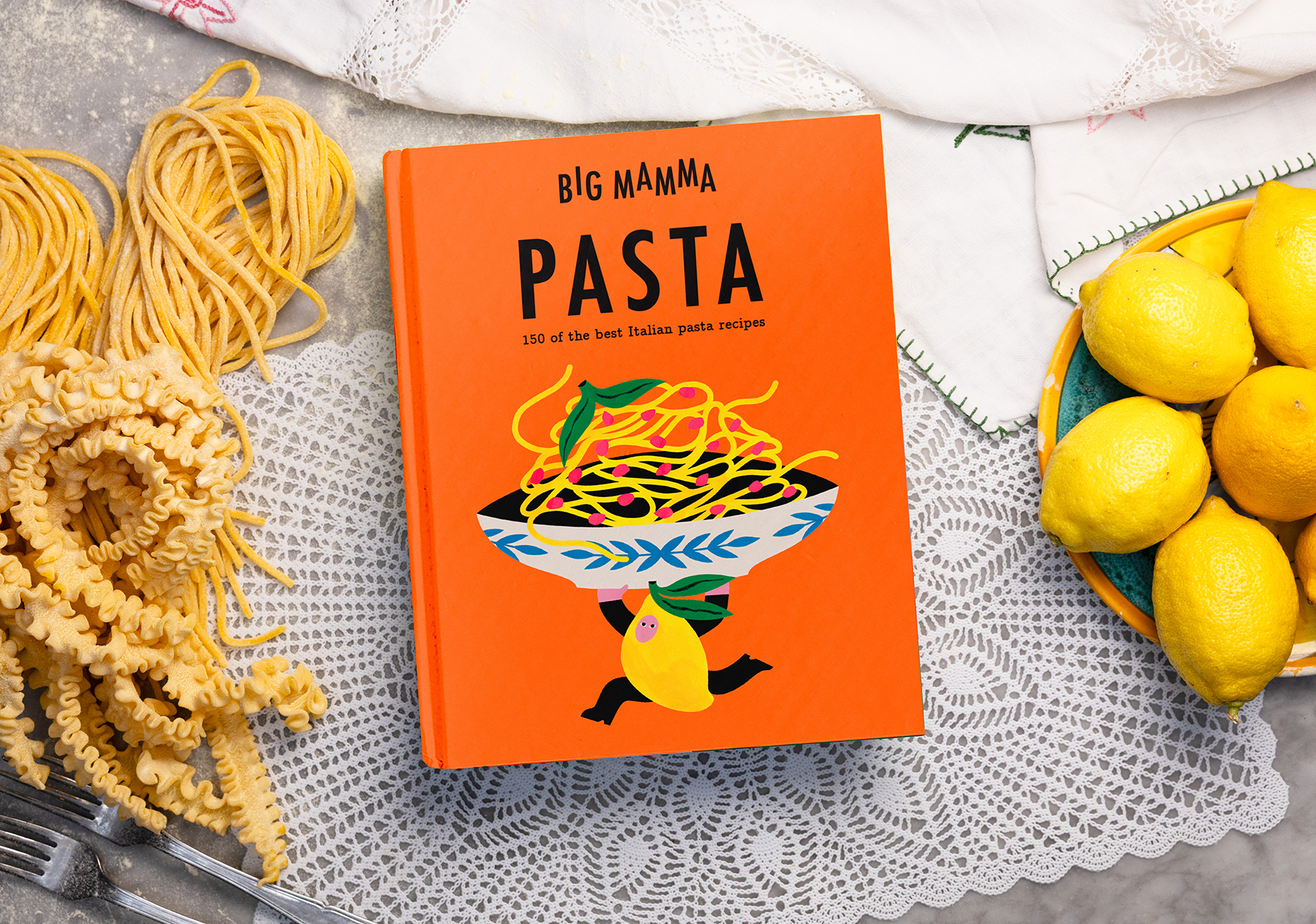
Big Mamma: Pasta’ brings together 150 Italian pasta recipes, from classic ragùs to homemade orecchiette, and will be published on 8 October 2026, priced at £26
Following its 2024 title ‘Big Mamma: Italian Recipes in 30 Minutes’, the Big Mamma team behind La Bellezza is set to launch a cookbook on one of the greatest treasures of Italian culinary heritage: pasta.
The book explores the full diversity and creativity of Italian pasta, both past and present, through 150 iconic recipes and eight thematic chapters, from dried and fresh pasta to the shaping and moulding of pasta dough.
Recipe highlights include a mixture of classic recipes, bakes and salads, as well as sweet dessert variations made from the same dough, plus plenty of tips and anecdotes from the team’s chefs to help readers become true pasta experts.
Readers can learn how to hand-shape Apulian orecchiette, Tuscan pici, and tagliatelle rolled out according to Emilian tradition, as well as the essential basics including the different types of flour, the art of mantecatura for perfectly creamy sauces, and the utensils that make all the difference, from pasta machines to gnocchi boards and the Abruzzo chitarra.
Each recipe, from Sunday lunch Spaghetti Scarpariello, to Tagliolini al Tartufo worthy of a gourmet dinner, not forgetting Rigatoni con i Broccoli arriminati or Gnocchi Nerano, is enhanced with an Italian song to groove to whilst cooking, alongside secrets passed down through Big Mamma’s chef’s family traditions.

There’s monstrous tales, award-winning theatre, electrifying dance and some of the brightest visual art stars set for Warwick Arts Centre’s Autumn/Winter 2026-2027 Season.
The UK’s most significant exhibition of contemporary art, British Art Show 10, opens in Coventry on 2 October 2026 (until 10 Jan 2027), with Warwick Arts Centre’s Mead Gallery hosting works by a range of exciting artists including Turner Prize 2025 winner Nnena Kalu, West Midlands-born artist Emma Talbot and painter Matthew Krishanu - with Emma and Matthew, along with artist Nengi Omuku, also taking part in a special Artists In Conversation in the gallery (19 Nov 2026) chaired by BAS10 curator Ekow Eshun.
A thread running throughout the season’s live and film programme, and into early 2027, is Home – a series of events that brings together work exploring the places, people and experiences that shape our lives. Highlights include Ad Infinitum’s autobiographical story of love, loss and resilience Pieces of My Life (22 Oct 2026), written and performed by Kirris Riviere; African Soul Rebels featuring Les Amazones d’Afrique (6 Oct 2026); West Mids icon Fatt Butcher with his joyous Congregational (27-28 Nov 2026); a chance to see Ken Loach’s landmark Cathy Come Home on the big screen (Nov); and a powerful new piece of theatre from award-winning writer Inua Ellams, Once Upon A Time In Sokoto (5-7 Nov 2026).
Elsewhere, a Home ‘conversation’ strand features exclusive curated talks with leading writers and curators including journalist Omar El Akkad in conversation with Gary Younge, poet Nikita Gill talking to Len Pennie, and Stephanie Phillipsspeaking to Pauline Black, while three contributors to the seminal The Good Immigrant - Nikesh Shukla, Nish Kumar and Salena Godden – mark the anthology’s tenth anniversary.
Elsewhere, in the wider Autumn/Winter programme, there’s plenty to keep families thoroughly entertained, with appearances from poetry legend Michael Rosen (25 Oct 2026) and the charming Nick Cope (8 Nov 2026), plus Dinosaurs Live! (11 Oct 2026) with the Natural History Museum, a brand new family musical from Little Angel Theatre entitled Toto The Ninja Cat and The Great Snake Escape (31 Oct-1 Nov 2026), and the much-loved The Gruffalo’s Child (28 Nov-27 Dec 2026). Warwick Arts Centre’s ongoing Free Family Events programme also continues with Musical Picnics, Family Singing, Family Sundays, Mini Creatives and My First Concert (various dates).
Other well-known names heading to the West Midlands arts centre include writer Caitlin Moran (25 Sep 2026), poet Brian Bilston (1 Oct 2026), astronaut Tim Peake(6 Oct 2026), globetrotter Michael Palin (16 Oct 2026), Inside No.9’s Reece Shearsmith (10 Oct 2026) and historians Tracy Borman (4 Oct 2026), Lucy Worsley(11 Oct 2026) and Mary Beard (5 Nov 2026).
There’s plenty to laugh at too, with mirth-filled shows from Alan Davies (25 Sep 2026), Hasan Al-Habib (8 Oct 2026), Maisie Adam (9 Oct 2026), Jazz Emu (14 Oct 2026), Nurse Georgie Carroll (1 Nov 2026), Mike Wozniak (12 Nov 2026) and Romesh Ranganathan (4 Dec 2026).
A varied music line-up boasts jazz hero Courtney Pine (26 Sep 2026), country-pop duo Ward Thomas (24 Sep 2026), former Ultravox frontman Midge Ure (29 Nov 2026) and accomplished guitarist Martin Simpson (3 Dec 2026), while the London Gospel Choir reimagine Paul Simon’s era defining Graceland (11 Dec 2026).
Acclaimed Brazilian guitarist Plinio Fernandes joins Chineke! Orchestra (26 Nov 2026) and the City of Birmingham Symphony Orchestra tackle The Nutcracker (9 Dec 2026) as part of the Orchestral Season, while the WNO orchestra accompany a screening of Hitchcock’s classic Psycho (29 Oct 2026) with a live performance of Bernard Herrmann’s chilling score.
Finally, over in Warwick Arts Centre’s cinema, alongside Met Opera, Exhibition On Screen and NT Live screenings, there’s everything from the latest blockbusters to curated classics and the best of World Cinema. Forthcoming highlights include a lavish new adaption of Sense And Sensibility, Digger starring Tom Cruise, and the conclusion of Denis Villeneuve’s Dune trilogy, as well as regular Cosy Classics and even more accessible, relaxed and captioned screenings.
Warwick Arts Centre, University of Warwick, Coventry CV4 7FD. For tickets and more information, see: warwickartscentre.co.uk
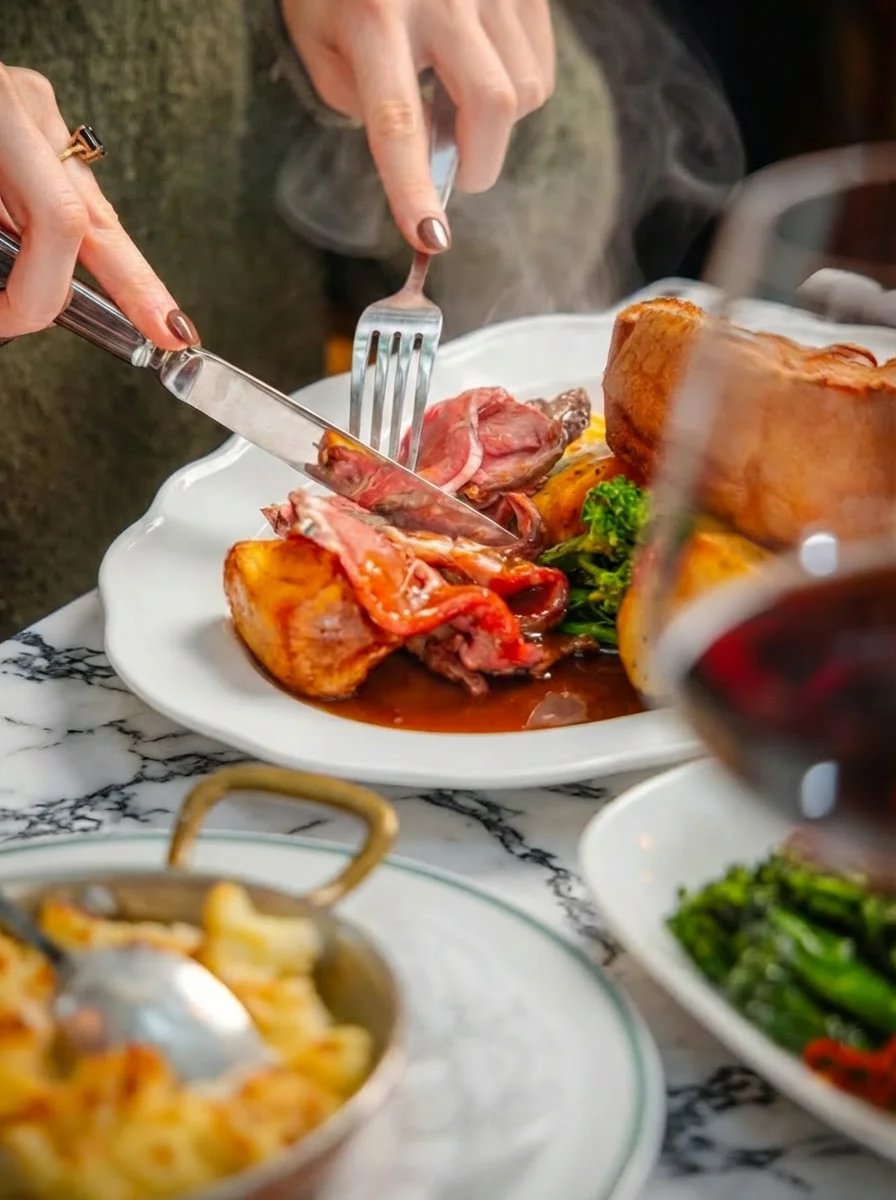
Family-owned Italian restaurant group San Carlo has a great Sunday Roast offering at both San Carlo Birmingham on Temple Street and Fumo Birmingham on Waterloo Street, bringing a contemporary take on a traditional British favourite to two of the city’s most established dining destinations.
As one of Birmingham’s first true restaurant-and-bar destinations, Fumo has long set the standard for stylish dining and nightlife in the city. Blending a vibrant atmosphere with refined Italian flavours, the venue pairs a striking marble cocktail bar with a relaxed, social dining style centred around sharing plates, handmade pasta, fresh seafood, artisan meats and indulgent desserts. Meanwhile, San Carlo Birmingham on Temple Street is renowned for its elegant, classic approach to Italian cuisine, offering a more traditional yet equally premium dining experience.
The new Sunday Roast menu is designed for long, relaxed weekend dining and is perfect for family gatherings, friends getting together, or couples looking to enjoy a leisurely meal in the city centre. It offers a welcoming setting where guests can come together over a classic roast with a San Carlo group twist. The menu features a selection of mains including Half Roast Chicken, Lamb Rump, Rib of Beef and a T-Bone Steak designed for sharing. All roasts are served with rosemary and thyme roasted potatoes, roasted seasonal vegetables, Yorkshire pudding, traditional trimmings and rich gravy. Guests may also add cauliflower cheese.
With its central locations, elegant interiors and reputation for expertly crafted cocktails, premium wines and exceptional Italian cuisine, Fumo and San Carlo continue to be two of Birmingham’s standout destinations for both dining and late-night experiences, with live DJs and weekend sessions at Fumo further enhancing its energetic atmosphere.
To make a booking, please visit sancarlo.co.uk
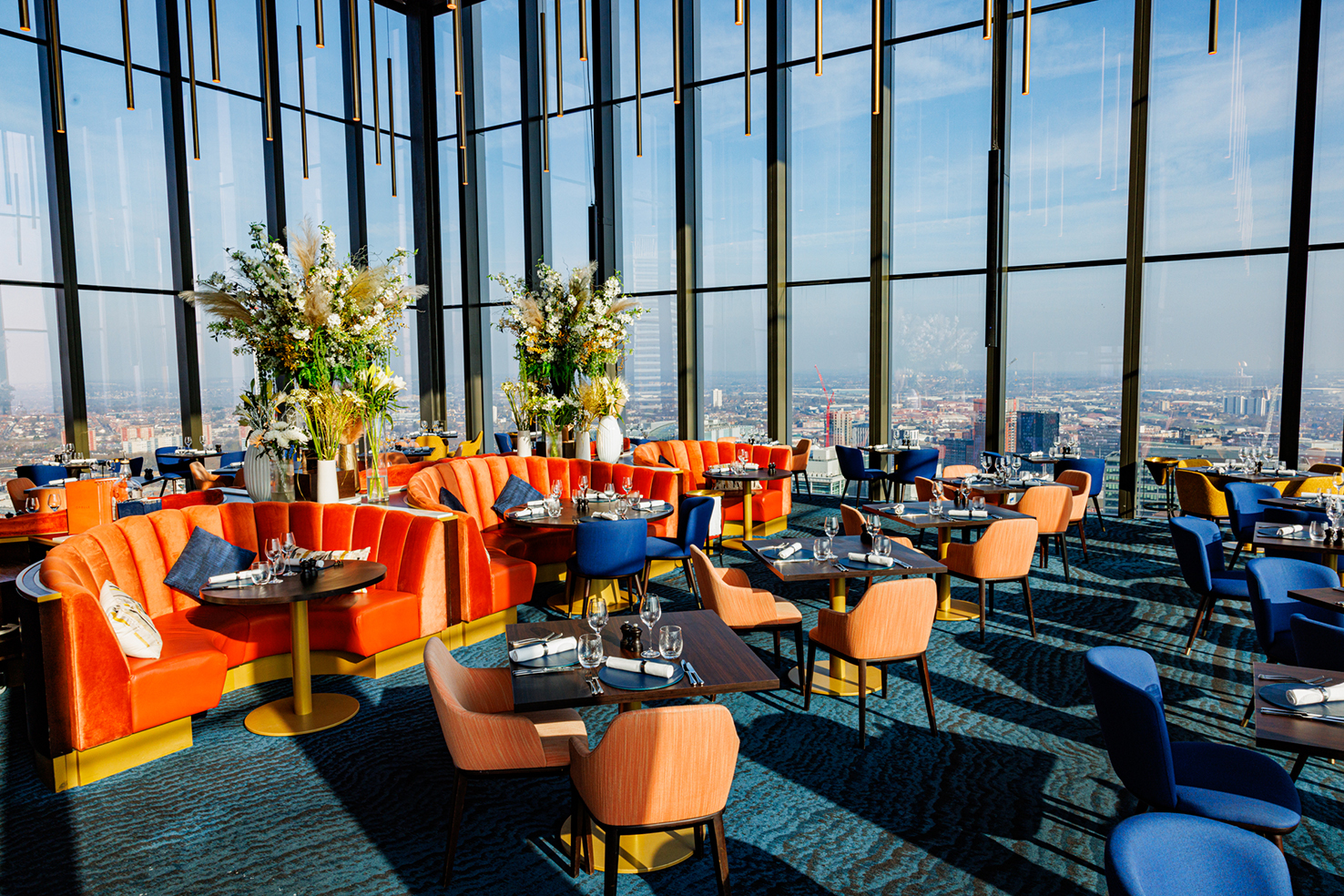
24 Stories is marking the Bank Holiday weekend with summer sips and sophisticated dining, set against panoramic views of Birmingham.
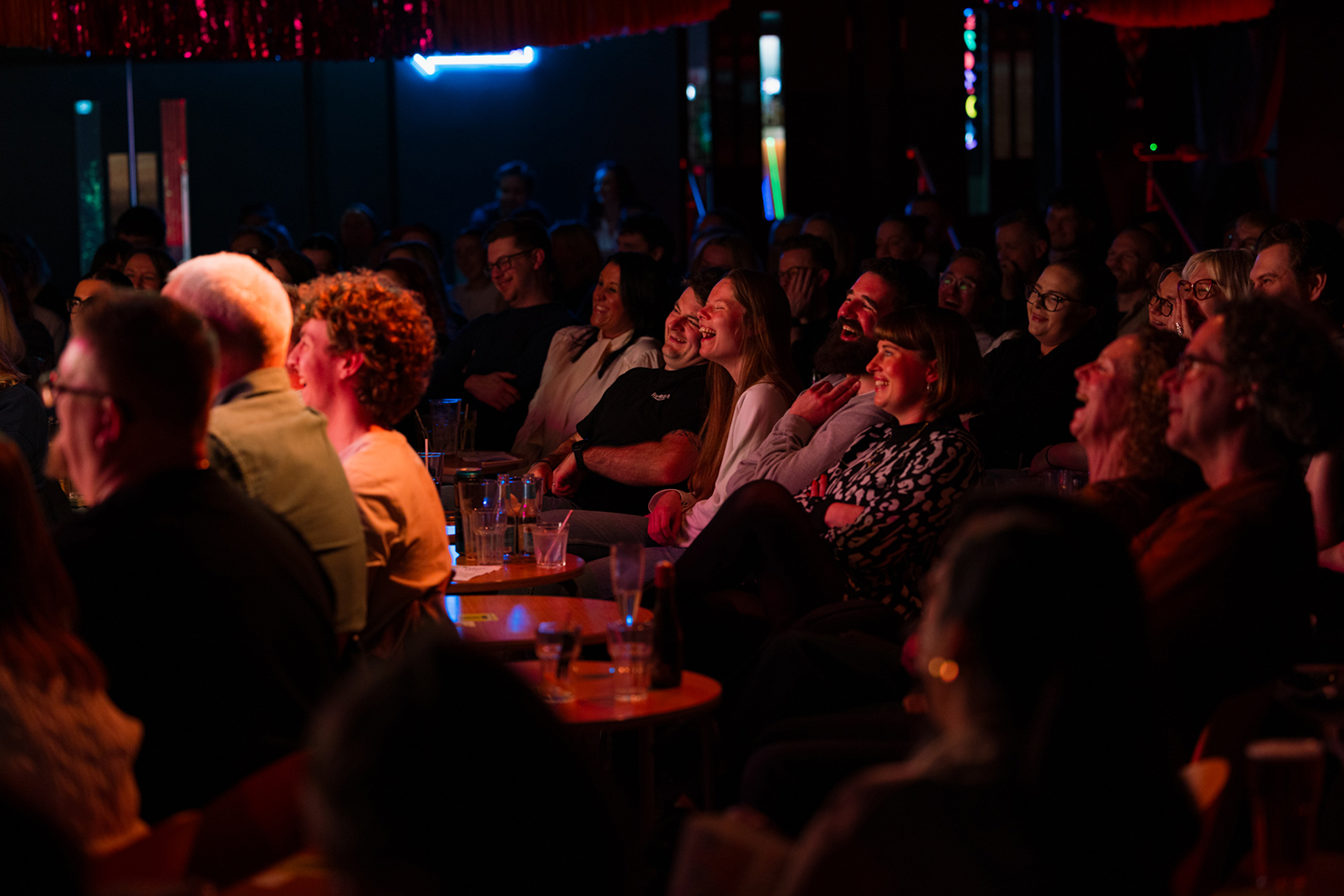
Hundreds of free tickets are up for grabs for humour-hungry Brummies between 14 August and 26 September
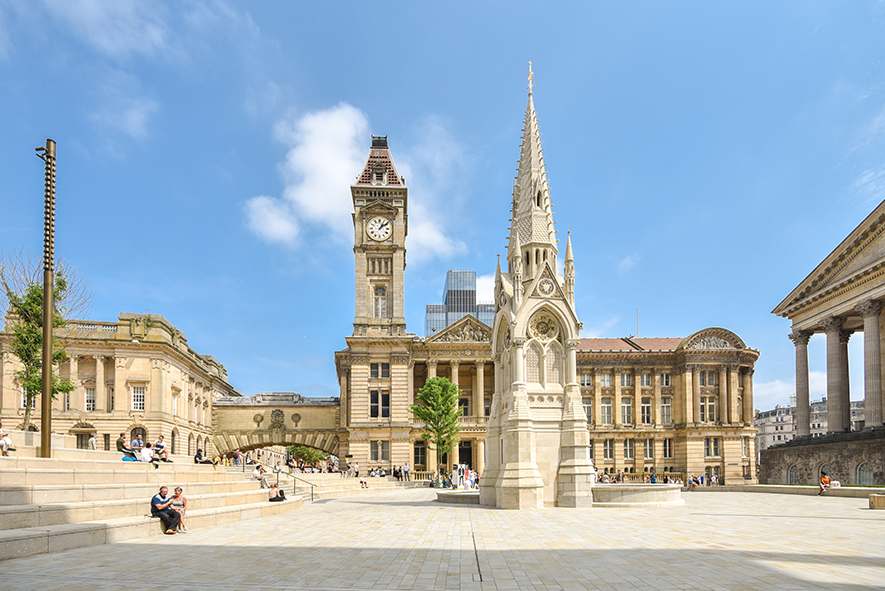
The open call for the UK’s brand new jewellery festival’s flagship exhibition will offer jewellery practitioners from across the UK the chance to exhibit at the world-renowned Birmingham Museum and Art Gallery and to win thousands of pounds.
Ahead of May 2027’s inaugural Birmingham Jewellery Biennial, organisers have launched the open call for the flagship exhibition, giving jewellery practitioners from across the UK the chance to exhibit alongside internationally recognised names in one of the country’s great civic museums.
The exhibition theme has been revealed as ‘Colour’, with organisers and the expert jury looking for ambitious, statement work that responds to the theme while demonstrating creative design, technical excellence and quality of materials.
Held at Birmingham Museum and Art Gallery, the exhibition will invite audiences to discover and celebrate the extraordinary world of jewellery, using colour as a lens to explore the making, wearing, gifting and viewing of jewellery.
The expert jury, made up of leading experts from the jewellery industry, will be looking for entries thatexperiment with, take inspiration from, or explore the stories and symbolism of colour, welcoming works in traditional and contemporary materials, across a broad range of jewellery-making techniques.
The artist in first place will receive £2,000, the second place artist will be awarded £1,500, and following the exhibition, the People's Choice Award winner will receive £2,000. Further prizes will be announced in due course.
The open call is for practitioners at any career stage and there is no fee to enter. Applications are open via the Birmingham Jewellery Biennial website until 6 September 2026. Organisers are also covering the transport costs of all selected works.
Exhibition Curator, Sophie Morris, said: “The exhibition is such an exciting opportunity to celebrate the mix of skills, materials and ideas that constitute jewellery-making now. We are seeking colourful, ambitious and meaningful works that demonstrate artistic excellence, inspire new makers and welcome people into the extraordinary world of jewellery and the joy it brings.”
The Jury comprises 12 leading figures in the jewellery industry, including:
Supporting the Jury in a non-voting remit will be Ben Massey the Chief Executive of the National Association of Jewellers, Rebecca Unsworth, Curator of Decorative Art at Birmingham Museums Trust, Matthew Bott, the Chair of Jewellery Quarter Development Trust, and Birmingham Jewellery Biennial’s Festival Director and City Curator, Alex Nicholson-Evans.
Birmingham Jewellery Biennial was announced earlier this year, following the city’s recognition as a World Craft City for Jewellery and Allied Trades by the World Crafts Council in 2025.
Co-founded by Jewellery Quarter Development Trust and Birmingham City University, Birmingham Jewellery Biennial is set to become the UK's leading festival dedicated to the art, innovation and heritage of jewellery. Alongside the flagship exhibition, the city will be brought to life with Open Studios, workshops, talks, tours and more! The festival takes place across Birmingham's Jewellery Quarter and the wider city from 1-31 May 2027.
The open call is free to enter and open to jewellery artists and makers at any career stage based in the UK. Applications are open now, with the deadline for Expressions of Interest set for 6 September 2026.
Full details on how to apply are available at www.birminghamjewellerybiennial.com/open-call
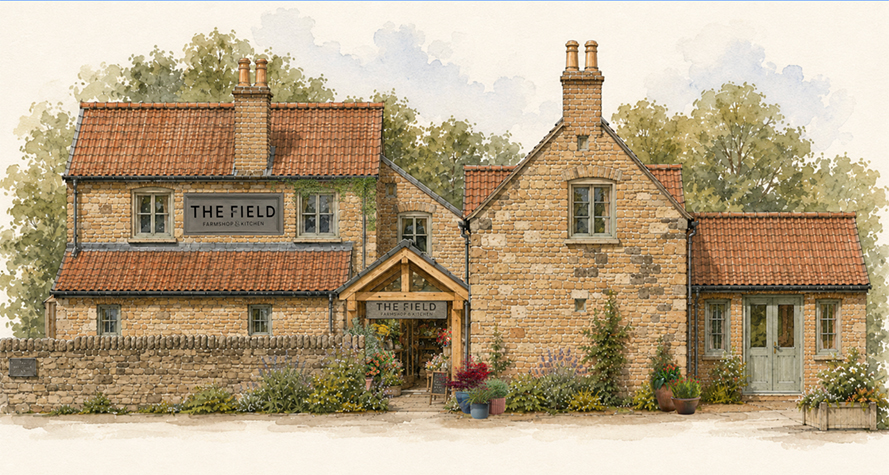
Cow & Sow, the premium steakhouse brand with restaurants in Bristol and Birmingham has announced the opening of The Field Farmshop & Kitchen, which is set to open in Autumn 2026.
Once known as the Dew Drop Inn and more recently The Jubilee, the site has been shuttered for more than three years and will undergo a change of use transformation, led by founder Mark Warbuton and his wife Amy. Sitting within almost an acre of land, the property is located opposite Cow & Sow’s recently launched Kitchen Farm in Flax Bourton, just outside of Bristol.
The Field farm shop will sell home-grown produce delivered daily from the farm, as well as fresh bread, dairy products, pantry staples and butchery, in partnership with Cow & Sow’s British meat suppliers. The shop will also feature a florist, plus a gift and homewares section.
Open from morning until 6pm, The Field will also be home to a 70-seater restaurant/cafe, serving up a range of hearty breakfast, brunch and lunch offerings including fresh salads, quiches, soups and ploughman's platters, all freshly prepared onsite. Guests will also be able to enjoy coffee, using beans from Clifton Coffee Roasters, plus refreshing drinks from a bar.
Behind the building, external decking will give a further 40-plus guests the opportunity to dine al fresco, or enjoy a drink from the bar, whilst taking in the stunning countryside views. The Field will stay open into the evening on selected days, giving locals and visitors the chance to catch up and enjoy the last rays of sunshine.
Cow & Sow has also revealed ambitious plans for a phase two of the development, creating meeting and event spaces available to hire, plus a test kitchen and cookery school on the first floor of the building.
Offering masterclasses and courses both in the test kitchens and over fire on the terrace, Cow & Sow and the team at The Field will be collaborating with experts including Roam Catering’s Ross Anderson, an expert in fireside cooking and judge for the World Steak Challenge competition and Ben Naylor from Somerset Grill Co, who are both currently working with the Cow & Sow team.
Mark Warburton, founder of Cow & Sow, said: “It’s been a really exciting start to the year for us, we’ve already introduced our Kitchen Farm and now Amy and I are bringing The Field Farmshop & Kitchen into the wider family. We’re passionate about using and growing the very best produce in our restaurants and sourcing it from as locally as possible, and we want to share that passion with the people of Bristol and beyond.
“I really want this space to become a place to gather, enjoy and celebrate for locals and visitors and we’re already working with our friends at Clifton Coffee Roasters, Walter Rose & Son, Roam Catering and Somerset Grill Co to make sure we’re able to offer something really special. We can’t wait to welcome people through the doors this autumn.”
To be the first to get updates on The Field, follow the journey on Instagram at: https://www.instagram.com/thefieldfarmshop/
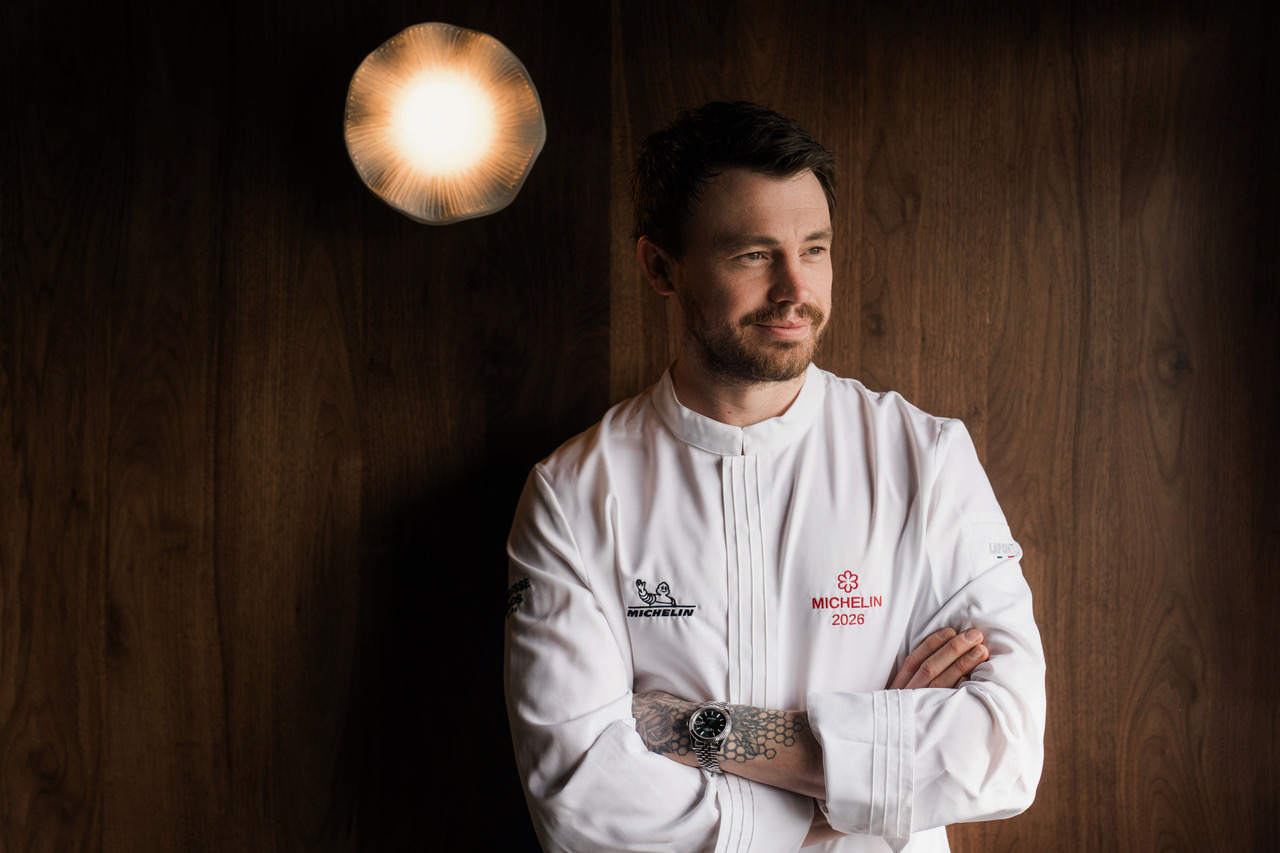
Opened in 2024 in the heart of the village, The Two Pigs combines exceptional seasonal produce with a relaxed, welcoming atmosphere, offering guests all the charm of a traditional country pub alongside food crafted with the care and attention of Michelin-starred chef Liam Dillon.
The restaurant joins the Michelin Guide following an impressive run of accolades. Within its first year, The Two Pigs was named among the UK's Top 50 Gastropubs and awarded 2 AA Rosettes, building on the success of Liam Dillon's acclaimed sister venue, The Boat in nearby Lichfield.
Designed as a true neighbourhood pub, The Two Pigs is a place to settle in, catch up with friends and family, and enjoy great food without fuss. The menu by Head Chef Beth Hip features everything from breakfast and brunch to generous sharing plates, classic Sunday lunches and expertly cooked pub favourites, all served alongside carefully selected drinks and a warm welcome.
In its guide, Michelin praised the restaurant, saying:
"This delightful spot offers all you could want in a country pub. The lovely village setting is mirrored in the cosy, welcoming interior with a snug bar, slightly more formal dining room and a terrace for the summer. The menu sticks to the classics and delivers them with bags of joyous flavour, from a Welsh rarebit snack to smoked haddock fishcake, pork schnitzel and a knockout trifle for dessert. Steaks from the grill or roasted fish to share are ideal for a special occasion."
Liam Dillon, chef-owner of The Two Pigs, said:
"We're absolutely delighted to be included in the 2026 Michelin Guide. From the very beginning, our ambition was to create a neighbourhood pub where everyone feels welcome and where great ingredients, proper hospitality and consistently delicious food are at the heart of everything we do. To receive recognition from Michelin so soon after opening is an incredible achievement for the whole team, whose hard work and passion have made this possible. We couldn't be more grateful to our guests for their continued support, and we're excited for what's to come.”
The Two Pigs 47 Main Street, Barton-under-Needwood, Burton-on-Trent DE13 8AA
For reservations head to : https://thetwopigs.com
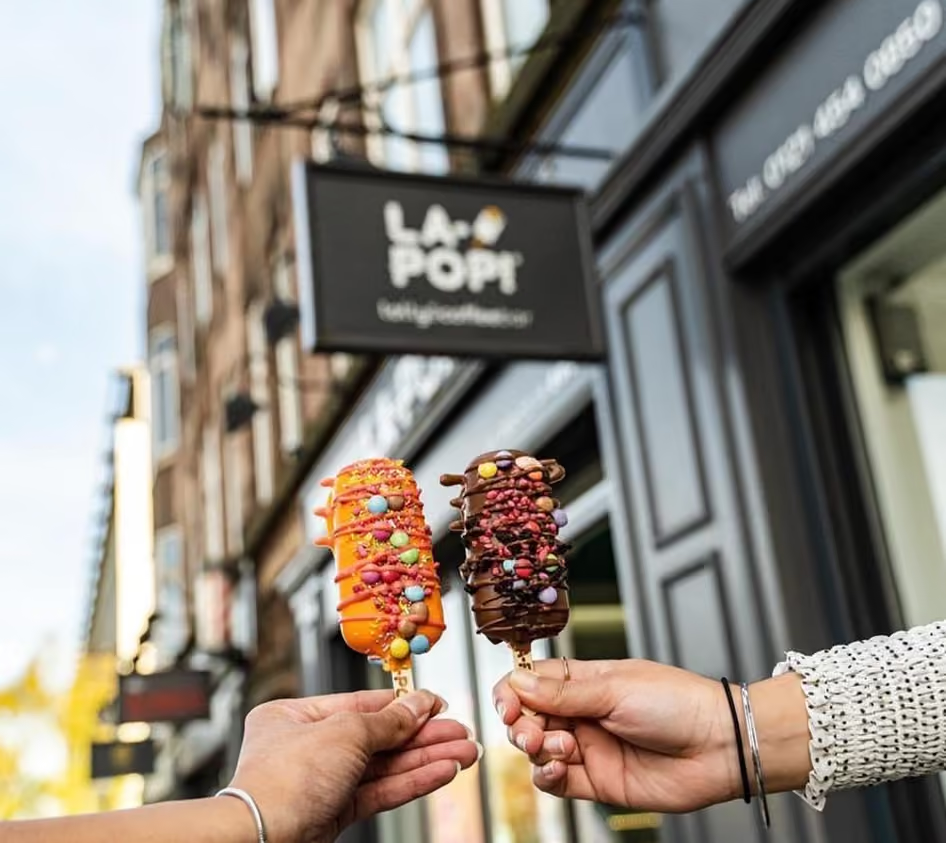
La squadra at La Bellezza has joined forces with Birmingham favourites LA-POP! to create the ultimate summer mashup: three limited-edition Italian gelato lollies inspired by Big Mamma's most legendary desserts.
Crazy-creamy Tiramisu, classic Fior Di Latte and a zingy Lemon Meringue Pie are being flipped onto a stick, ready to keep Brummies cool all summer long.
From 7th August, you’ll find the exclusive lollies every Friday and Saturday on Chamberlain Square, outside La Bellezza, made with proper Italian gelato and all the indulgent flavour you’d expect from La Bellezza.
Whether you’re taking a stroll through the city, or simply looking for an excuse to treat
yourself (we fully support that), this is your sign.
The LA-POP! and La Bellezza gelato-cart will be available every Friday and Saturday in August, from 12-5pm, on Chamberlain Square outside La Bellezza.
Lollies are priced at £4.50 each.
To book a table at La Bellezza, visit: https://www.bigmammagroup.com/italian-restaurants/la-bellezza-birmingham
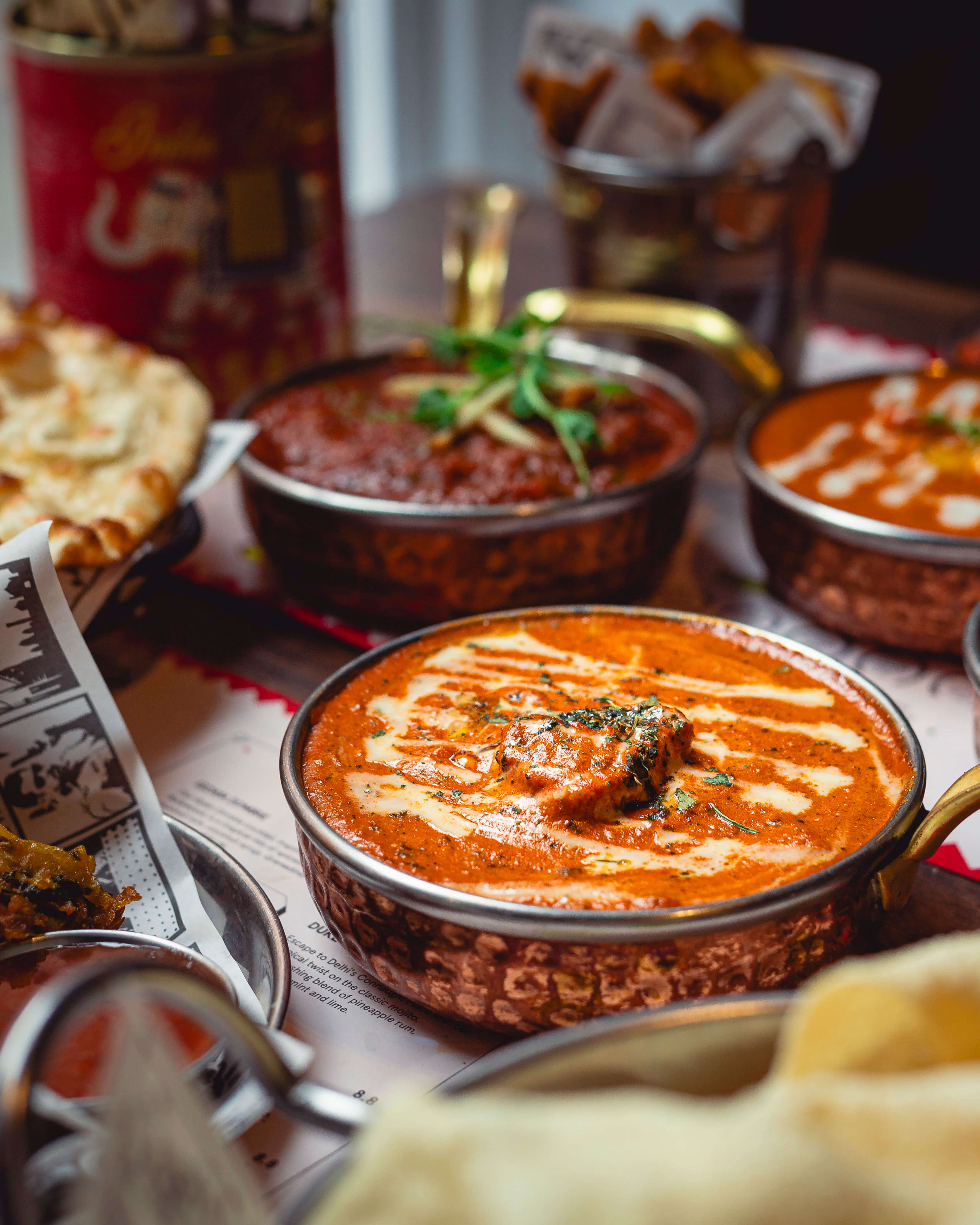
Three months after announcing his search for the right successor, founder Raj Rana has confirmed that My Delhi will lead Itihaas into its next era, safeguarding the restaurant's legacy, retaining its first-class reputation while investing in its future.
Guests can continue to expect theItihaas they know and love, but behind the scenes the next chapter has alreadybegun. The new ownership team is already making improvements across therestaurant, with further investment and a broader vision for the future to beannounced later this year.
The acquisition, completed on 22July 2026, marks My Delhi's first venture into Birmingham and the group's firstacquisition. While ownership has changed, diners can be reassured that Itihaaswill continue to trade under its iconic name, with its heritage, reputation andwarm hospitality remaining firmly at the heart of the restaurant.
Founded in Newcastle in 2019, MyDelhi has grown from a single restaurant into one of the UK's most excitingindependent Indian restaurant groups, with successful venues in Newcastle,Sunderland and Leicester, and Leeds set to open soon. Inspired by the vibrantculture and flavours of India's capital city, My Delhi has become renowned forits bold regional dishes, immersive dining experiences and modern take onIndian hospitality, earning national recognition from the BBC along the way.
The new ownership team includesMy Delhi founders Elahi Amin, Executive Chef Gaurav Dayal, Shah Amin, GauravGoyal and Neha Goyal. For Birmingham residents Gaurav and Neha, bringing MyDelhi to their home city through the acquisition of Itihaas is especiallymeaningful.
While the restaurant willcontinue to operate as Itihaas, all staff members have retained their jobs and thenew owners will reveal their longer-term vision for the business later thisyear.
Raj Rana, who founded Itihaas in2004, said finding the right people to continue the restaurant's story hadalways been his priority.
He says, "Itihaas has been ahuge part of my life and this was never simply about finding a buyer.
"For more thantwenty years we've built something that people genuinely care about. I wantedto find a team that would respect everything we've created, support our peopleand continue building on the reputation Itihaas has earned.
"From our veryfirst conversations, it was clear this team shared those values. They've builtan exceptional restaurant business, but more importantly they understandhospitality, people and what it takes to create something with lasting impact.
"I have everyconfidence they'll protect what makes Itihaas so special while giving it theinvestment, care and leadership it deserves for many years to come."
Speaking on behalf of the newownership team, Elahi Amin described the acquisition as a landmark moment forMy Delhi.
"We've admiredItihaas for many years. Restaurants with this history, reputation andconnection to their city rarely become available.
"To be entrustedwith its future is both an honour and a privilege. We're not here to changewhat people love about Itihaas – we're here to protect its legacy, invest inits future and ensure it continues to thrive for generations to come.
"We'll bringeverything we've learned from building My Delhi into this next chapter whilerespecting the heritage, people and reputation that have made Itihaas such animportant part of Birmingham's dining scene."
Gaurav Goyal added:"Birmingham is our home and Itihaas is part of the city's food story. Thiswas never simply a business decision – it was an opportunity to invest insomething that means so much to local people.
"My family and Ihave celebrated many special occasions at Itihaas over the years, so weunderstand just how cherished it is. We're incredibly proud to be part of itsfuture and are committed to ensuring Birmingham continues to enjoy Itihaas atits very best."
Executive Chef Gaurav Dayal said:"Every great restaurant has a story, and Itihaas is one of Birmingham'sfinest. Our role isn't to rewrite that story, but to build on it with care,passion and respect.
"We'll honour thestrong foundations that Raj and his team have created while continuing tochampion exceptional ingredients, outstanding food and memorable experiencesfor every guest who walks through the doors."
Although a really challenging time for hospitality, theacquisition marks the beginning of an exciting new era for Itihaas, withBirmingham diners able to look forward to the same much-loved restaurant,supported by fresh investment and a passionate team committed to preserving oneof the city's true dining institutions.
To book your table head to: www.itihaas.co.uk
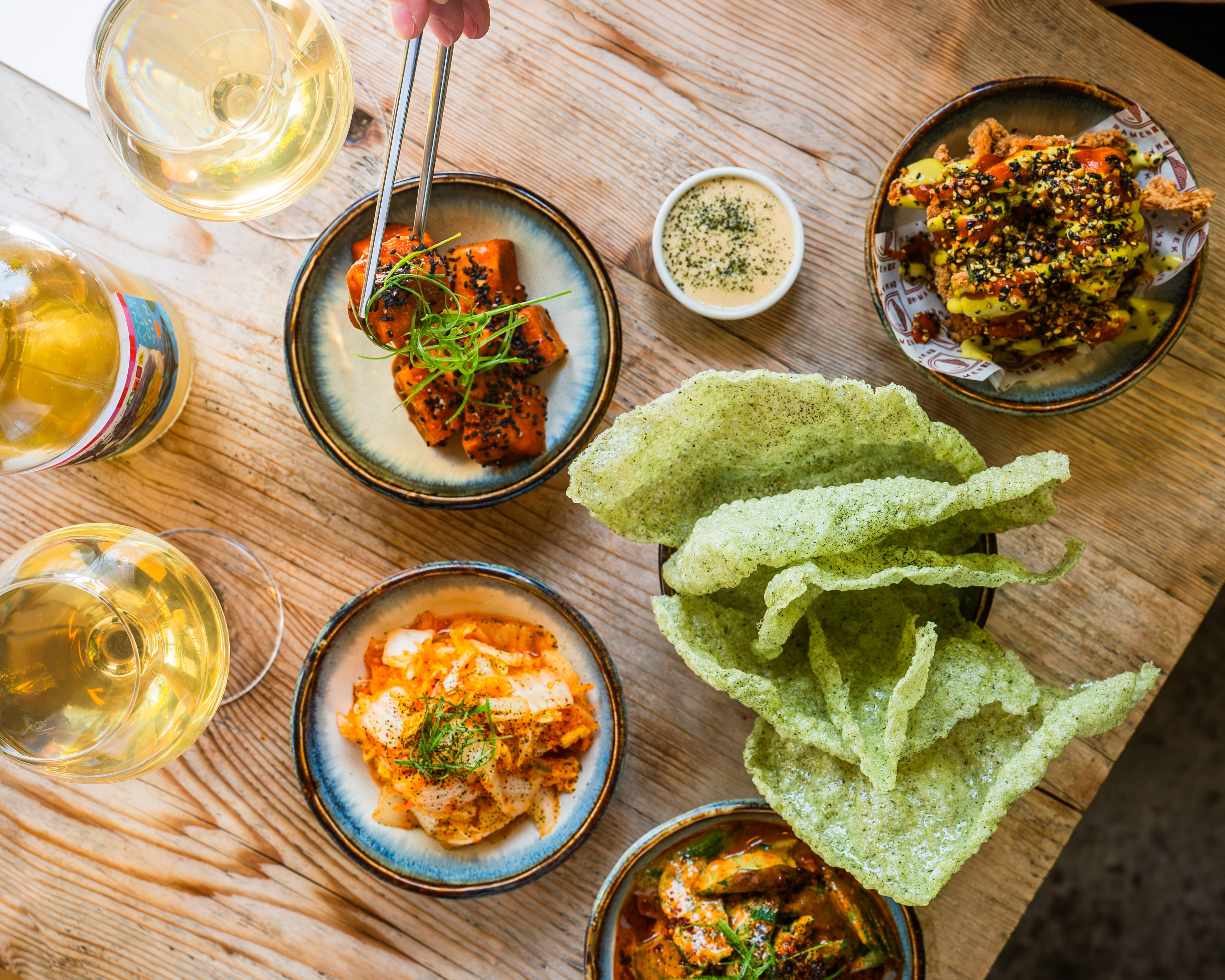
Following a culinary exchange in Barcelona between Pete Dovaston, Head Chef and Owner of Maneki Ramen and Mike Davies, Head Chef at Umami Plant Based, Maneki is launching a new summer small plates menu inspired by the flavours, techniques and cultures of Japan and Spain.
Launching on 27th July, guests can enjoy two small plates and a glass of wine for just £14.50, bringing the spirit of Spanish social dining and Japanese flavour innovation to Birmingham. Alternatively, guests can enjoy two small plates and a cocktail for £16.50, or three small plates and a bottle of wine for £40.50.
Pete travelled to Barcelona in April to collaborate with Mike Davies, sharing culinary expertise, cooking techniques and perspectives shaped by their respective food cultures. Together, they hosted an exclusive supper club, bringing to life a unique fusion of culture, experience and cuisine.
Inspired by the experience, the new Tokyo Tapas menu at Maneki celebrates the precision and umami-led approach of Japanese cooking alongside Spain's vibrant small plates culture, encouraging guests to explore, share and discover new flavour combinations.
Summer Small Plates Menu:
Chashu Pork & Chicken Croquettes
Inspired by Barcelona's iconic bomba croquettes - chashu pork and chicken with Ma-yu citrus mayo.
Kimchi Fried Rice Croquettes
Pineapple & pear kimchi, crispy chilli mayo.
Gochugaru Rice Crackers
Crisp rice crackers with whipped tofu ponzu, balearic seaweed salt with a hint of spice
Korean Double Fried Tofu
House tofu, gochujang sweet & spicy sauce, furikake and scallions
Karaage Chicken
Japanese triple fried chicken, wild garlic & crispy chilli ‘kewpie’ mayo, furikake
Sichuan Smashed Cucumber Salad
Smashed cucumber, black vinegar, garlic, ginger & Sichuan chilli, furikake
Pineapple & Pear Kimchi
Spicy fermented pineapple & pear, scallions
Commenting on the collaboration, Pete Dovaston said:
"Wherever I travel, I take inspiration from the food culture around me, not just the dishes themselves, but the people behind them, the techniques they use and the stories they tell through food. Collaborating with Mike Davies in Barcelona was an incredible opportunity to learn from each other, exchange ideas and celebrate what makes both Japanese cuisine and Spanish culture so special. Bringing those experiences back to Maneki and sharing them with our guests is something I'm really passionate about."
He added:
"The response to our supper club in Barcelona showed us how exciting these cross-cultural dining experiences can be. The small plates menu is just the start of what will be an ongoing creative partnership between Maneki and Umami, with much more to come."
The Maneki small plates summer menu launches at the Jewellery Quarter restaurant on 27th of July, with guests invited to enjoy any two small plates with a glass of wine for £14.50, two small plates and a cocktail for £16.50 or three small plates and a bottle of wine for £40.50.
This marks the first chapter of an ongoing collaboration between Maneki x Umami, with further events and culinary projects planned soon.
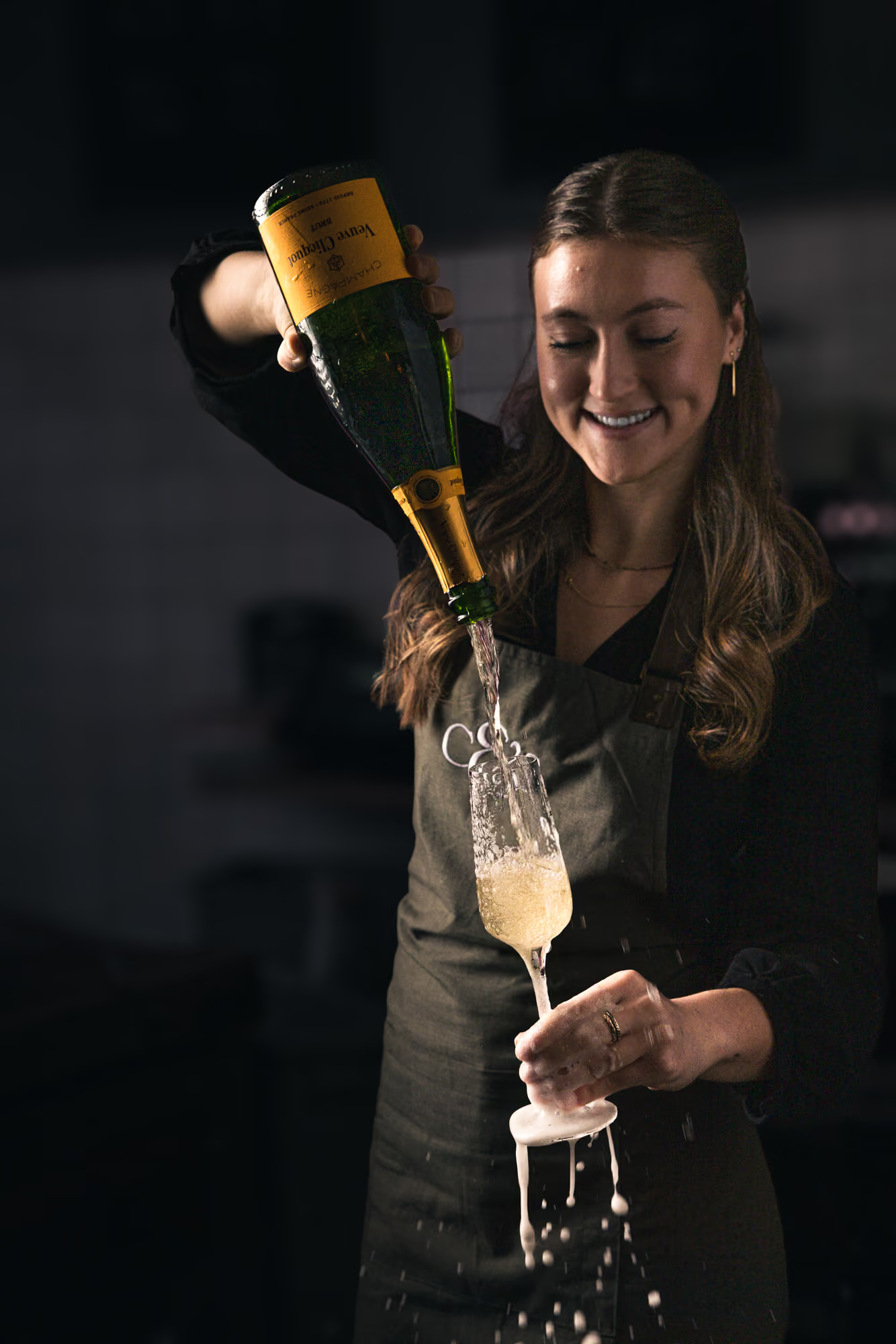
Cow & Sow is offering all graduates a complimentary glass of fizz to kick-start their celebrations. Available Monday-Friday from 6th-31st July.
Cow & Sow is offering all graduates a complimentary glass of fizz to kick-start their celebrations. Available Monday-Friday from 6th-31st July.
Ideal for celebrating, the Cow & Sow menu features sharing steaks such as Picanha, Chateaubriand or Tomahawk and Porterhouse, all served with the chef’s selection of house sauces, butters and sides for the whole table to enjoy.
Cow & Sow has recently added English Wagyu to the menu, giving guests the chance to take their celebrations to a delicious new level this graduation day.
Graduates can claim the free glass of fizz by quoting ‘graduation’ in the comments when booking online, or verbally when booking by phone or email. Tables must be booked in advance to claim the offer.
For more information on Graduation at Cow & Sow, visit:
https://thecowandsow.co.uk/graduation-celebrations/
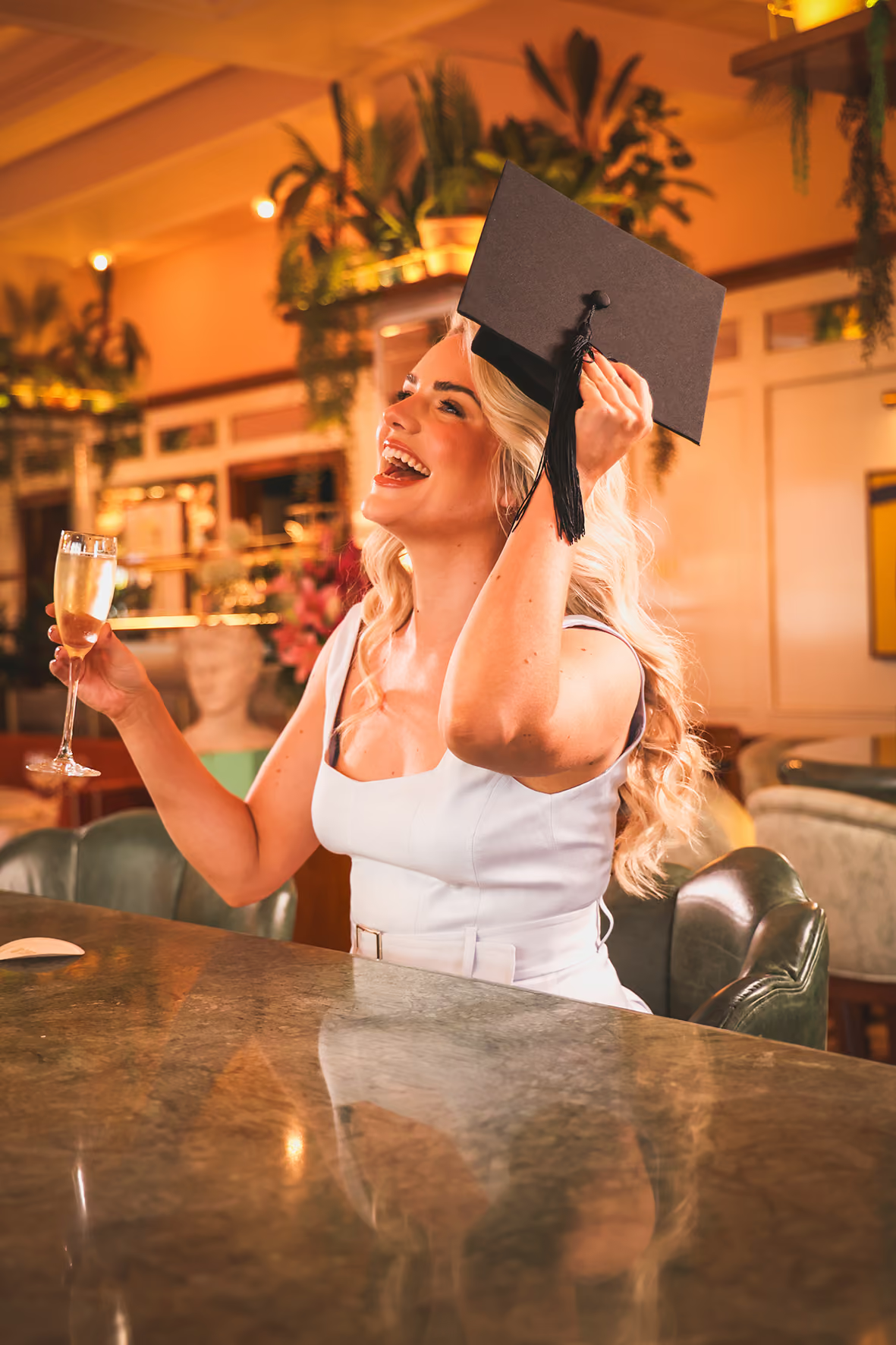
Dedicated Graduation Menu, available from 6th July to 2nd August.
This graduation season, remember the moment at San Carlo, where special memories are made gathered around exceptional Italian food and elegant interiors. At San Carlo, graduation is about bringing friends and family together, raising a glass and marking the occasion properly, with signature warm hospitality.
Launching this summer, San Carlo on Temple Street, Birmingham, is introducing a dedicated Graduation Menu, available from 6th July to 2nd August. Designed for celebratory dining, the menu offers a relaxed yet elevated way to commemorate the occasion.
The Graduation Menu is priced at £35 per person and the set menu begins with bread and olives for the table. Guests can then choose from a choice of antipasti including Arancini, Calamari Fritti, Insalata Tricolore, Costine di Maiale Orientale or Cocktail di Gamberetti, before moving onto signature mains spanning handmade pasta, seafood and meat specialities. Highlights include Mafaldine con Ragu di Manzo (short wavy pasta with slow cooked beef ragú) Branzino San Carlo (Grilled fillet of sea bass served with a gremolata dressing), Suprema di Pollo Principessa and Salmone Prosecco & Gamberetti, or the Ribeye Steak (available for a £7 supplement). Dessert offers a classic San Carlo finish, with guests invited to choose between Tiramisu, Homemade Gelato or Panna Cotta Amarena.
For those looking to start the evening in style, guests can add a glass of Prosecco on arrival for £5 per person, while a bottle of Veuve Clicquot Champagne is also available to all those dining off the graduation menu for only £60, creating a more elevated moment for graduation and group dining alike.
The Graduation Menu reflects San Carlo’s signature approach to hospitality, bringing people together over exceptional Italian food, warm service and memorable moments. Available from the 6th July until 2nd August.
Book your table now at sancarlo.co.uk.
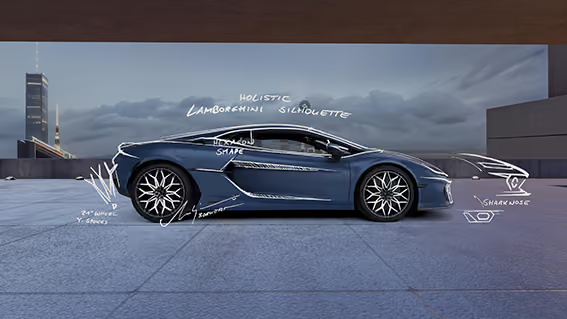
Explore Lamborghini with spatial computing: Place the full-scale car in your space, interact with engineering beneath the surface, and experience design in extraordinary detail.
Sant’Agata Bolognese, 07 July 2026 – Automobili Lamborghini keeps innovating in the digital space, leveraging technology to extend its vision into immersive environments to offer new ways to experience its vehicles. Today’s launch of the Lamborghini app for Apple Vision Pro is the next milestone of the company’s success story. The new spatial computing app redefines how enthusiasts and collectors connect with the Italian icon, transforming the legendary craftsmanship of a super sports car brand into an immersive digital journey.The native app features the entire current model range of Automobili Lamborghini, including the Urus SE Performante, launched digitally just last week. Even before the Super SUV’s physical premiere at this week’s Goodwood Festival of Speed, enthusiasts can now explore its design and engineering through the Apple Vision Pro. Within the experience, users can go beneath the carbon fiber skin and discover the technical soul of Lamborghini’s most coveted models.

Presented annually, the award recognises chefs who have made an outstanding contribution to the profession, celebrating both rising talent and established industry leaders from across the UK's hospitality sector.
Dillon’s commitment to sustainability, seasonality and innovation is supported by a pioneering micro-farm featuring pigs, polytunnels for year-round growing, beehives, and an expanding range of produce that supplies the kitchen. This approach has been central to The Boat’s identity and growing recognition, and the title of Restaurant Chef of the Year is incredibly well-deserved.
The accolade caps an exceptional year for Dillon. Earlier this year, The Boat was awarded its first Michelin star and was also named Lichfield Business of the Year, an award that recognises outstanding businesses in the area.
The Michelin Guide praised The Boat as having grown "into a proper dining destination", highlighting the exceptional quality of its ingredients, which are "treated with a skilled, detailed approach by Chef Liam Dillon and his team."
Following nine years of development, The Boat recently completed an extensive refurbishment before reopening in May. The redesigned interiors bring added warmth, elegance and comfort, providing the perfect setting for the restaurant's evolving dining experience.
Dillon continues to lead The Boat with a focus on seasonality, sustainability and strong relationships with local producers. Under his guidance, both The Boat and The Two Pigs continue to champion modern British cooking while celebrating the very best of local ingredients.
For more information or to book a table visit https://theboat.restaurant
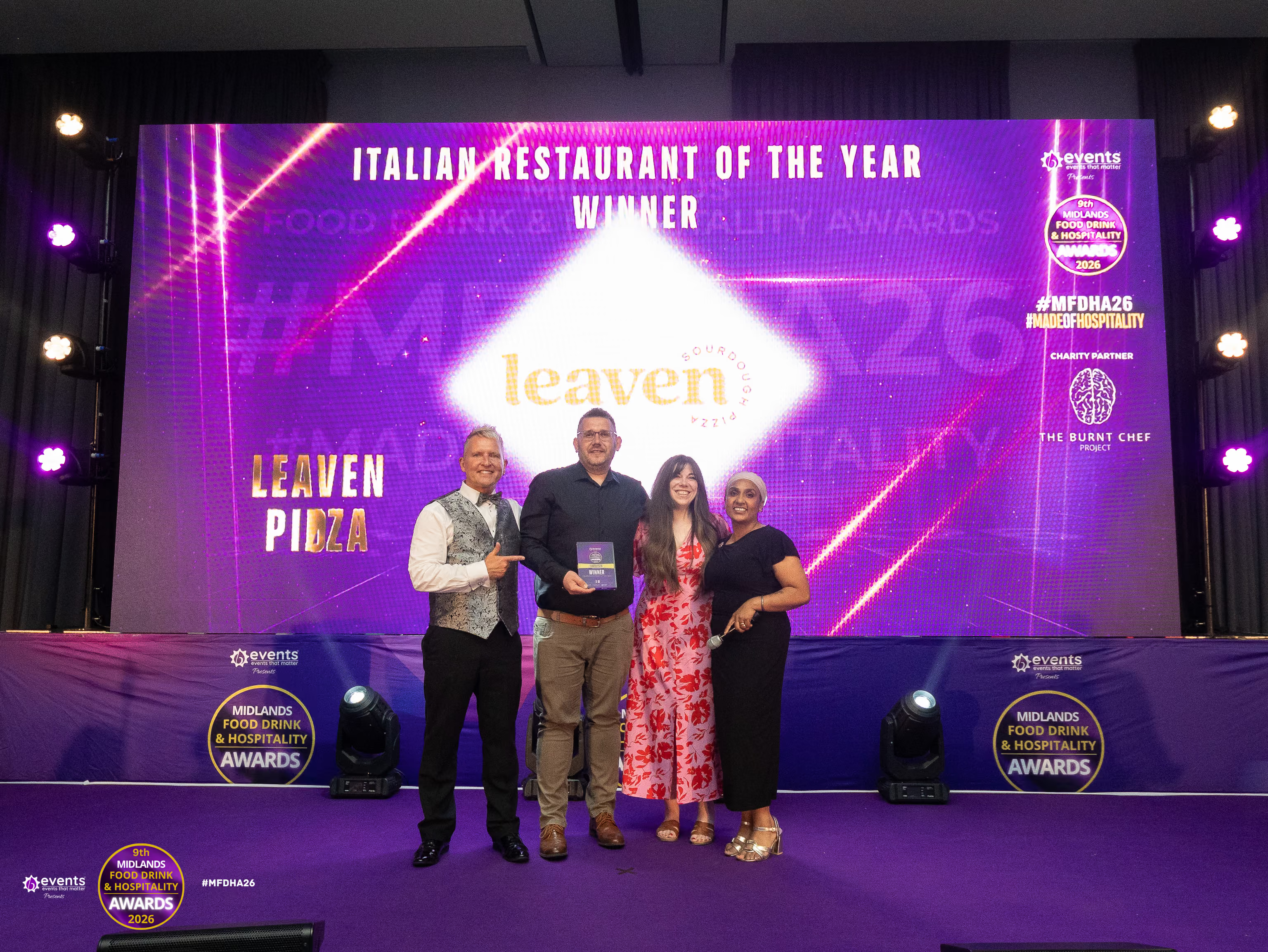
The Midlands Food, Drink & Hospitality Awards 2026 saw double success for ART Hospitality group for both Independent businesses
Celebrating the very best of the Midlands hospitality industry, the awards, held at The Eastside Rooms in Birmingham with over 220 finalists competing across 32 categories. The evening was filled with a double success for ART Hospitality, the independent hospitality group where Leaven Pizza was crowned Best Italian Restaurant 2026.
Leaven Pizza previously won the PAPA Award for Best Independent Pizzeria in the UK in 2024 and has been recognised as a finalist at the Italian Awards for two consecutive years. The Hereford-based pizzeria is known for making their fresh sourdough pizza’s, daily on site.
Maneki Ramen, located in Birmingham’s Jewellery Quarter, and the sister brand as part of ART Hospitality was recognised among the region’s best chefs after Matt Nichols, Head Chef of Maneki Ramen on Ludgate Hill, was shortlisted for Chef of the Year at the prestigious Midlands Food, Drink & Hospitality Awards 2026.
Maneki Ramen has quickly established itself as one of the city’s most exciting independent restaurants, serving modern interpretations of Japanese ramen and small plates in a vibrant, contemporary setting.
Whilst Nichols narrowly missed out on taking home the individual title, the recognition highlights the growing reputation of a hospitality group that continues to invest heavily in chef-led businesses and independent restaurant concepts across the Midlands after being shortlisted amongst some of the region’s most respected chefs was recognition of years spent refining his craft.
Nichols is part of ART Hospitality’s Chefpreneur model, which gives chefs and hospitality leaders genuine influence in shaping the businesses they operate and said: “To be shortlisted for Chef of the Year was an incredible honour. Birmingham has one of the most exciting food scenes in the country, so to be recognised alongside so many talented chefs is something I’m really proud of.
Hospitality is always a team effort and this recognition belongs as much to the team around me as it does to me personally. Every day we’re trying to create a restaurant experience that people genuinely want to come back to.”
ART Hospitality Director Dorian Kirk believes the recognition reflects the quality of talent within Birmingham’s hospitality sector and added: “Matt has done an exceptional job at Maneki. He’s one of the most talented chefs I’ve worked with and has played a huge part in establishing Maneki as one of Birmingham’s most exciting independent restaurant brands.
To see him shortlisted for Chef of the Year is fantastic recognition of his hard work, creativity and leadership.”
For ART Hospitality, the success demonstrates the strength of its Chefpreneur approach.
“Whether it’s Matt leading Maneki in Birmingham or Jamin leading Leaven Pizza in Hereford, our philosophy is the same” added Kirk.
“Great restaurants are built by talented people who care deeply about what they do. Our job is to give them the support, autonomy and opportunity to create something special. Seeing both Matt recognised individually and Leaven win such a major award is validation of that approach.”
As Birmingham’s independent hospitality sector continues to evolve, the recognition reinforces Maneki Ramen’s position as one of the city’s standout independent restaurant operators and highlights the calibre of talent helping drive the city’s food scene forward.
Maneki Ramen
Located on Ludgate Hill in Birmingham’s Jewellery Quarter, Maneki Ramen serves modern interpretations of Japanese noodle bowls, snacks and cocktails in a contemporary restaurant setting.
ART Hospitality
ART Hospitality operates a collection of independent hospitality brands across Birmingham, Worcester, Hereford and Gloucester, including Maneki Ramen, Burger Shop, Leaven Pizza, Dr Foster, The Yard and The Bookshop.
Recent Accolades
.avif)
Downstairs At The Grand has announced 'Six Weeks of Summer’, a new entertainment series running for 6 weeks, featuring Ibiza classics, nostalgic summer anthems and more.
This summer, The Grand Hotel Birmingham is celebrating the season of longer days and warmer nights, unveiling a limited edition series of entertainment events, all at Downstairs at The Grand.
Kicking off the season at The Grand Hotel Birmingham, in Isaac’s restaurant, the Six Weeks of Summer programme will be running from 16th July until 5th September.
Taking inspiration from Ibiza anthems, the iconic Cafe Del Mar, Glastonbury sing-along tunes and jukebox summer classics, the series of shows will transform Downstairs at The Grand into the ultimate summer party.
After being welcomed with a refreshing Hugo Spritz cocktail, guests will be invited to take their seats and enjoy a three-course meal from the brand new summer menu, served between each set of live music.
New dishes include small plates such as Marinated burrata with smoked tomato and chilli jam, Chicken croquette with comte and wild garlic emulsion, or Grilled lobster salad. Main courses include Grilled pork tomahawk with burnt corn & peach salsa, BBQ gochujang monkfish with fennel & chilli marmalade or a lighter vegetarian option of Roasted courgette and basil orzo. To round off the meal, desserts include Tiramisu tart with coffee custard and Strawberry trifle with an elderflower crème diplomat.
Downstairs at The Grand’s summer shows promise a talented line-up of acts to wow audiences. Featuring nostalgic Ibiza anthems such as Praise You, Murder on the Dancefloor, and Make Luv, Six Weeks of Summer will see local singers and musicians take to the stage to bring the summer party vibes.
This production is produced by the ever popular Mr and Mrs Grey, whose long standing contribution to the Birmingham music scene needs no introduction. Utilising musicians from their highly skilled rosta of Birmingham-based artists the show promises to bring powerhouse vocals and expert musicianship.
Icons, Club 1879 and Musical Theatre Thursdays will be running as usual at Downstairs at The Grand until 11th July, before Six Weeks of Summer takes over on 16th July. Tickets are priced at £55 per person which includes a welcome spritz, three course meal and the show.
For further information or booking details, visit:
https://www.thegrandhotelbirmingham.co.uk/downstairs-at-the-grand

If you’ve been using your pension as a savvy way to pass wealth down to the next generation, i’ve got some news that might make you want to put down your coffee for a second. For years, pensions have been the "holy grail" of estate planning, a tax-efficient bucket that sat safely outside the reach of the tax office when you passed away.
Well, the goalposts haven't just moved; they’ve been dug up and replanted in a completely different stadium.
From April 2027, the rules governing pensions and Inheritance Tax (IHT) are set for a massive shake-up. At Southcote Financial, we’re already seeing a surge of questions from clients looking for an Independent Financial Adviser, all wondering the same thing: Is my retirement fund about to become a tax trap for my kids?
Let’s break down exactly what’s happening, why the "age 75" rule is more dangerous than ever, and what you can do right now to protect your legacy.
The April 2027 Bombshell: Pensions Enter the IHT Scope
Currently, most pension schemes are held under trust, which means they don’t typically form part of your "estate" when you die. This has allowed many of our clients in the Midlands to build up significant pots, knowing that if they didn't spend it all, the remainder would go to their loved ones largely tax-free.
However, from April 6th, 2027, unused pension funds and death benefits will be dragged into the IHT net. If your total estate (including your pension) exceeds the available thresholds, the tax office will be looking for their 40% cut.
For many SME owners and families seeking pension advice, this could be a game-changer. Suddenly, a pot of money you thought was protected is now vulnerable. If you’ve worked hard to build a business and a retirement fund, this shift requires a complete rethink of your wealth management strategy.
The "Double Tax" Trap: Dying Post-75
This is where things get really spicy, and not in a good, Birmingham-balti-style way. If you pass away after the age of 75, your beneficiaries already have to pay income tax at their marginal rate on any money they withdraw from an inherited pension.
When you layer the new IHT rules on top of this, we enter the territory of the "double tax" trap.
Imagine you have a pension pot of £100,000. Under the new rules:
First Hit (IHT): The estate pays 40% Inheritance Tax. That’s £40,000 gone immediately.
Second Hit (income tax): Your beneficiary inherits the remaining £60,000. If they are a higher-rate taxpayer (40%) and they withdraw the money, they pay another £24,000 in tax.
In this scenario, your loved ones receive just £36,000 out of a £100,000 pot. That is an effective tax rate of 64%. In some extreme cases involving the loss of personal allowances or the residence nil-rate band, we’ve seen calculations where the effective tax rate could spiral even higher.
This is why getting pension advice isn't just about picking the right funds anymore; it’s about sophisticated tax planning to ensure your hard-earned money doesn't just end up back in the Treasury’s pockets.
Don’t Ignore the Paperwork: The Nomination Form
One of the simplest, yet most frequently overlooked, elements of pension planning is the Expression of Wish or Nomination Form.
Because pensions have historically sat outside your Will, you have to tell your pension provider exactly who you want to receive the money. If you haven't updated these forms in a few years, you might be surprised (or horrified) to see who is still listed. We’ve seen forms naming ex-spouses, deceased relatives, or simply no one at all.
If your nominations aren't clear, the pension trustees have the ultimate discretion. This can lead to lengthy delays and, in the context of the 2027 rules, could complicate how the IHT is calculated and paid. As part of our advice process, we make sure these forms are aligned with your current wishes. Checking these forms should be at the top of your to-do list this weekend.
Is it Time to Consider a Trust?
With pensions becoming part of the IHT estate, the "automatic" protection of the pension trust is effectively being bypassed by the tax office. This has led many to look at other ways to ringfence assets.
Modern estate planning often involves the use of specific types of Trusts. While they can sound a bit "old money," they are incredibly practical tools for modern families. A Trust can give you control over when and how your beneficiaries receive their inheritance, which is particularly useful if you’re worried about younger generations inheriting a large sum too soon.
If you’re wondering, "do I need to set up a Trust?", the answer is: it’s definitely worth a conversation. While a trust won't always solve the IHT problem entirely, it provides a layer of protection and control that a standard inheritance might not.
Why a Will is Now Imperative
If you don't have a valid Will, you are essentially letting the government decide who gets your assets through the "Laws of Intestacy." Historically, people relied on their pensions to bypass the Will and get money to specific people quickly.
Now that the value of your pension is going to be bundled into your estate for tax purposes, the lack of a Will could create a total administrative nightmare. Your executors will need to value the pension, calculate the IHT due, and potentially pay that tax before the rest of the estate can be distributed.
Without a Will, the process becomes slower, more expensive, and far more stressful for your family. Please ensure your Will is up-to-date. It is the foundation upon which all other tax planning is built.
At Southcote Financial, we specialise in helping SME owners and individuals navigate these complex shifts. We aren't just about spreadsheets; we’re about making sure your family is looked after. We’re here to help you navigate the 2027 and beyond.
Don’t wait for a bill you can’t take back. Let’s get a plan in place now.
CONTACT US today on 0121 661 7014 or visit us at: southcotefinancial.co.uk
Our services relate to certain investments whose prices are dependent on fluctuations in the financial markets beyond our control. Investments and the income from them may go down as well as up and you may get back less than the amount invested. Past performance cannot be used as a reliable prediction of future performance.
Tax treatment depends on individual circumstances and may be subject to change in the future.
Southcote Financial Limited is an appointed representative of New Leaf Distribution Limited, which are authorised and regulated by the Financial Conduct Authority. Their FCA number is 460421.

Dermoperfection - Award-winning medical skin & advanced aesthetic clinic
PRECISION ANALYSIS: THE AURA REALITY CONSULTATION
At Dermoperfection, we believe that the most rewarding results begin with a deep understanding of your unique skin health. To ensure you are investing in feeling and looking your most confident, we have integrated Aura Reality into our consultation process. Powered by advanced Artificial Intelligence, this world-leading 3D imaging technology allows us to move beyond the surface, providing a scientific foundation for a truly bespoke treatment plan tailored specifically to your goals.
THE POWER OF AI-DRIVEN PRECISION
Your consultation is an informative and collaborative experience where we use Aura Reality to create a photorealistic 3D digital twin of your face and neck. This high-definition capture, enhanced by AI analysis, allows our expert clinicians to rotate and examine your features from every angle with surgical accuracy, ensuring no detail is overlooked. By revealing what is happening beneath the skin, such as deep seated pigmentation, vascular patterns and early signs of structural changes, we can address concerns before they even surface, giving you peace of mind that your skin is in the best possible hands.
VISUALISING YOUR CONFIDENT SELF
One of the most valuable capabilities of Aura Reality is the ability to visualise your aesthetic goals with total clarity. The AI-powered system allows us to perform sophisticated 3D simulations, providing a visual language to discuss potential outcomes and ensuring we are perfectly aligned with your expectations. For those focusing on lifting and contouring, the technology measures exact volume changes and lifting vectors, guaranteeing that every enhancement remains balanced, symmetrical, and authentically you.
QUANTIFIABLE SUCCESS
Aesthetic improvements can often be subtle, but with Aura Reality, your progress is never in doubt. Every scan is saved to your profile, providing an objective scientific baseline. This allows us to track your skin’s evolution over months or years with side by side 3D comparisons, offering quantifiable proof of your skin’s improvement and the absolute efficacy of your personalised protocol. Seeing these tangible changes, validated by AI data, provides that extra boost of confidence as you see your skin’s health restored.
INFORMED CONFIDENCE
By choosing the best technology available on the market, Dermoperfection removes the guesswork from aesthetics. Aura Reality acts as the intelligent, AI-driven foundation for our entire suite of treatments, ensuring that our clinical expertise is always backed by data. This is the new standard of aesthetic consultation, designed to give you total confidence that your treatment plan is as unique as you are.
Instagram: @dermoperfectionuk
Email: info@dermoperfection.co.uk
Telephone: 0121 439 4350
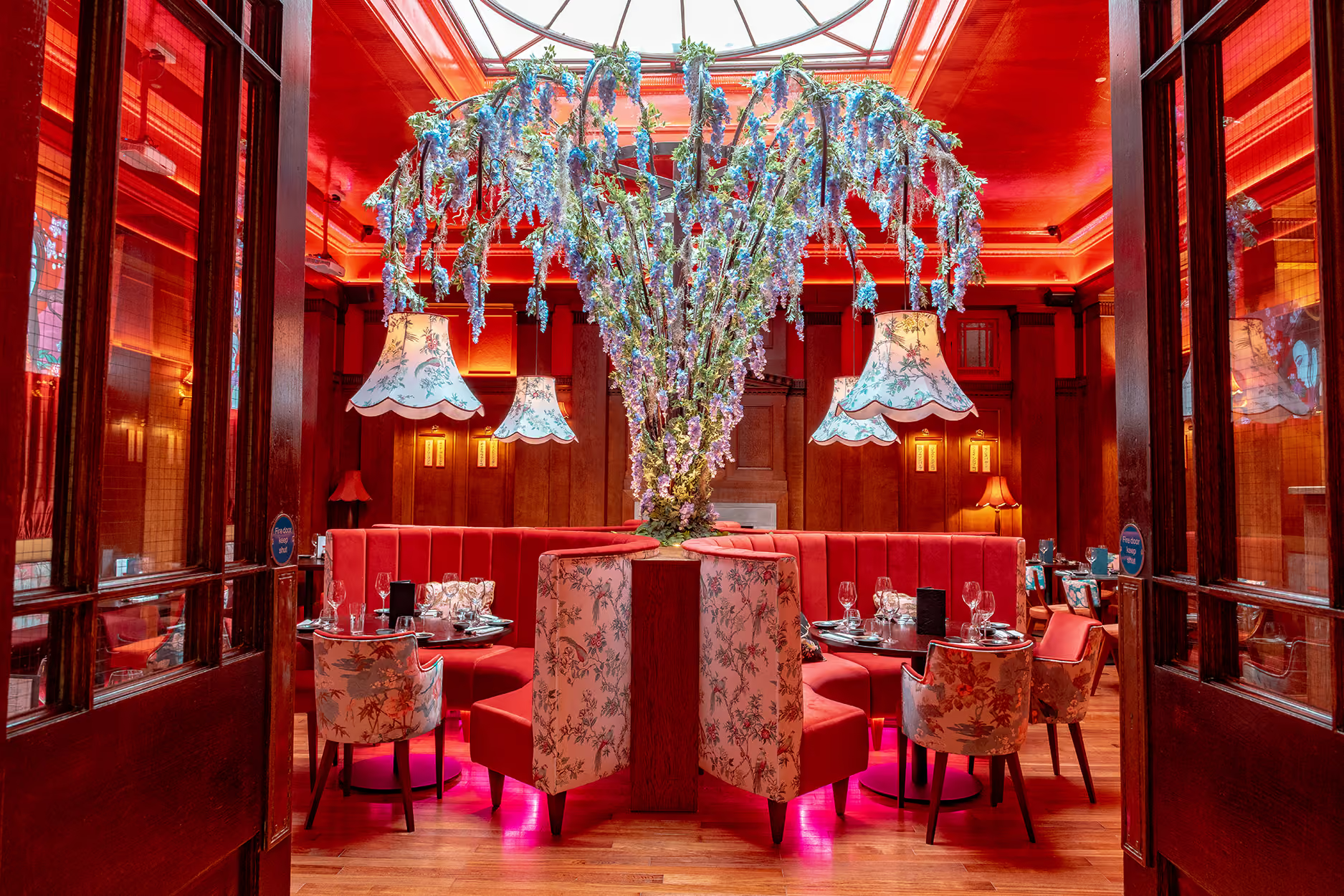
The award-winning restaurant will open on Temple Row this Autumn, serving classic and contemporary Japanese dishes, specially curated cocktails plus an extensive list of Japanese sake, whisky and umeshu
Award-winning KIBOU Japanese Kitchen & Bar is to open its seventh restaurant in Birmingham this autumn. The new site at 61-63 Temple Row, currently home to Riva Blu, will accommodate up to 200 covers across a bar and lounge, open sushi kitchen, main restaurant, and private dining space.
Nestled in the heart of the Colmore Business District, facing onto Cathedral Square, the new KIBOU restaurant will be open seven days a week.
The menu spans classic and contemporary Japanese sharing plates, from chicken karaage, spiced pork gyoza and crisp tempura to beautifully presented sushi and sashimi, A5 Joshu wagyu beef, steaming ramen, katsu curry, and teriyaki. A standalone bar will serve KIBOU's Japanese-inspired cocktails alongside an ambitious list of Japanese whisky, sake, and umeshu.
The restaurant will be designed by Q&A Interior Design Ltd, who have been responsible for creating the interiors across all KIBOU sites to date, and will feature original hand-painted and digital murals by Gloucestershire-based artist Martyna Sabadasz, whose creativity underpins the look and feel of the brand. Guests can expect bold, colourful, Japanese-inspired interiors that evoke a sense of escapism and stylishly capture the brand's spirit of discovery and adventure.
The opening follows KIBOU's strongest trading year on record, with significant year-on-year revenue growth driven by sustained investment in team retention and guest experience. It marks a significant step in the brand's expansion, adding to the existing Midlands site in Solihull, as well as restaurants in Battersea, Cheltenham, Clifton (Bristol), Cambridge, and Oxford.
Commenting on the new site, Sam Horswill, Managing Director at KIBOU Restaurants Ltd, says:
“We’ve had our eye on Birmingham for a long time and we’re so excited to be growing our brand and opening our newest site in the heart of the city. Some people may be familiar with KIBOU after having visited our nearby Solihull restaurant and we can’t wait to become part of the Birmingham community too.
“Following exceptional growth across the business, this marks a real step change in our ambitions and an exciting new chapter for the brand.”
For more information about KIBOU Restaurants Ltd and the new Birmingham site, visit www.kibou.co.uk
Restaurant Touring Company (RTC), founded by Harborne residents Del Gardner and Sarah Wagstaff are launching its first ever Neighbourhood Food Tour in Harborne on Sunday 12th July 2026.
As independent restaurants across the UK continue to face unprecedented economic pressures, a new Birmingham-based venture is calling on local people to rally behind their neighbourhood food scene before it is too late.
Restaurant Touring Company (RTC), founded by Harborne residents Del Gardner and Sarah Wagstaff are launching its first ever Neighbourhood Food Tour in Harborne on Sunday 12th July 2026 with a simple but powerful message: "If we don't use it, we will lose it."
Living in Harborne and witnessing first-hand the challenges facing independent restaurants, cafés, bars and hospitality businesses, Del and Sarah became increasingly concerned about the decline of local food destinations that help define the character and identity of our communities.
"We walk past these venues every day and proudly tell friends and family from outside the area that Harborne is a fantastic foodie destination," says Del Gardner. "But the reality is that unless we actively support these businesses, many simply won't survive. Restaurants are closing at an alarming rate across the country, and our local independents need our support now more than ever."
Inspired by a shared passion for food, travel and discovering authentic local experiences, Del and Sarah created Restaurant Touring Company to encourage people to reconnect with the restaurants, chefs and business owners on their own doorstep.
The concept is simple. Guests visit a selection of carefully chosen independent venues during a guided walking tour, enjoying signature dishes, meeting restaurant owners and chefs, hearing the stories behind the businesses and discovering the passion, hard work and resilience that goes into keeping independent hospitality alive.
More than just a food tour, RTC's Neighbourhood Tours are designed to strengthen connections between local communities and local businesses.
"People often don't realise the challenges these businesses face," explains Sarah. "Behind every independent restaurant is a story. There are families, chefs, entrepreneurs and teams who have invested everything into creating something special for their community. We want people to meet them, hear those stories and experience what makes their local food scene unique."
The inaugural Harborne Neighbourhood Tour will showcase some of the area's most exciting independent food destinations and aims to shine a spotlight on the talent and diversity that exists within the local hospitality sector.
The initiative has drawn inspiration from one of Britain's most famous public calls to action. Just as Lord Kitchener's iconic wartime recruitment poster urged citizens to do their part, Restaurant Touring Company is launching its own campaign for local hospitality: "YOUR LOCAL RESTAURANTS NEED YOU!"
Restaurant Touring Company hopes that the Harborne tour will be the first of many across Birmingham's vibrant neighbourhoods, celebrating local food culture while helping direct customers back through the doors of independent establishments.
The first Harborne Neighbourhood Food Tour takes place on Sunday 12th July 2026 from midday and includes great independent venues such as:
Cuubo - A small, chef-led fine-dining restaurant in Harborne known for modern British cooking with strong Italian influences, run by chef Dan Sweet.
Urban Tea House - A casual, independent Korean-Japanese restaurant and bubble tea cafe that combines Asian comfort foods with modern cafe-style drinks.
El Buen Gusto - An independent Spanish restaurant specialising in authentic tapas, paella, Spanish wines, and sangria, offering traditional Iberian flavours in a relaxed and welcoming setting.
Mela Indian Kitchen - A long-established Indian and Bangladeshi restaurant offering traditional recipes with modern touches. Known for its warm hospitality, experienced chefs, and focus on fresh ingredients, it provides a relaxed neighbourhood dining experience centred on authentic South Asian flavours.
Buonissimo - An independent authentic Italian Restaurant with dishes made from high-quality ingredients and traditional recipes. Known for its handcrafted pasta, fresh seafood, warm hospitality, and elegant atmosphere.
Henry Wong - A refined Cantonese restaurant that blends traditional Chinese cooking with a more modern, polished dining style. It’s especially well regarded for its dim sum and seafood dishes, alongside a broader menu of Cantonese classics.
Tickets are £69 for more information, visit Restaurant Touring Company.
Future tours are monthly and will rotate around Harborne, Moseley and Stirchley
Lucarelli imports ingredients directly from Italy to give guests the true taste of Italia in the heart of Birmingham.
Authentic family-run restaurant Lucarelli Italian, is excited to announce the launch of their new summer menu; packed with the dishes you know and love, with some new additions and as always – the freshest of ingredients.
Highlights of the new menu include the Ravioli Lobster. Fresh lobster packed into ravioli, all coated in a garlic, chilli, parsley, and tomato sauce. It’s flavourful and complex with a little bit of a kick. Making a popular return for those craving pasta, there’s the Mezzo Maccherone Alla Zozzona. A classic roman dish that has short tube-shaped pasta with seasoned pork cheek, sausage, tomato sauce, egg yolk, and pecorino cheese.
For a dish with a kick, they have the Pollo Alla Calabrese. Supreme of chicken cooked with roasted peppers, Calabrian ‘Nduja (an Italian spicy pork sausage) and a spicy tomato source, perfect for those wanting to bring on the heat. Another can’t-miss dish is the Capesante Agli Spinaci. The refined dish has fresh baked king scallops with spinach and lobster sauce. A notorious pairing, the delicate flavour from the scallops pairs seamlessly with the earthy spinach.
Seafood lovers will enjoy the Filetti Di Branzino All’Isolana, a timeless dish from Southern Italy that captures the vibrant and bright flavours of the Mediterranean. Made with flame grilled fillets of sea bass and served with cherry tomatoes, baby potatoes, olives, capers, oregano and fresh basil.
General Manager Pasquale Gianni said “We are thrilled to introduce our new spring menu that showcases the real Italia, Chef Doriano Fisotti has been working hard to introduce our guests to the best of Italian summer cuisine. And as we are based by the Mailbox canal, our terrace is the perfect sun trap this Bank Holiday
Lucarelli Italian’s new menu is available from the Spring May Bank Holiday.
One of Birmingham's favourite summer drinking spots is making a welcome return, as the popular Peroni Piazza reopens at St Martin's Balcony for the season.
Overlooking the bustling St Martin's Square, the open-air terrace has become one of the city's most sought-after destinations for after-work drinks, weekend meet-ups and soaking up the summer atmosphere in the heart of Birmingham.
With panoramic views across the city centre and plenty of sunshine throughout the day, The Peroni Piazza offers visitors the perfect excuse to take a break from shopping, catch up with friends or enjoy an alfresco drink after work.
Guests can choose from a wide selection of drinks, including Peroni, Asahi and Cornish Orchards cider on draught, alongside classic cocktails and Italian-inspired favourites such as the ever-popular Aperol Spritz.
Pints are available from £7, while cocktails are priced at £12.50. Selected drinks are also included in a two-for-£20 promotion. Soft drinks are available for £3.50 and bottled water for £2.50.
Dion Cox of Leisure Events said : "We're really happy to be welcoming Peroni Piazza back. It's going to be a great place to be when the sun's out in Birmingham. The terrace has become a popular summer destination and we're looking forward to seeing people enjoying the space once again."
Open daily throughout the summer from 12pm until 9pm, The Peroni Piazza provides a relaxed outdoor setting in the centre of the city, offering visitors the chance to enjoy refreshing drinks and vibrant city views all season long.
The Peroni Piazza opens this weekend at St Martin's Balcony, Bullring, every day from 12pm to 9pm throughout the summer.
Follow on Instagram/Facebook: @peroni_piazza_birmingham / @ThePeroniPiazzaBirmingham
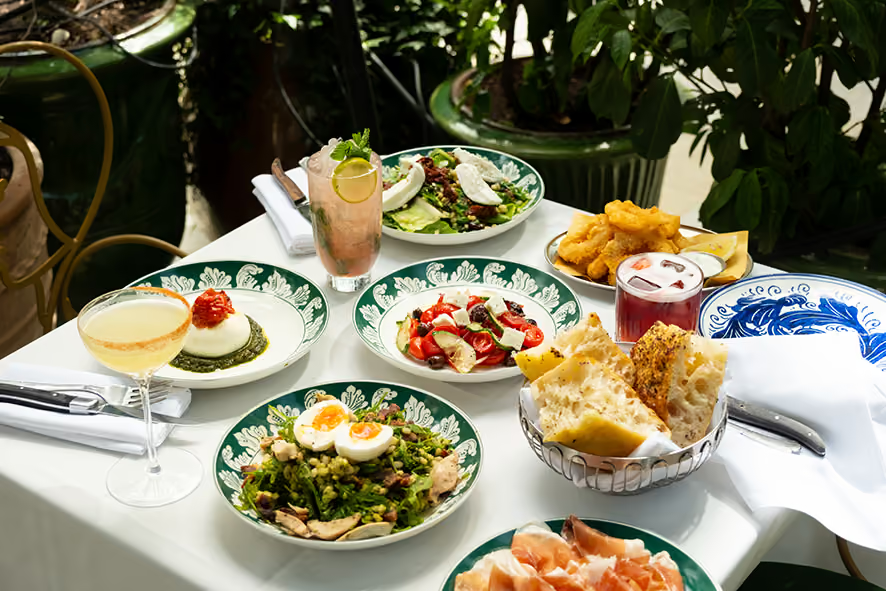
Guests can enjoy three courses from either the à la carte or set lunch menu, with all dishes designed to take you to Italy and back in 60 minutes. The set menu is priced at £19 for antipasti and main, with dolci available for an extra £5
Big Mamma Group's twinkling trattoria, La Bellezza, located in Paradise, Chamberlain Square, is bringing back the Italian art of the lunch break with a new 60-minute lunch menu designed to transform the usually hurried midday meal.
Inspired by Italy's long-held tradition of treating lunch as a protected pause in the day, La Bellezza is inviting guests to step away from emails, meetings and desks to enjoy a meal and meaningful conversation with friends, family or colleagues, all within an hour.
Guests can enjoy three courses from the à la carte or set lunch menu, available Monday to Friday from 12:00pm to 4:45pm. Every dish is designed to deliver the flavours of Italy in under 60 minutes. The set lunch menu is priced at £19 for an antipasti and main course, with a dessert available for an additional £5.
The new lunchtime à la carte menu includes a selection of Italian-inspired bowls and salads, including the Amalfi Bowl with buffalo mozzarella, pesto and pistachios, the Etna Bowl with grilled chicken, Sicilian broccoli and guanciale, a Greek-style salad with feta and olives, and a classic Caesar with seasonal greens and Parmigiano. Each dish is built around fresh, high-quality ingredients and balanced flavours, available as part of the restaurant’s new 60-minute lunch offering.
The set menu features a choice of starters, including Burrata with basil pesto and confit tomatoes, Prosciutto di Parma, and a Greek salad with Taggiasche olives; mains such as Mezzi rigatoni alla Norma, Lamb ragù spaghettoni and the Mammargherita pizza; plus tiramisù to finish.
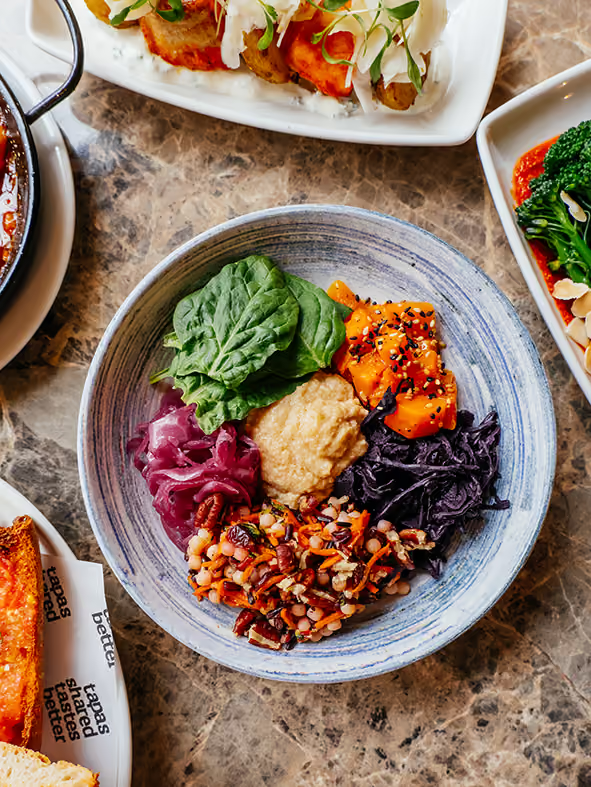
The opening marks the third restaurant within the Baresca Tapas brand, joining Escabeche in West Bridgford and Baresca Nottingham, which is celebrating its tenth anniversary this year.
Inspired by the food, culture and sociability of Barcelona, the brand has spent more than 15 years introducing diners to a relaxed style of dining centred around shared plates, great drinks and genuine hospitality. What began with Escabeche in 2010 has evolved into a much-loved collection of bars and restaurants known for bringing people together around the table.
The new restaurant will be located in the heart of Mere Green, an area chosen for its strong community spirit, thriving independent business scene and shared appreciation for quality hospitality. Set in the old 4,700 sq ft Pierre Bistro unit on Mere Green Road, it will have 150 covers inside and 40 on the outdoor terrace.
Jon Perkins, Managing Director of Perkins Family Group, said: “Baresca Nottingham is celebrating its tenth year in 2026 and we're incredibly proud of what the brand has become. What inspired us from the very beginning was the spirit of Barcelona. The city has an incredible way of bringing people together around the table. Meals are relaxed, food is shared, conversations last longer and there is a real sense of connection. That's the feeling we've always tried to recreate through Escabeche and Baresca.
Mere Green feels like the perfect place to write the next chapter of the Baresca story. It has a fantastic sense of community and an independent spirit that aligns perfectly with what we're all about, and we're excited to become part of it. It’s also so great to be part of the wider Birmingham hospitality scene, which is so supportive of independent venues"
Guests can look forward to many of the dishes, drinks and experiences that have made Baresca a favourite for over a decade.
The menu will feature authentic tapas, Baresca's signature rotisserie chicken, locally sourced, brined and marinated for 24 hours before being slow-roasted on the spit, alongside seasonal specials and a carefully curated drinks list featuring cocktails, sangria, vermouth and Spanish wines. Weekly Barcelona Beats vinyl DJ sessions will add to the atmosphere every Friday evening.
As Baresca Nottingham celebrates its tenth anniversary, the Mere Green opening brings the brand's next chapter to a new community.
Baresca Tapas is due to open Wednesday 22nd July for lunch and dinner, with breakfast served at weekends.
For more information please visit www.barescafamily.co.uk/baresca
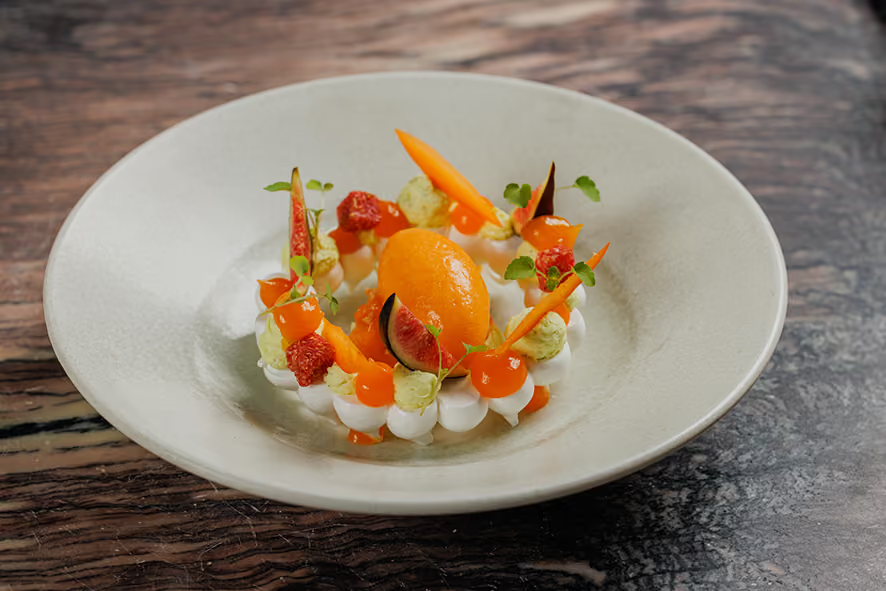
Birmingham Restaurant Festival has revealed the final list of 60 restaurants, the highest number of participating eateries in its history, and the exclusive menus that will offer foodies exciting and affordable dining experiences from 1st to 31st August.
Celebrating its milestone fifth anniversary this year, Birmingham Restaurant Festival is inviting locals and visitors from further afield to explore the city's vibrant culinary scene through specially curated lunch and dinner menus. Diners can make as many bookings as they wish throughout the festival, allowing them to experience the exceptional diversity and flavours that Birmingham has to offer.
Amongst the newly announced venues are Restaurant Folium, who offer elevated British cuisine and will be serving a six-course tasting menu plus paired wines and a welcome drink for £70; and Plate's by Purnell's from Michelin-starred chef, Glynn Purnell, which will be dishing up two courses for £15 or three courses for £20.
In the city centre, culinary adventurers can indulge in a variety of dining experiences, including, a tasting menu at Michelin-starred Adam’s for £70 with the option to add tasting wines for £55; a tasting menu at Land, a modern, plant-focused restaurant in Great Western Arcade for £70; or two or three courses of Bombay inspired street food at Dishoom for £29 and £34 respectively.
Festival-goers can also enjoy a 6-course tasting menu in the sky at 24 Stories for £70, or a two-course sharing experience for two people with a bottle of wine included at premium steakhouse, Cow & Sow, for £100.
Foodies will be able to enjoy exclusive menus in the iconic Jewellery Quarter, such as a tasting menu packed full of inventive dishes for £85 at The Wilderness, who were awarded their first Michelin star in February; Maneki Ramen, the Japanese Restaurant of the year 2025, which will serve two courses for £18.50 or three courses for £25, featuring their delicious ramen bowls; and four courses and sides for £45 at the Sicilian-inspired Vieni which opened in The Goodsyard earlier this year.
Not just limited to central Birmingham, restaurants throughout the city’s wards will also be ready to offer foodies exciting dining experiences during the festival. In Edgbaston Village,Chapter will serve two or three courses of the best of British produce for £26 or £33, and just down the road, Fiesta de Asado, will offer two or three courses of true Argentine asado experience for £25 and £30.
In Digbeth, the Michelin Guide recommended 670 Grams will serve an exclusive tasting menu for £65 and a signature menu for £90; meanwhile, vegan restaurant, BA-HA, will offer two courses for £22 or three courses for £27.
In Moseley, Greek Aura will dish up two or three courses of Mediterranean delights for £20 or £27, while Zindiya will treat guests to three courses and a side of vibrant, authentic Indian food for £25. Pho in Harborne, which will serve two or three courses of fresh Vietnamese dishes for £22.95 and £26.95.
Among the 60 restaurants presenting exclusive and affordable menus are also Arch 13 at Connolly's, Bhancha, Chung Ying Cantonese Restaurant, F1®️ Arcade, Fumo by San Carlo Selfridges, Fumo by San Carlo Waterloo St, Flight Club, Bistro at Hotel du Vin, Indian Brewery Snowhill, Isaac's Restaurant, The Jam House, Lulu Wild, Marco Pierre White Steakhouse Bar & Grill Birmingham, The Mayan, Miller & Carter, Noel's Bar and Restaurant, The Oyster Club, Primitivo Bar & Eatery, Regina's, San Carlo, Siamais, Wagamama Brindleyplace, Wagamama Bullring, Wagamama New Street, Yakinori, The Alchemist BrindleyPlace, The Alchemist Colmore Row, Asha's, Bazar, Chez Mal Bar & Brasserie, Cosy Club, Del Villaggio, Fogo de Chão, Gaucho, Lasan, Rosa's Thai, Samo Bistro, Seafood City, Temper and Brown, Tiger Bites Pig, Trentina, Txikiteo, Vietnamese Street Kitchen.
Alex Nicholson-Evans, Founder & Director of Living For The Weekend, organisers of Birmingham Restaurant Festival, said: “With 60 restaurants taking part and serving up exclusive and affordable menus, this is our biggest lineup ever for our landmark fifth year.
Whether you're planning a summer city break filled with exciting flavours, revisiting a favourite local restaurant, or discovering somewhere new, we're confident there's a menu to suit every taste. We encourage food lovers to make the most of the festival, explore Birmingham's vibrant culinary scene, and support the city's fantastic hospitality businesses."
While some restaurants may have the capacity for walk-ins, to guarantee access to the exclusive festival menus, diners must book in advance. Diners do not need to purchase a ticket or wristband.
To make a reservation, diners need to visit www.birminghamrestaurantfestival.co.uk , and follow the directions given on the individual restaurant pages, in order to access their Festival menu.
Stay up to date on news from Birmingham Restaurant Festival by signing up to the e-newsletter, herehttps://birminghamrestaurantfestival.co.uk/#subscribe
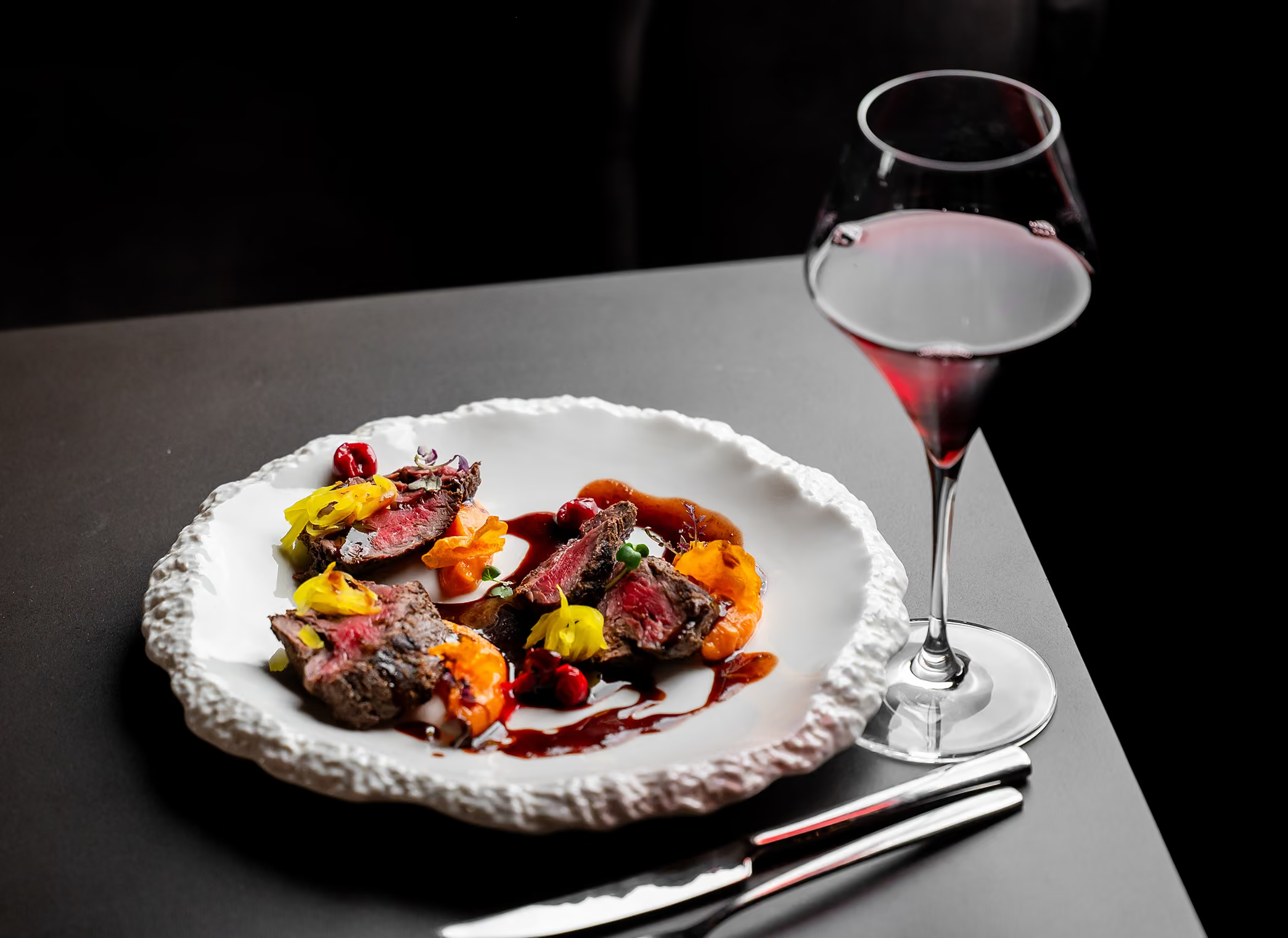
Father’s Day is just around the corner and we’ve got some perfect gifting ideas and events lined up for the big day!
ONE-NIGHT-ONLY SPEAKEASY CELEBRATION THIS FATHER'S DAY, DOWNSTAIRS AT THE GRAND
The Grand Hotel Birmingham is turning up the volume with an evening of live music entertainment, specially dedicated to all the father figures out there
Looking for the perfect gift this Father’s Day? On Sunday 21st June, the hidden speakeasy bar underneath The Grand Hotel Birmingham is putting on a special occasion to celebrate.
Downstairs At The Grand offers an intimate setting with elevated dining and the perfect spot to listen to live music entertainment, soundtracking the night.
Guests can enjoy a glass of fizz or bottle of beer on arrival, followed by a delicious three-course meal for £49 per person. Live music will cover Rock, Motown, Soul and Jazz, guaranteed to take him right back to the good old days!
For more information about Father’s day, Downstairs At The Grand, visit: https://www.thegrandhotelbirmingham.co.uk/whats-on#!/e/father-s-day-downstairs-at-the-grand-b1f67e6d
CELEBRATE FATHER’S DAY WITH 24 STORIES
24 Stories is ready to celebrate Father’s Day, offering sophisticated dining in the sky or quality beers served in tankards in their downstairs bar, Stories Tavern
Looking for the perfect spot to celebrate this Father’s Day? Guests can enjoy panoramic views of the city and beyond with carefully curated menus and sophisticated cocktails.
Alternatively, Stories Tavern, their recently launched downstairs bar, taking inspiration from original 17th and 18th century taverns is also open to guests.
Serving quality beers such as lager, IPA and Guinness in traditional tankards, at just £5, 24 Stories has multiple spots to for enjoying a drink, whatever the weather. Guests can choose to toast to all the father figures out there as the sun sets over the city or downstairs in Stories Tavern.
For more information about 24 Stories and how to book a table, visit: https://24stories.co.uk/
TREATING DAD MADE EASY THIS FATHER'S DAY, WITH COW & SOW’S NEW PREMIUM HOME DELIVERY SERVICE
Cow & Sow at Home will allow customers to order restaurant quality meat to doors across the UK, making treating dad simple this Father’s day
Looking for the perfect gift, or some help with lunch this Father’s Day? Cow & Sow has just launched their new direct-to-door service which provides access to restaurant-quality meats and wine.
Cow & Sow at Home is aiming to provide exceptional produce for the occasion, the perfect chance to impress dad with the ultimate home cooked meal, slow Sunday breakfast or an indulgent BBQ.
You can now treat dad to various products including premium steaks such as Tomahawk, Porterhouse and Picanha, carefully selected for their exceptional marbling, depth of flavour and consistency. Pricing is based on weight and begins from £10. These are available to order alongside pork belly, tenderloin and shoulder as well as smaller serves including burgers, sausages and bacon, perfect for any occasion.
Not limited to meat, the online shop also stocks Cow & Sow’s own Malbec, priced at £18 by the bottle and £40 for the magnum, as well as a selection of gifts and branded merchandise. All products can be delivered nationwide, with free local delivery available in areas surrounding Cow & Sow restaurants.
Cow & Sow at Home is now taking orders nationwide. For more information, visit: https://thecowandsow.co.uk/at-home/
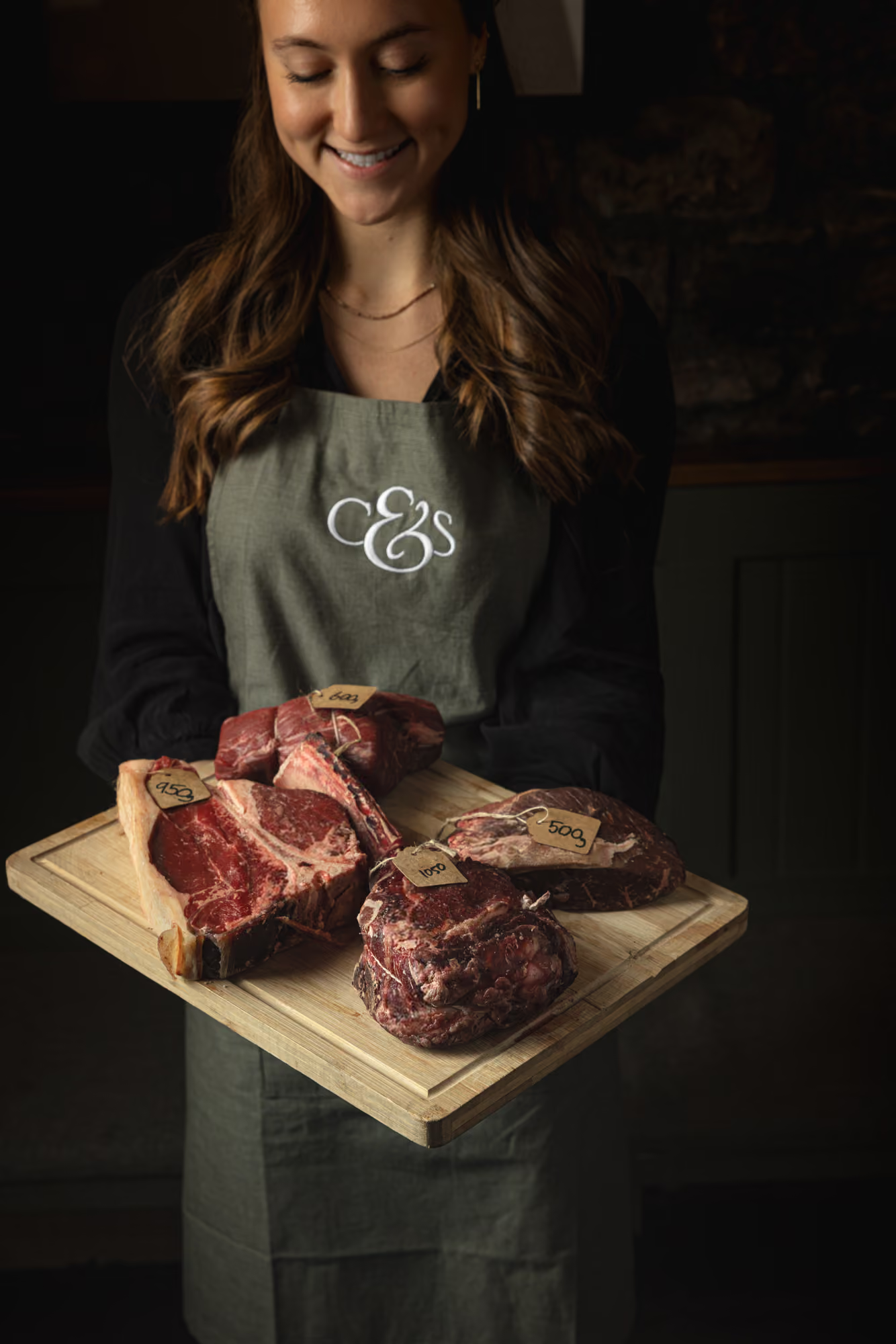
Cow & Sow is launching a new menu in time for summer featuring fresh, organic produce delivered straight from their Kitchen Farm and English Wagyu beef sourced directly from Yorkshire.
Cow & Sow, the B Corp certified, premium steakhouse group located in Birmingham’s Paradise development, has launched a brand new menu with the freshest of ingredients and the finest cuts of meat, including English Wagyu, Black Angus beef and Hampshire x Landrace pork.
Working with UK farmers to bring some of the country’s finest beef and pork cuts to the Cow & Sow grills, the new menu will see the meat take centre stage on the new menu. The restaurant will offer grass-fed Black Angus beef, Hampshire x Landrace pork and is also introducing Olive-fed English Wagyu for the first time.
Hailed for its intense marbling and flavour and primarily sourced from suppliers in Japan or Australia, Cow & Sow will be serving English Wagyu from Scurf Dyke Farm in Yorkshire. Customers will be able to choose from Angus or Wagyu beef on single cuts including Sirloin and Ribeye, or indulgent bigger cuts to share, such as Picanha and Chateaubriand.
Grass-fed Angus beef from family farms in Wiltshire is also available in Fillet and Flat Iron single cuts, or Tomahawk and Porterhouse sharing cuts.
Pork dishes on the menu include Roast Porchetta with burnt apple sauce or Slow cooked pork belly served with fondant potato, celeriac puree and greens. These dishes are made with Hampshire X Landrace pork sourced from Cameron Naughton and the team from West End Farm in Devizes.
Following the recent opening of the Cow & Sow Kitchen Farm, the restaurant is delivering the ultimate grassland to grill experience, with the new menu also featuring produce grown on the farm. Mouthwatering dishes made with their own produce will include Cow & Sow’s iconic Crispy onion blossom with black garlic mayo, Miso and chipotle glazed Hispi cabbage and Grilled baby Caesar lettuce served with bacon bits and parmesan.
Cow & Sow became a certified B Corporation in 2024, a huge milestone for what started as a small family business. Built on three main pillars, their daily commitment involves making a positive impact on the Planet, People and Community which is clearly championed throughout their carefully curated new menu featuring the freshest, locally sourced ingredients.
Mark Warburton, Founder of Cow & Sow, said: “We have always worked with the very best farmers to source our meat and we’re thrilled to be partnering with Roy and his family from Scurf Dyke farm, to be introducing English Wagyu to our menu too.
“This is a really exciting time for Cow & Sow. We’ve just announced our Kitchen Farm, which our Head Grower Amanda has been working hard on since January. After some amazing growing conditions over the last few months, we are ready to start supplying our restaurants with our own fresh produce, which customers can now spot on the menu by looking for the tractor icon. We know diners are becoming more discerning and want to know exactly where their food is coming from, we’re proud to be delivering the very best grassland to grill experience and can’t wait for everyone to come and try the new menu!”
To book a table at Cow & Sow Birmingham, visit: https://thecowandsow.co.uk/
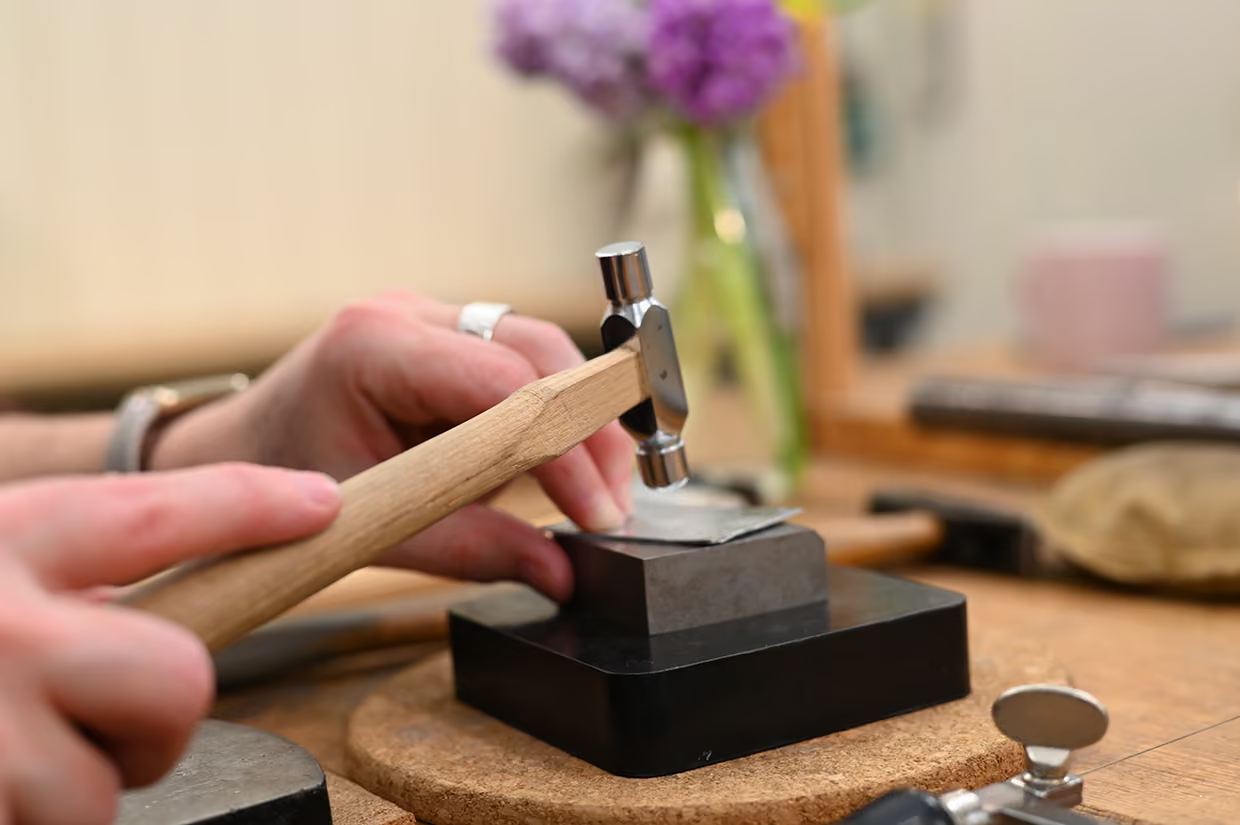
Birmingham Jewellery Biennial will bring together exhibitions, activities, and workshops from world-class creatives, while also giving the public a chance to make their own jewellery every day for a month.
One year on from Birmingham achieving World Craft City status, organisers have announced that the city will host a month-long festival to celebrate over 250 years of jewellery-making in the Jewellery Quarter, in May 2027.
Birmingham Jewellery Biennial will bring together exhibitions, activities, and workshops from world-class creatives, while also giving the public a chance to make their own jewellery every day for a month.
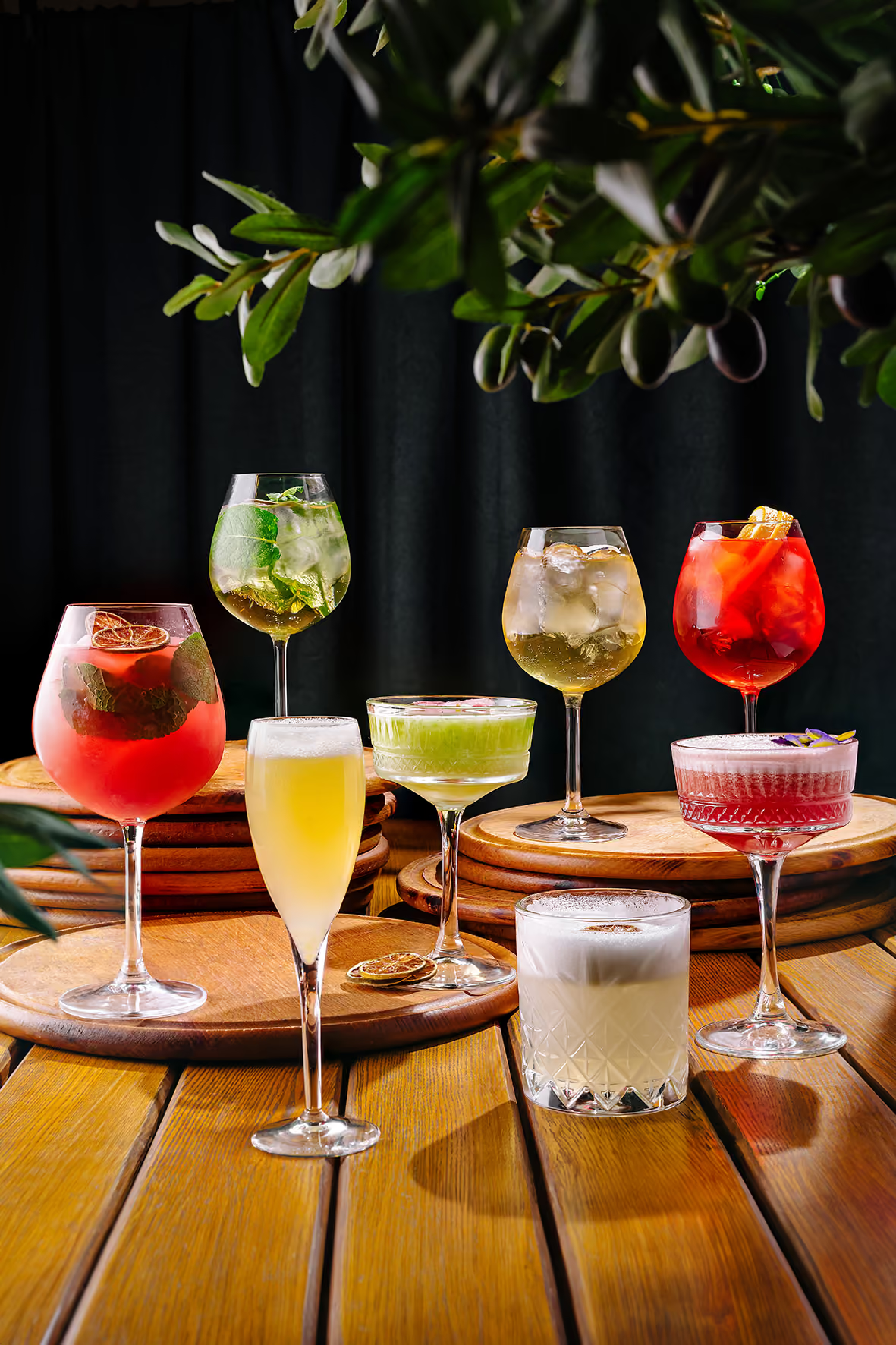
Birmingham Cocktail Weekend returns from 9th–12th July 2026, bringing four days of cocktails, events and city-wide celebrations to Birmingham, with Edgbaston Village is pouring in on the action
Festival wristband holders can unlock exclusive £6 signature cocktails at more than 40 venues across the city, alongside £5 alcohol-free alternatives, food offers and exclusive events throughout the weekend.
In Edgbaston Village, both The High Field and Chapter are taking part, offering two must-visit stops on your cocktail trail.
The High Field is ideal for relaxed summer sipping, with its spacious garden providing the perfect setting for an afternoon cocktail in the sunshine. Meanwhile, Chapter offers a lively atmosphere, stylish interiors and expertly crafted drinks that make it perfect for brunch, evening drinks or catching up with friends.
Whether you spend one evening exploring or make a full weekend of it, Edgbaston Village is the perfect place to raise a glass this summer.
Easy to Reach
Edgbaston Village is easily accessible, however you choose to travel:
By Train - Five Ways station is around a 10-minute walk from Greenfield Crescent. Birmingham New Street Station is approximately 20 minutes on foot or a short bus ride away.
By Metro - The Edgbaston Village Metro stop is just a 2-minute walk from the market.
By Bus - Regular services run along Calthorpe Road and Harborne Road.
By Car - Limited on-street and pay-and-display parking is available nearby.
By Bike / Foot - The area is pedestrian and cycle friendly, with plenty of bike racks available.
Dine Outdoors
After a day spent exploring Birmingham’s gardens and outdoor events, make the most of the sunshine with alfresco dining in Edgbaston Village. Enjoy drinks in The High Field’s garden, brunch on the terrace at Chapter, or discover the area’s independent cafés, bars and restaurants.
Make the Most of Summer
From peaceful garden walks to bustling markets and outdoor dining, Edgbaston Village offers the perfect way to enjoy everything summer has to offer!
Gardens and outdoor spaces to explore this Summer
Longer days and warmer evenings make this the perfect time to enjoy Birmingham’s greener side. From historic gardens to community spaces and seasonal events, Edgbaston offers plenty of ways to make the most of summer outdoors.
Birmingham Botanical Gardens
A true Edgbaston landmark, Birmingham Botanical Gardens offers 15 acres of stunning landscapes, glasshouses and seasonal floral displays. Wander through colourful borders, discover over 30,000 plants and enjoy one of Birmingham’s most peaceful green spaces.
This summer, visitors can also take part in the Gardens’ popular outdoor yoga sessions, held weekly at 9am on Saturday mornings throughout the summer. Featuring guided movement, mindfulness and sound bath experiences surrounded by nature, it’s the perfect way to start the weekend.
Martineau Gardens
One of Birmingham’s hidden gems, Martineau Gardens, is a tranquil community garden filled with orchards, wildlife-friendly planting and peaceful walking routes.
On Saturday 27th June, its much-loved Annual Garden Party returns from 3pm, bringing live music, food, fundraising and community spirit to the gardens. With a fizz reception, raffle and entertainment, it’s a wonderful way to enjoy this unique green space while supporting an important local charity.
Winterbourne House & Garden
With seven acres of beautifully maintained gardens, woodland walks and colourful planting displays, Winterbourne House & Garden offers a picture-perfect summer day out. The historic Edwardian house adds even more charm, making it ideal for a relaxed afternoon of exploring.
Artisan Market Dates for Your Diary
The much-loved Edgbaston Village Artisan Market returns to Greenfield Crescent on Saturday 13th June and Saturday 11th July, bringing together up to 80 independent traders offering artisan food, drink, handmade crafts and unique gifts.
For even more summer shopping, don’t miss the Summer Night Market on Friday 17th July from 4–9pm, with over 40 Birmingham Artisan Market traders, live entertainment and a lively evening atmosphere.

Loki Wine operates three venues in Birmingham City Centre, Edgbaston and Knowle, specialising in high-quality wines with expert staff who can recommend bottles for any occasion
When we think about sparkling wine, the mind usually jumps to Champagne or Prosecco. These two categories have dominated the conversation for the last decade (or, in Champagne’s case, for centuries, since the monk Dom Pérignon allegedly “saw the stars” in his wine). However, I’m here to tell you that while Champagne feels like the ultimate celebratory drink and Prosecco offers a budget-friendly alternative, there are plenty of other options around the world that deliver both quality and value.
England
If you’ve been living under a rock and haven’t tried English sparkling wine, now is the time. As the price of Champagne has risen significantly over the past few years, English sparkling wine is, for the first time, offering genuinely great value. It’s also worth remembering that many large Champagne houses produce high volumes that aren’t always matched by quality, you’re often paying for marketing. In contrast, English producers tend to be smaller and more focused on craftsmanship. Hattingley Classic Reserve is a great example: fresh, crisp, and refreshing, with enough texture to make it a serious wine.
£35.99
Lambrusco
Lambrusco is often confused with Lambrini (they are not the same, the latter is actually a pear cider). Lambrusco, on the other hand, is a unique sparkling wine from Emilia-Romagna in Italy. These wines are mainly sparkling reds, though you can also find rosé and white versions. Personally, I’d stick to the reds. They are perfect barbecue wines; light, fruity, refreshing, and delicious, with enough tannin to pair well with meats. A personal favourite is Cleto Chiarli Lambrusco di Sorbara “Vecchia Modena”. The colour is almost like a deep rosé, but it still packs a punch, full of juicy, vibrant fruit.
£19.99
Corpinnat
Corpinnat is a relatively new collective formed by some of the top Cava producers. These wines offer stunning value and represent some of the best sparkling wine made today. The producers involved have a long history of crafting high-quality sparkling wines. One of the founding members, Can Feixes, produces an excellent Brut Nature, offering a racy yet complex style.
£23.99
Pet Nat
Short for pétillant naturel, this style may now be associated with hipsters, but it is actually the original method of making sparkling wine. Fermentation continues in the bottle after it has been sealed, trapping the carbon dioxide within the wine. These are fun, summery wines - don’t take them too seriously. One standout is Domaine de la Madone “Perréon Power” Pet Nat from Beaujolais, which bursts with crunchy fruit and purity, and practically screams: “pour me another glass!”
£22.99

This issue, we turn our attention to wellness, exploring the books shaping conversations around mental clarity, emotional resilience, mindfulness and modern wellbeing.
From psychology and longevity to mindfulness and digital balance, each title offers a thoughtful perspective on how we navigate increasingly demanding lifestyles. Leading this month’s selection at number one is Why Has Nobody Told Me This Before? by Dr Julie Smith, a standout guide that combines clinical expertise with accessible, practical advice for everyday life.
Across the collection, these are not simply books designed to motivate, but titles that genuinely challenge perspectives, encourage reflection and offer meaningful tools for living with greater intention and self-awareness in a constantly distracted world.
Why Has Nobody Told Me This Before? - Dr Julie Smith
Dr Julie Smith’s Why Has Nobody Told Me This Before? feels less like a traditional self-help book and more like a calm, intelligent conversation with someone who genuinely understands modern emotional pressure. Drawing on her experience as a clinical psychologist, Smith breaks down complex topics such as anxiety, confidence, stress and low mood into practical, manageable advice that feels realistic rather than overwhelming. What stood out to me most was the accessibility of the book. The techniques are simple enough to apply immediately, yet grounded in genuine psychological expertise. It is easy to understand why the book became such a phenomenon. Thoughtful, reassuring and highly practical, it is a book I found myself returning to repeatedly.
£20
Why We Sleep - Matthew Walker
Matthew Walker’s Why We Sleep completely changed the way I think about rest, recovery and long-term health. Drawing on decades of scientific research, Walker explains the extraordinary role sleep plays in everything from cognitive performance and emotional wellbeing to disease prevention and longevity. What makes the book particularly compelling is how clearly the science is communicated without losing depth or authority. Topics such as REM sleep, dreaming, caffeine and changing sleep patterns are explored in a way that feels both fascinating and slightly alarming. After reading it, it becomes difficult to view sleep as optional or negotiable. Informative, persuasive and deeply researched, it is one of the most impactful health books I have read.
£13
Breath: The New Science of a Lost Art - James Nestor
James Nestor’s Breath takes something we do instinctively every day and reveals just how much we have been getting wrong. Blending scientific research with ancient breathing practices, the book explores how breathing patterns can influence everything from stress and sleep to athletic performance and immunity. What I enjoyed most was Nestor’s investigative style. He travels extensively, tests methods himself and presents complex ideas in a highly engaging way. Some of the findings are genuinely surprising, particularly around mouth breathing and modern lifestyle habits. Breath is one of those rare books that immediately changes your awareness of your own body. Long after finishing it, I found myself thinking differently about something as basic as inhaling and exhaling.
£11
Mindfulness: A Practical Guide to Finding Peace in a Frantic World - Professor Mark Williams and Dr Danny Penman
This is one of the most practical and accessible introductions to mindfulness I have read. Rather than approaching mindfulness as something abstract or overly spiritual, Williams and Penman present it as a realistic tool for navigating stress, anxiety and the constant pace of modern life. Rooted in mindfulness-based cognitive therapy, the book combines scientific credibility with genuinely useful exercises that can be integrated into everyday routines. What stood out to me was its calm, compassionate tone. Nothing feels forced or unrealistic. Instead, it encourages small, sustainable shifts in awareness and perspective. Quietly powerful and highly readable, it is a book that feels increasingly relevant in a permanently distracted world.
£17
The Body Keeps the Score - Bessel van der Kolk
The Body Keeps the Score is one of the most insightful and thought-provoking books I have read on trauma and emotional healing. Bessel van der Kolk explores how trauma affects not only the mind, but also the brain and body, challenging many traditional approaches to treatment. What makes the book so powerful is its balance between scientific research, patient stories and practical understanding. Rather than focusing solely on medication or talking therapies, van der Kolk examines alternative healing approaches that reconnect people with their physical and emotional selves. It is an emotionally intense read at times, but also an incredibly important one that completely reshaped my understanding of trauma and long-term wellbeing.
£15
The Power of Now - Eckhart Tolle
Tolle’s The Power of Now is a book that demands patience and reflection, but ultimately rewards both. Centred around the idea of living fully in the present moment, Tolle challenges the constant mental noise and anxiety that often dominate modern life. What struck me most was the simplicity of many of his ideas, despite the profound impact they can have when genuinely applied. The conversational structure makes complex spiritual concepts feel surprisingly accessible. While it is certainly a deeply philosophical book, I found it grounding rather than abstract. More than anything, The Power of Now encourages a quieter, calmer way of living that feels increasingly relevant in a constantly distracted world.
£13
Outlive: The Science and Art of Longevity - Peter Attia with Bill Gifford
Outlive is one of the most comprehensive books I have read on health, ageing and longevity. Attia challenges conventional healthcare approaches by focusing not simply on extending lifespan, but on improving quality of life across every decade. Covering nutrition, exercise, sleep and emotional health, the book presents longevity as something proactive rather than reactive. What impressed me most was Attia’s ability to balance scientific depth with practical application. The advice feels strategic and evidence-based without drifting into trends or biohacking culture. It is an ambitious book, but an incredibly valuable one that reframes how we think about health, prevention and long-term wellbeing in modern life.
£25
Best Self: Be You, Only Better - Mike Bayer
Bayer’s Best Self approaches personal development in a direct and highly actionable way. Built around the idea of identifying both your “best self” and “anti-self”, the book encourages honest reflection on habits, relationships and daily choices. What makes it effective is its accessibility. Bayer avoids overly complicated theory and instead focuses on practical exercises that encourage meaningful behavioural change. Throughout the book, there is a strong emphasis on authenticity and alignment, particularly around building a life that genuinely reflects personal values rather than outside expectations. I found it motivating without feeling unrealistic or overly polished. It is a straightforward, engaging read that offers practical tools for personal growth and self-awareness.
£13
Set Boundaries, Find Peace - Nedra Glover Tawwab
Tawwab’s Set Boundaries, Find Peace is one of the clearest and most practical books I have read on relationships, communication and self-respect. Tawwab removes much of the confusion around what healthy boundaries actually look like and explains how a lack of boundaries often contributes to stress, burnout and resentment. What I appreciated most was the book’s straightforward tone. The advice is direct, realistic and immediately applicable across work, friendships and family dynamics. Rooted in therapeutic practice and cognitive behavioural techniques, it offers practical frameworks without becoming clinical or overwhelming. It is an empowering read that encourages clarity, confidence and healthier relationships in every aspect of life.
£17
Digital Minimalism - Cal Newport
Newport’s Digital Minimalism offers a compelling argument for reclaiming focus and intentionality in an increasingly distracted world. Rather than rejecting technology entirely, Newport encourages a more selective and conscious relationship with digital tools, particularly social media and constant online connectivity. What makes the book effective is its practicality. The “digital declutter” approach feels achievable rather than extreme, while the broader message around attention, solitude and meaningful interaction feels increasingly important. I found the sections on prioritising deeper conversations and rediscovering offline activities particularly insightful. Calm, intelligent and highly relevant, Digital Minimalism is ultimately about creating more space for clarity, presence and genuine quality of life.
£11
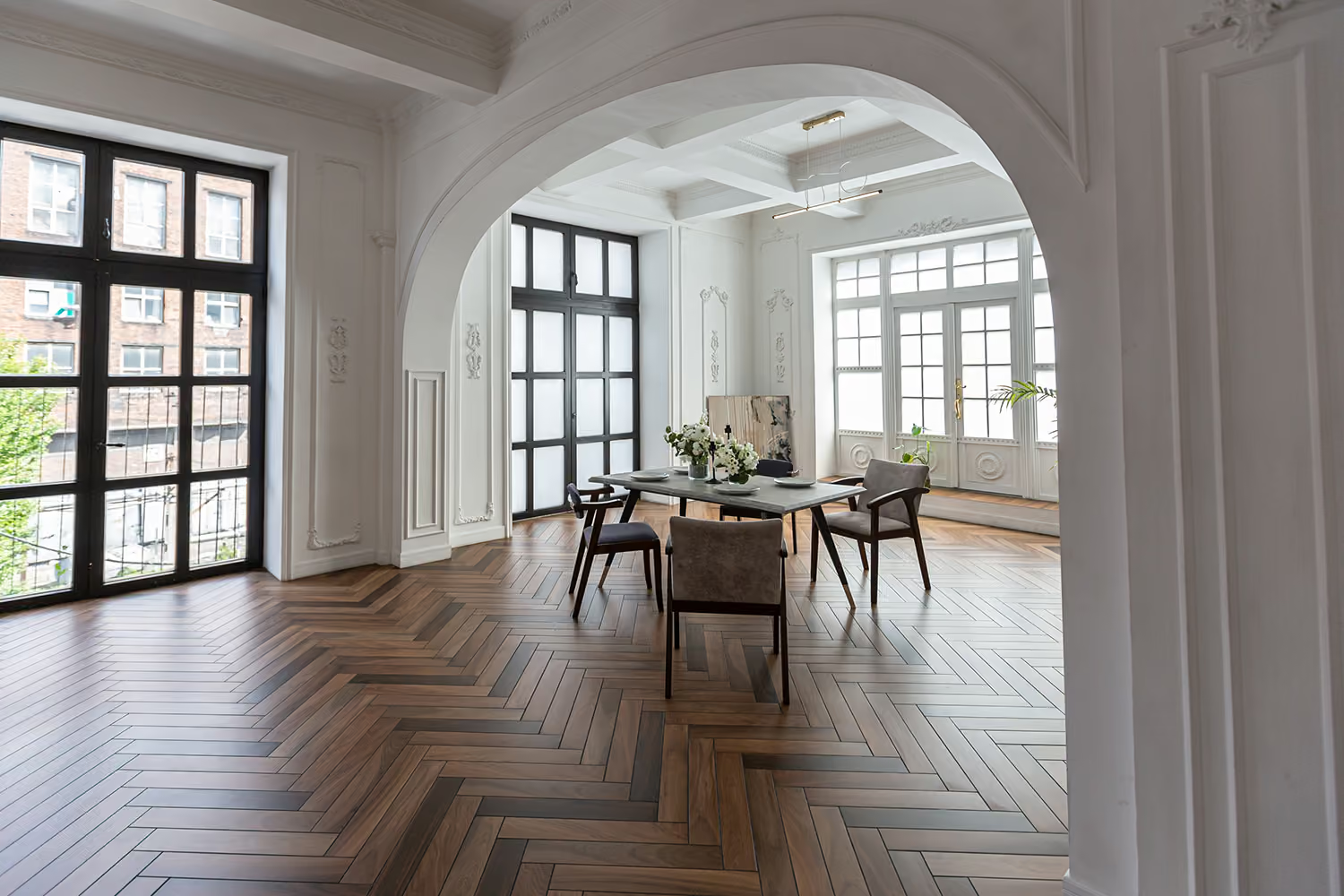
Swealthy stage properties to sell faster and for more.
In the upper tiers of the residential property market, value is rarely determined by location and specification alone. It is shaped by perception, confidence and the ability of a property to communicate a complete lifestyle narrative from the moment a buyer enters the space. Increasingly, experienced sellers recognise that presentation is not simply an aesthetic consideration but a strategic decision that can materially influence the financial outcome of a sale. Within prime markets especially, home staging has become an important component of intelligent asset positioning.
Luxury buyers do not approach property in the same way as mainstream purchasers. They are rarely searching for compromise solutions or transitional homes. Instead, they are selecting environments that must immediately support the standards of comfort, privacy and entertaining that already define their lives. As a result, the viewing experience carries unusual importance because it establishes whether a property feels aligned with expectation from the outset. When presentation supports that alignment, confidence increases. When it does not, hesitation can appear quickly and begin to shape perceptions of value.
For this reason, staging now operates less as decoration and more as preparation for market entry at the highest level of residential real estate.
WHY BUYERS AT THE TOP END PURCHASE EMOTION AND CERTAINTY
Affluent purchasers expect clarity when they walk through a property. They want to understand how rooms relate to one another, how space supports everyday routines and how the architecture accommodates both privacy and social life without requiring interpretation. Even generous homes can feel uncertain when their layout is not clearly expressed through proportionate furnishing and considered styling.
Thoughtful staging removes that uncertainty by presenting a property as resolved rather than potential. Reception rooms communicate entertaining scale. Bedrooms suggest calm retreat. Transitional areas become legible parts of a coherent living environment rather than undefined spaces waiting for explanation. Buyers begin to experience the property as somewhere they could already live, rather than somewhere they would need to adapt.
This shift matters because emotional certainty plays a decisive role in luxury purchasing decisions. When buyers feel confident about how a property will function within their lifestyle, they are more likely to interpret its value positively and respond with stronger engagement at an earlier stage of the marketing process.
THE COST OF UNDER PRESENTING PRIME PROPERTY
Even architecturally distinguished homes can underperform when presentation fails to match the expectations of the audience they are intended to attract. Empty rooms often appear smaller than they are. Oversized furniture can distort proportion. Inconsistent styling can interrupt the visual rhythm that allows architecture to communicate its strengths.
These signals are rarely analysed consciously, yet they influence judgement quickly. Buyers begin to imagine effort rather than ease, adjustment rather than readiness. Once that shift occurs, attention moves away from lifestyle possibility and towards perceived inconvenience, which can subtly affect both enthusiasm and pricing behaviour.
At the upper end of the market, where expectations are precise and competition between properties is often strong, presentation helps ensure that architectural quality is recognised immediately rather than discovered gradually. A carefully staged home enters the market already communicating coherence and completeness, which supports alignment between its intrinsic qualities and its perceived value.
PRESENTATION AS A SIGNAL OF CONFIDENCE
There is an unspoken dialogue between seller and buyer in prime residential transactions. Presentation forms part of that conversation by signalling how the property has been understood and prepared before reaching the market.
A carefully staged home suggests attention to detail and consistency of stewardship. Buyers often interpret this as evidence that the ownership experience has been considered thoughtfully, which reduces uncertainty at exactly the moment when they are forming impressions about risk. Confidence strengthens when the viewing experience feels deliberate and composed rather than improvised.
Within luxury markets, this confidence supports pricing resilience because buyers are responding not only to architecture but also to the sense that the property already reflects the standard of living they expect it to deliver.
WHY STAGING ACCELERATES LIQUIDITY IN HIGH VALUE REAL ESTATE
Liquidity is not always discussed in residential property conversations, yet it remains central to effective wealth management. A property that attracts confident engagement early in its marketing lifecycle protects flexibility for the seller and preserves the ability to respond to future opportunities elsewhere within a portfolio.
Presentation plays a significant role in supporting this liquidity because it influences how quickly the right buyers recognise the relevance of the opportunity being offered. Strong staging improves photography, strengthens digital engagement and increases the likelihood that serious purchasers will prioritise a viewing appointment while momentum remains high. Early interest often establishes the tone for the entire marketing period, particularly in prime markets where perception of demand can influence negotiation dynamics from the outset.
By encouraging immediate clarity and engagement, staging contributes to a marketing environment in which a property can move more efficiently from introduction to transaction without compromising value expectations.
THE IMPORTANCE OF THE DIGITAL FIRST IMPRESSION
Luxury property searches increasingly begin long before a viewing appointment takes place. Buyers often review numerous opportunities online before selecting which homes justify their time and attention. Photography therefore acts as the first introduction to the property experience.
Staging transforms the effectiveness of this introduction. Balanced colour palettes, resolved spatial arrangements and carefully managed lighting allow architecture to communicate its strengths clearly through imagery. Rooms appear purposeful rather than uncertain. Circulation feels intuitive rather than ambiguous. Materials read as deliberate rather than incidental.
These visual signals shape whether a buyer progresses from curiosity to engagement. In high value residential markets, that decision frequently determines whether a viewing is scheduled at all, which makes presentation a critical element of market positioning long before the front door is opened.
NEGOTIATION STRENGTH AND PERCEIVED READINESS
Negotiation behaviour is influenced strongly by whether buyers believe a property requires adjustment after completion. Even modest anticipated improvements can introduce caution into discussions about value because they create uncertainty about timing and effort following acquisition.
Staging reduces this uncertainty by presenting the home as complete in atmosphere as well as structure. Buyers begin to imagine continuity rather than transition, which supports a more confident interpretation of the property’s positioning within the market. When the viewing experience reflects readiness rather than potential, negotiation conversations are more likely to centre on acquisition decisions rather than anticipated changes.
This shift in emphasis helps maintain alignment between expectation and price throughout the transaction process.
PRESENTATION AS A COMPONENT OF ASSET STRATEGY
Experienced sellers increasingly treat staging as part of a broader preparation strategy that begins before a property is introduced to the market. They recognise that first impressions establish the framework through which all subsequent discussions about value will take place. When presentation reflects the expectations of the intended audience, the property enters the market with clarity, coherence and confidence already established.
Within prime residential markets, where perception shapes engagement as much as specification, staging operates as a practical extension of asset management rather than a decorative enhancement. By supporting emotional certainty, protecting pricing position and improving marketing momentum, presentation contributes directly to the preservation and strengthening of residential wealth in ways that are increasingly recognised by sophisticated property owners and advisers alike.
If you’re ready to stage smarter, Swealthy Staging can help. Visit swealthystaging.com to see how purposeful staging can transform your property and attract the right buyers.
swealthystaging.com
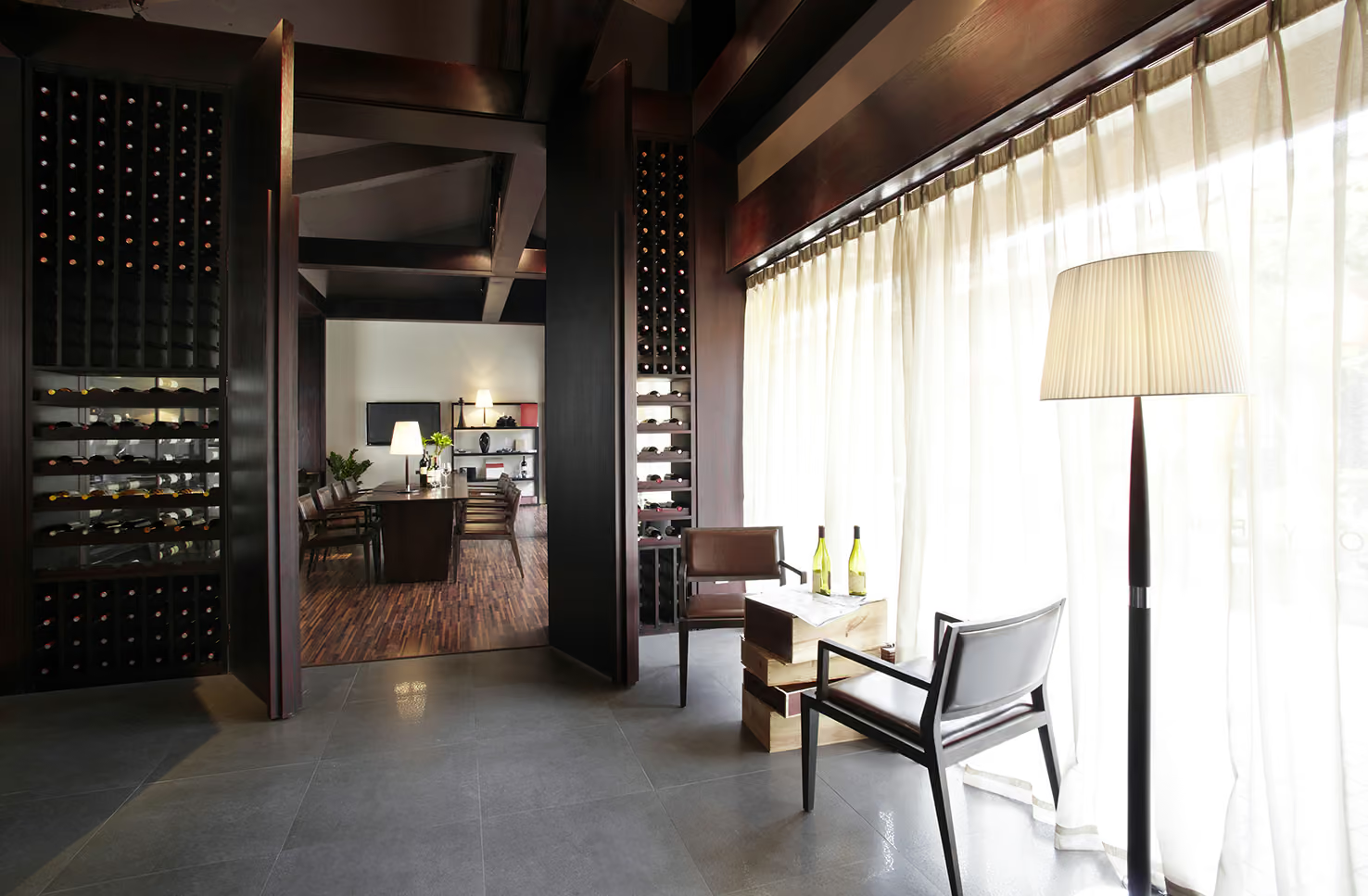
In refined spaces, the wine room has evolved far beyond storage. It is no longer simply a temperature-controlled cupboard hidden from view. Today it is an architectural statement, a place of atmosphere and intention where collecting, hosting, and appreciation intersect. At the highest level of residential design, a wine room expresses not only taste in wine but taste in living.
The most successful wine spaces begin with clarity of purpose. Some collectors prioritise long term maturation. Others focus on accessibility and entertaining. Many aim for a balance between preservation and presentation. Defining the role of the room early allows every design decision to support the lifestyle it serves. A wine room designed only for display will feel different from one designed for serious cellaring. The distinction matters.
Location within the home shapes the experience immediately. Traditionally, wine storage belonged underground where stable conditions occurred naturally. Contemporary architecture now allows wine rooms to sit confidently within living spaces while maintaining technical precision behind the scenes. Positioned adjacent to dining areas or social rooms, wine rooms become part of the rhythm of entertaining rather than a separate destination.
Climate control remains the technical foundation of any serious wine environment. Stability matters more than exact temperature. Gentle consistency protects the integrity of every bottle across years rather than months. Humidity management supports cork preservation and prevents premature ageing. Quiet systems are essential. A wine room should feel calm and composed rather than mechanical.
Materials define the emotional tone of the space. Natural timber introduces warmth and tradition. Stone surfaces provide visual weight and permanence. Bronze detailing adds depth without distraction. Glass can create drama while allowing collections to remain visible from surrounding spaces. When thoughtfully combined, these elements create a room that feels purposeful rather than decorative.
Lighting deserves particular attention. Wine should never feel exposed under harsh illumination. Instead, layered lighting allows the room to glow softly while still supporting visibility and selection. Shelf lighting highlights labels gently. Ceiling washes create depth. Accent lighting can draw attention to rare bottles or architectural features. The objective is quiet theatre rather than spectacle.
Storage configuration transforms a wine room from functional to exceptional. Horizontal racking supports long term cork integrity. Feature walls allow important bottles to be presented as part of the architecture. Display niches create visual pauses within larger collections. Dedicated areas for large format bottles recognise the scale and presence of special pieces. Every section of the room should feel intentional rather than repetitive.
Collectors increasingly value flexibility within their wine spaces. Adjustable shelving allows collections to evolve over time. Modular display elements support seasonal rotation. Dedicated tasting shelves allow bottles to be staged before service. These details create flow and usability without compromising visual coherence.
The tasting area itself has become one of the defining features of the contemporary wine room. Even a modest seating arrangement transforms the atmosphere of the space. A central island, a marble ledge, or a pair of carefully placed chairs introduces the possibility of conversation. Wine rooms are no longer regarded as simply places to retrieve bottles, they are places to pause and engage.
Technology enhances this environment quietly when used well. Discreet inventory systems help track vintages and readiness. Smart lighting adapts to different moments of the day. Climate monitoring protects collections without drawing attention to itself. The most sophisticated wine rooms allow technology to disappear into the background so that the experience remains tactile and personal.
Presentation plays a powerful psychological role. A thoughtfully curated wall of bottles communicates depth of interest and confidence of taste. The arrangement itself becomes part of the story of the home. Vertical displays can highlight rare acquisitions. Symmetrical arrangements create calm structure. Mixed orientations introduce movement and individuality. The composition of the collection becomes a form of visual authorship.
Security is another important consideration at higher collection levels. Integrated locking displays protect exceptional bottles without isolating them from the environment. Hidden safes allow rare acquisitions to remain within reach while remaining discreet. Protection should never interrupt the elegance of the room but should quietly support it.
There is also increasing recognition that wine rooms contribute meaningfully to property desirability. Buyers at the higher end of the market expect dedicated storage environments that reflect a serious approach to lifestyle design. A beautifully executed wine room signals permanence, confidence, and readiness to entertain at scale. It suggests that the home is designed for living well rather than simply living comfortably.
Perhaps most importantly, the perfect wine room reflects the personality of its owner. Some collections celebrate heritage regions and traditional vintages. Others explore emerging producers and contemporary expressions. Some rooms emphasise visual drama with illuminated glass enclosures. Others remain deliberately understated, allowing the collection itself to speak quietly.
Ultimately, a wine room is not defined by its size but by its intention. When proportion, climate, materials, and presentation align, the result becomes something more than storage. It becomes a private environment where anticipation lives alongside memory. Every bottle represents a future occasion waiting to unfold, and the room that holds them becomes part of that story.
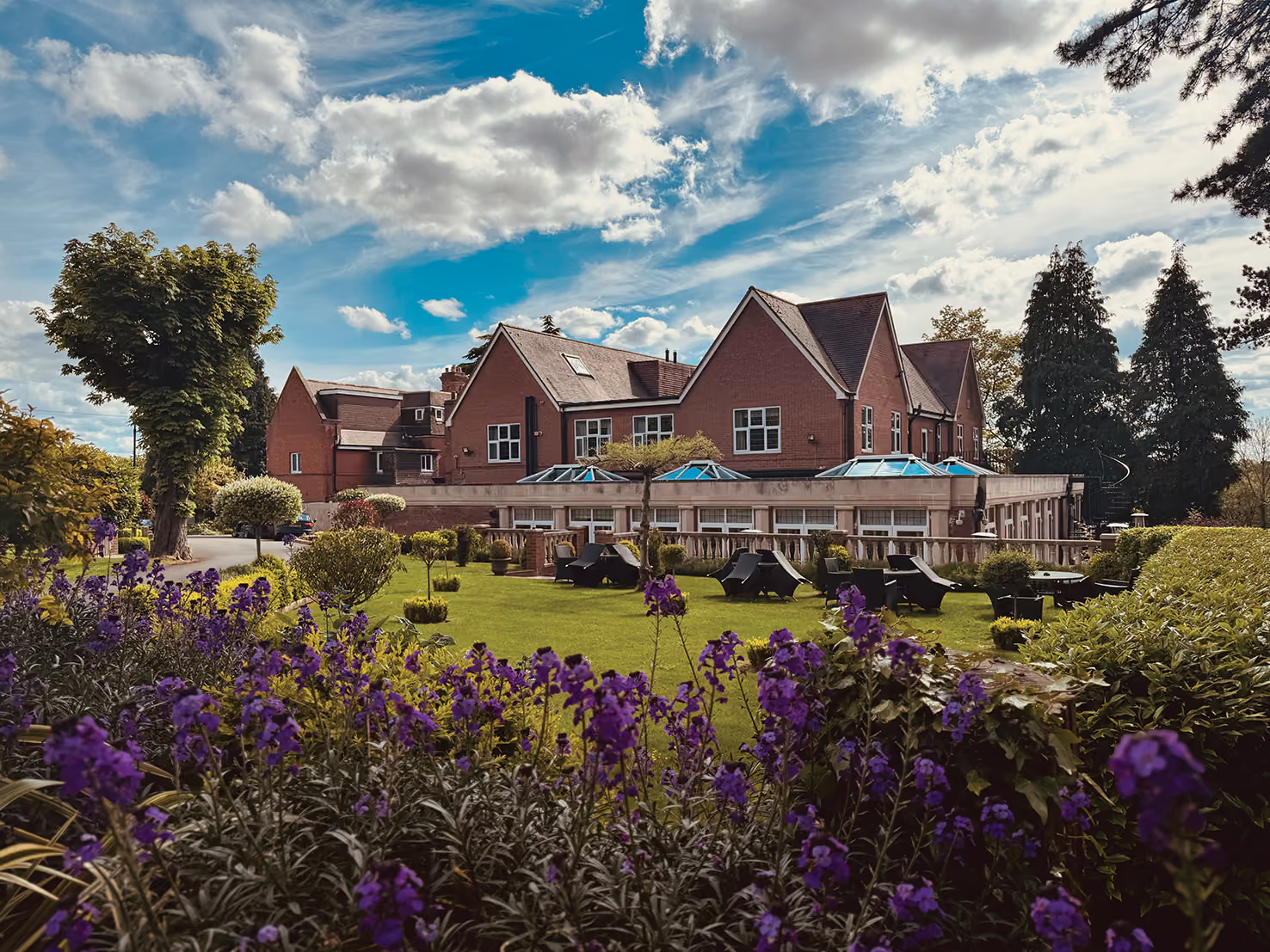
Nuthurst Grange: Tucked quietly within the Warwickshire countryside, just beyond the bustle of the Midlands, Nuthurst Grange represents a style of hospitality that has become increasingly rare in modern Britain.
Independent, character driven, and deeply personal in its approach, the country house hotel has carved out a reputation not through excess or theatrical grandeur, but through refinement, atmosphere, and authenticity.
At a time when many hotels lean heavily into standardisation, Nuthurst Grange offers something more intimate. The property combines the romance of a traditional English country residence with the elevated comforts expected from a contemporary boutique retreat. Mature woodland surrounds the estate, gardens unfold across the grounds with quiet elegance, and every corner of the hotel feels intentionally designed to create calm.
It is this balance between timeless countryside charm and polished modern luxury that continues to attract guests from across the Midlands and beyond.
Originally built as a private residence during the late nineteenth century, the property began life as “Nuthurst Lodge” before evolving into the hotel known today. Over the decades, the building has changed hands between notable industrialists and businessmen, including former Birmingham MP Walter F. Higgs, each leaving subtle layers of history within the estate. Yet despite extensive refurbishments and modernisation, the soul of the original country house remains firmly intact.
There is a quiet confidence to the hotel’s design philosophy. Exposed beams, leaded windows, landscaped gardens, and classic architectural details preserve the heritage of the building, while upgraded suites, contemporary bathrooms, refined event spaces, and elegant interiors ensure the experience feels entirely current. Rather than replacing the past, Nuthurst Grange has chosen to evolve alongside it.
Since proprietor Paul Hopwood took ownership in 2006, the hotel has undergone a significant transformation. Bedrooms have been modernised, superior suites introduced, and the bridal suite elevated into one of the property’s most sought after spaces, complete with balcony views overlooking the Warwickshire countryside. The former stable block has also been reimagined into stylish function and lounge areas that now sit at the heart of the hotel’s events offering.
The challenge, of course, with any historic property is preserving character without allowing tradition to become restrictive. Nuthurst Grange achieves this by layering contemporary luxury carefully into the existing architecture. The result feels elegant rather than over designed. Sophisticated rather than overly formal.
The setting itself is one of the property’s greatest luxuries. Positioned near Hockley Heath, the hotel enjoys a rare duality. It feels entirely secluded, surrounded by countryside and woodland, yet remains exceptionally well connected to Birmingham, Solihull, Coventry, Warwick, Stratford upon Avon, the NEC, and Birmingham Airport. For guests, this creates a compelling sense of escape without inconvenience.
For leisure visitors, it becomes the ideal base from which to explore Shakespeare's country and the wider Midlands. For corporate guests, it offers a peaceful alternative to city centre conference venues. For couples planning weddings, the rural backdrop provides both privacy and beauty in equal measure.
The hotel has developed a reputation for delivering celebrations that feel luxurious without losing warmth or personality. Facilities include The Stables, The Packwood Function Suite, ceremony spaces, landscaped gardens, on site guest accommodation, and dedicated preparation areas including the aptly named “Hen House” bridal suite facilities.
Unlike larger commercial wedding venues, the experience here feels deeply bespoke. Packages can include ceremony room hire, arrival drinks, canapés, multi-course wedding breakfasts, evening receptions, and exclusive use of the property, but flexibility remains central to the hotel’s philosophy. Menus are tailored. Layouts are adapted. Styling is personalised. The emphasis is always on creating celebrations that reflect the couple rather than imposing a rigid template.
This same flexibility extends across the hotel’s broader events offering. Nuthurst Grange regularly hosts conferences, private dining experiences, anniversaries, charity events, business meetings, workshops, funeral receptions, and milestone celebrations. Yet despite the scale of its capabilities, the venue never feels corporate or impersonal.
The Kingswood Restaurant and Orangery focus on modern British cuisine elevated through seasonal ingredients, elegant presentation, and understated sophistication. The atmosphere reflects the wider character of the hotel itself. Refined but relaxed. Stylish without pretension.
Alongside the restaurant, guests can enjoy The Henley Bar and Lounge, private dining spaces, bespoke event catering, and an outside terrace that becomes especially popular during warmer months. Wedding and event menus are also highly customisable, with chefs working closely alongside guests to create tailored dining experiences for celebrations and functions.
One of the most distinctive areas within the property remains The Stables. Converted from the original barn structures, the space perfectly encapsulates the hotel’s overall aesthetic. Rustic exposed brickwork and timber beams sit alongside elegant contemporary styling, creating a venue that feels atmospheric throughout every season.
Particularly impressive is the covered outdoor terrace area adjoining The Stables. Designed with heaters, seating areas, and a firepit beneath a canopy, the space allows guests to enjoy the outdoors throughout the year without the usual anxieties surrounding British weather. It has become a standout feature for weddings and evening events, bringing both practicality and ambience into one beautifully considered environment.
Beyond the physical setting, however, it is the service culture that truly defines Nuthurst Grange.
As an independently owned hotel, there is a level of flexibility and attentiveness that guests often struggle to find within larger hospitality groups. Staff are encouraged to personalise experiences wherever possible, whether through bespoke wedding styling, tailored event planning, exclusive use arrangements, surprise proposals, late night entertainment requests, or carefully curated dining experiences.
The hotel’s approach to hospitality feels instinctively human rather than procedural. Guests are welcomed personally. Requests are accommodated thoughtfully. The atmosphere remains warm, polished, and genuinely accommodating throughout your stay.
While the hotel does not currently hold formal accolades such as AA Rosettes, it has received recognition in the past and continues to focus less on chasing industry labels and more on delivering consistent guest experiences rooted in quality, comfort, and personal service.
In many ways, that perfectly reflects the ethos of Nuthurst Grange itself.
This is not a hotel attempting to imitate metropolitan luxury or fashionable trends. Instead, it embraces the enduring appeal of the English country house while quietly evolving for modern guests. It is elegant without becoming intimidating, luxurious without becoming ostentatious, and contemporary without sacrificing heritage.
For those seeking a countryside retreat with genuine character, thoughtful hospitality, and an atmosphere that feels both elevated and deeply personal, Nuthurst Grange offers something increasingly difficult to replicate: authenticity wrapped in understated luxury.
To find out more about this unique country house, visit:
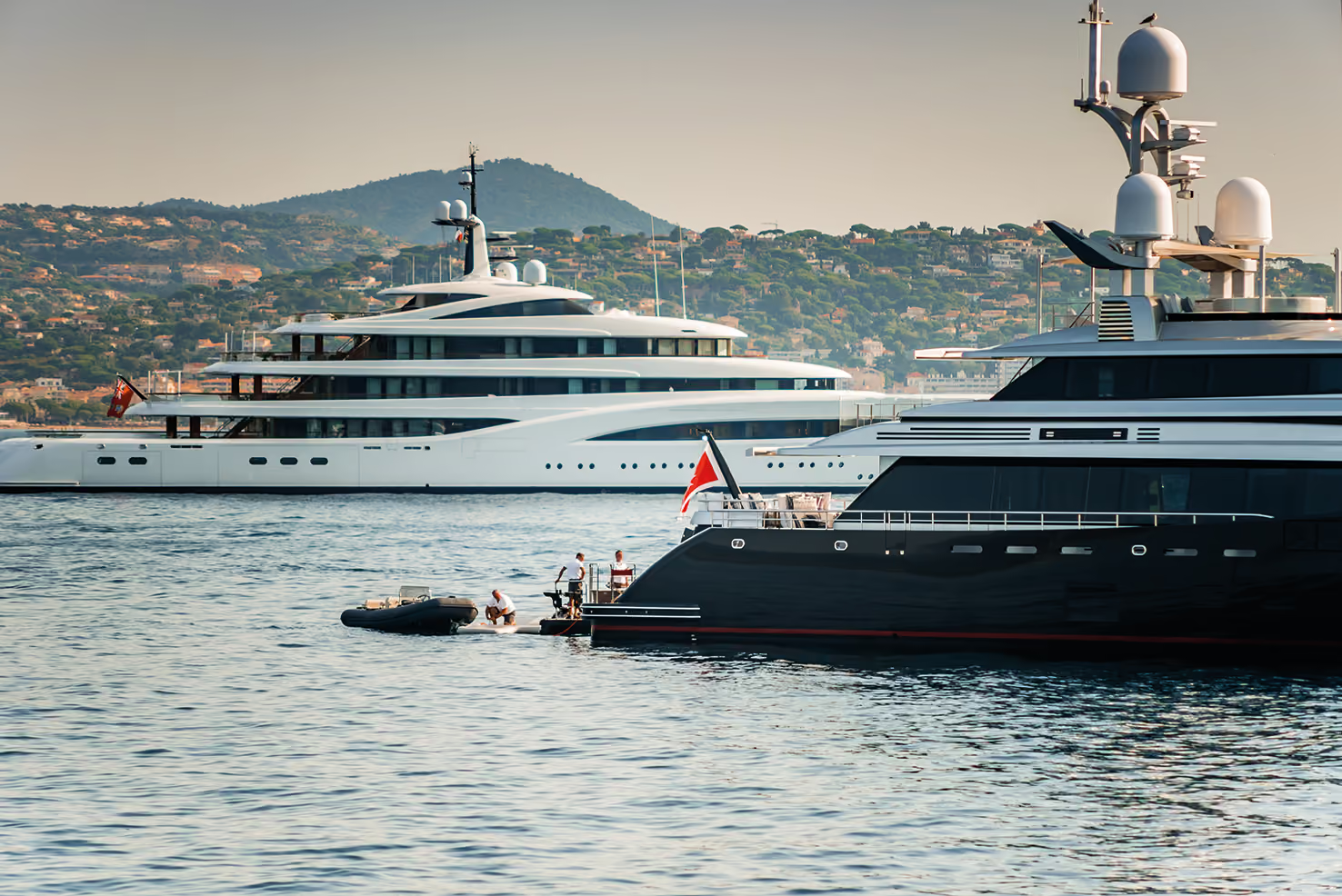
In the upper echelon of global travel, yacht harbours are no longer functional maritime infrastructures. They are curated luxury ecosystems, engineered as much for atmosphere as for anchorage.
Here, discretion and visibility coexist in deliberate tension. Arrival is choreographed. Departure is unhurried. And every berth is a stage upon which wealth expresses itself through precision, restraint, and presence.
These are not ports in the conventional sense. They are controlled environments of influence, where superyachts operate as both private sanctuaries and public statements, and where the shoreline becomes an extension of the vessel itself. Across continents, a select group of destinations has come to define this architecture of modern maritime luxury.
1. MONACO YACHT HARBOUR
Monaco
Monaco remains the reference point against which all yacht destinations are measured. Its harbour operates at maximum density of prestige, where some of the world’s most recognisable vessels sit in immediate proximity, forming a continuous exhibition of naval architecture and capital concentration.
The transition from deck to shore is instantaneous. Within minutes, guests move from private maritime privacy into a condensed world of haute couture, high-stakes gaming, and globally benchmarked dining. During peak moments such as the Monaco Yacht Show, the harbour shifts into a global focal point of maritime attention, reinforcing its position as the apex of yacht culture.
2. MARINA DI PORTOFINO
Italy
Portofino’s power lies in restriction. The harbour’s physical limitations are not a constraint but a mechanism of exclusivity. Berthing space is scarce, and scarcity defines value.
Framed by pastel architecture and steep Ligurian terrain, the marina delivers a quiet, almost architectural intimacy. The experience ashore is deliberately restrained: refined retail, low-profile gastronomy, and a cadence of life that privileges privacy over performance. It is luxury expressed through absence rather than excess.
3. PUERTO BANÚS MARINA
Marbella
Puerto Banús operates as a hybrid environment where maritime luxury merges with social theatre. It is high-energy, visually assertive, and intentionally performative.
Superyachts sit alongside designer flagships, while waterfront promenades function as continuous social corridors. Beach clubs, late-night venues, and luxury retail create a perpetual cycle of visibility and movement. Here, luxury is not quiet. It is kinetic.
4. MARINA DI PORTO CERVO
Sardinia
Porto Cervo represents calibrated Mediterranean refinement. Developed along the Costa Smeralda, it integrates natural landscape with architectural control, producing an environment that feels both designed and organic.
The marina is supported by curated urbanism: sculpted piazzas, discreet luxury boutiques, and controlled social spaces. The effect is a setting where exclusivity is embedded in spatial design rather than overt signalling.
5. IBIZA MAGNA
Ibiza
Ibiza Magna reflects Ibiza’s transition from purely hedonistic destination to layered luxury environment. Its position adjacent to Ibiza Town places it at the intersection of seclusion and immediate cultural access.
By day, the marina functions as a private base for offshore leisure. By night, it becomes a gateway to curated nightlife, contemporary dining, and private cultural programming. The contrast between withdrawal and immersion defines its appeal.
6. PORT DE SAINT-TROPEZ
France
Saint-Tropez maintains its position through a carefully sustained mythology of glamour. The port itself is modest in scale, yet disproportionately influential in cultural perception.
Yachts sit against a backdrop of historic façades and active waterfront terraces where observation and participation blur. The surrounding ecosystem of beach clubs, fashion houses, and seasonal ritual reinforces a sense of effortless, unforced prestige.
7. PORT VAUBAN
Antibes
Port Vauban is less a social harbour and more an operational cornerstone of the Mediterranean yacht industry. Its scale and technical capacity make it one of the most significant superyacht hubs in the world.
Beyond berthing, it functions as a centre for refit, maintenance, and technical coordination. This is infrastructure as luxury enabler, where engineering precision underpins the visible lifestyle of the world’s largest vessels.
8. MARINA GRANDE
Capri
Capri’s Marina Grande derives its exclusivity from geography rather than development. The island’s dramatic topography creates inherent limitation, and limitation creates desirability.
Arrival is visually theatrical, framed by vertical cliffs and intense blue water. Ashore, the experience is tightly controlled, with boutique hospitality and elevated dining shaping a compact but highly refined luxury environment.
9. YACHT HAVEN GRANDE
St. Thomas
In the Caribbean context, Yacht Haven Grande represents structured luxury within a natural paradise setting. Purpose-built for superyachts, it combines scale with curated retail and waterfront hospitality.
Its strength lies in balance: high-end provisioning and services integrated seamlessly with leisure infrastructure, all set against a consistently favourable marine environment. It is efficiency wrapped in escapism.
10. MARINA BAY
Singapore
Marina Bay is the most technologically and architecturally defined expression of yacht luxury on this list. It operates within a hyper-urban environment where precision is a core aesthetic.
The marina benefits from streamlined logistics, regulatory efficiency, and immediate adjacency to one of the world’s most advanced luxury districts. Here, maritime experience and metropolitan infrastructure merge into a single continuous system of high-performance luxury.
Across these ports, the defining principle is not size but orchestration. Each destination operates as a managed ecosystem in which maritime infrastructure, urban luxury, and service architecture are tightly integrated.
Deep-water capacity, advanced mooring systems, and technical reliability form the baseline. Beyond that, connectivity becomes essential: proximity to private aviation, luxury hospitality, and global transport networks ensures seamless mobility across jurisdictions and time zones.
However, the decisive factor is atmospheric control. Each harbour sustains a distinct identity shaped by geography, cultural code, and clientele behaviour. Monaco concentrates intensity. Portofino enforces restraint. Saint-Tropez cultivates narrative glamour. Singapore delivers precision. Together, they define not merely where yachts dock, but how modern luxury is staged, experienced, and ultimately understood at sea level.
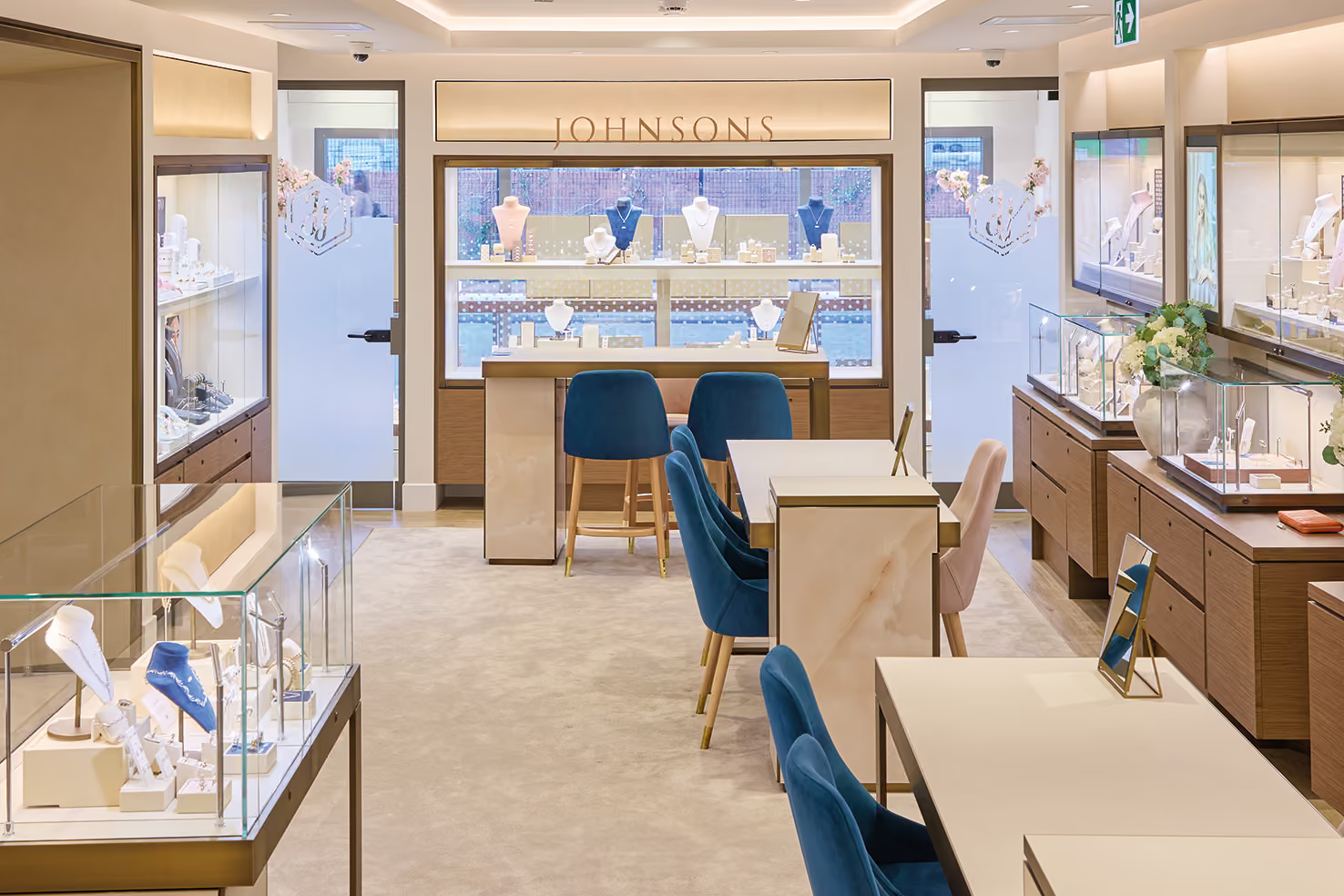
Fourth-generation luxury jewellery & watch retailer celebrates significant expansion.
Johnsons Jewellers is a respected family-run business with a history of more than 125 years and a reputation as one of the finest jewellers in the Midlands.
Their latest major store expansion is not the first since their inception in 1897. However, it reflects a significant shift to build on their renowned bespoke jewellery and bridal service and to elevate their presentation of luxury Swiss watches.
“We pride ourselves on being a destination store in the region and want to keep it that way”, said Libby Johnson. “With the Birmingham jewellery district nearby and plenty of other regional competition, we need to give customers even more reason to choose us. Additionally, we hoped to take advantage of new footfall from the large retail & leisure park that recently opened opposite our store.”
With the closure of a neighbouring shop came the opportunity to significantly expand, nearly doubling the previous retail space. This has allowed for a more defined customer experience with an inviting jewellery room and attractive bridal floor beyond. Whilst prestigious Swiss watch brands have been allocated their own ‘shop-in-shops’, the whole showroom is united through an overarching new interior design scheme which effectively creates a branded Johnsons environment, including a large central welcome and repairs collections desk.
The result is a look that emanates quiet luxury. The whole space effortlessly attracts attention with tempting views that draw customers through the space. It’s an attractive interior design scheme which blends layers of rich materiality and colour, together with craftsmanship and sensitive lighting to perfectly showcase the fine jewellery and watches on offer.
Customer experience has been paramount to the store layout and design. There’s an increased choice of consultation spaces; all created with premium service and comfort in mind. An elegant hand drawn ceiling and wall frieze was commissioned to flow over the bridal space - its ornate, tactile details of magnolia and doves symbolising love, peace and everlasting connections. While the hospitality bar, which used to be behind the scenes, is now centrally located to support and embrace the frequent customer celebrations throughout the showroom.
The Johnsons Jewellers story is less about individuals – the fourth-generation expert family team is supported by long-standing knowledgeable staff. And what’s important to the whole team is their great heritage and prestigious reputation which has built trust amongst its customers. So it seems only fitting, that in pride of place, adjacent to the hospitality area, they feature an image from the 1930s which honours the original beginnings of the current store.
Robert Johnson recalls visiting his grandparents who used to live above the small jewellery shop on this site. “We’ve come a long way since then but I’m sure that they, and my father, would be proud of the business we’ve built today and what we’ve achieved here with this latest fantastic store development
His daughter Libby, concludes, “it’s been a lengthy phased process so that we could remain open for our loyal customers but Lloyd and the wider project team have more than fulfilled our vision. We have had some wonderful feedback from our customers as well as the brands. The whole team love their new ‘home’ and are excited for our next chapter.”
johnsonsjewellers.co.uk
50/51 Queens Road, Nuneaton, Warwickshire, CV11 5JX

A singular expression of craftsmanship and coastal inspiration, the Aston Martin Vanquish Volante Wave Edition distils the rhythm and serenity of Florida’s shoreline into a one-of-one automotive statement.
Commissioned through Q by Aston Martin in collaboration with Aston Martin Naples, this bespoke convertible makes its world debut at the 2026 Naples Winter Wine Festival, where it will be auctioned in aid of the Naples Children & Education Foundation.
Visually, the car is defined by its Q Iridescent Sapphire finish, a luminous blue with a subtle green undertone that mirrors the movement of water through the Everglades. Gloss black tinted carbon fibre elements and a bespoke Club Sport White wave-inspired livery create contrast and dynamism, while red brake calipers subtly reference coastal navigation markers.
Inside, the narrative softens. A Glacier White interior palette is paired with pale blue stitching that forms an abstract wave motif, delivering a calm, almost meditative environment. Performance remains uncompromised, with a twin-turbocharged 5.2-litre V12 producing 835PS, propelling the car from 0–62mph in 3.4 seconds, with a 214mph top speed. The result is a convertible that balances raw power with poetic design.

Lamborghini’s Few-Off Roadsters represent the most distilled expression of the marque’s V12 philosophy, rare, uncompromising machines that transform performance into a deeply emotional, open-air experience.
Produced in extremely limited numbers, these cars sit at the intersection of radical design, advanced engineering and pure sensory engagement.
Rooted in a lineage that stretches back to the 1968 Miura Roadster, Lamborghini’s open-top vision has continually evolved through a series of landmark creations. Modern Few-Off interpretations, including the Reventón Roadster, Veneno Roadster, Centenario Roadster and Sián Roadster, each push the boundaries of what a super sports car can be, both visually and technically.
What defines these models is not simply performance, but intensity. With the engine positioned prominently behind the driver and the absence of a fixed roof, the connection between car, environment and driver becomes immediate and visceral. Every detail is engineered to heighten sensation, from dramatic aerodynamic forms to cutting-edge materials.
As Stephan Winkelmann notes, these cars are statements of capability and intent. They are not designed for volume, but for impact, each one a milestone that encapsulates Lamborghini’s relentless pursuit of innovation and emotional design.

From luxury soft play experiences in private homes to a beautifully curated family destination near Lichfield, Remen Bains, the founder of the kids corner and crumb and play is redefining what family spaces can be. We caught up with her to discuss the inspiration behind both brands, the rise of design-led play, and what's next for the business.
What originally inspired you to enter the children's lifestyle and play sector?
Becoming a parent was the real inspiration. Once I had my own children, I noticed a clear gap in the market for high-end, beautifully designed play spaces that catered to both children and parents.
That vision led to The Kids Corner, a space designed to feel intentional, creative and elevated rather than purely functional. As the community grew, Crumb and Play evolved naturally from that idea, bringing together quality food, design and family experiences under one lifestyle-led concept.
Both brands were born from a desire to create family spaces that feel inspiring, thoughtful and beautifully designed, while still being fun and enriching for children.
The Kids Corner has become known for luxury soft play experiences in private homes and events. How did you identify the demand for a more elevated approach?
We identified the demand through both personal experience and client feedback. Many families wanted to bring play into their homes and events in a way that still felt exclusive, luxurious and aesthetically aligned.
A lot of our clients are also very private and, in some cases, we've signed NDAs. Bringing high-end play experiences directly into their homes allows their children to enjoy those experiences in a more personal setting, away from the public eye.
At the time, there was very little in the market that combined high-quality play with a design-led approach. We saw an opportunity to create soft play experiences that were not only engaging for children but also beautifully curated and seamlessly integrated into luxury settings.
Crumb and Play introduces a Dutch-inspired play village concept just outside Lichfield. What attracted you to that European aesthetic?
I've always loved the Scandinavian approach to family spaces because everything feels simple, thoughtful and creative. I was especially drawn to the use of wooden toys, neutral tones and calming environments that encourage children to use their imagination and play more freely.
With Crumb and Play, I wanted to bring that same design-led concept to the Midlands, creating a space that feels stylish, welcoming and community-focused for parents, while remaining engaging and inspiring for children.
Both businesses balance style, experience and practicality in very different environments. How do you maintain the same standards across both brands?
For us, it always comes back to consistency in the experience we create. Whether it's a mobile setup inside a client's home or our permanent space at Crumb and Play, every detail is considered, from the design and styling to the customer experience and overall atmosphere.
Both brands are built around the same values: quality, intentional design and creating spaces that feel welcoming, elevated and memorable for families. Although the environments are different, we approach each experience with the same level of care and attention to detail.
Looking ahead, how do you see the future of luxury family spaces evolving?
I think the future will be all about experience, connection and creating environments that feel beautiful and welcoming for the whole family. Even though so much is moving towards AI and technology-led play, I still love the idea of keeping play simple, allowing children to use their imagination, be creative and enjoy natural, open-ended play.
With both The Kids Corner and Crumb and Play, I want to continue creating thoughtful family experiences that feel inspiring and genuine. I'd also love to keep growing within the children's sector and I do have a product idea sitting in the back of my mind that's waiting to come to life, so watch this space.

Project Nightingale marks a significant evolution in Rolls-Royce’s Coachbuild programme, introducing its first formalised Coachbuild Collection.
Limited to just 100 motor cars worldwide and available strictly by invitation, it represents a new chapter in highly personalised luxury.
The name draws from ‘Le Rossignol’, the nightingale, referencing the creative sanctuary at Henry Royce’s French Riviera estate. This heritage informs a design language inspired by the experimental ‘EX’ models of the 1920s, reinterpreted through a contemporary lens. The result is a sheer, monolithic aesthetic shaped by the principles of Streamline Moderne, delivering a presence that is both restrained and commanding.
Underpinning the project is Rolls-Royce’s Architecture of Luxury aluminium spaceframe, ensuring structural integrity and refinement at the highest level. While presented as a production concept, Project Nightingale will undergo a global testing and validation programme beginning this summer, with client deliveries scheduled from 2028.
More than a car, Project Nightingale is an exercise in curated exclusivity, designed for a select group of clients with a deep affinity for the brand’s design ethos, and a desire to participate in one of its most considered and collectible modern expressions.
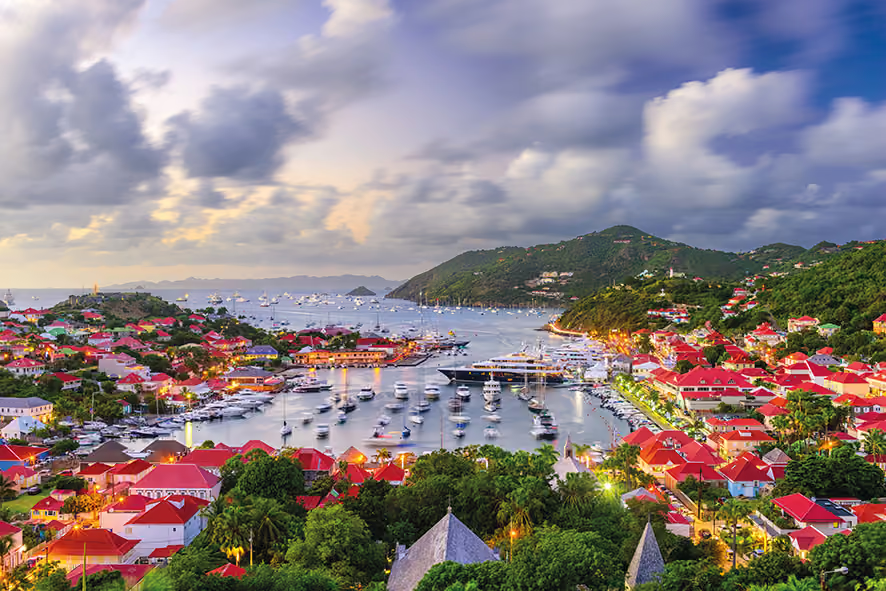
This tiny French Caribbean territory, barely ten square miles in size, has quietly evolved into one of the most exclusive destinations on earth. It is a place where superyachts glide into Gustavia Harbour like clockwork during high season, where Hermès sits comfortably beside local boulangeries, and where privacy is not marketed. It is assumed. For travellers who measure luxury not in spectacle but in subtlety, St Barts represents a masterclass in elevated island living.
A CARIBBEAN ISLAND WITH A EUROPEAN SOUL
Unlike many destinations across the region, St Barts does not trade on tropical clichés. Its identity is rooted in a distinctly French sensibility, evident in everything from architecture to cuisine to the cadence of daily life.
The capital, Gustavia, curves elegantly around a yacht-filled harbour lined with red-roofed buildings and designer boutiques. Here, one moves effortlessly between a morning espresso on a shaded terrace and an afternoon browsing fine jewellery houses that would feel perfectly at home on Avenue Montaigne.
French is the official language. The Euro is the currency. The rhythm is unmistakably continental.
Yet the island never loses sight of its Caribbean setting. Bougainvillea spills over whitewashed walls, the sea flashes impossible shades of turquoise, and sunsets arrive with theatrical precision every evening.
The result is a destination that feels less like a tropical escape and more like a Riviera enclave transported into warmer waters.
THE GEOGRAPHY OF EXCLUSIVITY
Part of St Barts’ appeal lies in what it deliberately does not offer.
There are no cruise ship terminals. No sprawling mega resorts. No high rise hotel towers dominating the skyline.
Accommodation is intentionally limited, and the island’s planning regulations protect its low rise aesthetic and natural beauty. The scarcity of rooms contributes directly to its exclusivity and helps preserve the discreet atmosphere its visitors value.
Instead of volume tourism, St Barts specialises in private villas, boutique hotels and bespoke concierge experiences designed around individual preferences rather than package itineraries.
This curated approach is precisely what attracts a global clientele accustomed to the highest standards of travel.
VILLAS: THE TRUE CURRENCY OF LUXURY LIVING
Across the island’s hillsides and coastlines sit hundreds of architect designed residences, many with private chefs, housekeeping teams and concierge services included as standard. Guests often arrive to find their favourite wines already chilled and their itinerary discreetly prepared before their aircraft has even landed.
Ocean view infinity pools, outdoor cinemas, sunset terraces and fully staffed kitchens are typical features rather than exceptions. For families and groups travelling together, villas allow privacy without compromise.
It is this ability to create a completely personalised environment that makes St Barts particularly attractive to high net worth travellers who prefer experiences tailored entirely around them.
BOUTIQUE HOTELS WITH GLOBAL REPUTATIONS
While villas dominate the island’s accommodation landscape, St Barts’ hotel portfolio remains among the most refined anywhere in the Caribbean.
Iconic properties such as Eden Rock St Barths and Cheval Blanc St Barth Isle de France have long defined the island’s hospitality reputation, combining beachfront settings with exceptional service and understated elegance.
Elsewhere, Le Barthélemy Hotel & Spa blends Parisian design influences with a relaxed Caribbean setting, offering suites with private terraces, ocean views and personalised wellness experiences tailored to each guest’s preferences.
Across the island, the emphasis is consistent. Intimacy over scale. Detail over drama.
GUSTAVIA: A HARBOUR FOR THE WORLD’S FINEST YACHTS
During the winter season, Gustavia Harbour becomes one of the most glamorous anchorages anywhere in the Atlantic.
Superyachts line the quay opposite cafés and boutiques, transforming the waterfront into a floating showcase of contemporary naval design. Chartering a yacht here is not unusual. It is expected.
Many visitors experience the island primarily from the water, cruising between secluded beaches and neighbouring islands before returning each evening to the gentle lights of Gustavia’s harbourfront restaurants.
The ability to transition seamlessly between villa life and yacht life is one of St Barts’ defining luxuries.
GASTRONOMY: THE CULINARY CAPITAL OF THE CARIBBEAN
If St Barts has a signature indulgence, it is dining.
The island is widely regarded as one of the Caribbean’s premier culinary destinations, thanks to its extraordinary concentration of French influenced restaurants and internationally trained chefs.
Lunch may be grilled lobster served barefoot on the sand at a beach club. Dinner could be a tasting menu paired with Burgundy in a candlelit hillside restaurant overlooking the sea.
Menus change with the seasons. Ingredients arrive daily from France. Service remains polished but never formal.
For many regular visitors, gastronomy alone justifies the journey.
BEACH CULTURE, REIMAGINED
Unlike destinations where beaches become crowded public arenas, St Barts’ coastline feels intentionally curated.
Saline Beach offers wide expanses of untouched sand and a sense of peaceful isolation. Colombier Beach rewards those willing to walk its scenic trail with one of the island’s most pristine swimming environments. St Jean provides a more social atmosphere without sacrificing elegance.
Each beach has its own personality and retains the same defining characteristic. Space.
This sense of breathing room, rare in popular tropical destinations, is central to the island’s appeal.
SHOPPING WITH A PARISIAN ACCENT
Luxury retail in St Barts rivals that of far larger destinations.
Along the harbourfront in Gustavia, international maisons including Louis Vuitton, Chanel, Hermès and Graff sit alongside independent boutiques offering curated resortwear collections unavailable elsewhere.
Shopping here feels intimate rather than transactional.
Clients are recognised. Collections are selected carefully. The atmosphere resembles a private club more than a commercial district. It is retail at its most civilised.
A SOCIAL CALENDAR DESIGNED FOR THE GLOBAL ELITE
St Barts operates on two distinct rhythms.
During the quieter summer months, the island becomes a sanctuary of tranquillity, perfect for travellers seeking privacy above all else.
From December through March, however, the social calendar accelerates dramatically. The festive season in particular attracts a remarkable concentration of international figures from the worlds of business, film, fashion and sport.
New Year’s Eve celebrations are legendary. Beach clubs transform into elegant open air venues. Fireworks illuminate the harbour. Yachts host private parties that last until sunrise. Yet even at its busiest, St Barts never feels crowded. Its infrastructure simply does not allow it.
WELLNESS WITH A SENSE OF PLACE
Luxury travel increasingly includes a wellness dimension, and
St Barts responds with characteristic sophistication.
Spa treatments frequently draw inspiration from marine botanicals and tropical ingredients, while yoga sessions overlook turquoise lagoons and sunrise meditation takes place on pristine, deserted beaches.
Le Barthélemy’s spa environment emphasises personalised therapies designed around individual relaxation needs rather than generic treatment menus. Wellness here is not a programme. It is a mood.
THE ARCHITECTURE OF PRIVACY
Perhaps the island’s greatest luxury is something rarely advertised. Discretion.
St Barts has become a preferred destination for individuals whose public lives require careful management of visibility. Celebrities and entrepreneurs alike return year after year precisely because the island respects privacy as a cultural value rather than a concierge service.
Low rise development regulations, villa based accommodation and the absence of cruise tourism all contribute to this environment. For many affluent clientele, that distinction is everything.
A NATURAL LANDSCAPE WORTH PROTECTING
Despite its reputation for glamour, St Barts remains remarkably unspoiled.
Volcanic hills rise above coral rich waters. Nature trails connect hidden beaches. Iguanas still roam freely across dry coastal landscapes dotted with cactus and wild vegetation.
Development has been deliberately restrained, allowing the island to maintain a rare balance between luxury infrastructure and environmental authenticity.
It is this equilibrium that gives St Barts its enduring appeal.
THE SEASON THAT DEFINES THE ISLAND
Timing matters here.
The period between late November and April represents the island at its most vibrant, when restaurants reopen after autumn refurbishment and the international jet set returns to its preferred winter refuge.
Reservations become essential. So does planning.
But those who arrive during this season experience St Barts at its most cinematic. Its beaches livelier. Its harbour fuller. Its evenings longer.
ST BARTS STILL LEADS THE CARIBBEAN LUXURY CONVERSATION
Many destinations claim exclusivity. Few sustain it over decades. St Barts succeeds because it never attempts to be everything to everyone. Instead, it focuses on delivering a precise combination of privacy, gastronomy, design and understated sophistication that resonates deeply with travellers who expect the exceptional.
It is not the Caribbean’s loudest destination. It is its most assured, and for those who understand luxury as a matter of atmosphere rather than extravagance, St Barts remains one of the most compelling destination in the world.
Powered by a front-mid-mounted twin-turbo V8 producing 640hp, the Amalfi Spider delivers immediate responsiveness while maintaining the refinement expected of a modern Ferrari.
Designed as a 2+ configuration, it introduces a level of versatility often absent in this segment. The soft top, available in tailored fabric or technical materials, opens in just 13.5 seconds at speeds of up to 60 km/h, reinforcing its usability across varied driving scenarios. Compact proportions are balanced by practical luggage capacity, positioning the Amalfi Spider as a genuine lifestyle proposition rather than a purely occasional indulgence.
Technologically, Ferrari integrates a brake-by-wire system for heightened control, supported by ABS Evo to ensure consistent braking performance across all conditions. Active aerodynamics, including a three-position rear wing and an integrated wind deflector, refine both stability and open-air comfort.
The Amalfi Spider ultimately captures Ferrari’s evolving philosophy: a car that delivers engaging performance without sacrificing accessibility, where elegance, engineering precision and driving pleasure exist in seamless alignment.
For more information, contact your local dealer
120 Highlands Rd, Shirley, Solihull B90 4NU
ferrari.birmingham@sytner.co.uk
0121 701 2458
It looks like your search doesn't match any of our library articles. Please reset the filter and try again.
Looking for a different viewing experience, head down to our printed issues library and browse throught our heritage of design and luxury all in one destination.

Copyright © Swealthy LTD
All rights reserved






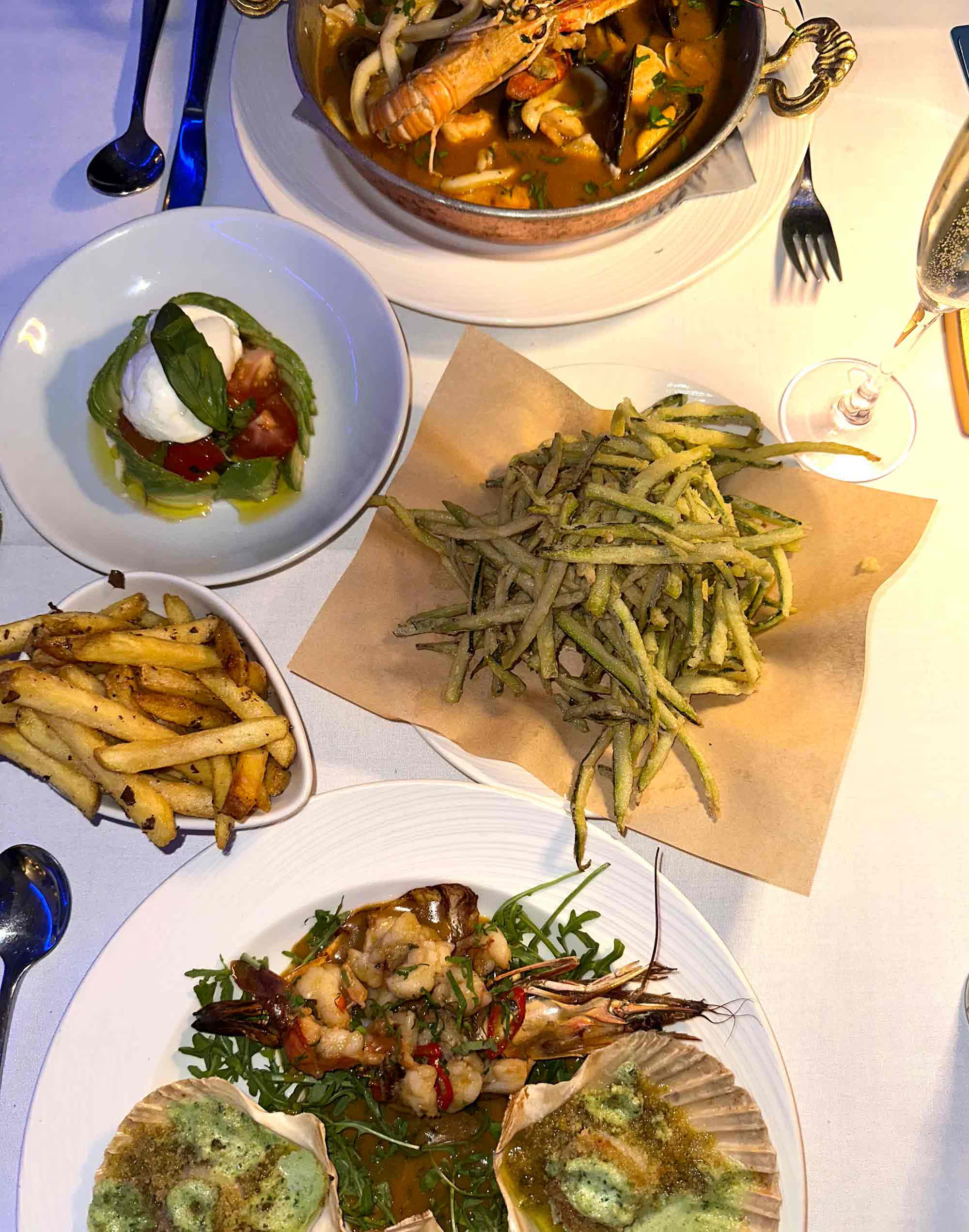



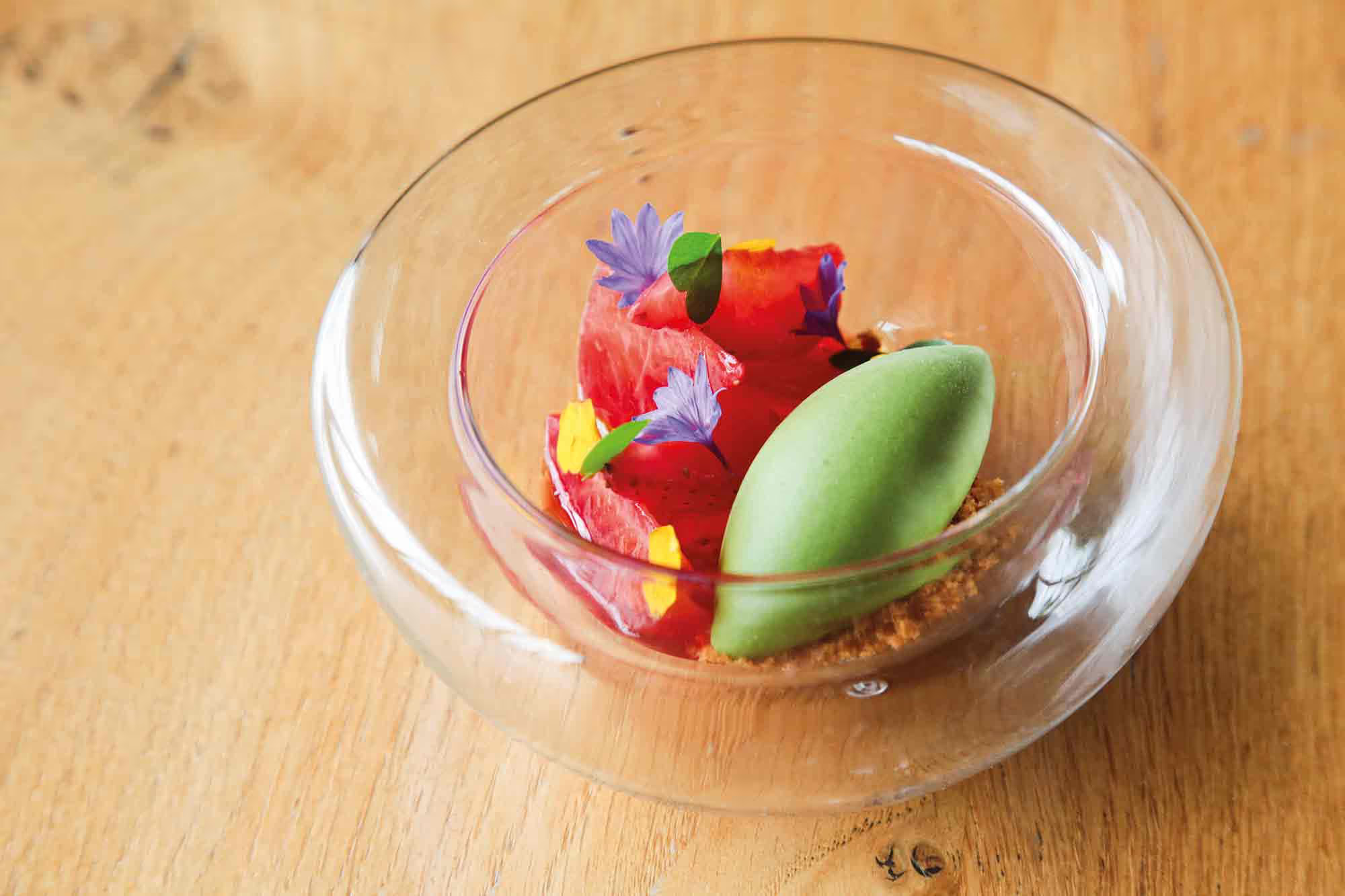
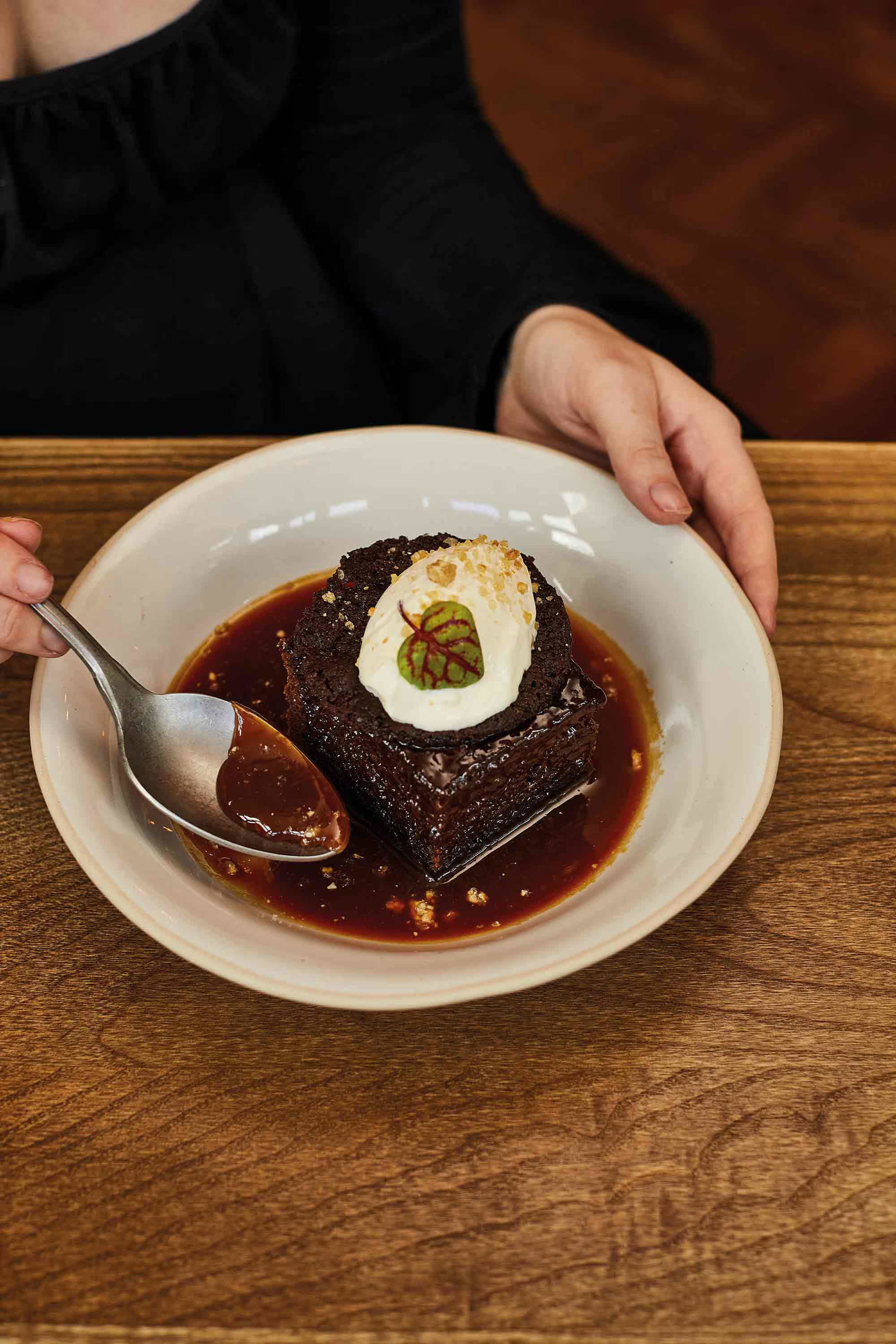
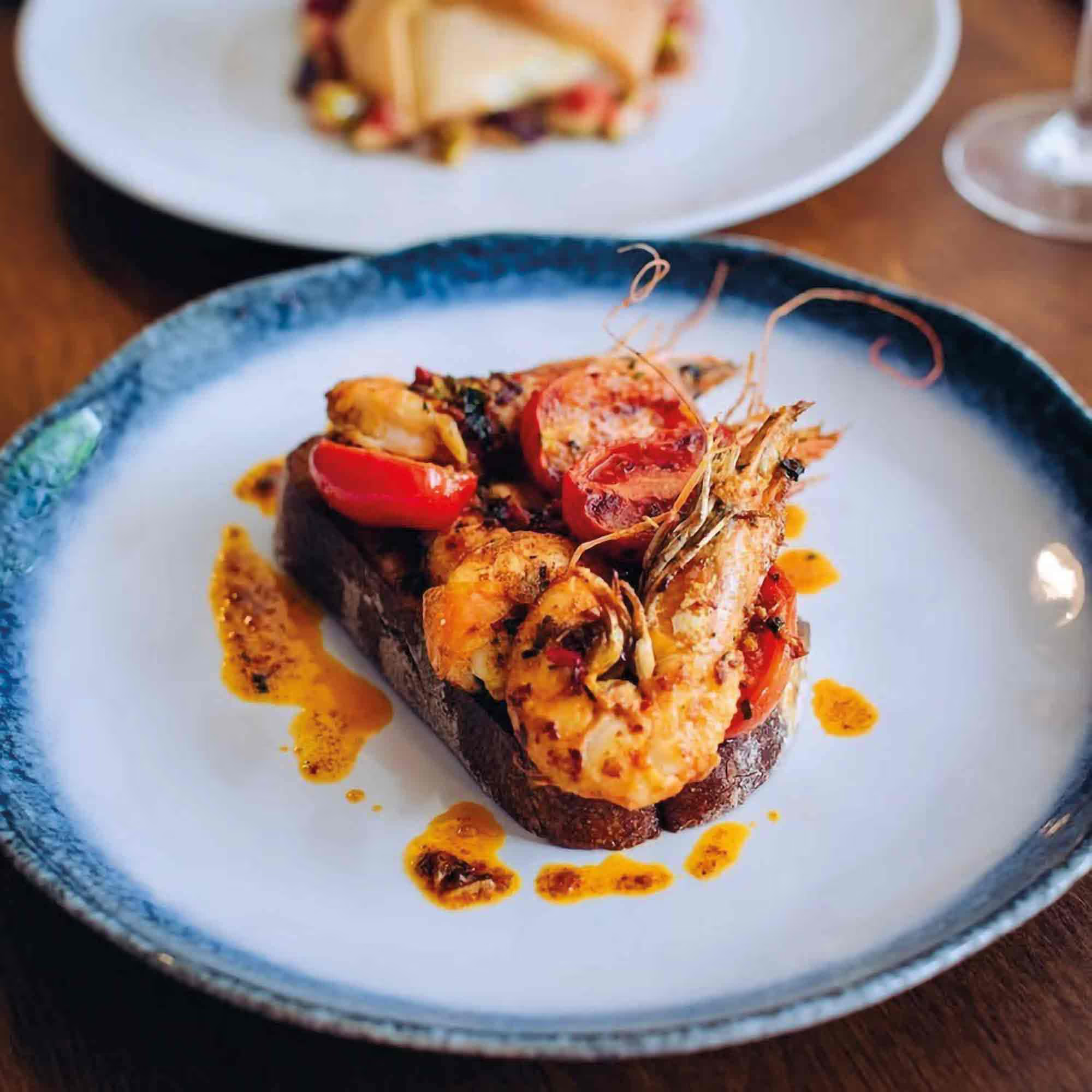
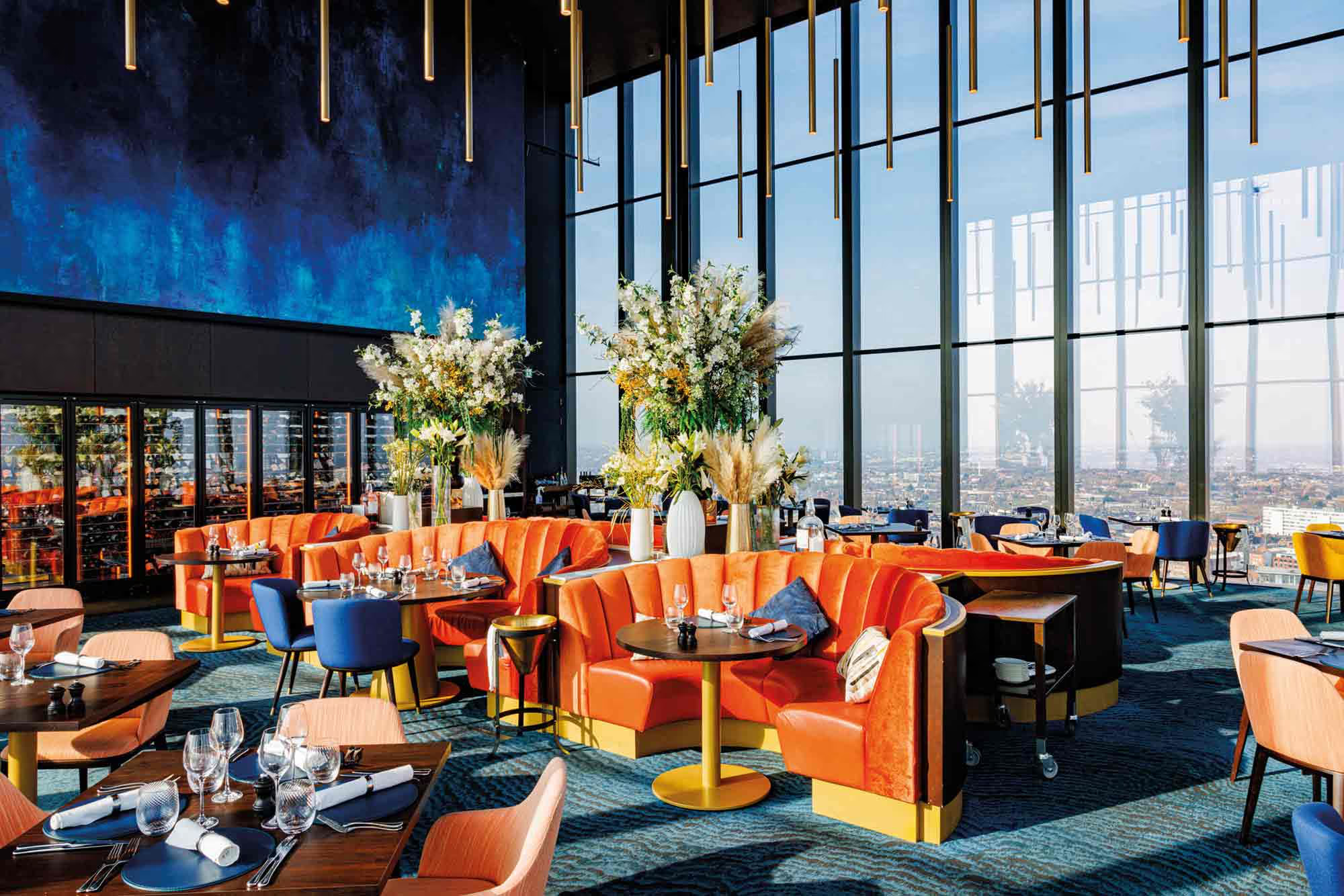
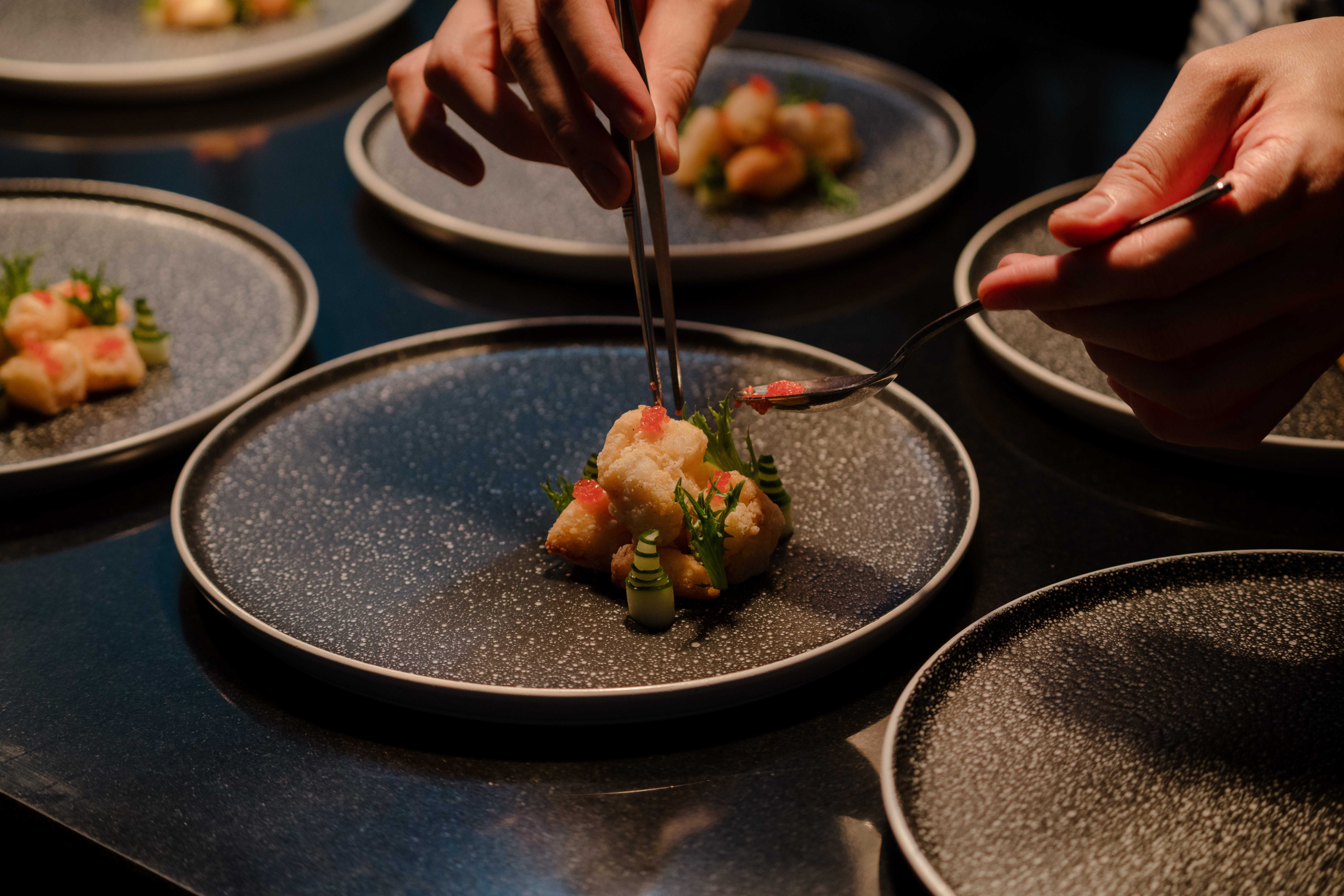
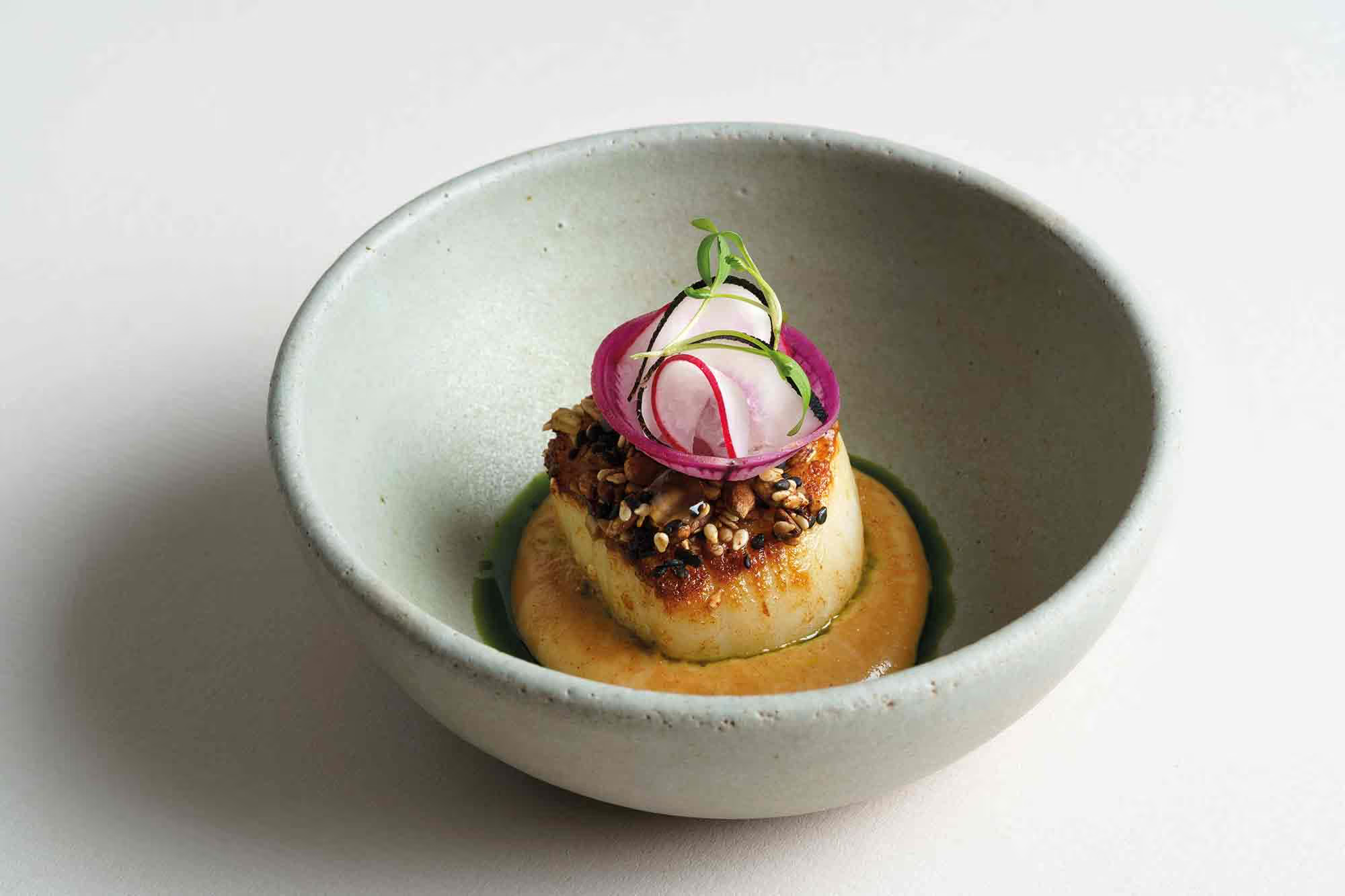
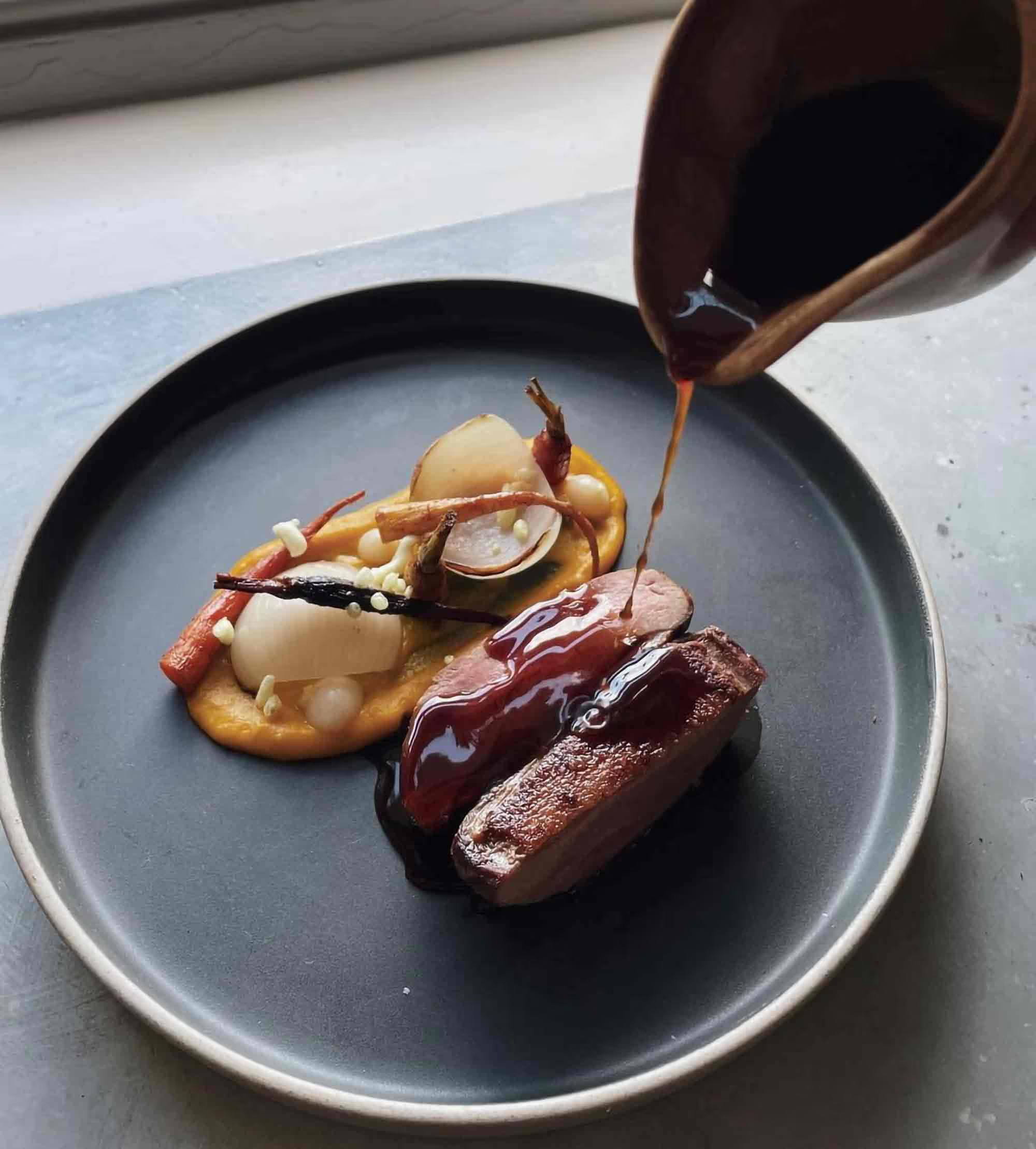
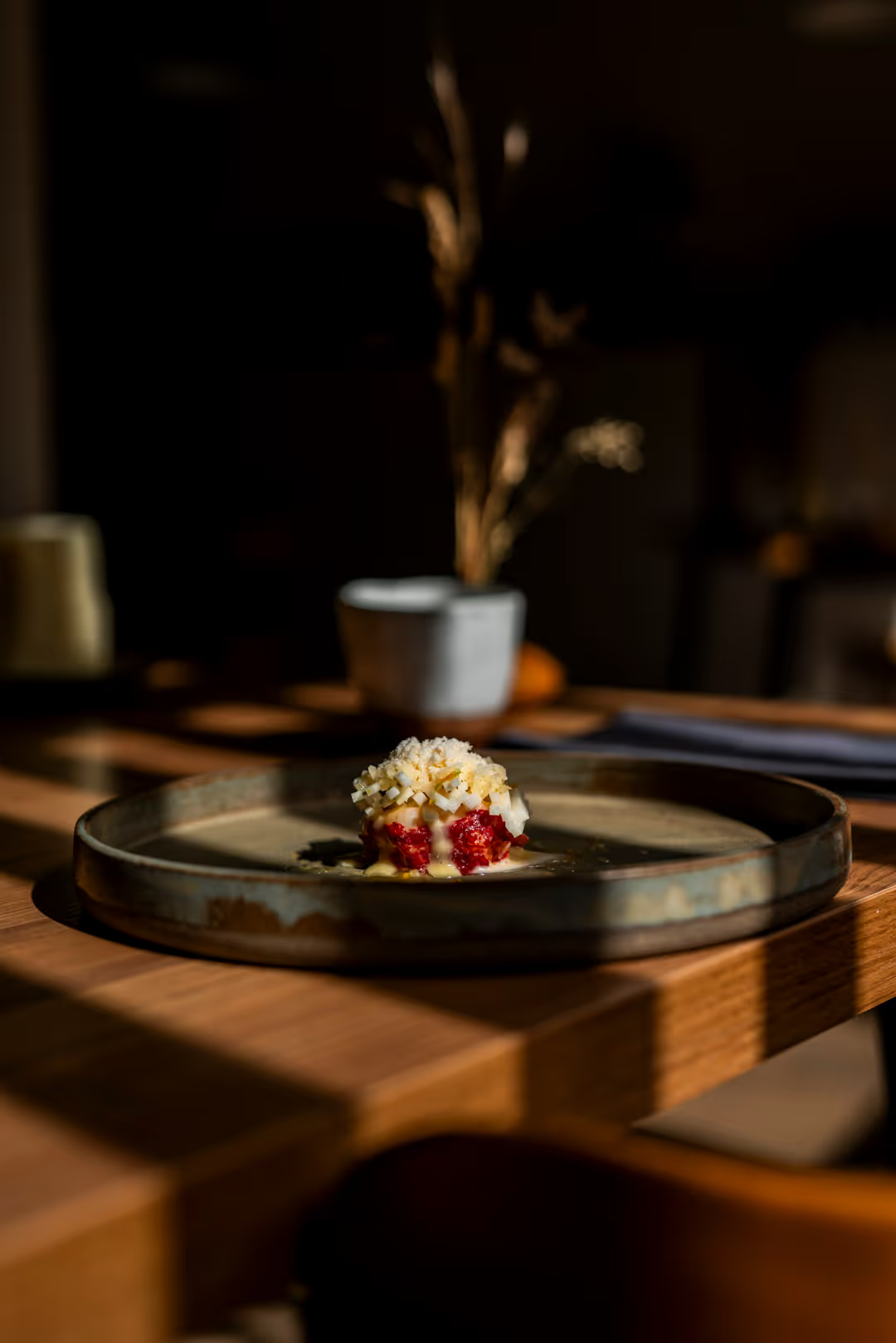
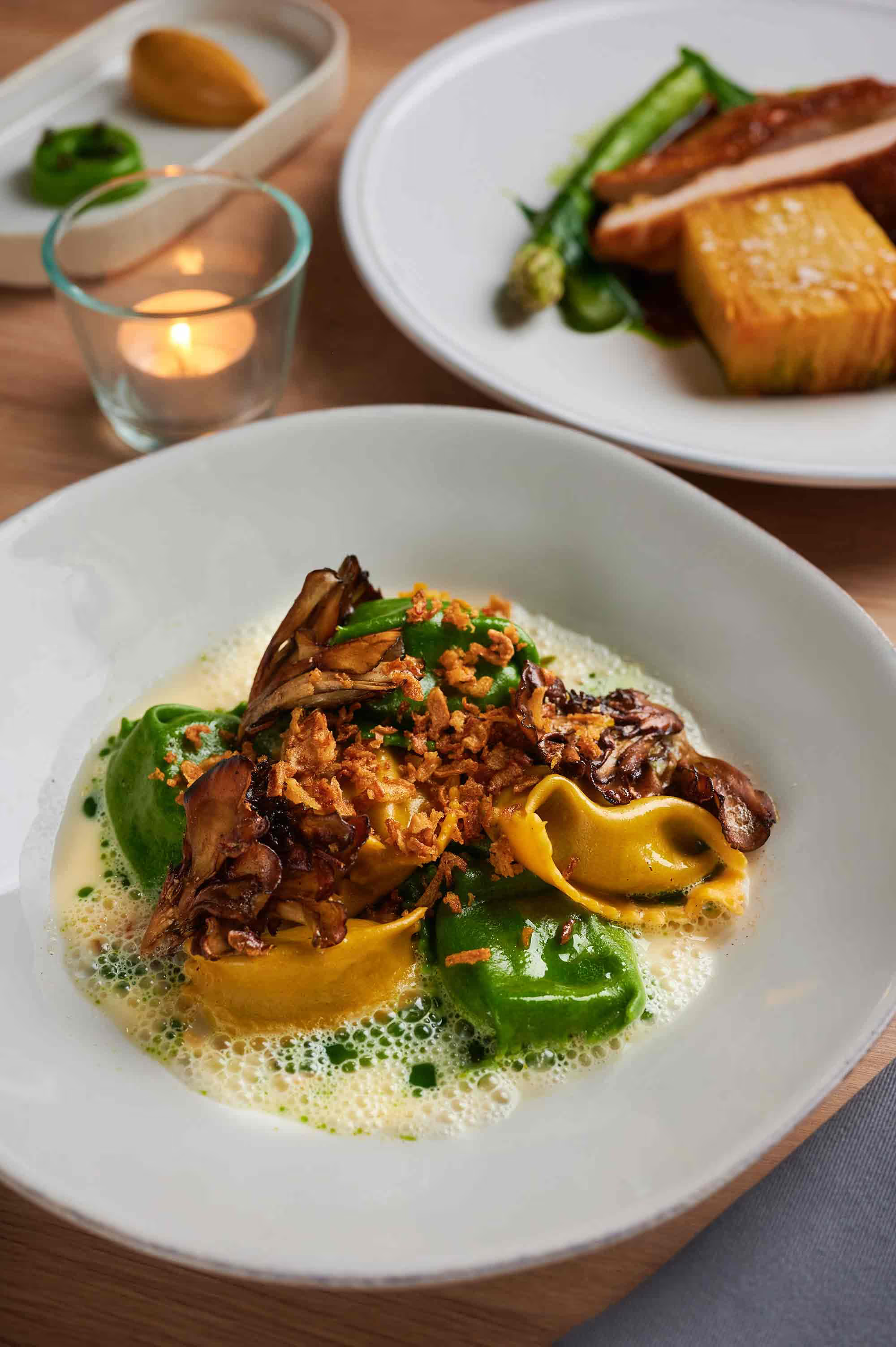
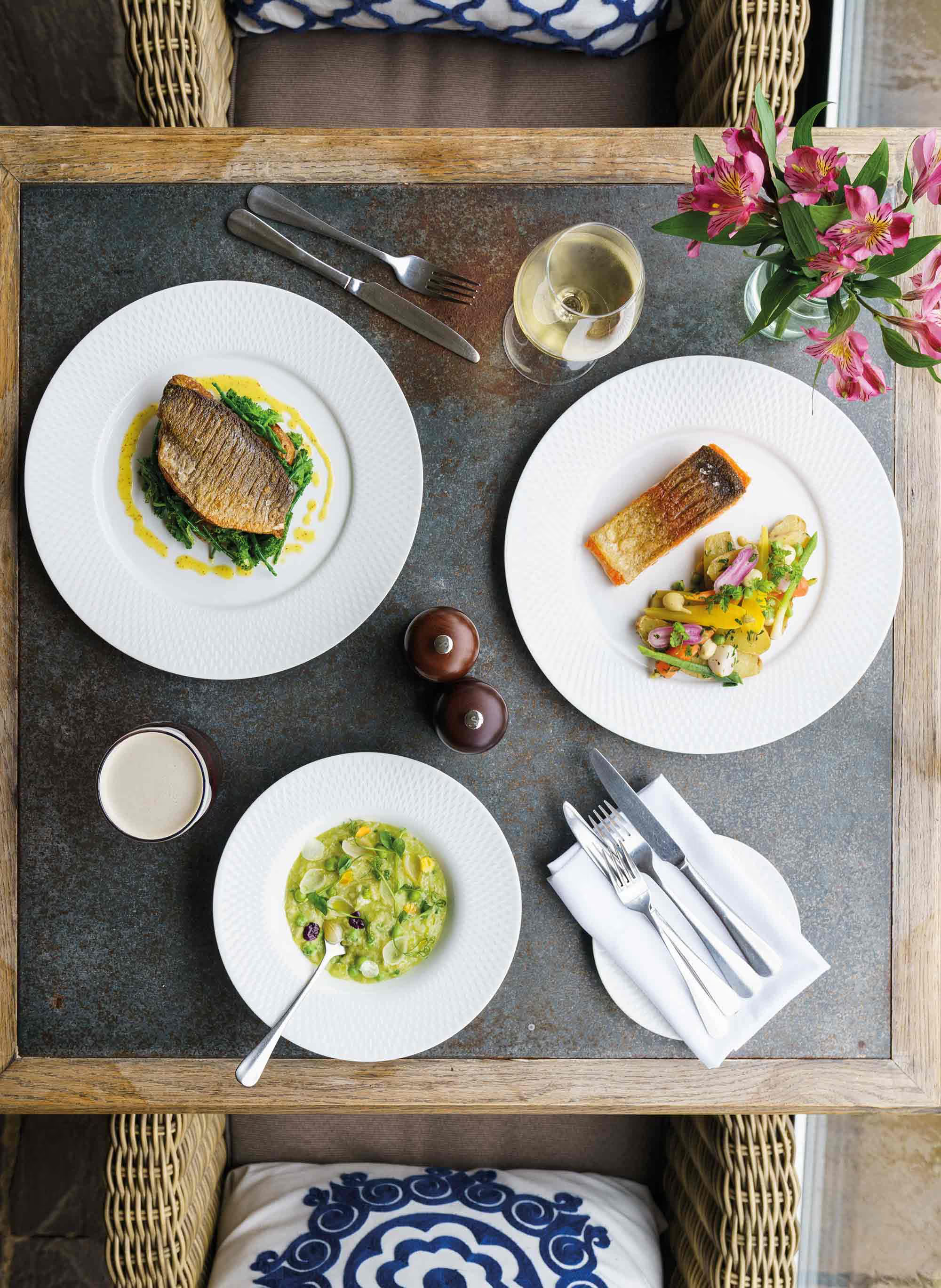
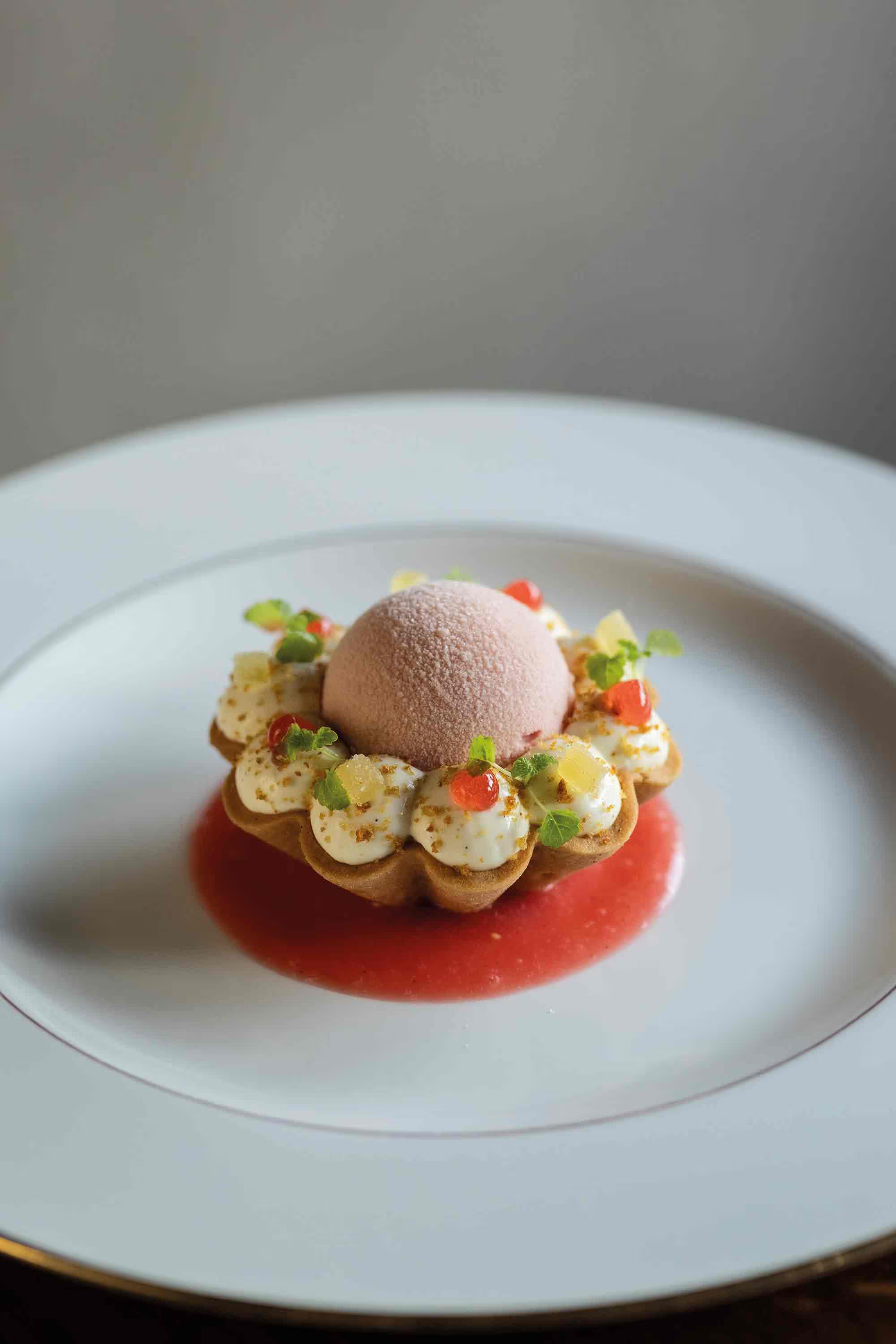
.avif)