Speak with our friendly team today and discover how you can stand in front of our readers and make this space your own.

From the quiet of the new mexico desert to the edge of space, a handful of travellers experience a journey that blends engineering, elegance, and a view of the earth few will ever see.
From the quiet of the new mexico desert to the edge of space, a handful of travellers experience a journey that blends engineering, elegance, and a view of the earth few will ever see.
From the quiet of the new mexico desert to the edge of space, a handful of travellers experience a journey that blends engineering, elegance, and a view of the earth few will ever see.
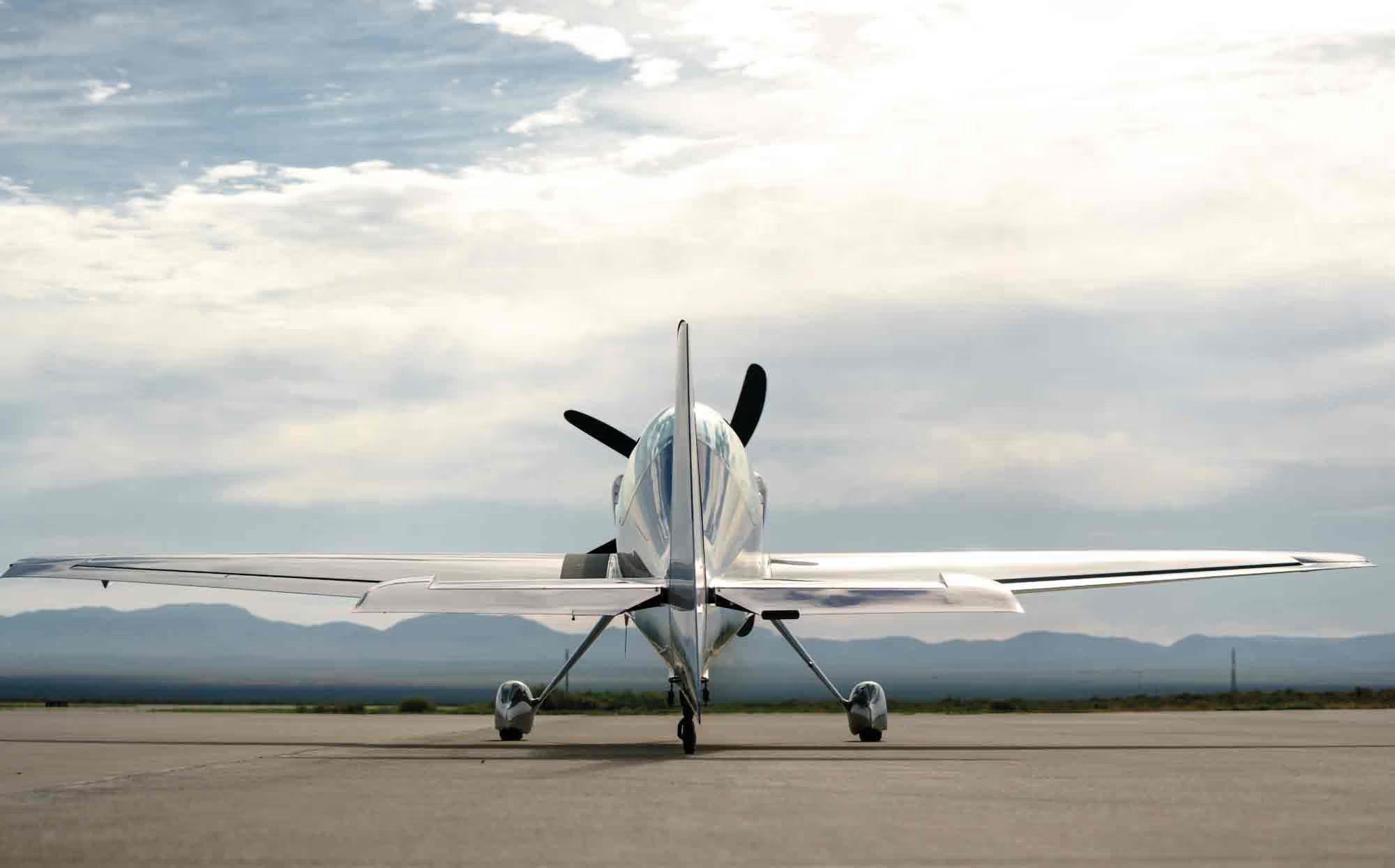
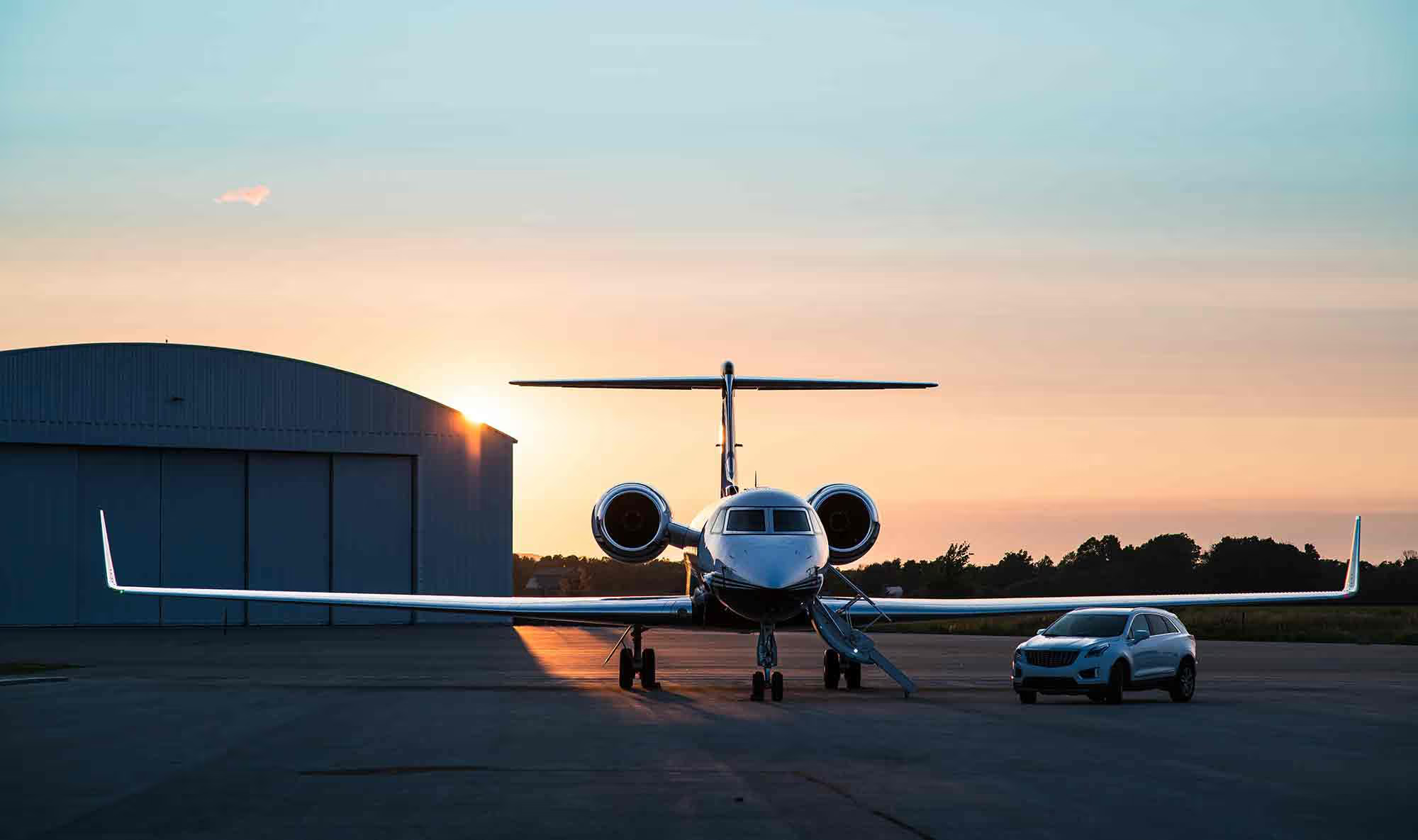
Instead of a countdown, there is a peaceful calm. A desert morning at Spaceport America in New Mexico, the air is still, the light sharp. On the tarmac sits a gleaming twin-fuselage aircraft, the VMS Eve, named after founder, Richard Branson’s mother.
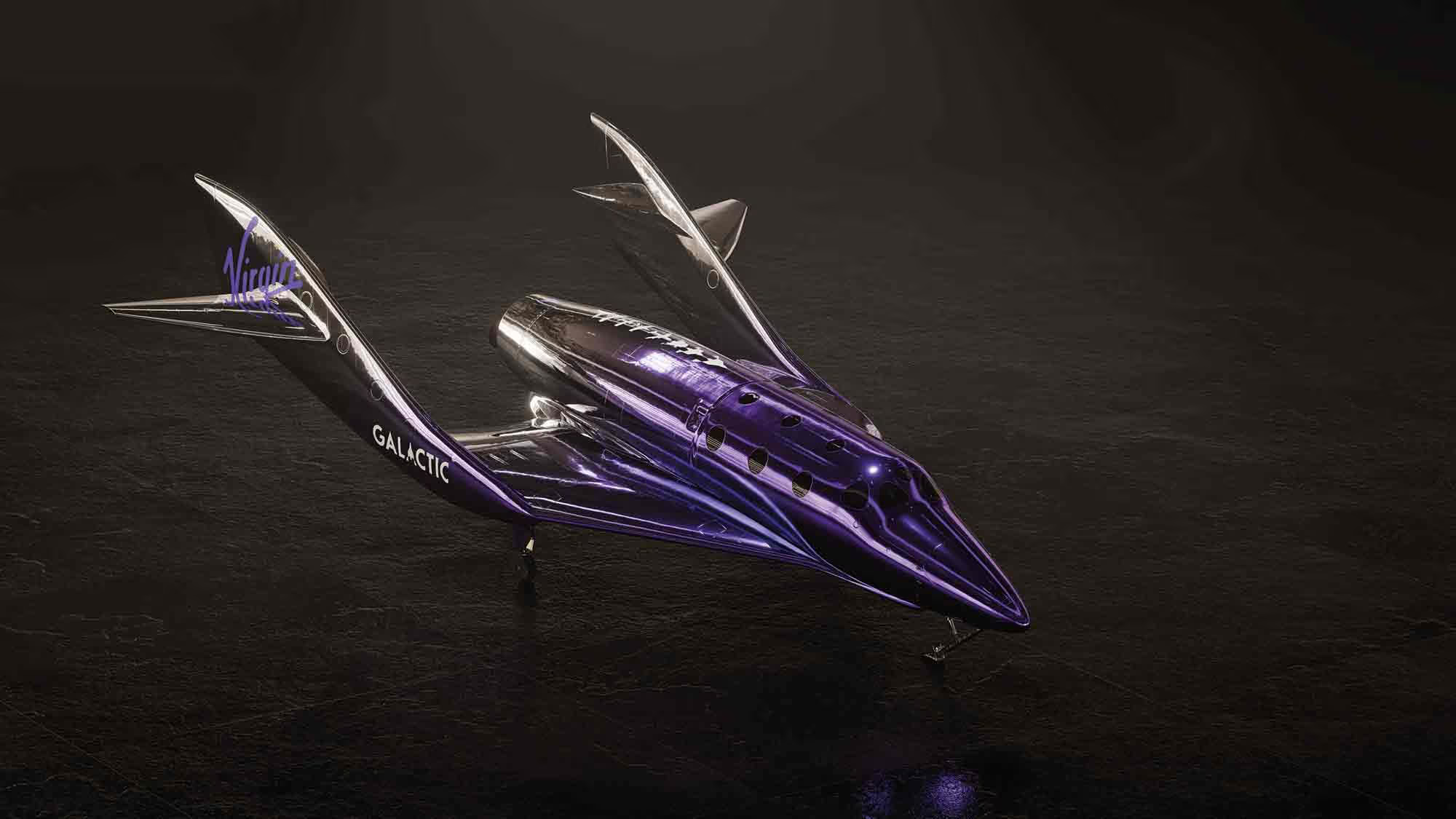
Suspended beneath its central wing, the smaller white shape of VSS Unity waits for flight. It looks more like sculpture than a machine, its mirrored windows catching the sunlight, its smooth hull marked simply with the words Virgin Galactic. For a handful of travellers inside, they will leave Earth behind and see it from above the edge of space.
Richard Branson’s ambitions have always stretched beyond the ordinary. From music, train travel, airlines and ocean exploration, his ventures have pushed boundaries, but none are as audacious or as transformative as his foray into space tourism. With Virgin Galactic, he has sought to make space travel accessible, offering a journey that combines technical excellence, luxury service and an unparalleled perspective on our planet. Based at Spaceport America in New Mexico, the gateway to the edge of space, private travellers can board the sleek spacecraft VSS Unity and leave Earth in a way that few humans ever will.
Virgin Galactic has spent nearly two decades building towards this point. Founded by Branson in 2004, the company was borne out of a simple but ambitious goal: to open space to private citizens. After years of testing, setbacks and redesigns, commercial service began in 2023. Since then, a select group of paying passengers has joined company staff and researchers on flights that rise more than 80 kilometres above the Earth, crossing the United States’ definition of space and offering a few minutes of weightlessness before gliding back to land.
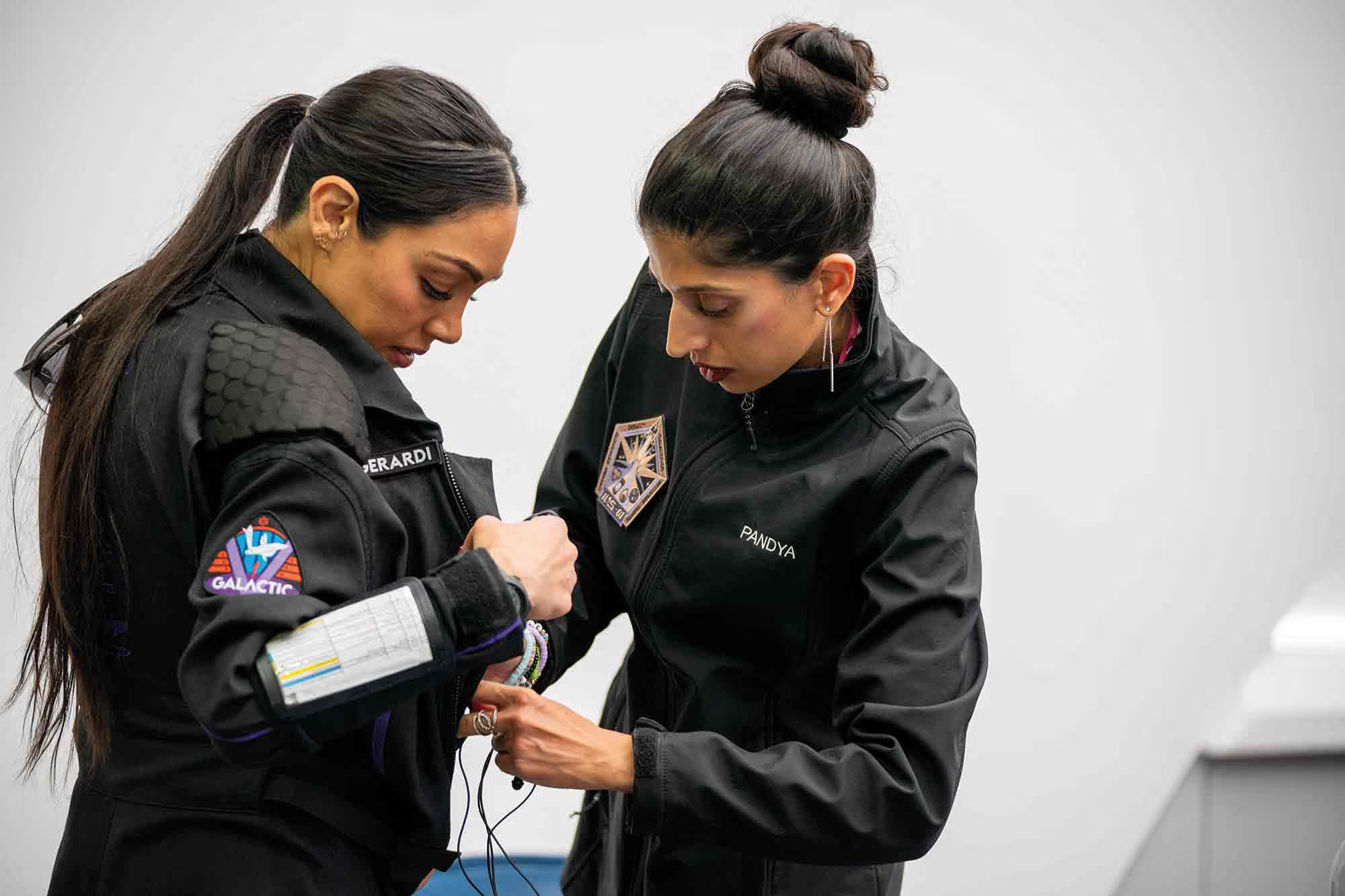
The journey is meticulously choreographed. Passengers arrive several days in advance for what Virgin calls its Astronaut Preparation Programme: an immersion that combines physical readiness, a technical briefing and a mental focus. They tour the spacecraft, practice moving in microgravity and learn how to steady themselves during phases of high gravity. They meet their pilots, often veterans of the test-flight programme, and rehearse communication protocols. Each traveller is fitted for a tailored Under Armour flight suit, designed to manage body temperature and enable freedom of movement in weightlessness. Evenings are spent with the small flight team in the spaceport’s lounge areas designed to echo the surrounding desert landscape. Meals are shared, questions answered and nerves eased.
“It’s a process that builds anticipation in a measured way,” explains Beth Moses, Virgin Galactic’s chief astronaut instructor and one of the first to experience the flight. “You get to know the crew, the systems, the procedures. By the time you walk out to the spacecraft, you’re ready both physically and emotionally.”
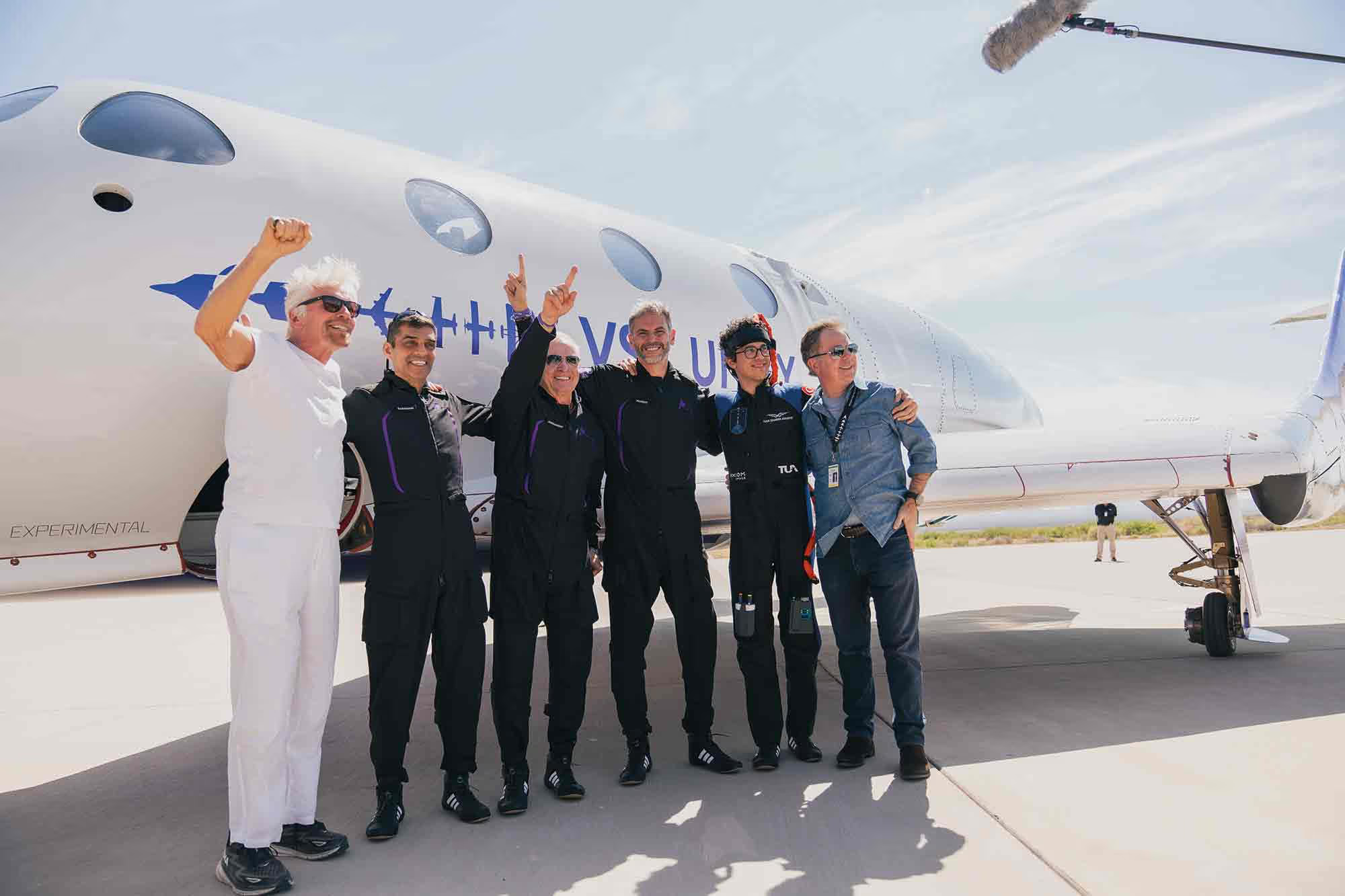
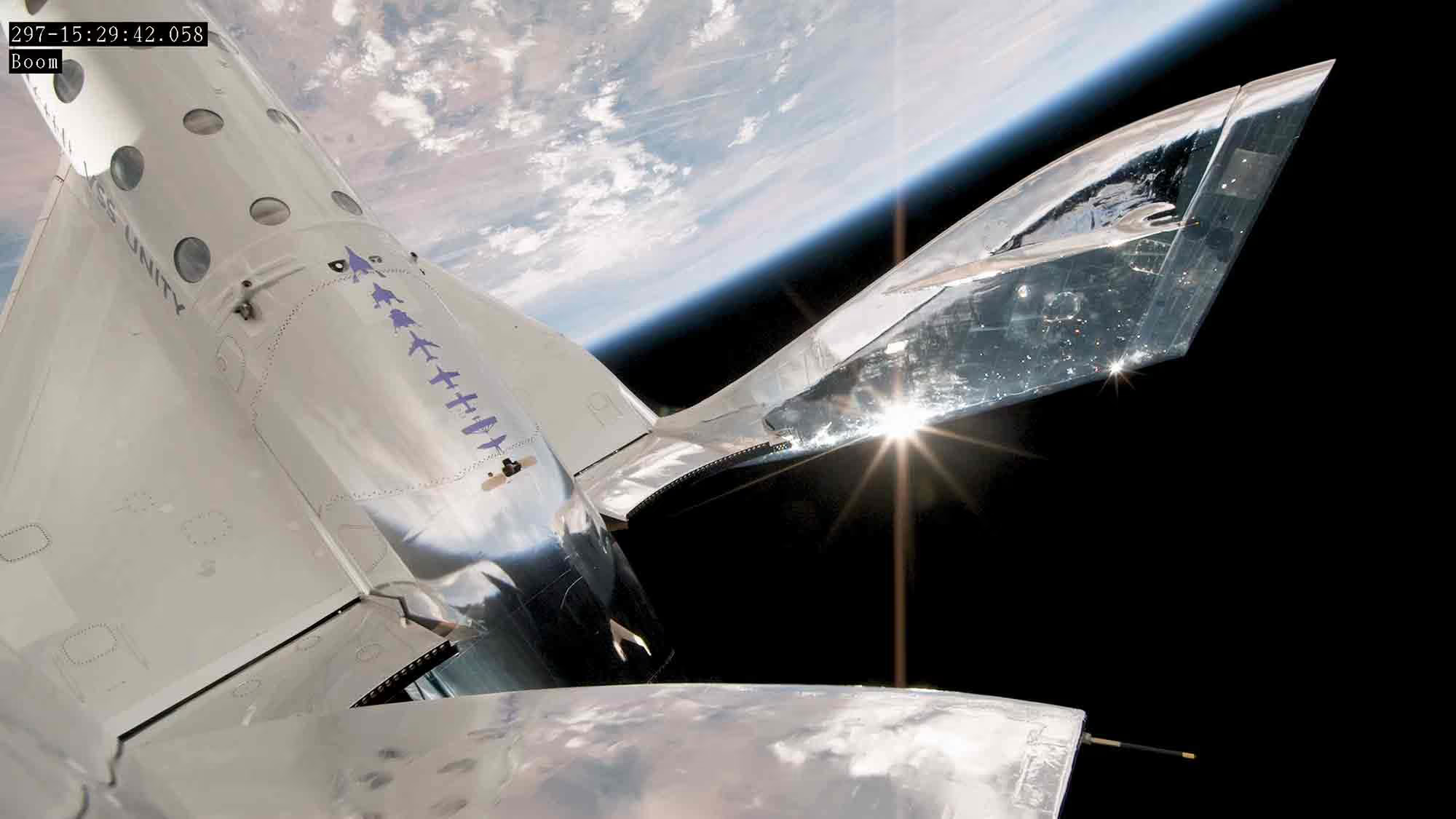
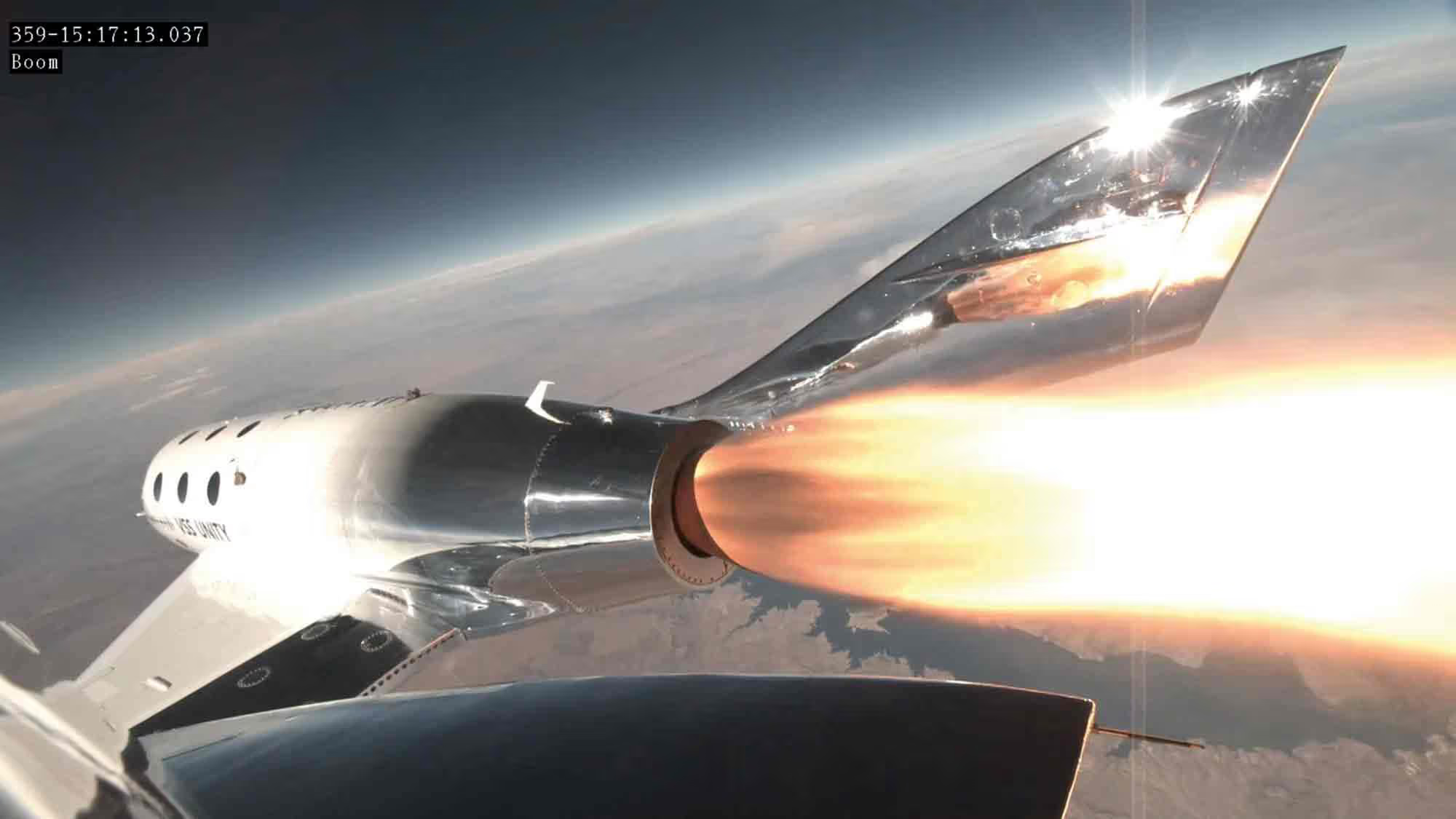
The VSS Unity itself is a hybrid of spacecraft and aircraft, capable of gliding to a runway landing yet to be built to endure the stresses of rocket flight. Each mission begins with Unity attached to Eve, which carries it to around 50,000 feet. The separation is smooth, almost unremarkable, until the rocket motor ignites. In a few seconds, the quiet is replaced by a rising thrust that pushes everyone firmly back into their seats. The ship climbs steeply, accelerating to three times the speed of sound. Through the windows the blue fades to indigo, then black.
Then, suddenly, silence again. The engine cuts off, the gravity forces vanish, and everything floats. Harnesses release and the cabin becomes a slow-motion zone. Passengers push gently from walls and seats, drifting in zero gravity, turning toward the windows to look down at home. From more than 80 kilometres up, the Earth curves visibly, a luminous arc edged by a thin blue line where atmosphere reduces to a fragile shimmer. “The moment you detach from the mothership and feel yourself in zero gravity, looking down at the planet, it’s unlike anything else in life,” says Moses. “You see how delicate everything is. You feel simultaneously small and connected.”
Branson himself, who flew aboard Unity’s first full-crew flight in 2021, described it as
“a moment to see the Earth as a whole, fragile and beautiful, and to feel our connection to it.”
He has often said that the true purpose of Virgin Galactic is not simply to offer a thrill but to change the way people think about the planet.
“Space offers clarity. It reminds you that Earth is our shared home, and that we are all connected.”
Inside the cabin, everything has been built to heighten that moment. Panoramic windows curve around both sides and the ceiling is designed to frame the view regardless of where a passenger floats. The structure, white, soft grey, polished metal portrays a calmness. The seats recline automatically as the ship re-enters the atmosphere, discreet lighting shifts to match each phase of flight. It feels less like a vehicle and more like a meditation chamber built for speed.
The descent, like the ascent, is choreographed with precision. As Unity re-enters the upper atmosphere, its wings pivot upwards into what engineers call “feather mode,” increasing drag and stability. The craft then transitions back into glider configuration for the final approach, touching down on the same runway it left. The entire journey, from take-off beneath the mothership to landing, lasts around ninety minutes. For passengers, though, it feels suspended outside of time.
The price of the Galactica experience is $600,000, or roughly £465,000. It includes the pre-flight training, accommodation, hospitality and post-flight debriefing, as well as membership in the company’s Future Astronaut community, an ongoing network of those who have flown (or are preparing to). Virgin Galactic frames this as the birth of a new kind of travel, a blending of engineering, exploration and emotion. “Flying to space is not just a thrill,” says Branson. “It’s about creating a moment that stays with you for the rest of your life.”
Those moments are already changing the people who experience them. Passengers consistently describe a shift in perspective: the so-called overview effect, first noted by astronauts decades ago, where viewing Earth from space provokes a deep sense of unity and responsibility. One recent traveller commented that it was the silence which struck her the most: “You expect fireworks and adrenaline. What you get is calm. You look down and it’s so peaceful, so complete. It’s impossible not to think differently about everything after that.”
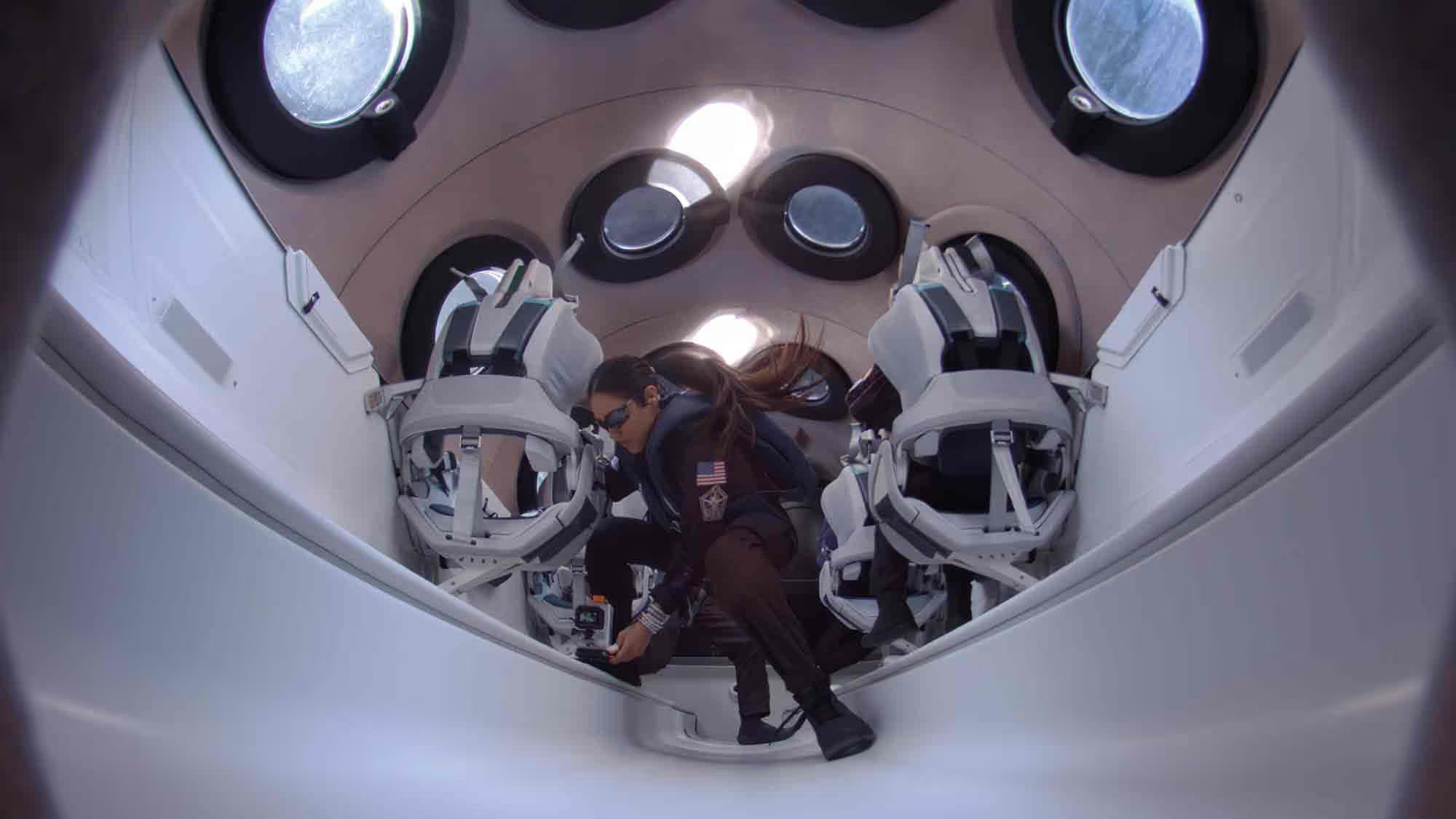
Virgin Galactic’s next generation of spacecraft, the Delta Class, is already in development and expected to begin service in 2026. These vehicles will carry six passengers per flight and enable weekly sessions of missions, expanding access while preserving exclusivity. Built using lessons learned from Unity’s test programme, they are designed for rapid turnaround, capable of flying, landing and being prepared again within days. The company’s long-term plan includes additional spaceports, including potential sites outside the United States, as Branson describes “a global space line for Earth.”
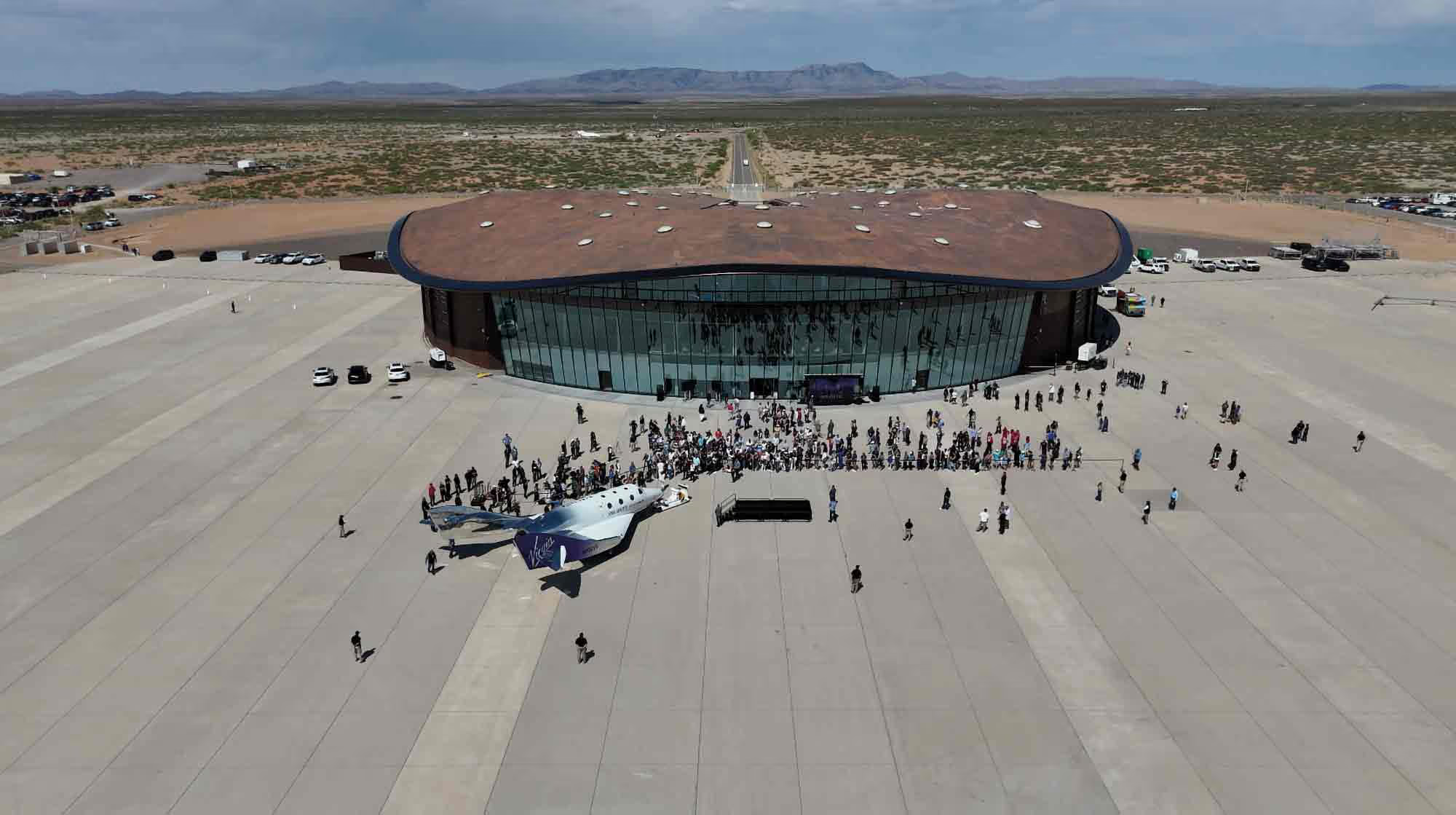
For all the innovation, Virgin Galactic has always framed its work in emotional rather than purely technical terms. The tone at Spaceport America is closer to a private retreat than a launch complex. The architecture, all glass and desert hues, merges with the landscape. Visitors pass through galleries that trace the history of flight and exploration before entering the preparation areas. Every element from sound, lighting, to pacing, is designed to build a sense of ritual.
That focus on human experience differentiates Virgin Galactic from its competitors. Where other companies talk about payload capacity and orbital range, Virgin speaks of perspective and connection. The result is a form of travel that sits somewhere between science and art, reflective even. In an era where luxury often means isolation, this experience offers the opposite: a direct, visceral awareness of belonging to a larger whole.
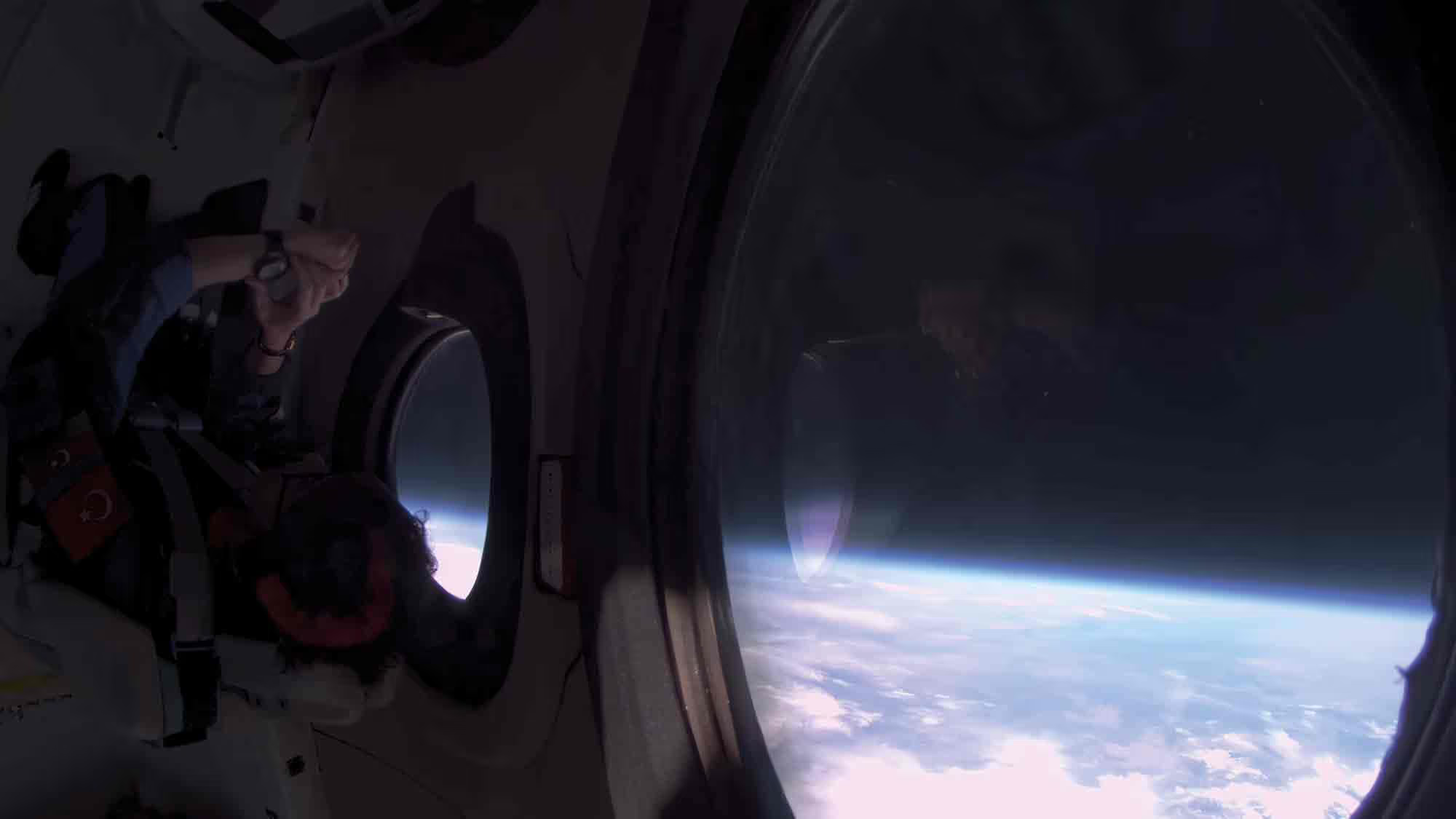
When the flight ends, passengers gather once more with their crew for debriefing and celebration. The suits are removed, the adrenaline fades, but the sense of quiet wonder remains. Each traveller is presented with an album of photographs taken from inside and outside the cabin, though the most powerful image is the one that stays in their memory: that curve of Earth, luminous against darkness.
It is, in every sense, a milestone in modern travel. Virgin Galactic has taken the structure of luxury (comfort, service and exclusivity) and redirected it toward experience, curiosity and perspective. The company is, in effect, selling access to a view and the feeling that comes with it: a glimpse of the planet that redefines the idea of home.
The world looks different after you have seen it from space. That, perhaps, is the real value of the ticket. It is not about status but awareness; not an escape from Earth, but a new way of returning to it. As Branson once said, “Every flight is an invitation to see the world differently, to understand our place on this planet, and to carry that perspective forward.”
Branson’s dream was never just to send people upward, but to expand their view outward. As more travellers look beyond Earth’s horizon, they will bring that vision back with them, reshaping not only how we travel, but how we live in the world we call home.
Every flight is an invitation to see the world differently, to understand our place on this planet, and to carry that perspective forward.
Speak to your audience directly within articles of their interest both digitaly and through our printed issues.
Speak with our friendly team today and discover how you can stand in front of our readers.

Speak to your audience directly within articles of their interest both digitaly and through our printed issues.
Images: Virgin Galactic Press Center
Never miss an edition. Sign up for our digital subscription and enjoy Swealthy content wherever you are. Simply leave your details and join our community – oh and it’s completely free of charge!

There’s monstrous tales, award-winning theatre, electrifying dance and some of the brightest visual art stars set for Warwick Arts Centre’s Autumn/Winter 2026-2027 Season.
Hundreds of free tickets are up for grabs for humour-hungry Brummies between 14 August and 26 September
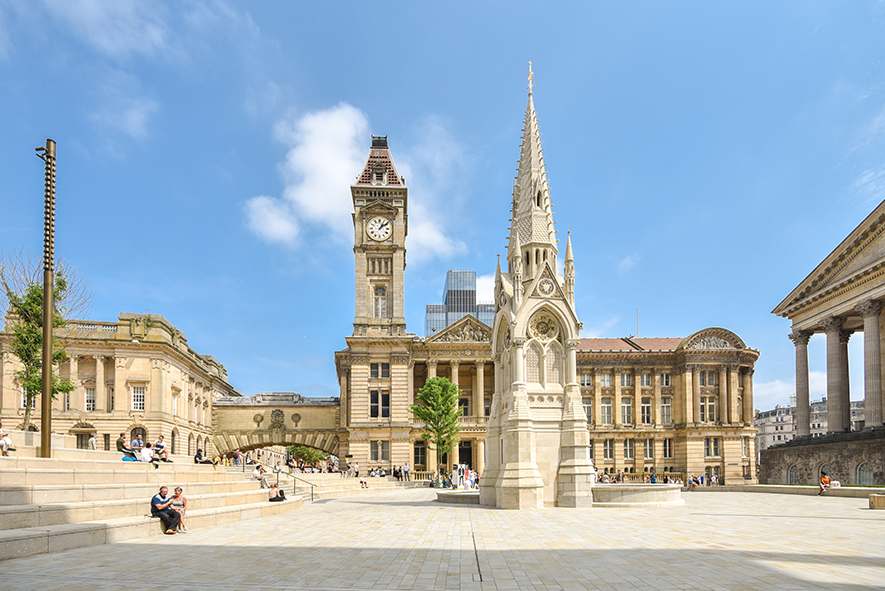
The open call for the UK’s brand new jewellery festival’s flagship exhibition will offer jewellery practitioners from across the UK the chance to exhibit at the world-renowned Birmingham Museum and Art Gallery and to win thousands of pounds.

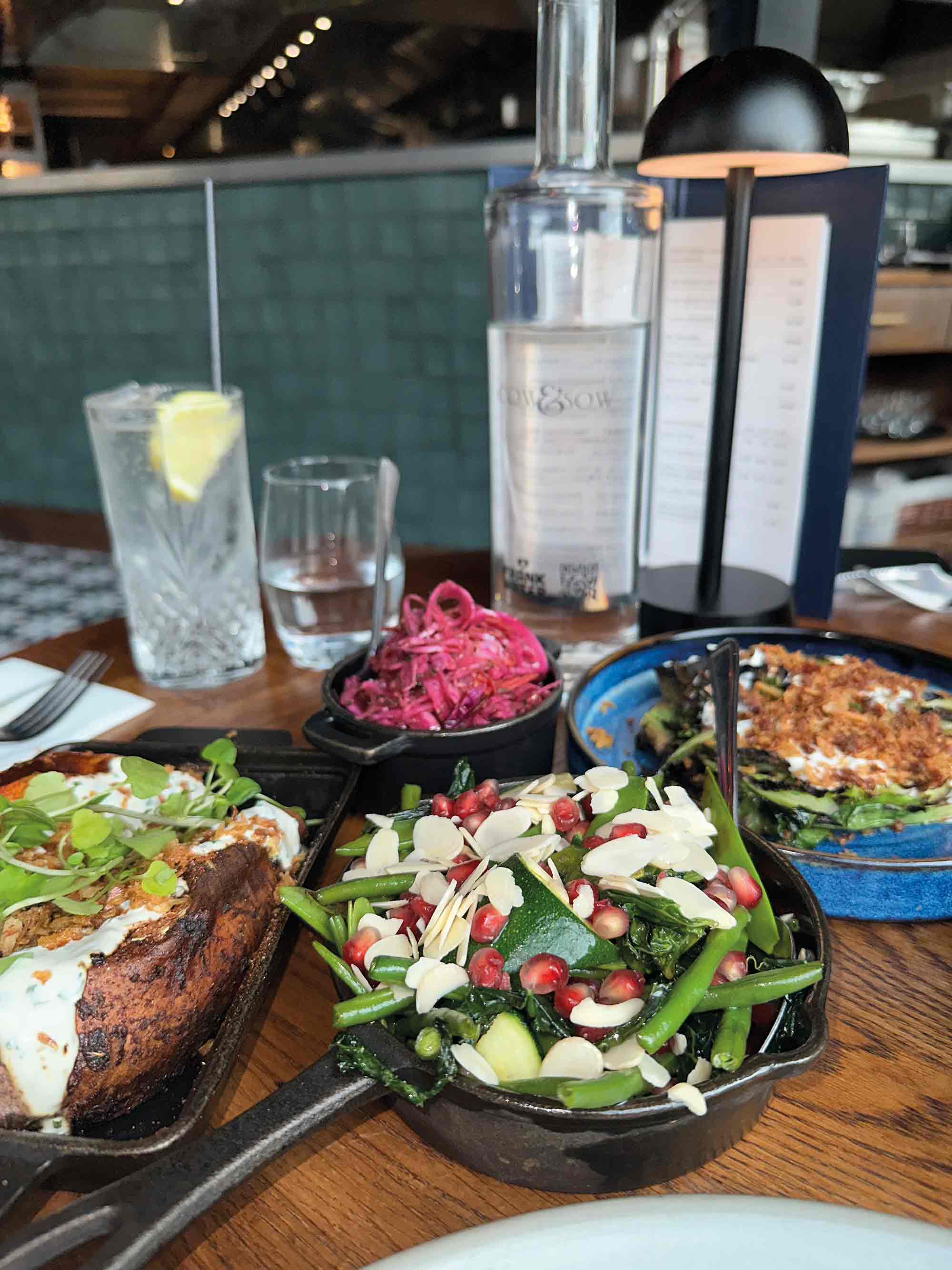
Cow & Sow is offering all graduates a complimentary glass of fizz to kick-start their celebrations. Available Monday-Friday from 6th-31st July.

Dedicated Graduation Menu, available from 6th July to 2nd August.
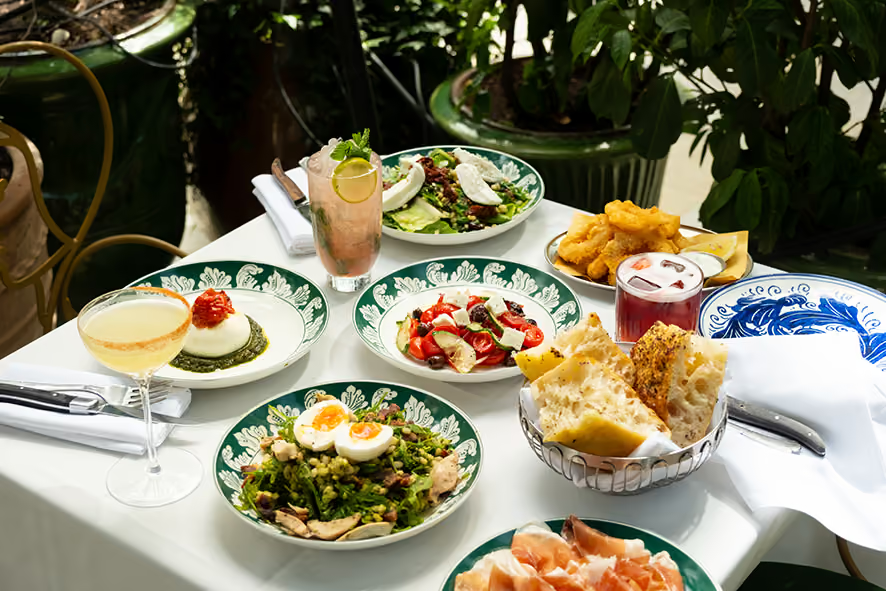
Guests can enjoy three courses from either the à la carte or set lunch menu, with all dishes designed to take you to Italy and back in 60 minutes. The set menu is priced at £19 for antipasti and main, with dolci available for an extra £5
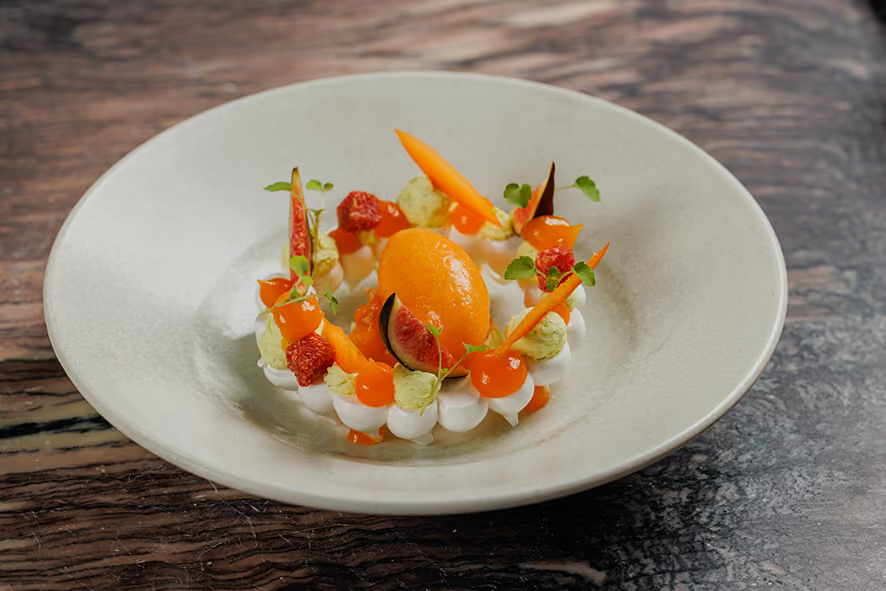
Birmingham Restaurant Festival has revealed the final list of 60 restaurants, the highest number of participating eateries in its history, and the exclusive menus that will offer foodies exciting and affordable dining experiences from 1st to 31st August.
New to Swealthy Magazine? Welcome. Discover where to find our latest editions and catch up on everything you’ve been missing here:
Our beautifully crafted print magazine deserves pride of place on your coffee table. Sign up to receive every bi-monthly edition, delivered directly to your door - before anyone else.
Subscribe for a year and save 25%

Copyright © Swealthy LTD
All rights reserved




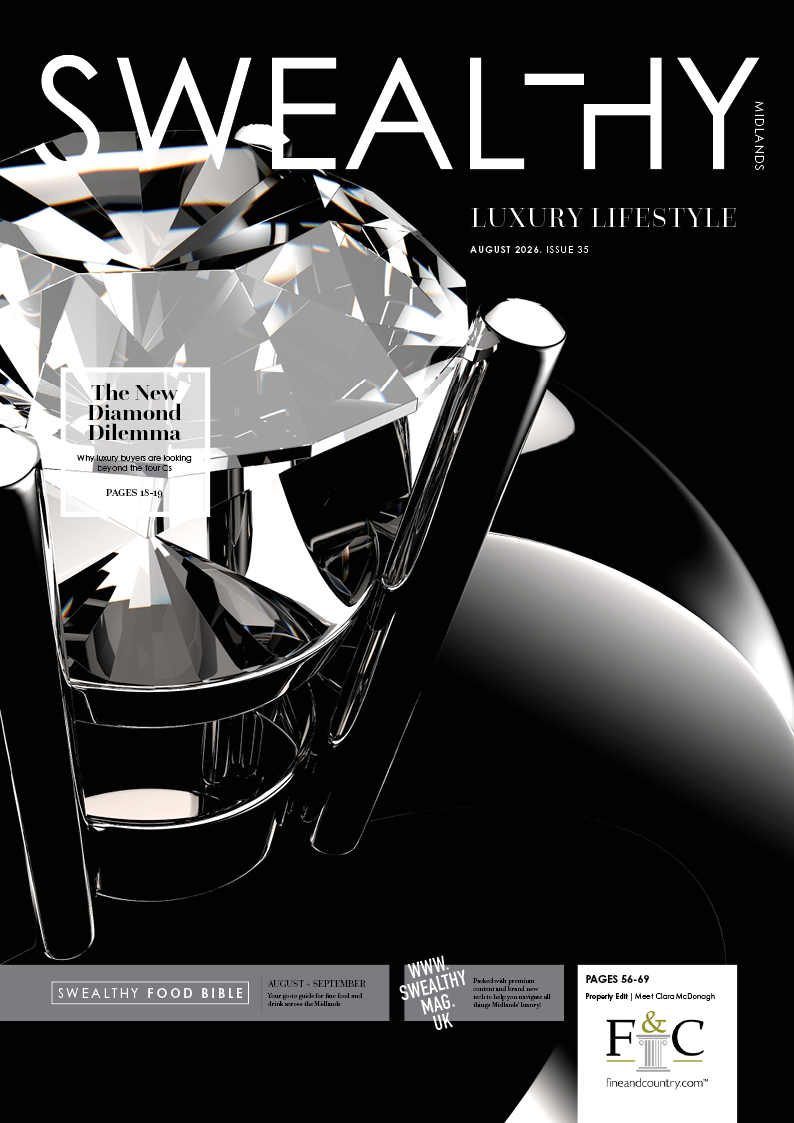







%204541%20(1).avif)


-2.avif)
.avif)



-RSC.avif)





.avif)






-copy.avif)










.avif)